







Message Magazine is trying out a new size and we’re eager to hear your thoughts.

‘Le Tourneau: The minute I started that partnership, business boomed. The next year my sales were over $100,000. . . It kept going like that, in leaps and bounds. In 1939 our sales were over $7,000,000.
‘Ripley: All because of your partnership with God! What was God’s share in your business?
‘Le Tourneau: I set aside 90 percent of the stock for God’s use. . . .
‘Ripley: Then you keep very little for yourself?
‘Le Tourneau: Yes. You see, I don’t feel that my brain made this money. I believe that the Lord made it possible for me to make it, and I’m only returning to God what belongs to Him. My motto is: NOT HOW MUCH OF MY MONEY DO I GIVE TO GOD, BUT HOW MUCH OF GOD’S MONEY DO I KEEP FOR MYSELF?’”
by Adlai Albert Esteb,
The Message Magazine, October 1966


relationship
readineSS
Call 1-800-456-3991 Monday through Thursday 8:00 a.m. to 5:00 p.m. Mountain Time for subscription information or address changes. MESSAGE (ISSN 0026-0231) is published bimonthly Jan/Feb, Mar/Apr, May/June, July/Aug, Sept/Oct, Nov/Dec.
© 2026 by the North American Division of Seventh-day Adventists, 9705 Patuxent Woods Drive, Columbia, Maryland, 21046, U.S.A. Address editorial correspondence to MESSAGE MAGAZINE, 9705 Patuxent Woods Drive, Columbia, MD 21046-1565 U.S.A. All subscriptions are prepaid. If you did not order MESSAGE, it is being sent as a gift from a friend. You will not be billed. To subscribe, mail payment to MESSAGE, 1350 North Kings Road Nampa, ID 83687, U.S.A. or call 1-800-456-3991. Subscription price: one year, $19.95 U.S. currency; single copy, $4.00; overseas, add $10.00 per year for postage. Prices subject to change without notice. Periodicals Postage paid at Nampa, Idaho and additional offices. Vol. 92 No. 4 JULY/AUG POSTMASTER: Send address changes to MESSAGE, 1350 North Kings Road Nampa, ID 83687, U.S.A. Printed in the U.S.A.
Unless otherwise noted, Bible texts in this issue are from the New King James Version. Copyright © 1979, 1980, 1982 by Thomas Nelson, Inc. Used by permission. All rights reserved. Statements in this issue attributed by an author to other speakers/writers are included for the value of the individual statements only. No endorsement of those speakers’/writers’ other works or statements is intended or implied.



Media That Takes You Higher

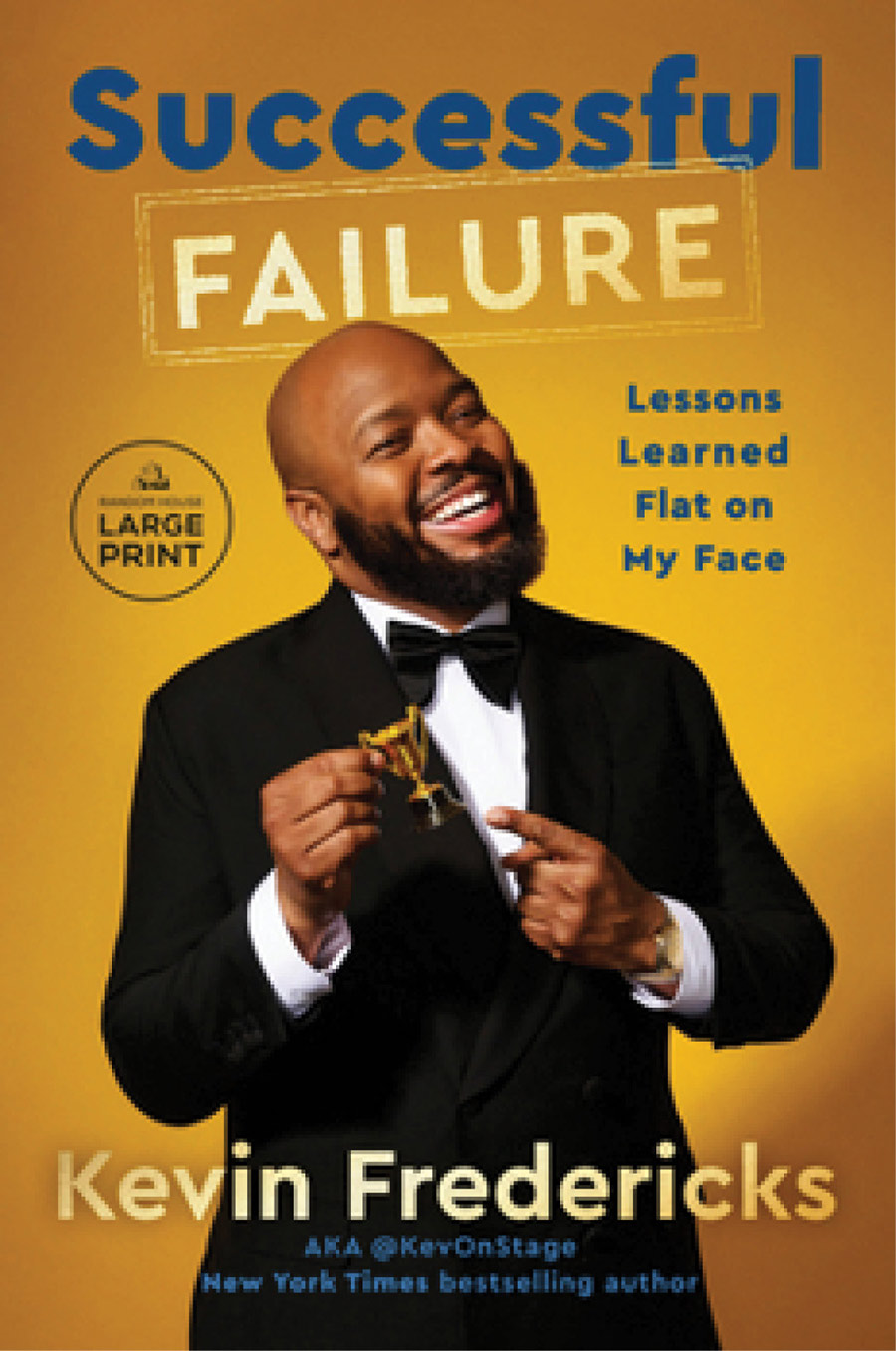
I enjoy Kevin Fredericks’ videos on social media and have watched him continue to build his brand and thrive. “Successful Failure” speaks candidly about his journey, offering both humor and honesty as he reflects on the ups and downs along the way. I appreciate his vulnerability in addressing topics like bullying, his deep love for his father, and the personal transformation that has shaped his life. It’s a refreshing reminder that growth often comes through real, unfiltered experiences.

I’m drawn to gospel that carries a jazz-soul flavor, and when I first heard “Pass Me Not” and “Take Me Back” by Mayia Warren, I was immediately sold. From “Outta My Way” (2022) to her newer projects, “No One” (2026) and” Take Me Back,” Mayia continues to blend gospel, neo-soul, and R&B into a worship experience that feels both intimate and authentic. Her music is rich with testimony, faith-building messages, and compassion for those navigating life with disabilities, a reality she understands personally.


As a writer, leader, and speaker, I find it important to have an app that helps. Notion allows you to connect ideas, track progress, and build systems that grow with your vision. For leaders, creatives, and anyone starting something new, Notion does not just help you stay organized; it helps you move with intention, giving structure to your purpose and clarity to your next step. What makes it especially powerful is its flexibility. Whether you are planning sermons, writing books, organizing speaking engagements, or managing daily tasks, Notion adapts to the way you think rather than forcing you into a rigid structure.


The protest route wound around the front of the White House, around three blocks to the back of the White House. I had ventured to Washington, D.C., on the call of Reverend William Barber, founder of Repairers of the Breach and Moral Mondays, Sojourners, and our friend Claudia Allen, executive director of Adventist Peace Fellowship. This peace rally and protest — opposing so many governmental policies and positions — required our presence, the calling out of injustice, and sacrifice.
It’s the last part. Orange armband people were appointed first. First to get their heads cracked, if it came to that. The rest were reserved and preserved back in the line in order to live and die another day, said Barber.
In that protest model, that very spiritual couplet — sacrifice and life — we can’t help but see the move of Jesus. As the writer of Hebrews lays out, we were headed for our just due:
“And as it is appointed unto men once to die, but after this the judgment …” (Hebrews 9:27).
But, our stand-in, our substitute, our sin-bearer, the sacrificial lamb of God, put on sin, and shame for us. He was a marked Man whose life and sacrifice changed our destiny:
“So Christ was once offered to bear the sins of many; and unto them that look for him shall he appear the second time without sin unto salvation” (Hebrews 9:28, KJV).
Not that God took pleasure in the suffering of His Son, but that in God’s plan, that sacrifice means that we live in eternity.
May 11, 2026
Protest on the White House
Unknown Speaker
It has offended the conscience of people of faith.
It’s not just the egregious cost, but it’s Toxic Theology.
Military commanders have been instructed that the war is part of God’s plan to usher in Armageddon.
This administration gleefully calls for death and destruction to rain down from the skies, But the Bible says: “Seek peace and pursue it.”
This administration quotes fake verses about great vengeance and furious anger, but the Bible says beat your swords into plowshares.
This administrations says, no mercy for the enemy. No harbor for prisoners of war.
But Jesus said, ‘Those who live by the sword, shall die by the sword.’
Make no mistake—this is no holy war; it is a fools’ errand, enacted by Christian Nationalists, who cozy up to white supremacy, gag the gifts of women, and erect idolatrous golden statues of this president.
Today we say clearly, this is not the faith of Jesus Christ.
Justice is surely coming and we will hold this administration accountable for all of its unholy bloodshed.
God will not be mocked.


CARMELA MONK CRAWFORD, Esq., is Editor of Message Magazine

- “I’m colorblind. I don’t see color.”
- “Some of my very best friends are black.”
- “Like Dr. Martin Luther King Jr. stated, ‘I believe people should be judged by the content of their character and not the color of their skin.’”
- “I am not a racist. I don’t hate black people.”
Depending on the audience, these deflective and defensive phrases invoke a sense of community or trigger frustration for lack of awareness. These statements rarely address the motives underlying racist behaviors, but attempt to shift the conversation to the character of the offended party, instead.
In a press release dated March 11, 2026, the United Nations Committee on the Elimination of Racial Discrimination warned that “racist hate speech by political leaders, including the president, combined with intensified immigration crackdowns in the United States, notably near schools, hospitals and faith-based institutions, has sparked grave human rights violations.”
The United Nations cited human rights violations as “right to life and liberty, freedom of speech and assembly, fair trial, and protection from arbitrary detention.” When these rights were violated, we saw the repercussions of ICE agents deployed in Chicago, Los Angeles, Minneapolis-St. Paul, Portland and Washington, D.C. through traditional and digital media.
Further, the impact of “racist hate speech” is seen in the elimination of diversity, equity, inclusion programs, and voter suppression.
- “We elected President Barack Obama. We no longer need diversity, equity, inclusion, or voting rights protection.”
- “Affirmative Action only benefits black people. It’s reverse discrimination against white people.”
According to a 2025 study by the League of Women Voters, the overwhelming beneficiary of affirmative action DEI for both college admissions and jobs are women, specifically white women.

“When policies aimed at producing racial equality and justice are proposed, the opposition is, in part, due to racism or prejudice,” said David C. Wilson, co-author of “Racial Resentment in the Political Mind” and dean of the Goldman School of Public Policy at UC Berkley. “But the stronger factors are tied to uncertainty about how the politics will disrupt a way of life that most whites have learned to navigate and benefit from.”
Self-interest favors the status quo. Self-interest resists changes. Self-interest causes anxiety. Self-interest fails to consider what is best for society as whole. Self-interest represents greed. Self-interests drives racist hate speech.
In Nancy MacLean’s book, “Behind the Mask of Chivalry: The Making of the Second Ku Klux Klan,” MacLean cited Chester D. Morton (a white man) as one who joined the Klan for self-interests to eliminate his Jewish competitor in the funeral business. Morton knew the Klan despised the Jews and would never allow them to join their organization. As a result, Morton obtained a competitive advantage by joining the Klan for his funeral business. His motivation had nothing to do with hate but was driven by self-interest.
We can apply this same motivational principle of self-interest at the expense of humanity for the racist hate speech we’re hearing today.
Bett, that was it. She washed, sewed and ironed their clothes; cultivated their crops and cooked their food. Yet this whole person’s identity was reduced to one syllable for half her life. (“Mum” was added when she got older.)
Bett and Lizzy. Two nicknames for Elizabeth given to one set of sisters born in Claverack, New York, on a forced-labor prison camp that Americans nostalgically call a plantation. Bett was born between 1742 and 1744. Lizzy was younger, with even less certainty about her birthday.
Hannah didn’t always prize daddy’s presents. She swung a hot shovel at Lizzy one day, but Bett intervened and got gashed instead. The scar from this laceration spurred Bett’s determination for liberation.
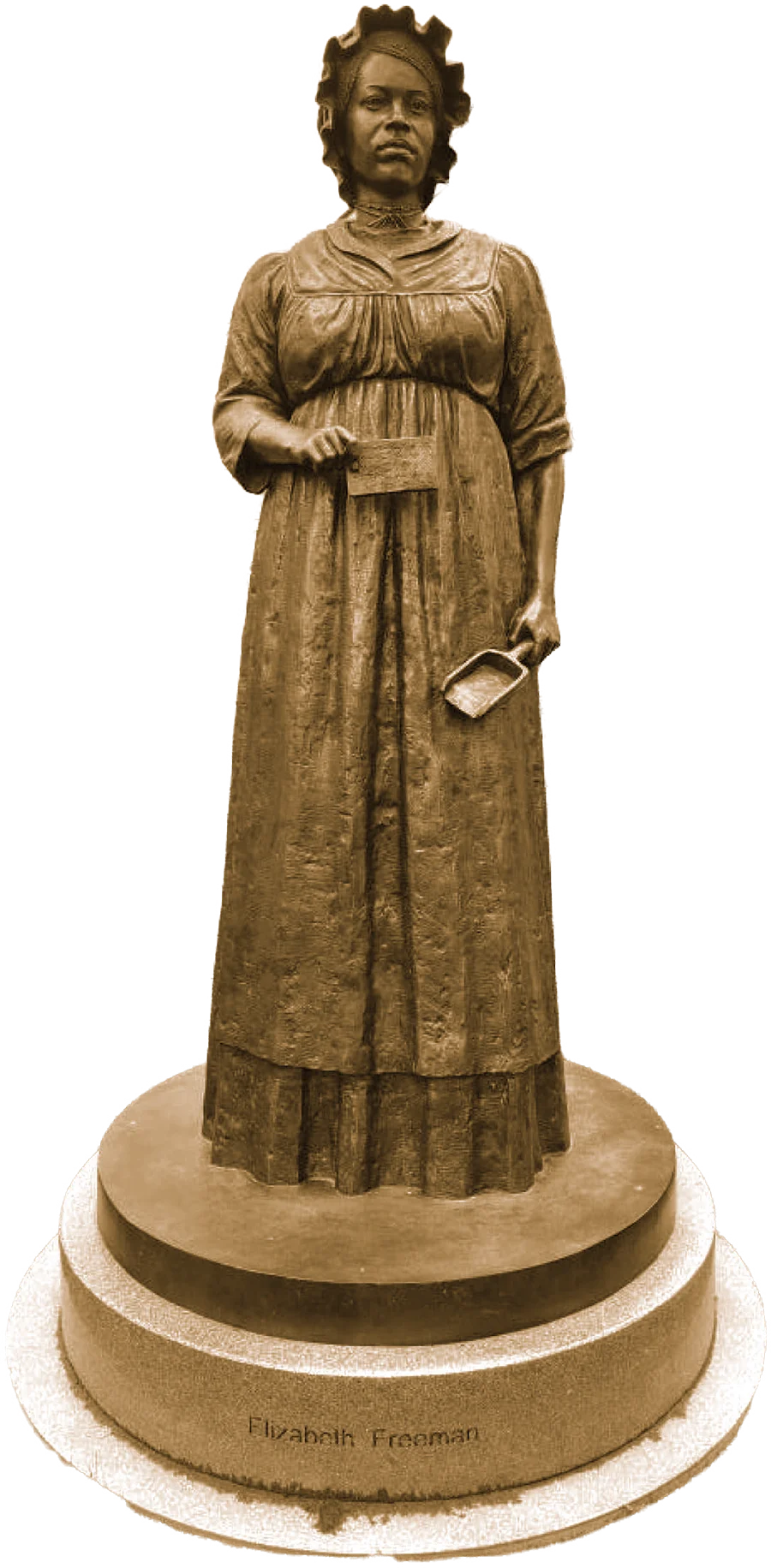
Article 1 stated that “All men are born free and equal, and have certain natural, essential, and unalienable rights; among which may be reckoned the right of enjoying and defending their lives and liberties” and “seeking and obtaining their safety and happiness.”
Bett and Brom won their freedom and a small payment of reparations. The case had multiple ripple effects. John Ashley settled a suit from his slave Zach Mullens, resulting in his freedom. Bett’s case also paved the way for Quok Walker’s freedom suit. Walker paved the way for the abolition of slavery in Massachusetts. The colony that was first to encode slavery became the first state to abolish it.
Most importantly, Bett used her freedom to give herself a full name – Elizabeth Freeman. Her minute of freedom lasted until she died on December 28, 1829.


The indictment is the first of its kind against an organization that has historically worked closely with the DOJ — the same DOJ that has now indicted it — to dismantle hate groups and prevent racial violence against African Americans. The similarity in origins of the DOJ and the SPLC, despite their respective beginnings separated by more than a century, is as noble as it is remarkable. It says much about the nature of authentic moral values, most significantly that they transcend space and time.
Regrettably, morality, too often, is no match for politics. Right and wrong will quickly take a backseat to right and left, as a “might makes right” approach of expediency to maintain political power replaces the importance of a nobility of mission. Has that happened in the unprecedented indictment against the SPLC? Has right and left replaced right and wrong? If so, does such ideological posturing signal the final expulsion of morality from the American ethos? Can morality return to the public square and restore public confidence in such a vital American institution as the DOJ? The urgency of these questions is undeniable.

In Garland’s opening statement to the Judiciary Committee, he made the following statement:
“Celebrating DOJ’s 150th year reminds us of the origins of the Department, which was founded during Reconstruction, in the aftermath of the Civil War, to secure the civil rights promised by the 13th, 14th and 15th Amendments. The first Attorney General appointed by President Grant to head the new Department led it in a concerted battle to protect black voting rights from the violence of white supremacists, successfully prosecuting hundreds of cases against members of the Ku Klux Klan” (Testimony of Merrick Brian Garland before the U.S. Senate Judiciary Committee, February 22, 2021)”
The mission of the DOJ, understood in its historical context, is clear: society’s most vulnerable, evolving from predominately African Americans in 1870, to include victims of human trafficking today, must be protected through strict adherence to the rule of law, and will find that protection highly valued and enforced in the work of the DOJ. Noble? Yes. Deeply moral? Indeed.
This raises the question of whether morality can be legislated. It cannot. But the law can, as Martin Luther King has argued, prevent us from harming one another. Morality cannot be legislated. But it is a moral imperative that the law protect people, especially the most vulnerable among us, which the SPLC, consistent with the origin of the DOJ, intended to do.
Trump’s rhetoric appealed to a segment of the American electorate who have committed themselves to the racist logic of the infamous Dred Scott decision that America was intended for whites only. Regrettably, even some future lawyers believe that today, such as Preston Damsky, a white law student who wrote a research paper arguing that Dred Scott represents the correct view of the Constitution. He was recognized with an award for his overall performance in the class!



But does this logic withstand scrutiny? Indeed, if the SPLC solicits donations with the stated aim of dismantling racist, white-supremacist organizations, and then uses that money to divide the loyalty of members of those organizations, are they not contributing to the destabilization and downfall of those organizations? Do police undercover operations in internet chat rooms to catch sexual predators defraud taxpayers because police fabricate stories to catch sex offenders? And what about police undercover drug operations that use informants, often less than wholesome individuals, to catch high level drug traffickers? Are they too committing criminal fraud?
Prosecutors have often recited the old adage, “If you’re prosecuting the devil, you’ve got to go to hell to get the witnesses.” This is true, whether it be going to hell to get witnesses against the devils of pedophilia or those of drug kingpins.
Protecting the most vulnerable is noble and moral. Pursuit of political enemies based on ideology is power-driven politics. The indictment of the SPLC has occurred because we have replaced the morality of the former with the politics and ideology of the latter.
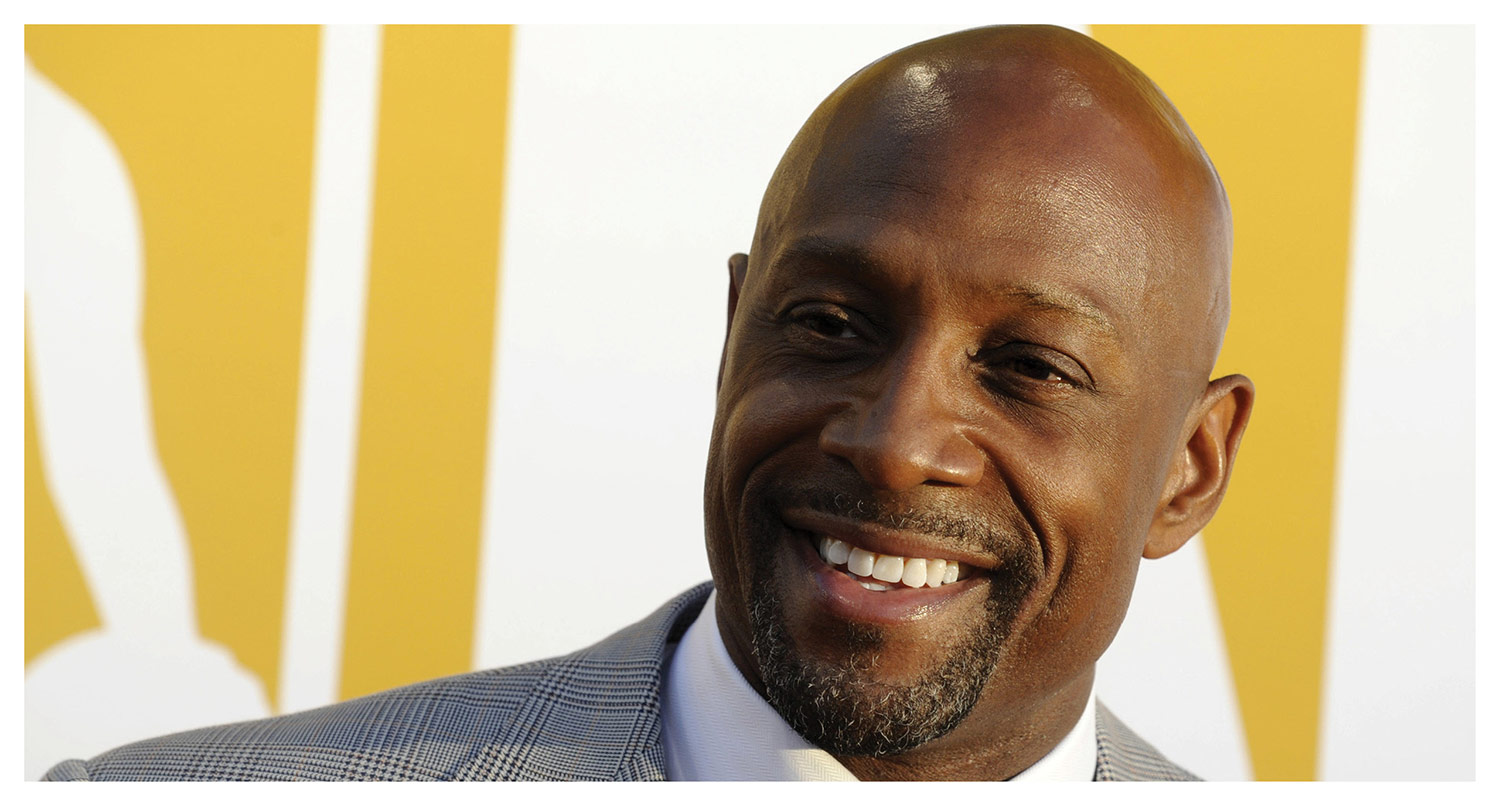

At 6-foot-10, no one would call him undersized by any means. But in a profession where he routinely battled against Shaquille O’Neal, Yao Ming, David Robinson and other giants, he had to push himself to greatness.
The result? In 15 NBA seasons, he was an NBA All-star seven times. In addition, he was a two-time Defensive Player of the Year (1999 and 2000), a gold medalist (2000 in Sydney, Australia), first-team All-NBA (1999) and an NBA champion with the Miami Heat in 2006.
After the Olympics, he was faced with a life-threatening challenge of a rare genetic kidney disease that required a transplant. A cousin gave him a transplant, but he missed a full season and briefly retired in 2003 before his unprecedented return.
The ferocity, grit and determination were written all over his face on the court. He was raised on “Hoya Paranoia” at Georgetown University; an us-against-the-world mentality where team goals came first and everyone else was held at arm’s length.
Yet Mourning, now 56, is part of a wave of retired athletes who consistently give back. Mourning has been instrumental in raising more than $50 million through the Mourning Family Foundation. The Overtown Youth Center opened in 2003 to provide after-school and summer programs in the downtown Miami neighborhood. In fact, North Miami has been the home of Alonzo and Tracy Morgan High School since 2009.
Perhaps his biggest project is more than 200 miles north in the small town of Bradenton.
Where did one of the toughest players in NBA history find the inspiration?

“I have a responsibility to pay it forward. Otherwise, I’d be doing the people that got me here a disservice if I didn’t.”
One of those seniors was Fannie Ella Reid Threet.
When Mourning was 10, his parents divorced, and he spent crucial developmental years in foster care. Threet was “a retired schoolteacher [who] fostered 49 kids in her lifetime. A very faith-based woman. She instilled all that in me at the age of 12 when she took me in. I was with her for six years, and I ended up being the No. 1 high school player in the country.”
The lessons of Threet as well as Georgetown coach John Thompson were guiding forces in his life.
Among those lessons: what to do when basketball is over.
Said Mourning: “We’re on our 15th project, and it’s very fulfilling for me, but knowing that I’m providing a home environment, especially for our seniors, that they can age with grace and dignity… Here in South Florida, you’re spending well over half your income just on rent.”
In his current role as vice president of player programs and development for the Miami Heat, Mourning often comes in contact with current NBA stars. What does he tell them about giving back?
“The spirit of giving back is taking hold with our next generation,” Mourning said. “I’m speaking from the perspective of an executive with the Miami Heat for 16 years. I couldn’t be prouder. These guys leave here, and they leave this organization understanding, not just how to be a professional on the court but also off the court and being responsible to the community as well.”


arcus almost quit. Not his job. His faith. He had been a deacon for 11 years, read his Bible most mornings, and showed up to church every Sabbath without fail. But somewhere along the way, without noticing it, he had stopped growing. The routines were still there. The roots were not. “I was going through the motions,” he said. “I knew all the right words. But I didn’t feel God anymore.”
Maybe you recognize something of Marcus in yourself.
Jesus made the same distinction with the seeds in Matthew 13. Some fell on rocky soil and sprang up quickly. They looked healthy at first. But when the sun came, they withered, because they had no root. Shallow soil can produce growth that looks real without being deep. And shallow growth cannot survive the storms of life.
The invitation in Scripture is never just to practice. It is to be deep; implanted. Roots grow in the dark, under pressure, unseen. That is exactly where God does His deepest work in us.
This is the paradox of spiritual discipline. Prayer, Scripture, meditation, Sabbath, silence, fasting, worship, these are not performances for God. They are the root system of the soul. They are how we reach Living Water in the dry seasons. They work, not because they are impressive but because they are persistent.
He started small. Five minutes of silence before opening his Bible. Writing one sentence in a journal after reading. A Sabbath afternoon walk with no agenda but gratitude. Nothing dramatic. But over several months, something shifted. “I started hearing God again,” he said. “Not in big moments, in the small ones. That’s where He was all along.”
Spiritual depth is not achieved in a weekend retreat, though retreats can help. It is built in the dailiness of choosing, again and again, to turn toward God before turning toward everything else. It is the quiet, unhurried practice of being with Him, not to get something, but to know Someone.
This is what it means to be rooted. Not perfect. Not dramatic. Just deep. The tree in Psalm 1 doesn’t strain or strive. It simply grows because it is planted by the water. That is God’s invitation to you this season. Not to try harder. To go deeper.
Plant yourself. Stay there. Search. Persist. Watch what grows.

Research on spiritual formation confirms what scripture has long established: small, consistent practices reshape us more effectively than occasional intense experiences.
Neuroscientists call this “habit stacking.” The soul calls it discipline. Psalm 1 describes the blessed person not as one who prays perfectly but as one who meditates day and night. Consistency beats intensity. Depth beats duration. You don’t need more time, you need more intention and persistence.

One practice you can start today with no special equipment required:
Try the ROOT Method this week.
- Read one passage slowly, twice.
- Observe one phrase that stands out and write it down.
- Operationalize it: what does this reveal about God and say to me?
- Talk to God about what you read, in your own words, for two minutes. That’s it.
Ten minutes total. Do it five days in a row. Roots don’t grow in a day, but they do grow when you keep showing up.

Lord, I confess that I have sometimes mistaken busyness for rootedness, activity for intimacy. Today, and in the future, I choose to go deeper. Plant me by still waters. Let my roots reach past routine into relationship. When life is dry, let me draw from You. Not because I have earned it, but because You are the Source, and I am thirsty. Grow me. Ground me. Keep me. Amen.


- healthy choices
- strong relationships
- sickness and disease prevention

The historical context of this situation can’t be ignored. The legacies of slavery and exploitation of labor have resulted in modern health crises, exacerbated by the high consumption of processed foods, particularly sugar.
The seminal work, “Sweetness and Power: The Place of Sugar in Modern History,” (S.W. Mintz, 1985.) examines the historical significance of sugar. The book traces sugar’s origins in slavery and how it became a staple in Western diets. It particularly focuses on sugar’s detrimental health effects on populations, including black communities, that have long-suffered from the consequences of high sugar consumption.
Deliverance, rooted in wellness, takes a stand against these systemic challenges. It promotes a wholistic approach to overcoming issues like sugar addiction through lifestyle changes that empower individuals and communities.
to the South
to the South
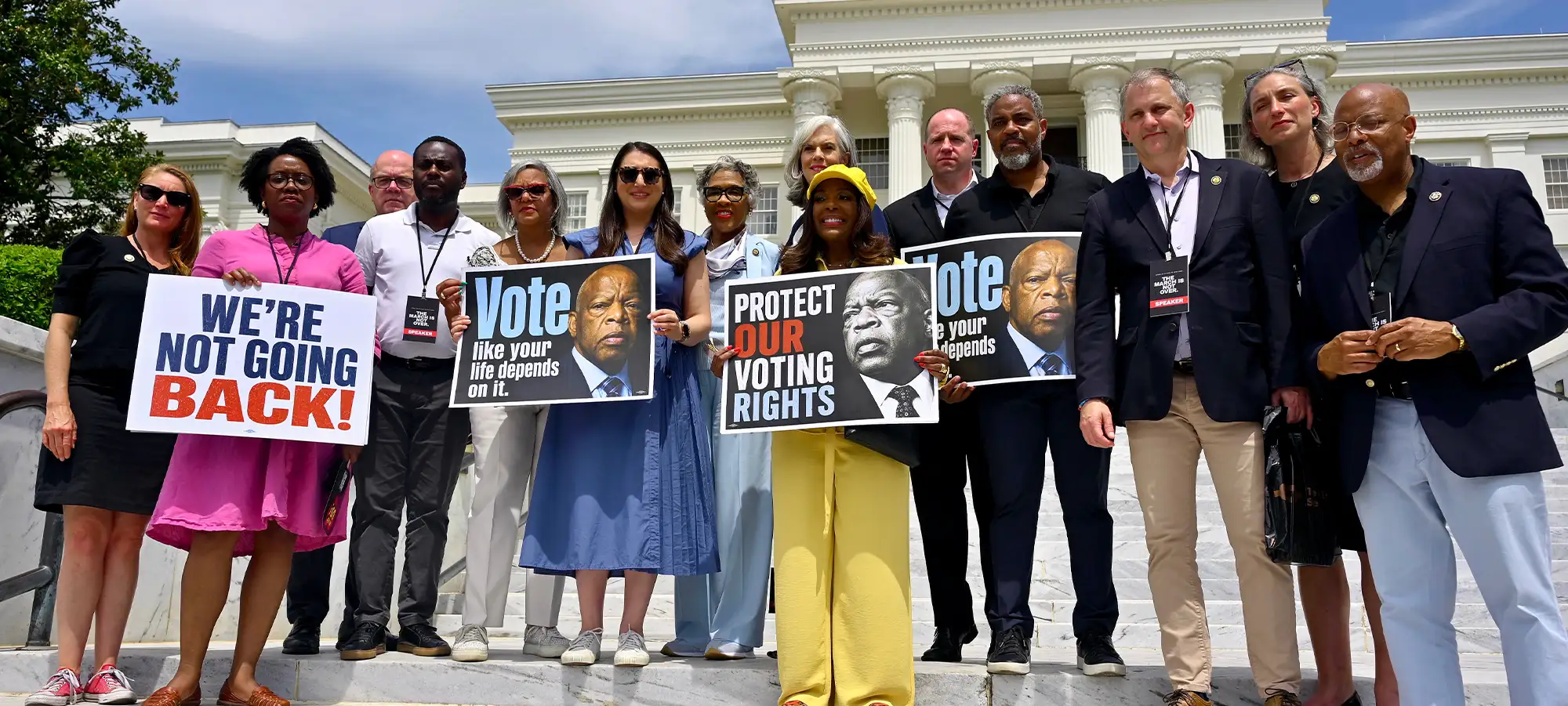
This intensely energetic rally of an estimated 5,0000 people carried the spirit of unity, and reconciliation. From behind the bullet proof shields, hundreds of police officers, and the sweltering heat, I could feel the echoes of Selma, the Civil Rights Movement, and the unwavering faith of those who believed love and righteousness would ultimately outlast even the most complex and sophisticated hatred(evil).
Those echoes reminded me that the fight for dignity, voting rights, equality, and humanity is not merely political it is spiritual warfare rooted in divine purpose.


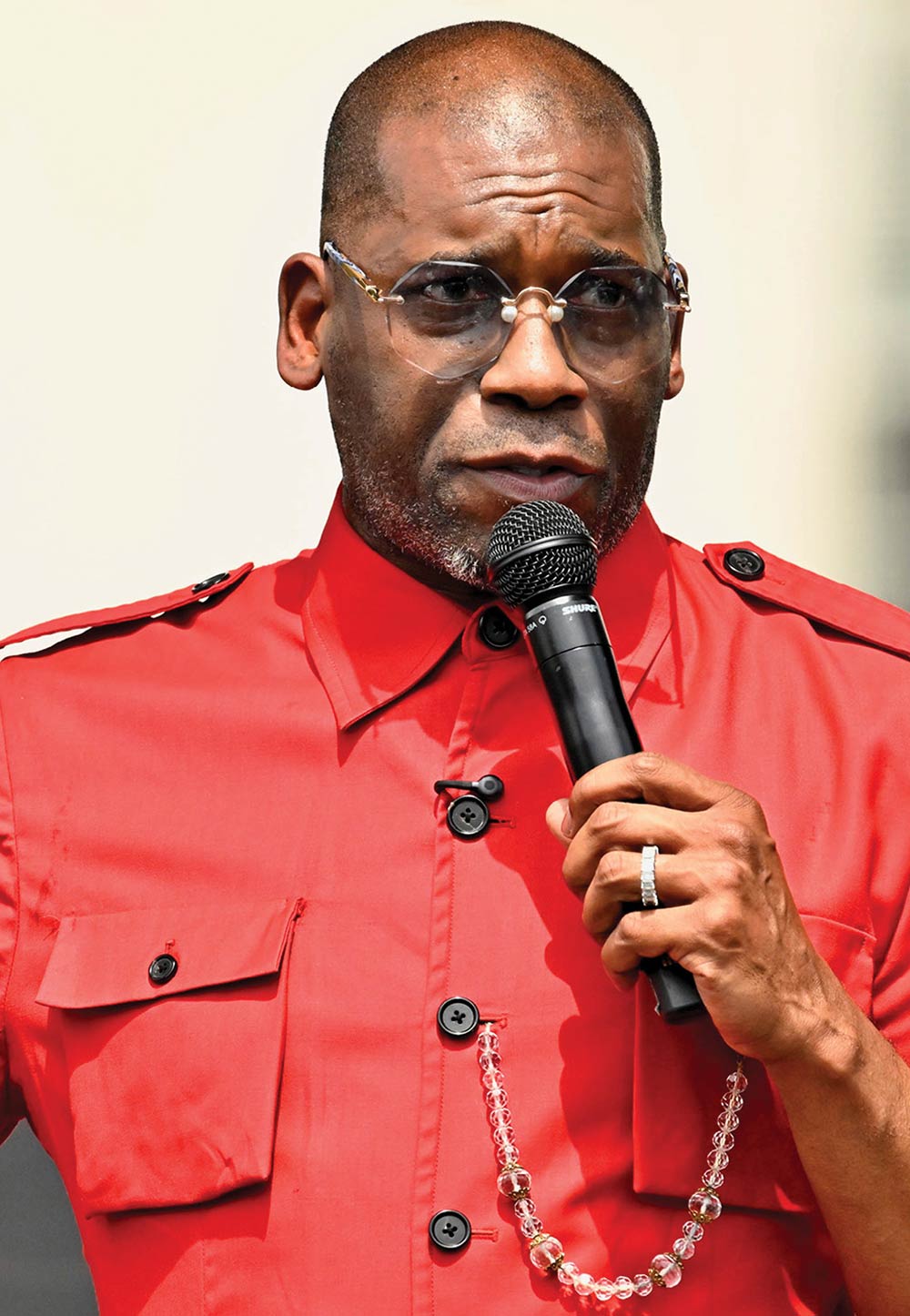

Justin Pearson: “You Can rig a Mop but you can’t rig a movement”
Ayanna Pressley: ”Freedom is never really won. Every Generation must earn and defend it for the next.”
United States Senator/Pastor Raphael Warnock, Senator Corey Booker and Pastor Jamal Bryant each encouraged everyone to stand proudly for all people to Stand for Going Forward!


“All Roads Lead to the South” was truly a call back to the heart of faith, community, and the power of people united under God. It represented no living off the grid, standing with one voice, one mission, and one hope.



This small Latin/Hispanic congregation, mostly women, was in one of two evangelistic series Escalante had been nurturing for weeks. The Allentown group grew out of a friendly food-pantry ministry.
Until the last two years, Escalante’s ministry as an evangelist and coordinator for immigrant populations was overwhelmingly positive. Now, under the current policies of the Trump administration, coupled with anti-immigrant sentiment, observers calculate real-time impact on the immigrant communities. The conflict and potential threat to the practice of their faith, in the United States, a place of refuge, is significant.
“Since January 21, 2025, there has been a significant shift toward faster removals, broader enforcement priorities, and less flexibility in adjudications,” according to Andrea Stewartson, of Robinson, Kirlew & Associations, PC, a Maryland law firm practicing immigration law.
- Many asylum seekers watched the system close them out with internal processing now largely frozen. Other forms of humanitarian protection, such as Temporary Protected Status (TPS) and humanitarian parole programs are being withdrawn, or restricted.
- Applications for visas and work permits now bring heightened scrutiny and suspicion.
- Agencies such as United Sates Citizenship and Immigration Services, (USCIS) or the Department of Homeland Security (DHS) both increased fees, or created new fees, setting some of them out of reach.
- Undocumented immigrants among us, now live in fear of Immigration and Customs Enforcement (ICE) raids in public spaces and private homes.
- An arrest could lead to detention at an undisclosed location for an indefinite period of time, or deportation to another country altogether.
According to Escalante, the evangelist and pastor, the fallout on his flock is significant. Church attendance fell 25% in the last two years. He’s witnessed the loss of 300 members to deportation, mostly Hispanic and Haitian members.
Churches and small groups now hide in plain sight, in rented spaces where the members of the host church have promised to stand in the doorways to put a white, “All-American” face on the church in case government agents come knocking. Escalante supports several pastors in their creation of a network of small groups, house churches, where families can come together, quietly, to pray.
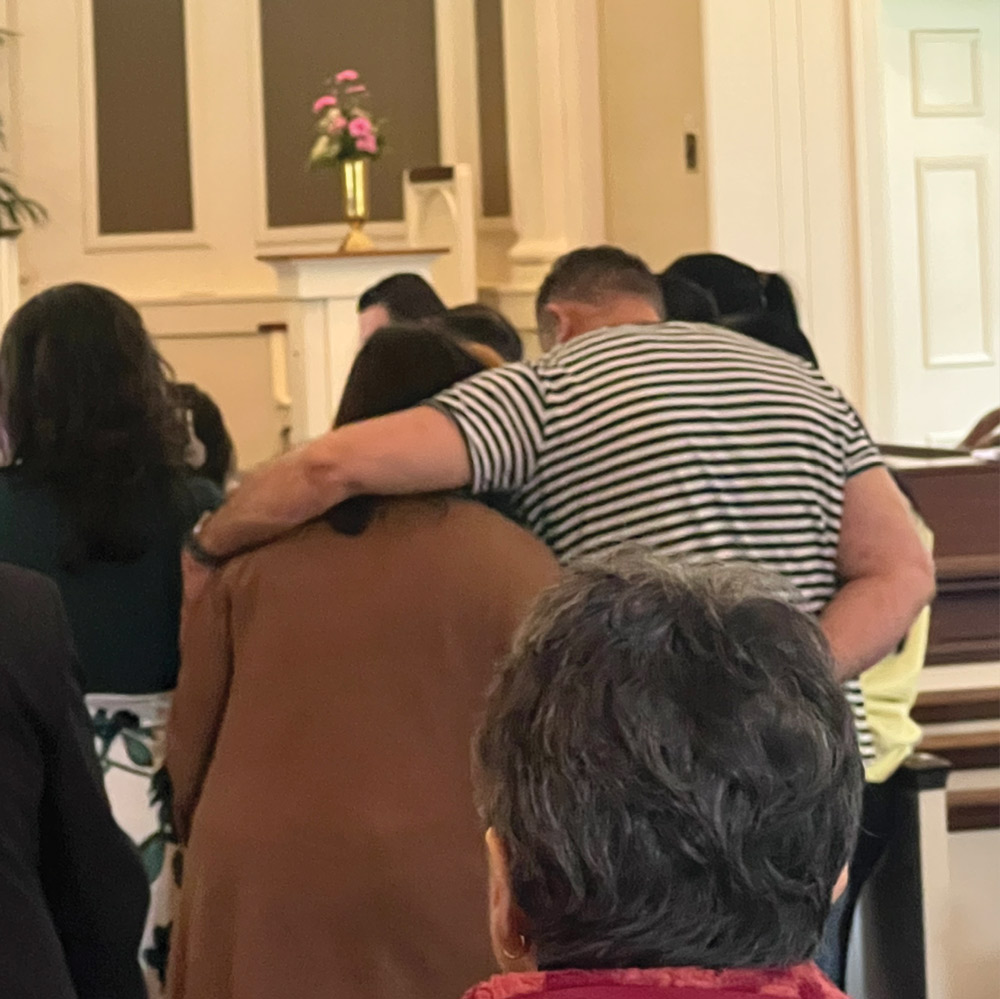
So, Escalante has countered the persecution — his word — through prayer, fasting, teaching and preaching even harder. Against this backdrop, the Spirit was moving through his appeal that Sabbath morning. One woman caught the eye of the local pastor, her tears betrayed her calm exterior as she sat glued to her seat, nestled close to her husband. Jesus was calling, but to what?

“Jesus Was a Migrant” aims to highlight the tension between Christian faith and current U.S. immigration policy by showing how Christians are celebrating the suffering of migrants at the border. He explained that the film challenges viewers to consider whether they truly see Jesus in migrants and whether their actions align with their religious beliefs about treating the “least of these” with compassion and mercy.
“When you look at the movie poster, you’ll see it says 270,000 migrants were locked out in a day,” said Tisby. “Many of them were Christians, so were the people celebrating.”
Many of the migrants to which Tisby referred were asylum seekers, and the very nature of their claim is that they are seeking to escape persecution because of their race, or religion, or beliefs, or political activities. In one day, however, claims that were already in process of being reviewed were frozen, and seekers locked out of the government app, with no warning, and no alternative.
“And it brings us all the way back to Matthew 25: … “Whatsoever you did for the least of these, my brothers and sisters, so you did to me” quoted Tisby.
“And it’s like, do we see Jesus in the migrants at the border? Do we believe this religion that we profess, because if we did, it’s not that we would have open borders, it’s not that we wouldn’t have any rules at all, but we’d certainly treat people more humanely, we’d treat people more mercifully, we’d treat people with more compassion. The other thing I get fired up about is, folks have these caricatures of migrants, particularly at the southern border, where the current president began his campaign in 2015 by saying they’re sending criminals and rapists over the Mexican border, right? And that image has stuck with too many people.
“Christians ought to know better. We ought to, at least do our homework, and make sure that we understand what’s happening here.”
“One county in Pennsylvania? No one pays property tax because of the facility” said Dionne-Lanier.
In large facilities, such as a the Farmville Detention Center, in Farmville, Virginia, observers notice there are plenty of officers at work. Same thing in other large centers such as the one in Louisiana, about an hour and a half from New Orleans. Communities are looking at this as job opportunity, never mind the impact on family or the detained individual who will be isolated from family.
Americans have also become desensitized to the warehousing and processing of immigrants.

Yet, even Amazon packages have it better — at least they can be tracked, and arrive intact most of the time. Conditions in the detention centers are horrible, said Dionne-Lanier, citing everything from overcrowding, lack of medical care, infestations of bed bugs, lack of showers, lack of phones, and lack of toilets. Adding to the distress of those who are incarcerated and their families is the indefinite time frame for detention. Three months is the average detention, but it depends upon the country of origin. Some detainees are stuck for six months to a year, and still for others, the appeals process could take years. Detainees, understandably then, want to know only this:
“Why am I still here? How do I get out?”
The desensitization and tolerance of the conditions is powered by classic, American, or nativist tropes, and requires Christians and Americans to wrestle with foundational ideas and beliefs about humanity. Traditional complaints regarding immigrant communities are that they bring “[d]isease, poverty, and crime; racism holds all three of them” explains Brianna Nofil, who wrote “The Migrant’s Jail.”
“The question of which outsiders the United States had an obligation to was inseparable from ideas of who was too poor, to radical, too sick, and above all, too racially different to be a citizen,” wrote Nofil. “Detention was most politically popular when it involved eliminating people deemed racially unassimilable or unfit for citizenship; people whom many Americans imagined might belong in jail.”

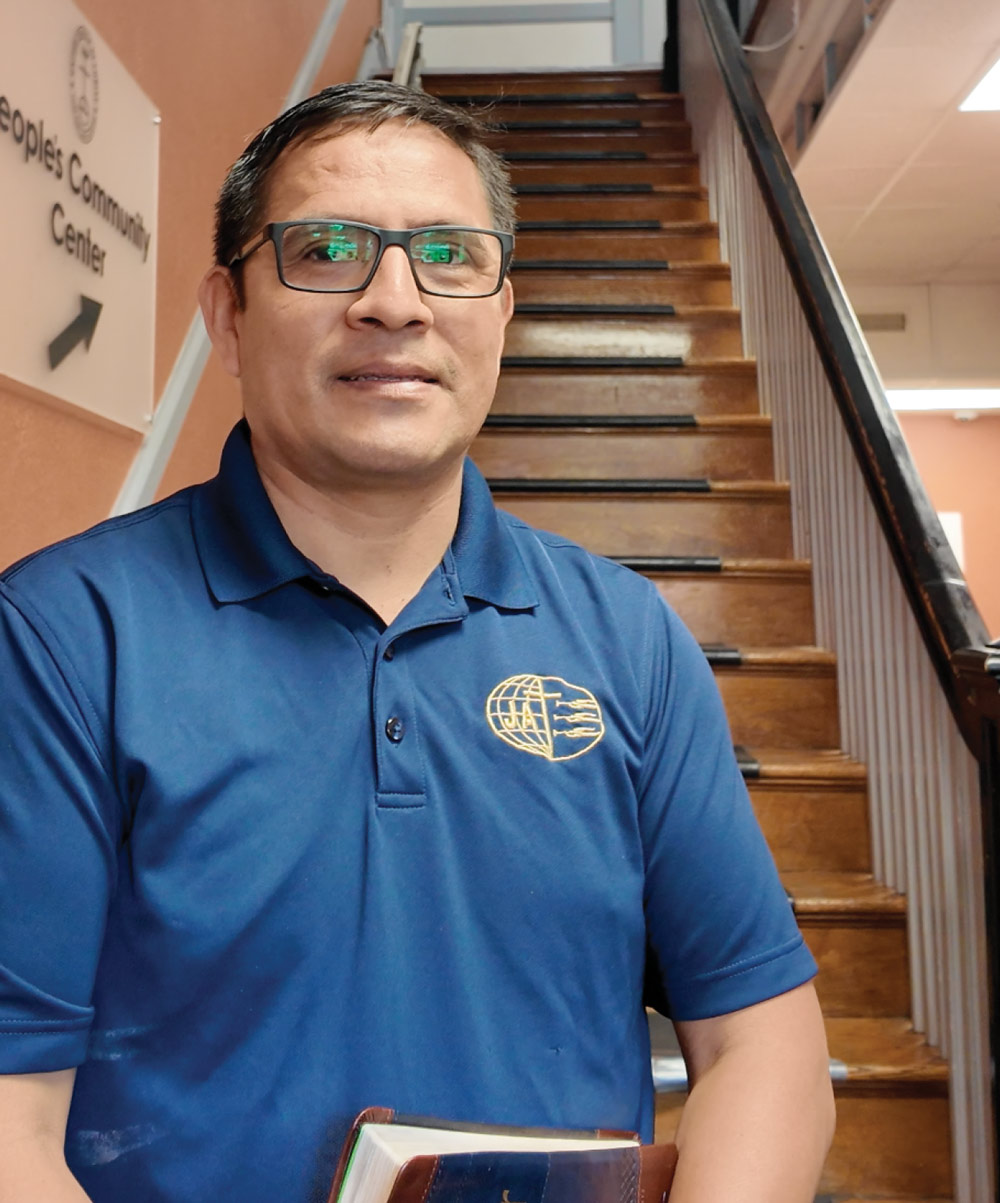
The pastor, Luis Estrada, originally from Peru, rotates among the nine small groups in the area. He supports his scattered flock by raising needed funds, and keeping the members encouraged. Estrada frames these kind of “difficulties” prophetically. They are part of the ongoing battle between good and evil, in which sometimes God’s people would be severely challenged, yet are encouraged to remain faithful.
So far one man in their collective church has been taken by ICE.
“Thank goodness, only one,” said Borrayes, a wife and mother. “We always pray that immigration doesn’t take anybody from our church. We’ve heard they’ve been in the area.”
Borrayes’ 10 year-old daughter Melissa translates for her.
“She said she worries sometimes, but believes God will protect us. If they do take us, it’s all in God’s plan.”

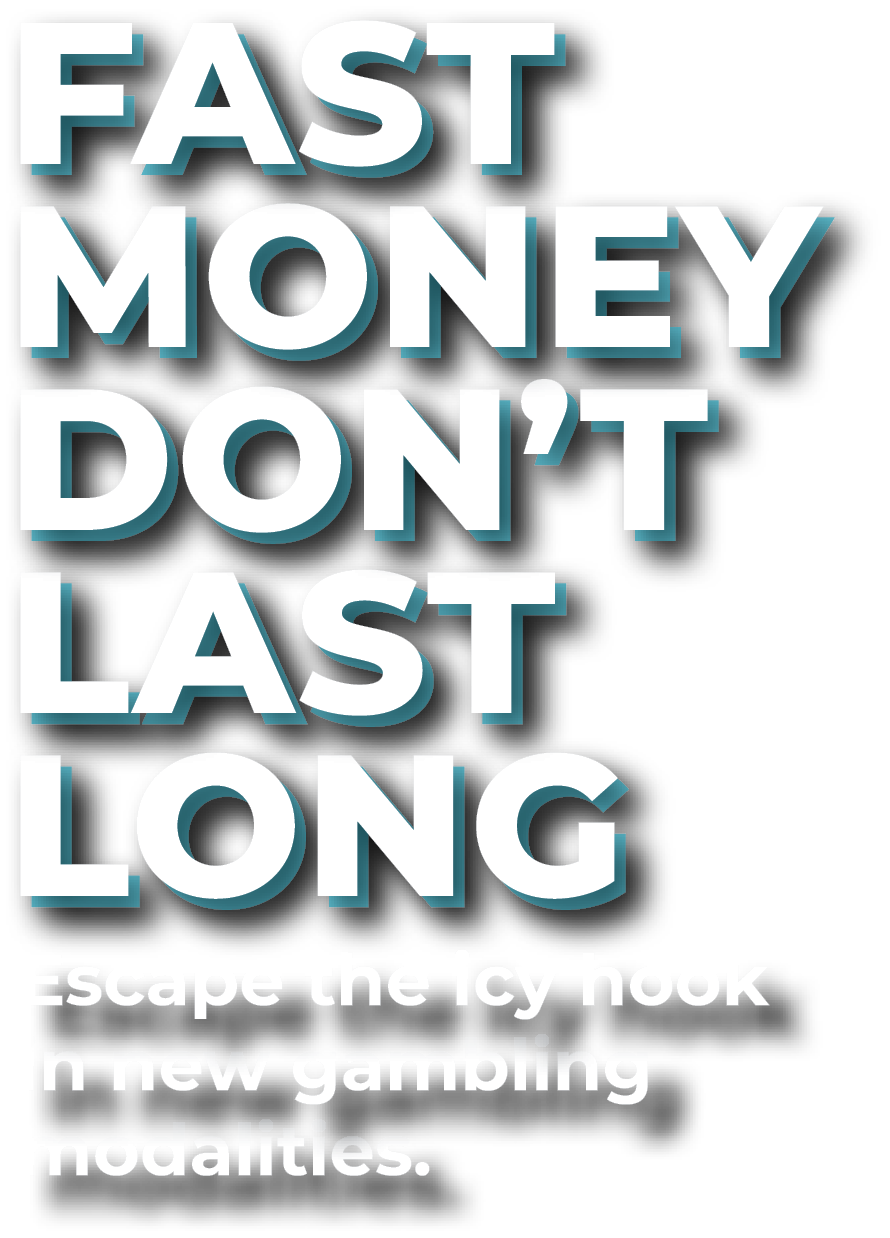
Money
Don’t
Last
Long
Anthony grew up in Cleveland, Ohio, the kind of neighborhood where the check-cashing store opened before the library did and the lottery machine at the corner store was never without a line. He watched his mother stretch a paycheck across two weeks like a piece of fabric that was always a little too small for what needed covering. By the time he was grown, Anthony had decided one thing with everything in him: he was not going to live like that. He was going to find a way out.
The first time he walked into a casino was to celebrate a coworker’s birthday. He was 26. He sat down at a blackjack table, put down $60, and walked out two hours later with $900. He called his mother on the way to the car.
“Mama, I think I found something.”
She didn’t say much. She’d seen that look before — not on his face — but in his voice. The way a man sounds when he thinks he’s finally found the door.
Ask anyone who’s ever received a windfall they weren’t prepared for; an unexpected tax return spent before the month was out. An inheritance that evaporated within a year. A bonus that felt enormous on Friday and was gone by the following Sabbath. It’s not that people are irresponsible. It’s that money without labor attached to it doesn’t carry the same weight in your hands. You didn’t feel it leaving because you never really felt yourself earning it.
That principle sits at the very heart of gambling, and it’s worth naming before we go any further.

Money
Don’t
Last
Long
Anthony grew up in Cleveland, Ohio, the kind of neighborhood where the check-cashing store opened before the library did and the lottery machine at the corner store was never without a line. He watched his mother stretch a paycheck across two weeks like a piece of fabric that was always a little too small for what needed covering. By the time he was grown, Anthony had decided one thing with everything in him: he was not going to live like that. He was going to find a way out.
The first time he walked into a casino was to celebrate a coworker’s birthday. He was 26. He sat down at a blackjack table, put down $60, and walked out two hours later with $900. He called his mother on the way to the car.
“Mama, I think I found something.”
She didn’t say much. She’d seen that look before — not on his face — but in his voice. The way a man sounds when he thinks he’s finally found the door.
Ask anyone who’s ever received a windfall they weren’t prepared for; an unexpected tax return spent before the month was out. An inheritance that evaporated within a year. A bonus that felt enormous on Friday and was gone by the following Sabbath. It’s not that people are irresponsible. It’s that money without labor attached to it doesn’t carry the same weight in your hands. You didn’t feel it leaving because you never really felt yourself earning it.
That principle sits at the very heart of gambling, and it’s worth naming before we go any further.
And more people are doing it than ever before.
In 2018, the U.S. Supreme Court struck down a federal law that banned sports betting in most states. Since then the industry has exploded. As of 2024, 38 states and Washington D.C. have legalized sports betting. The American Gaming Association reported that Americans wagered more than $119 billion on sports legally in 2023 alone, a number that would have been unthinkable a decade ago (State of the States, 2024. americangaming.org).
Apps like DraftKings, FanDuel, and BetMGM have made it possible to place a bet from your couch, your car, or during your lunch break. The casino used to require a trip. Now it lives in your pocket.
Increased gambling rates have followed. The National Council on Problem Gambling reported a 30% increase in calls to its helpline, between 2020 and 2023, from younger men, particularly black men, between the ages of 18 and 35, emerging as one of the fastest growing at-risk groups.

When most people hear the word gambling they picture a casino with slot machines, card tables, and the roulette wheel. But that’s only one face of it. There’s the lottery, scratch tickets at the corner store, Mega Millions on a Wednesday night, and the quiet ritual of picking numbers, that millions of Americans perform every week like a second offering. There’s sports betting, now so normalized that it’s advertised between plays on afternoon television. There are poker nights that start friendly and become something else. There are online platforms that operate around the clock and never close, never check the time, and never ask if you’re OK.
Each format is different in style. All of them run on the same engine.
Before we go further, let’s be honest; risk is not foreign to any of us. We take gambles every single day without calling it that. You took a risk when you chose your career. When you got married. Every entrepreneur who ever opened a business put money on an uncertain outcome. Every farmer who planted a crop in uncertain weather was betting on the rain.
The difference is that healthy risk is tied to effort, skill, and informed decision-making. When you study for an exam your risk is not purely chance. When you invest in a business you’ve researched, you’re not just spinning a wheel. The line between wise risk and gambling isn’t always clean, but it exists, and it has everything to do with what you’re actually in control of.

When you win, or even when you almost win, your brain releases dopamine. Dopamine is the chemical your brain uses to say that was worth it, do it again. It fires when you eat something delicious, fall in love, or accomplish something you worked hard for. It is one of the most powerful motivational forces in human biology.
Here’s the catch: gambling doesn’t just activate that system. It hijacks it.
Researchers have found that the dopamine surge from an unpredictable reward is actually larger than the surge from a guaranteed one. According to researcher and author Wolfram Shultz, your brain gets more excited by the possibility of a win than by a certainty. This is why the near miss — the slot machine that lands two cherries and then a blank — feels almost as thrilling as winning. Your brain treated it like a win. The machine was designed to make it feel that way.
Anthony described it this way, while sitting in a Gamblers Anonymous meeting two years into his recovery:
“I wasn’t even chasing the money anymore. I was chasing the feeling. The money was just the ticket to get back to the feeling.”
This is not a character flaw. This is biology. The gambling industry has spent billions studying exactly how the human brain responds to uncertainty and has engineered its products accordingly. The sounds, the lights, the near misses, the small periodic payouts that keep you in your seat, none of it is accidental. You are not weak for responding to it. You are human.
Over time though, repeated gambling changes the brain’s baseline. The nucleus accumbens, the part of the brain most tied to reward and pleasure, becomes desensitized. Ordinary life starts to feel flat. The only thing that cuts through is the next bet. Researchers call this tolerance, the same process that occurs in substance addiction. The DSM-5, the official diagnostic manual used by psychiatrists, now classifies gambling disorder alongside substance use disorders for exactly this reason.
Studies show that people with gambling problems consistently overestimate their ability to control outcomes, what researchers call the illusion of control. They develop what’s known as the gambler’s fallacy, the belief that a string of losses makes a win more likely. They chase losses not because they are reckless but because the brain, flooded with stress hormones and craving relief, genuinely cannot calculate long-term risk the way it normally would. The prefrontal cortex, your brain’s rational decision-maker, gets outgunned by the limbic system, where craving and emotion live.

Research consistently shows that lower-income individuals spend a disproportionately higher share of their earnings on gambling, not because they are foolish, but because the industry targets them deliberately and because the psychological weight of scarcity makes the prospect of a windfall neurologically irresistible. (See the 2021 report: “Relationships between socio-economic status and lottery gambling across lottery types: neighborhood-level evidence from a large city.”)
Anthony knew this without knowing the research. “Growing up,” he said, “the lottery felt like the only investment plan anybody on my block had access to. Nobody was talking about index funds. They were talking about the numbers.”
Cognitive Behavioral Therapy, known as CBT, is the most evidence-based psychological treatment available for gambling disorders. It works by targeting the distorted thinking patterns that keep a gambler locked in the cycle: the illusion of control, the gambler’s fallacy, the compulsion to chase losses. A therapist trained in CBT doesn’t just tell you to stop. They help you understand why you started, what the behavior was doing for you emotionally, and what needs to replace it. A 2012 meta-analysis in “Clinical Psychology Review” examining 22 randomized controlled trials found that CBT produced significant, lasting reductions in gambling behavior with gains holding at a 12-month follow up.
Gamblers Anonymous (GA) works on a different but equally powerful level. When you sit in a room with people who have lost what you’ve lost and found their way back, something happens that no clinical definition can fully capture. You stop feeling like a moral failure and start feeling like a person in recovery. That distinction is everything. A 2014 Cochrane Review found GA participation produced outcomes comparable to formal therapy in certain subgroups, particularly when combined with other treatments.
For those who cannot access therapy right now, the National Council on Problem Gambling operates a 24-hour helpline at
For some people it was about escaping a life that felt too small. For others it was about proving something; to themselves, to a father who said they’d never amount to anything, or to a neighborhood that taught them the only way out was luck. For many it was about poverty, the bone-deep exhaustion of never having enough, and wanting — just once — to exprience what abundance feels like.
When you find the root, you can address it directly. And here is something the recovery community has learned that our churches would do well to apply: the dopamine pathway that gambling hijacks does not disappear when you stop gambling. It needs somewhere to go.
High-intensity exercise produces real, sustainable dopamine. So does creative work, entrepreneurship, mentorship, athletic competition, music, and building something with your hands. The person drawn to the high-stakes energy of a poker table often has exactly the risk tolerance, strategic thinking, and competitive drive that makes a remarkable businessman, coach, or community organizer. The gambler’s personality is not the problem. The channel is.
Now let’s talk about the church. Prayer matters. Fasting matters. Laying your burden down at the altar on Sabbath morning matters. The spiritual dimension of addiction and recovery is real and no clinical study can fully quantify it. We believe in a God who heals, who restores, who meets people in their lowest moments and calls them by name.
But James 2:17 does not leave us room to stop there. Faith without works is dead. And in the context of a gambling disorder, a condition with documented neurological roots, measurable psychological dimensions, and evidence-based treatments, means getting help from someone licensed and trained to give it.
Anthony is back in church now. He says the most powerful thing his pastor ever did was ask him, quietly, after a Sabbath service: “How are you really doing?”
That question changed his life more than any sermon. The person sitting in your pew this Sabbath, the one who tithes faithfully and laughs loudly at fellowship lunch, may be one bad night away from losing everything. What they need is not judgment from a distance. They need proximity. They need someone to ask the real question.
The gambler is, at their core, a person who believes something transformative is just around the corner. That the next hand, the next spin, the next ticket could change everything. That life doesn’t have to stay the way it is. That there is more available than what they currently have.
That instinct, stripped of the casino, stripped of the machine, stripped of the false promise could also be said of faith. Think about it.
Following Jesus has always been a high-stakes proposition. You lay down your old life with no guarantee of what the new one will look like. You bet everything on a promise you cannot yet see. You go all in on a God who asks for your whole heart, not just your Sabbath morning. There is nothing safe or predictable about genuine discipleship. It will cost you something. It always does.
The difference, the only difference that matters, is who is running the table.
The casino is engineered to take from you. Every light, every sound, every near miss is designed to extract. The house always wins because the house was built to win. You were never the point. Your money was.
God operates on an entirely different economy. He is not extracting. He is investing. He doesn’t take your all-in and pocket it. He multiplies it, refines it, and returns it to you in a form you could not have imagined when you sat down. The risk is real. The surrender is real. But the house you’re betting on was not built to take from you.
It was built to bring you home.
And unlike the lottery, that promise has never once come back void.



Thank God for friends who intervene. My friend insisted on a “Mommy day out.” I booked a salon appointment. I told the stylist to take her time because the wash, set, and trim felt ceremonial. For the first time in months, there were no urgent cries, no tiny fists grasping at my mumu. When I left the salon, my hair was long and flowing. I felt restored, in appearance and most importantly in spirit. When I returned home, I peeked into my daughter’s room. She was peacefully asleep. As I turned to leave, she stirred. Her eyes opened and immediately fixed on me. I could not resist those tiny eyes. I immediately picked her up, expecting the usual smile. Instead, she stared intensely. Her breathing deepened. Tears pooled in her eyes. Then she began to cry, and I mean she wailed.
“I’m here, baby girl, don’t cry.”
Then, the crying softened. That’s it. The visual cues she associated with me were gone without the bonnet and mumu. She did not recognize what she saw, but she responded to the familiar voice. My voice anchored her.
Attachment theory helps us interpret this moment. Infants develop internal working models that help them identify safety and familiarity. When a primary caregiver’s cues change, the attachment system activates. The nervous system scans for signals of safety. Research conducted by University of Wisconsin-Madison scientists (Social vocalizations can release oxytocin in humans. 2010) shows that a caregiver’s voice can regulate an infant’s stress response. Familiar vocal tones activate pathways associated with comfort and security. When cues deviate from what is familiar, anxiousness can increase.
Spiritually, many of us experience similar disorientations. We grow accustomed to recognizing God in certain forms, predictable outcomes, stable circumstances, even familiar patterns of blessing. However, when He shows up differently through conflict, illness, disappointment, or change, we have a hard time recognizing His presence. The storms of our experiences begin to ring louder than His quiet presence. In John 21, the Bible recounts an encounter with Jesus and His disciples that sheds more light on this idea of spiritual attachment.
The disciples, led by Peter, returned to fishing on the Sea of Galilee (Tiberias) after Jesus’ resurrection. They fished all night but caught nothing. At dawn, Jesus appears on shore, instructs them to cast their net on the right side of the boat, resulting in a massive catch. They see Him on the shore yet do not immediately know it is Him. It isn’t until they receive the blessings, in a pattern familiar to them, that they recognize it is Jesus.
How often do we miss God because He does not appear in the way we anticipated? We pray for resolution and instead are taken through a season of darkness, taken through a trial, taken through a long faith-staking process. We ask for clarity yet encounter ambiguity. We expect immediate relief and instead find ourselves in a prolonged waiting season, hoping that God will answer the prayers we have petitioned His throne for.
Adult attachment patterns often shape how we interpret these experiences.
- Those with anxious tendencies may interpret delay as abandonment, often asking the question, “Where are you God?”
- Those with avoidant tendencies may distance themselves emotionally when circumstances feel uncertain. They are no longer enthusiastic about God’s promises and become doubtful of His ability to answer prayers.
- Secure attachment, both relationally and spiritually, is built through consistent encounters with reliability. That is, over time repeated experiences of faithfulness to God teaches the nervous system how to respond when the existence of God’s presence is challenged. During those times God calls us to listen for His voice, rely on His promises, and trust His heart.
The disciples eventually recognized Jesus. They had the cognitive awareness that this blessing was extraordinary and one that can only come from the Lord.
“It is the Lord” Peter declared. This recognition came through memory, through the echo of previous encounters, through the familiarity with the blessings, instruction, and evidence of God’s hand.
My daughter eventually quieted in my arms. The tears subsided. My altered appearance no longer threatened her sense of safety because the sound of my voice was able to recalibrate and regulate her nervous system. She felt secure again.
When we experience uncertainty, God calls us to rely on the evidence of His sovereignty: the fact that we sinned yesterday yet we were able to wake up today in our right minds.
Secure attachment is achieved from high warmth, emotional stability, comfort, trust, and intimacy. Secure spiritual attachment occurs when our Heavenly Father demonstrates His sovereignty which in turn increases our safety, trust, and emotional resilience. God calls us to a secure relationship with Him, one that can only happen with daily surrender and a willingness to let Him lead our lives. When we can’t see Him, trust His heart and recognize His voice.



I don’t know about you, but when my kids were toddlers, they had no problem trusting in their daddy’s strength. When we traveled to different places, if they were tired of walking, they would reach out to me to pick them up and carry them the rest of the way. If we were at a park, and they wanted to get on the swing, they would look to me to push them so that they could go higher and higher.
If there was something scary, like a bug or spider, inside the house, they wouldn’t hesitate to call out to me to defend them from that scary thing. And while they knew that my wife, Gianna, would kiss their wounds, nurse them back to health, or nurture them with love only a mother could, it was their daddy who they trusted to do the heavy lifting.
There were times when, during our play, they would find themselves on top of slides, climbing walls or platforms, having ventured out on their own volition, and I would hear the famous phrase that every child utters at least once in their life:
“Daddy, catch me!”
And with little to no heads up for me, my children would launch themselves into the air with no worry or care because they were absolutely certain that I would keep them from hitting the ground.
And while I never missed, I was secretly more grateful than they were that they were safely in my arms. In fact, the biggest thing that struck me was that in their mind, there was no hesitation, no question about whether I would be able to do it. They knew that if they jumped, Daddy would catch them. That kind of unbiased trust and faith should be something we all strive for.
In Matthew 18, after the disciples inquired about who was the greatest in the kingdom of heaven, Jesus answered and said:
“Assuredly, I say to you, unless you are converted and become as little children, you will by no means enter the kingdom of heaven. Therefore whoever humbles himself as this little child is the greatest in the kingdom of heaven” (Matthew 18:3-4, NKJV).
My challenge to you is to have faith like children. We should unapologetically leap into the things that God has for us to do, knowing that our Father will catch us. So, whether you are wavering on the decision to go back to school, to write the book, change careers, or invest in your relationship, don’t stand on the edge hoping that He will catch you; have faith that He will.
Our Savior never disappoints us. He always catches us, and with our hand fully in His, He will take us higher and higher.

We invite you to watch Breath of Life.
There are many options to choose from…
Atlanta, GA | WATC-TV Channel 57
Huntsville, AL | WAAY-TV Channel 31
Memphis, TN | WANT-TV Channel 24
Montgomery, AL | WNCF-TV Channel 32
Phoenix, AZ | Good News TV • mygoodnewstv.com
Hope Channel
Three Angels’ Broadcasting Network (3ABN)
Word Network
YouTube – YouTube.com/c/breathoflifetv
Facebook – Facebook.com/breathoflifetv
BOL Website – breathoflife.tv/videos/



Depression is a widespread mental health condition that affects approximately 322 million people all around the world. It affects the way a person feels, thinks, and manages their daily activities.
- Name three strengths you have.
- List five people in your support circle that you could call if you were in need.

1 Kings 19

Read 1 Kings 19:1-3:
What caused Elijah to run away?
What fear causes you to panic, run, and hide?
Fear is a major contributor to depression. Fear is defined as a human emotion triggered by a perceived threat. Fear paralyzes and cripples us from doing and becoming who we are destined to be. In Elijah’s case, fear for his life caused him to run. In our lives, fear can lead to depression as we become aware of the thoughts of others regarding us, fear of loneliness, and the fear of things not turning out as planned.
Read 1 Kings 19:4:
How did fear of failure cause Elijah to fall into depression?
How have failures caused you to question your usefulness?
Elijah eagerly wanted to put an end to Israel’s adultery. This was a task that the prophets before him could not accomplish. Not reaching his goal made Elijah feel like a failure, useless. Sometimes we may be filled with so much passion and zeal as we try to accomplish a task, but due to challenges or obstacles, we do not get the desired result. When this happens there is a tendency to be very self-critical and believe our failure is a result of incompetence, not being good enough, or not working hard enough. However, this is not the case. You are not a failure; and though the desired outcome was not achieved, you should not give up on yourself but stay motivated and encouraged.
Read 1 Kings 19:5:
How did fatigue contribute to Elijah’s depression?
How has fatigue affected you and contributed to your own mental health condition?
Imagine running fearfully for your life and coming to a point where you fall asleep under a tree. This is significant because fearfully running for your life is emotionally taxing. Falling asleep beneath a tree shows Elijah’s level of exhaustion. Fatigue is often connected to depression.
Read 1 Kings 19:4-8: How did God care for Elijah during his moment of depression?
How have you dealt with your depression in the past? Has that method been helpful?
What lessons can we learn from God’s care for Elijah to help with your own depression?
How much time do you allow yourself to rest, not including your usual time to sleep?
Read 1 Kings 19:9-14: What invitation did God give to Elijah?
What lesson can you learn from this invitation?
How has speaking with someone helped with your depression?
Read 1 Kings 19:13-18: How did God give Elijah a new perspective?
How could talking with those you trust help you see your situation as more hopeful than you realized?
Review 1 Kings 19:13-18: God sends Elijah back to work. How might going back to work have helped Elijah’s progress towards depression recovery?
How might getting back to work and starting your daily routine help with your depression recovery?

What first step will you take toward your depression recovery?

Dear God, I pray that You help me to trust in Your love for me. Help me to know that I am not alone when I am at my lowest moments. God, help me to find Your light when I am in a dark place feeling hopeless and depressed. Help me to see my worth and my value. In Jesus’ name, amen.

The meal itself is simple: bread and drink, shared in community. Yet, its meaning is profound. Jesus institutes this practice on the eve of His death, not in a temple or public square, but at a table among friends. He chooses an ordinary act — eating together — to speak of extraordinary things. In doing so, He anchors faith not in abstraction, but in embodied, communal life.
The bread and cup direct attention to Jesus’ self-giving love. The bread points to His life given for others; the cup points to His faithfulness even unto death. But this remembrance is not mere recollection. In biblical thought, remembering is participatory. To remember is to reenter the meaning of an event and allow it to shape the present. The shared table becomes a space where Christ’s life and sacrifice are brought into lived experience again and again.

This practice also carries a moral dimension. To share the table is to acknowledge mutual belonging. Scripture consistently warns that the meal loses its meaning when it is detached from justice, humility, and love. The table confronts divisions of status, power, and exclusion. It reminds participants that reconciliation with God cannot be separated from responsibility toward one another.
The Lord’s Supper also holds future hope. Jesus speaks of the meal as anticipatory, pointing forward to a time when brokenness is healed and communion is complete. Each shared table becomes a small rehearsal for that promised future, where scarcity gives way to abundance and separation gives way to unity.
For some, including Adventists, this meal is accompanied by acts of humility and service, reflecting Jesus’ own posture toward others. These acts are not additions to the Supper, but expressions of its meaning: love that stoops, serves, and restores dignity.
For those exploring faith, the Lord’s Supper offers a glimpse of Christianity’s heart; a God who meets people not with spectacle, but with presence; not with demands, but with invitation. For those who follow Christ, it becomes a recurring reorientation, a call to live nourished by grace and shaped by self-giving love.


 rom the beginning, the movement formed around Jesus is marked by shared responsibility and diverse contribution. Christianity understands this not as organizational strategy, but as spiritual design. Jesus continues His work in the world by sharing it.
The New Testament presents spiritual gifts not as signs of spiritual rank or personal importance, but as expressions of Christ’s ongoing presence. After His resurrection, Jesus does not centralize authority in one figure or location. Instead, He entrusts His mission to a community and equips its members in different ways. Teaching, healing, leadership, service, encouragement, wisdom, creativity, and care all emerge as ways Christ’s life takes shape through human lives.
These gifts are not earned through merit, nor do they belong to individuals as possessions. They are given for the benefit of others. Their purpose is not self-expression but mutual flourishing. When gifts are used to elevate individuals or control communities, they distort their original intent. When they are exercised in humility and love, they reveal the generosity of Christ.
Jesus Himself models this pattern. He teaches crowds, but also listens to individuals. He confronts injustice, but also prepares meals. He speaks truth boldly, yet withdraws to pray. His life resists reduction to a single role. In sharing His work through diverse gifts, Jesus invites others into the same balanced wholeness.
These gifts are also dynamic. They develop through practice, accountability, and growth. They can be neglected, misused, or misunderstood. For this reason, Scripture places gifts within the context of community discernment rather than individual claim. Christ’s work remains Christ-centered when gifts serve love, truth, and healing rather than ego or ambition.
The Spirit’s distribution of gifts also guards against uniformity. Not everyone is called to do the same thing or serve in the same way. Unity does not require sameness. It requires shared orientation toward Christ’s mission.
This matters because many people have experienced religious communities where a few voices dominate and others are silenced or sidelined. Jesus offers a different vision. His community is participatory, not hierarchical; collaborative, not competitive.

 n Scripture, prophecy is less about forecasting the future and more about clarifying the present. Prophets speak into moments of confusion, injustice, or drift, calling people back to faithfulness, humility, and trust in God. Their role is not to replace Scripture or conscience, but to sharpen them. They function as witnesses, pointing away from themselves and back toward God’s revealed will.
Jesus stands as the fullest expression of this prophetic role. He speaks truth without compromise and compassion without dilution. He confronts religious hypocrisy, exposes misuse of power, and calls people to lives shaped by justice, mercy, and trust. Every prophetic voice that follows finds its meaning and measure in Him. If prophecy does not align with the character and mission of Jesus, it loses its authority.
Christian Scripture affirms that this prophetic function continues within the life of the community, not as a single controlling voice but as a gift meant to serve. Prophetic guidance does not exist to elevate individuals or to introduce new foundations of belief. Its purpose is to call people back; to Scripture, to Christ, and to faithful living when clarity is needed.
Within Adventist history, this prophetic role has been recognized in the ministry of Ellen G. White. Her writings are understood not as an alternative source of truth or a replacement for the Bible, but as a guiding voice that consistently directs attention back to Jesus, Scripture, and ethical responsibility. Her work addresses practical faith, moral accountability, and the lived implications of following Christ in complex times.
Importantly, Adventist understanding resists the idea that prophecy creates hierarchy. The prophetic voice does not stand above the community or override conscience. It serves the community by offering counsel, warning, encouragement, and perspective, always subject to Scripture and always accountable to Christ.
Prophecy also resists stagnation. It unsettles the temptation to reduce faith to comfort or tradition. It calls communities to examine whether they are reflecting Christ’s character or merely preserving identity. In this sense, prophecy is an act of care. It refuses to let drift go unchallenged.
This matters because communities often confuse certainty with faithfulness and tradition with truth. The prophetic voice interrupts that confusion. It reminds people that faith is not static and that allegiance to Christ requires ongoing discernment.
For those exploring faith, this vision of prophecy reframes it as guidance rather than control, invitation rather than threat. For those who follow Christ, it offers humility; an acknowledgment that even sincere communities can lose clarity and require correction.



In the Bible, God’s law is not introduced as an arbitrary list of demands, but as a reflection of who God is. It describes what love looks like when lived with integrity; how relationships function when trust, faithfulness, and respect are honored. Law, in this sense, is relational before it is moral. It protects life rather than restricting it.
Jesus embodies this law rather than discarding it. He does not treat God’s commands as obstacles to compassion or as tools of control. Instead, He lives them fully. His life reveals that obedience rooted in love is not burdensome, and that holiness expressed through compassion is not contradictory. Where religious leaders used law to exclude and condemn, Jesus uses it to heal and restore.
This is why Jesus insists that the law’s meaning is fulfilled, not canceled, in love. He exposes interpretations that preserve rules while abandoning people. He shows that obedience detached from mercy becomes distortion. At the same time, He resists the opposite error: dismissing moral responsibility altogether. Love, as Jesus lives it, is not permissive or vague. It is faithful, truthful, and accountable.
In Christian understanding, the law does not save. It cannot heal broken trust or restore fractured hearts. That work belongs to grace. Yet the law still matters because it reveals what a healed life looks like. It gives shape to love. It offers moral clarity in a world where truth is often negotiated for convenience or power.
Adventist theology emphasizes that God’s law remains relevant not because God is inflexible, but because love does not change. Honesty, faithfulness, reverence for life, respect for others, and integrity of desire are not cultural artifacts; they are expressions of God’s enduring character. In Jesus, these qualities are not imposed from outside but written into human life from within.
The law also functions as a mirror. It exposes where love has fractured, where harm has replaced care, and self-interest has replaced trust. This exposure is not meant to produce despair but to direct people back to grace. Law without Christ condemns; law interpreted through Christ clarifies and heals.
For those exploring faith, this reframing shows that Christianity is not opposed to moral clarity, nor obsessed with control. It seeks alignment between belief and life — truth lived with compassion. For those who follow Christ, it guards against both legalism and moral drift. Love without truth loses direction; truth without love loses credibility.

In Scripture, rest is woven into creation itself. Life is not designed for endless output. The rhythm of work and rest reflects God’s own pattern, not because God grows weary but because humanity needs space to remember who they are and who sustains them. Rest becomes an act of trust rather than withdrawal.
Jesus stands at the center of this vision. He identifies Himself as the Lord of the Sabbath, not to diminish its importance but to reveal its meaning. In His life, rest is never separated from compassion. He heals on the Sabbath, restores dignity, and confronts systems that protect rules while neglecting people. In doing so, He reveals that Sabbath rest is not inactivity, but restoration.
The Sabbath speaks to freedom. It interrupts cycles of control, exploitation, and endless striving. By ceasing from ordinary labor, people declare that life is not held together by constant effort alone. Provision comes from God, not from relentless productivity. This weekly pause becomes an embodied protest against systems that measure human value by output.

Importantly, Sabbath rest is not private or escapist. It carries social implications. It creates space for equality by granting rest to all, regardless of status, wealth, or power. It resists accumulation at the expense of others and honors limits that protect life. In this sense, the Sabbath stands quietly against injustice without spectacle.
Jesus also reframes rest inwardly. True rest is not merely cessation of activity, but release from fear and self-justification. He invites people into a deeper rest, a rest of conscience, rest of identity, rest from the need to prove worth. The Sabbath becomes a lived reminder that grace, not performance, defines belonging.
This matters because burnout, anxiety, and fragmentation are not just personal struggles, they are cultural conditions. The Sabbath offers a different way of inhabiting time. It reminds people that they are more than what they produce, and that life is sustained by gift rather than control.


When the world is shaking, some freeze. But others move. They don’t wait for conditions to calm; they leverage the storm. They know that downturns, disruptions, and disorder are where opportunity gets loud for those with vision and nerve.
This is not theory. This is movement. This is what it looks like when chaos becomes capital.
She didn’t wait for the market to recover; she made her own. Now, she services busy professionals, seniors, and church mothers who can’t get out easily. Her business doubled in 18 months.
“I lost a paycheck but gained my purpose,” she says. “That’s what faith does; it opens doors in walls.”
Now they’re hired by churches, nonprofits, and alumni groups to run seamless digital gatherings. Their overhead is low. Their impact is high. And it all started with one chaotic summer.
“I didn’t grow up learning this,” he says. “But I grew into it. And now my money works even when I’m asleep.”
- Crisis reveals gaps. Vision fills them.
- Micro-movements — one product, one idea, one connection — can open up major financial pathways.
- Volatility isn’t just something to fear; it’s something to read.
- Emotional, spiritual, and economic preparedness can turn a breakdown into a breakthrough.
We’ve seen it before. Our people have turned cotton fields into freedom trails, red lines into storefronts, grief into gospel. Why stop now?
From chaos to capital. That’s the assignment.

- What’s one moment in your life when chaos forced you to pivot, and what did you learn about your own capacity?
- How did your faith or instincts guide that shift?
- Marissa turned a job loss into a thriving business. What hidden gifts or skills might you be underutilizing right now?
- What area of your finances or work feels uncertain, but could hold potential if you approached it differently?
- Where is fear stopping you from seeing opportunity?
- The Kinnected Events story started with a family gathering. What everyday experience in your life could be reimagined into something greater?
- Darius invested during a downturn by leaning into learning. What financial habits or education are you currently pursuing or putting off?
- “Micro-movements open major pathways.” What’s one small move you can make this week that could lead to bigger financial freedom?
- Volatility can be a signal, not just a setback. How do you typically respond to instability, and how can you train yourself to respond with discernment?
- What’s one resource — time, skill, space, connection — you’ve overlooked as a potential asset? How might it be used creatively in a moment of crisis?
- These stories all highlight people who didn’t wait for perfect timing. What are you waiting for right now so that you could start moving on with what you have?
- How does your understanding of faith support you in turning disruption into direction?

1 Mango, cubed
1 Banana, sliced
10 Cherries, pitted and sliced
1 can pineapple chunks, drained
½ Melon, cubed
1 Teaspoon chopped mint
1 Tablespoon walnuts, chopped
Combine all ingredients in a salad bowl. Toss and chill.
Calories: 140
Sodium: 0
½ Cantaloupe, cubed
1 Apple, cubed
1 Kiwi, sliced
1 8-ounce can or fresh pineapple, cut
into chunks
Dressing:
½ Teaspoon fresh grated ginger
1 Tablespoon honey
1 Lemon, juiced
1 Lime, juiced
In a small bowl, mix ginger and honey. Add lemon and lime juice gradually and stir. Set aside. Place cut fruit into a large bowl. Spoon dressing on fruit. Refrigerate and serve chilled. Optional: garnish with shredded coconut.
Calories: 0
Sodium: 0


Historian & Filmmaker
emar Tisby’s documentary “Jesus Was a Migrant” opened to select audiences in April 2026. Viewers shed tears and reported feeling enlightened on the topic of immigration, especially as it relates to their Christian faith. In a recent interview with Message, Tisby explained that he seeks to stretch the compassion of the willing, to challenge the faithful to do more. We asked him to put us in his shoes: a sensory tour of the scene at the U.S.–Mexico border.

A Tisby Studios film, directed by Lauren Vernea.
So there was this exchange. The river was not a boundary, it was a landmark. And what we did was build walls, and fences, and barbed wire. So, it just felt arbitrary.
And then, the feeling was heat, dust on the Mexico side. It was loud; there was the din of tens of thousands of people in a small area.
The emotions are what stood out even more than the sensory aspects. There was this instant feeling of connection with the migrants. They’ve been labeled, with so many labels, pejorative ones: “alien,” “illegals,” “criminal alien.” But, first and foremost, they’re human beings. And that’s what came through instantly.
When we were talking to the people in the shelter, they were just that. They were people. They weren’t problems, they weren’t issues, they weren’t a policy to be debated.
They were human beings made in God’s image.


Atlanta, GA 30318
 404-799-7288
 http://atlantaberean.com/bomc
 [email protected]
P.O. Box 519
Ashton, MD 20861-0519
301-774-0400 https://www.emmanuelbrinklow.org [email protected]Baltimore, MD 21217-3803
410-669-6350 https://www.bereatemple.org [email protected]Windsor Mill, MD 21244-2042
410-922-0050 https://www.libertysda.org [email protected]7000 South Michigan Avenue
Chicago, IL 60637
773-224-7700 http://www.shilohsdachicago.orgMemphis, TN 38106
901-774-5431 http://longviewheights22.adventistchurchconnect.orgOrlando, FL 32810
407-704-6963 https://www.guilgalsda.org/ministries/community-serviceSaint Louis, MO 63113-1520
314-361-6446 https://bereanmo.adventistchurch.org [email protected] St. Louis, MO 63136-1500
314-868-0707 https://www.northsidesda.org [email protected]