

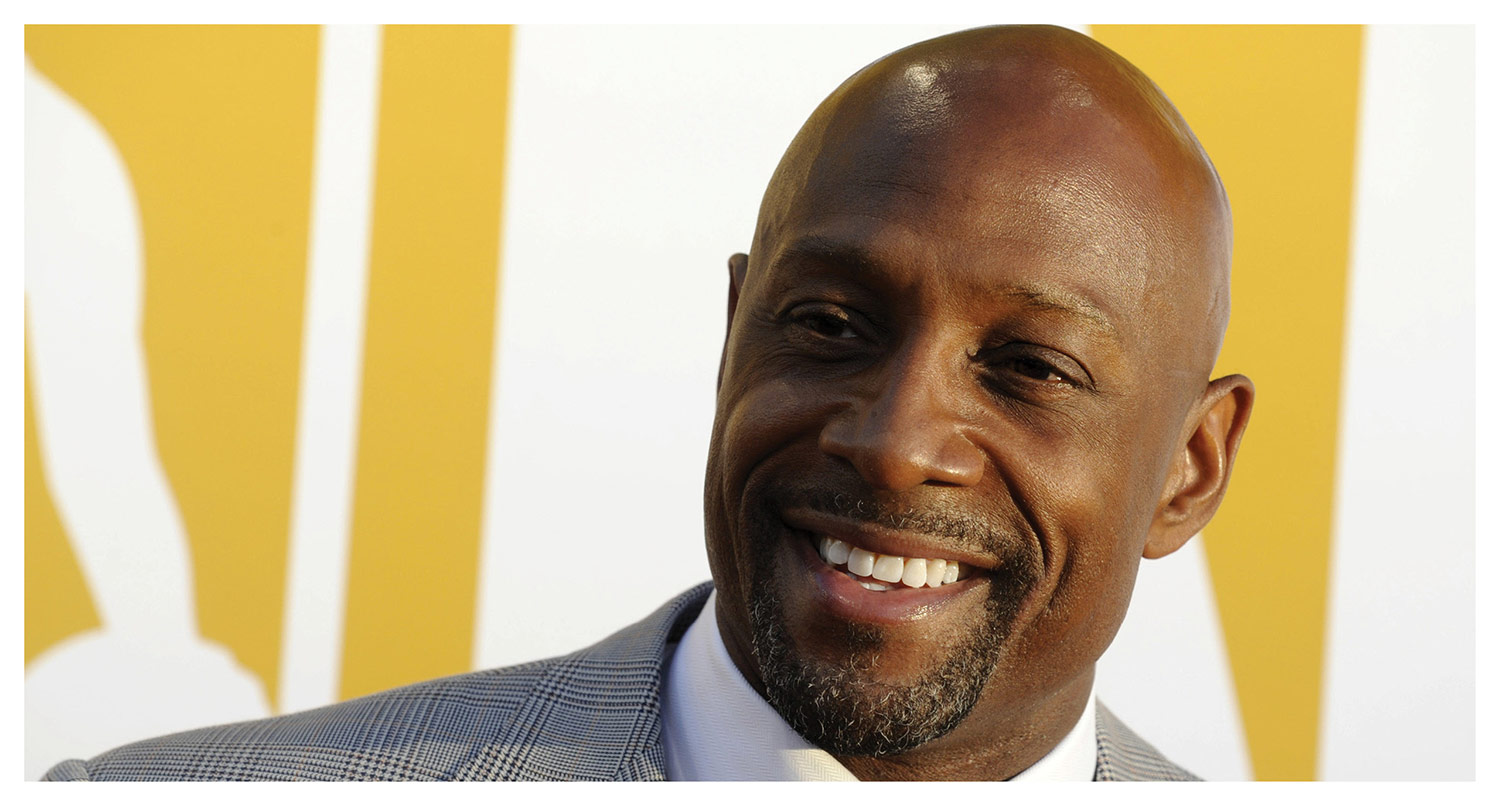

At 6-foot-10, no one would call him undersized by any means. But in a profession where he routinely battled against Shaquille O’Neal, Yao Ming, David Robinson and other giants, he had to push himself to greatness.
The result? In 15 NBA seasons, he was an NBA All-star seven times. In addition, he was a two-time Defensive Player of the Year (1999 and 2000), a gold medalist (2000 in Sydney, Australia), first-team All-NBA (1999) and an NBA champion with the Miami Heat in 2006.
After the Olympics, he was faced with a life-threatening challenge of a rare genetic kidney disease that required a transplant. A cousin gave him a transplant, but he missed a full season and briefly retired in 2003 before his unprecedented return.
The ferocity, grit and determination were written all over his face on the court. He was raised on “Hoya Paranoia” at Georgetown University; an us-against-the-world mentality where team goals came first and everyone else was held at arm’s length.
Yet Mourning, now 56, is part of a wave of retired athletes who consistently give back. Mourning has been instrumental in raising more than $50 million through the Mourning Family Foundation. The Overtown Youth Center opened in 2003 to provide after-school and summer programs in the downtown Miami neighborhood. In fact, North Miami has been the home of Alonzo and Tracy Morgan High School since 2009.
Perhaps his biggest project is more than 200 miles north in the small town of Bradenton.
Where did one of the toughest players in NBA history find the inspiration?

“I have a responsibility to pay it forward. Otherwise, I’d be doing the people that got me here a disservice if I didn’t.”
One of those seniors was Fannie Ella Reid Threet.
When Mourning was 10, his parents divorced, and he spent crucial developmental years in foster care. Threet was “a retired schoolteacher [who] fostered 49 kids in her lifetime. A very faith-based woman. She instilled all that in me at the age of 12 when she took me in. I was with her for six years, and I ended up being the No. 1 high school player in the country.”
The lessons of Threet as well as Georgetown coach John Thompson were guiding forces in his life.
Among those lessons: what to do when basketball is over.
Said Mourning: “We’re on our 15th project, and it’s very fulfilling for me, but knowing that I’m providing a home environment, especially for our seniors, that they can age with grace and dignity… Here in South Florida, you’re spending well over half your income just on rent.”
In his current role as vice president of player programs and development for the Miami Heat, Mourning often comes in contact with current NBA stars. What does he tell them about giving back?
“The spirit of giving back is taking hold with our next generation,” Mourning said. “I’m speaking from the perspective of an executive with the Miami Heat for 16 years. I couldn’t be prouder. These guys leave here, and they leave this organization understanding, not just how to be a professional on the court but also off the court and being responsible to the community as well.”