




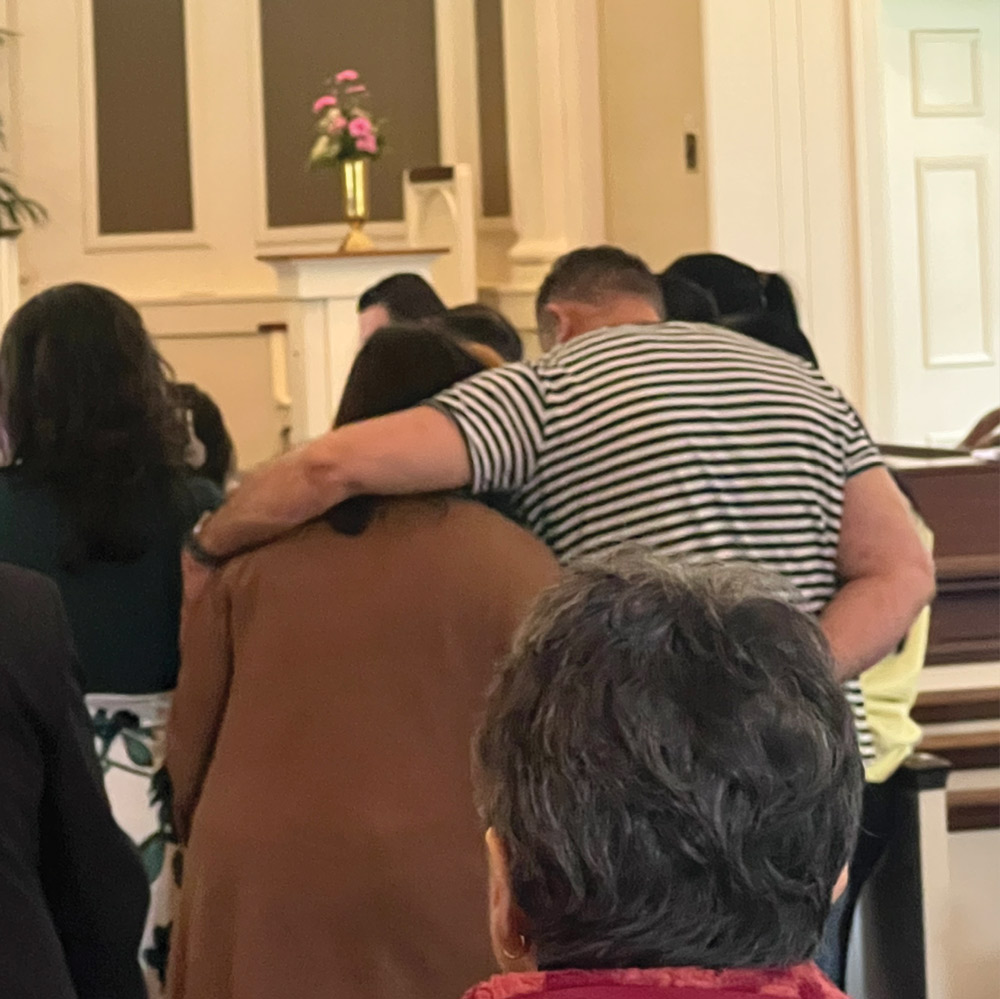
This small Latin/Hispanic congregation, mostly women, was in one of two evangelistic series Escalante had been nurturing for weeks. The Allentown group grew out of a friendly food-pantry ministry.
Until the last two years, Escalante’s ministry as an evangelist and coordinator for immigrant populations was overwhelmingly positive. Now, under the current policies of the Trump administration, coupled with anti-immigrant sentiment, observers calculate real-time impact on the immigrant communities. The conflict and potential threat to the practice of their faith, in the United States, a place of refuge, is significant.
“Since January 21, 2025, there has been a significant shift toward faster removals, broader enforcement priorities, and less flexibility in adjudications,” according to Andrea Stewartson, of Robinson, Kirlew & Associations, PC, a Maryland law firm practicing immigration law.
- Many asylum seekers watched the system close them out with internal processing now largely frozen. Other forms of humanitarian protection, such as Temporary Protected Status (TPS) and humanitarian parole programs are being withdrawn, or restricted.
- Applications for visas and work permits now bring heightened scrutiny and suspicion.
- Agencies such as United Sates Citizenship and Immigration Services, (USCIS) or the Department of Homeland Security (DHS) both increased fees, or created new fees, setting some of them out of reach.
- Undocumented immigrants among us, now live in fear of Immigration and Customs Enforcement (ICE) raids in public spaces and private homes.
- An arrest could lead to detention at an undisclosed location for an indefinite period of time, or deportation to another country altogether.
According to Escalante, the evangelist and pastor, the fallout on his flock is significant. Church attendance fell 25% in the last two years. He’s witnessed the loss of 300 members to deportation, mostly Hispanic and Haitian members.
Churches and small groups now hide in plain sight, in rented spaces where the members of the host church have promised to stand in the doorways to put a white, “All-American” face on the church in case government agents come knocking. Escalante supports several pastors in their creation of a network of small groups, house churches, where families can come together, quietly, to pray.
So, Escalante has countered the persecution — his word — through prayer, fasting, teaching and preaching even harder. Against this backdrop, the Spirit was moving through his appeal that Sabbath morning. One woman caught the eye of the local pastor, her tears betrayed her calm exterior as she sat glued to her seat, nestled close to her husband. Jesus was calling, but to what?

“Jesus Was a Migrant” aims to highlight the tension between Christian faith and current U.S. immigration policy by showing how Christians are celebrating the suffering of migrants at the border. He explained that the film challenges viewers to consider whether they truly see Jesus in migrants and whether their actions align with their religious beliefs about treating the “least of these” with compassion and mercy.
“When you look at the movie poster, you’ll see it says 270,000 migrants were locked out in a day,” said Tisby. “Many of them were Christians, so were the people celebrating.”
Many of the migrants to which Tisby referred were asylum seekers, and the very nature of their claim is that they are seeking to escape persecution because of their race, or religion, or beliefs, or political activities. In one day, however, claims that were already in process of being reviewed were frozen, and seekers locked out of the government app, with no warning, and no alternative.
“And it brings us all the way back to Matthew 25: … “Whatsoever you did for the least of these, my brothers and sisters, so you did to me” quoted Tisby.
“And it’s like, do we see Jesus in the migrants at the border? Do we believe this religion that we profess, because if we did, it’s not that we would have open borders, it’s not that we wouldn’t have any rules at all, but we’d certainly treat people more humanely, we’d treat people more mercifully, we’d treat people with more compassion. The other thing I get fired up about is, folks have these caricatures of migrants, particularly at the southern border, where the current president began his campaign in 2015 by saying they’re sending criminals and rapists over the Mexican border, right? And that image has stuck with too many people.
“Christians ought to know better. We ought to, at least do our homework, and make sure that we understand what’s happening here.”
“One county in Pennsylvania? No one pays property tax because of the facility” said Dionne-Lanier.
In large facilities, such as a the Farmville Detention Center, in Farmville, Virginia, observers notice there are plenty of officers at work. Same thing in other large centers such as the one in Louisiana, about an hour and a half from New Orleans. Communities are looking at this as job opportunity, never mind the impact on family or the detained individual who will be isolated from family.
Americans have also become desensitized to the warehousing and processing of immigrants.


Yet, even Amazon packages have it better — at least they can be tracked, and arrive intact most of the time. Conditions in the detention centers are horrible, said Dionne-Lanier, citing everything from overcrowding, lack of medical care, infestations of bed bugs, lack of showers, lack of phones, and lack of toilets. Adding to the distress of those who are incarcerated and their families is the indefinite time frame for detention. Three months is the average detention, but it depends upon the country of origin. Some detainees are stuck for six months to a year, and still for others, the appeals process could take years. Detainees, understandably then, want to know only this:
“Why am I still here? How do I get out?”
The desensitization and tolerance of the conditions is powered by classic, American, or nativist tropes, and requires Christians and Americans to wrestle with foundational ideas and beliefs about humanity. Traditional complaints regarding immigrant communities are that they bring “[d]isease, poverty, and crime; racism holds all three of them” explains Brianna Nofil, who wrote “The Migrant’s Jail.”
“The question of which outsiders the United States had an obligation to was inseparable from ideas of who was too poor, to radical, too sick, and above all, too racially different to be a citizen,” wrote Nofil. “Detention was most politically popular when it involved eliminating people deemed racially unassimilable or unfit for citizenship; people whom many Americans imagined might belong in jail.”

The pastor, Luis Estrada, originally from Peru, rotates among the nine small groups in the area. He supports his scattered flock by raising needed funds, and keeping the members encouraged. Estrada frames these kind of “difficulties” prophetically. They are part of the ongoing battle between good and evil, in which sometimes God’s people would be severely challenged, yet are encouraged to remain faithful.
So far one man in their collective church has been taken by ICE.
“Thank goodness, only one,” said Borrayes, a wife and mother. “We always pray that immigration doesn’t take anybody from our church. We’ve heard they’ve been in the area.”
Borrayes’ 10 year-old daughter Melissa translates for her.
“She said she worries sometimes, but believes God will protect us. If they do take us, it’s all in God’s plan.”