

Money
Don’t
Last
Long
Anthony grew up in Cleveland, Ohio, the kind of neighborhood where the check-cashing store opened before the library did and the lottery machine at the corner store was never without a line. He watched his mother stretch a paycheck across two weeks like a piece of fabric that was always a little too small for what needed covering. By the time he was grown, Anthony had decided one thing with everything in him: he was not going to live like that. He was going to find a way out.
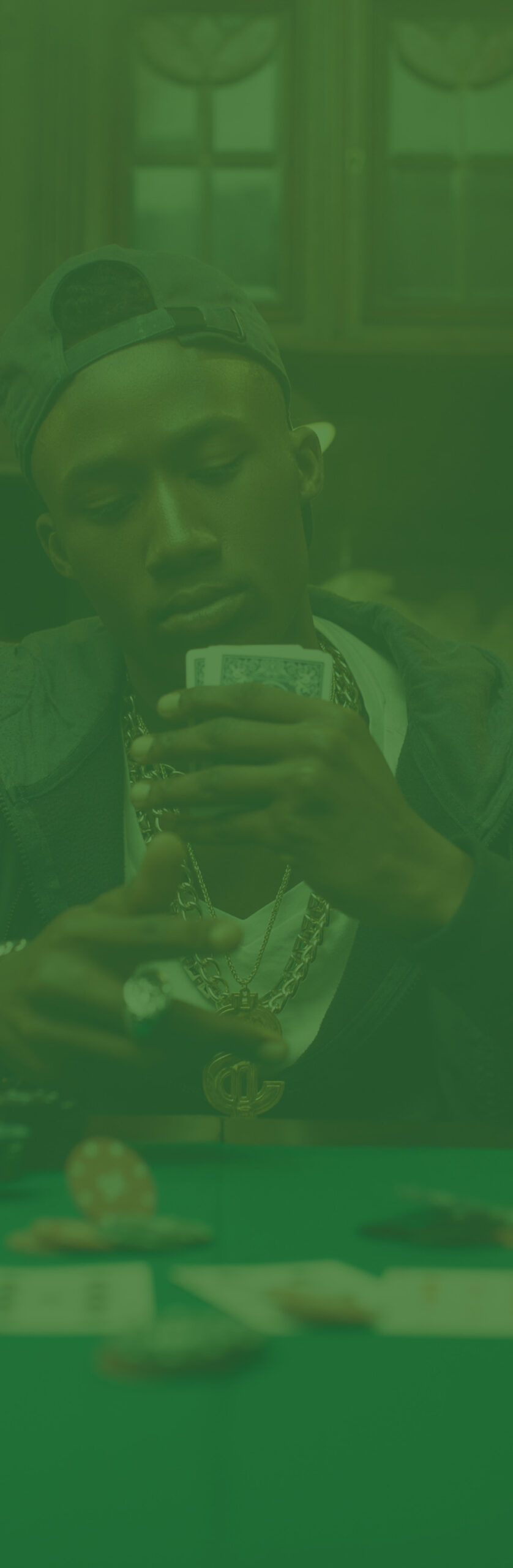
The first time he walked into a casino was to celebrate a coworker’s birthday. He was 26. He sat down at a blackjack table, put down $60, and walked out two hours later with $900. He called his mother on the way to the car.
“Mama, I think I found something.”
She didn’t say much. She’d seen that look before — not on his face — but in his voice. The way a man sounds when he thinks he’s finally found the door.
Ask anyone who’s ever received a windfall they weren’t prepared for; an unexpected tax return spent before the month was out. An inheritance that evaporated within a year. A bonus that felt enormous on Friday and was gone by the following Sabbath. It’s not that people are irresponsible. It’s that money without labor attached to it doesn’t carry the same weight in your hands. You didn’t feel it leaving because you never really felt yourself earning it.
That principle sits at the very heart of gambling, and it’s worth naming before we go any further.
Money
Don’t
Last
Long
Anthony grew up in Cleveland, Ohio, the kind of neighborhood where the check-cashing store opened before the library did and the lottery machine at the corner store was never without a line. He watched his mother stretch a paycheck across two weeks like a piece of fabric that was always a little too small for what needed covering. By the time he was grown, Anthony had decided one thing with everything in him: he was not going to live like that. He was going to find a way out.
The first time he walked into a casino was to celebrate a coworker’s birthday. He was 26. He sat down at a blackjack table, put down $60, and walked out two hours later with $900. He called his mother on the way to the car.
“Mama, I think I found something.”
She didn’t say much. She’d seen that look before — not on his face — but in his voice. The way a man sounds when he thinks he’s finally found the door.
Ask anyone who’s ever received a windfall they weren’t prepared for; an unexpected tax return spent before the month was out. An inheritance that evaporated within a year. A bonus that felt enormous on Friday and was gone by the following Sabbath. It’s not that people are irresponsible. It’s that money without labor attached to it doesn’t carry the same weight in your hands. You didn’t feel it leaving because you never really felt yourself earning it.
That principle sits at the very heart of gambling, and it’s worth naming before we go any further.
And more people are doing it than ever before.
In 2018, the U.S. Supreme Court struck down a federal law that banned sports betting in most states. Since then the industry has exploded. As of 2024, 38 states and Washington D.C. have legalized sports betting. The American Gaming Association reported that Americans wagered more than $119 billion on sports legally in 2023 alone, a number that would have been unthinkable a decade ago (State of the States, 2024. americangaming.org).
Apps like DraftKings, FanDuel, and BetMGM have made it possible to place a bet from your couch, your car, or during your lunch break. The casino used to require a trip. Now it lives in your pocket.
Increased gambling rates have followed. The National Council on Problem Gambling reported a 30% increase in calls to its helpline, between 2020 and 2023, from younger men, particularly black men, between the ages of 18 and 35, emerging as one of the fastest growing at-risk groups.

When most people hear the word gambling they picture a casino with slot machines, card tables, and the roulette wheel. But that’s only one face of it. There’s the lottery, scratch tickets at the corner store, Mega Millions on a Wednesday night, and the quiet ritual of picking numbers, that millions of Americans perform every week like a second offering. There’s sports betting, now so normalized that it’s advertised between plays on afternoon television. There are poker nights that start friendly and become something else. There are online platforms that operate around the clock and never close, never check the time, and never ask if you’re OK.
Each format is different in style. All of them run on the same engine.
Before we go further, let’s be honest; risk is not foreign to any of us. We take gambles every single day without calling it that. You took a risk when you chose your career. When you got married. Every entrepreneur who ever opened a business put money on an uncertain outcome. Every farmer who planted a crop in uncertain weather was betting on the rain.
The difference is that healthy risk is tied to effort, skill, and informed decision-making. When you study for an exam your risk is not purely chance. When you invest in a business you’ve researched, you’re not just spinning a wheel. The line between wise risk and gambling isn’t always clean, but it exists, and it has everything to do with what you’re actually in control of.

When you win, or even when you almost win, your brain releases dopamine. Dopamine is the chemical your brain uses to say that was worth it, do it again. It fires when you eat something delicious, fall in love, or accomplish something you worked hard for. It is one of the most powerful motivational forces in human biology.
Here’s the catch: gambling doesn’t just activate that system. It hijacks it.
Researchers have found that the dopamine surge from an unpredictable reward is actually larger than the surge from a guaranteed one. According to researcher and author Wolfram Shultz, your brain gets more excited by the possibility of a win than by a certainty. This is why the near miss — the slot machine that lands two cherries and then a blank — feels almost as thrilling as winning. Your brain treated it like a win. The machine was designed to make it feel that way.
Anthony described it this way, while sitting in a Gamblers Anonymous meeting two years into his recovery:
“I wasn’t even chasing the money anymore. I was chasing the feeling. The money was just the ticket to get back to the feeling.”
This is not a character flaw. This is biology. The gambling industry has spent billions studying exactly how the human brain responds to uncertainty and has engineered its products accordingly. The sounds, the lights, the near misses, the small periodic payouts that keep you in your seat, none of it is accidental. You are not weak for responding to it. You are human.
Over time though, repeated gambling changes the brain’s baseline. The nucleus accumbens, the part of the brain most tied to reward and pleasure, becomes desensitized. Ordinary life starts to feel flat. The only thing that cuts through is the next bet. Researchers call this tolerance, the same process that occurs in substance addiction. The DSM-5, the official diagnostic manual used by psychiatrists, now classifies gambling disorder alongside substance use disorders for exactly this reason.
Studies show that people with gambling problems consistently overestimate their ability to control outcomes, what researchers call the illusion of control. They develop what’s known as the gambler’s fallacy, the belief that a string of losses makes a win more likely. They chase losses not because they are reckless but because the brain, flooded with stress hormones and craving relief, genuinely cannot calculate long-term risk the way it normally would. The prefrontal cortex, your brain’s rational decision-maker, gets outgunned by the limbic system, where craving and emotion live.

Research consistently shows that lower-income individuals spend a disproportionately higher share of their earnings on gambling, not because they are foolish, but because the industry targets them deliberately and because the psychological weight of scarcity makes the prospect of a windfall neurologically irresistible. (See the 2021 report: “Relationships between socio-economic status and lottery gambling across lottery types: neighborhood-level evidence from a large city.”)
Anthony knew this without knowing the research. “Growing up,” he said, “the lottery felt like the only investment plan anybody on my block had access to. Nobody was talking about index funds. They were talking about the numbers.”
Cognitive Behavioral Therapy, known as CBT, is the most evidence-based psychological treatment available for gambling disorders. It works by targeting the distorted thinking patterns that keep a gambler locked in the cycle: the illusion of control, the gambler’s fallacy, the compulsion to chase losses. A therapist trained in CBT doesn’t just tell you to stop. They help you understand why you started, what the behavior was doing for you emotionally, and what needs to replace it. A 2012 meta-analysis in “Clinical Psychology Review” examining 22 randomized controlled trials found that CBT produced significant, lasting reductions in gambling behavior with gains holding at a 12-month follow up.
Gamblers Anonymous (GA) works on a different but equally powerful level. When you sit in a room with people who have lost what you’ve lost and found their way back, something happens that no clinical definition can fully capture. You stop feeling like a moral failure and start feeling like a person in recovery. That distinction is everything. A 2014 Cochrane Review found GA participation produced outcomes comparable to formal therapy in certain subgroups, particularly when combined with other treatments.
For those who cannot access therapy right now, the National Council on Problem Gambling operates a 24-hour helpline at
For some people it was about escaping a life that felt too small. For others it was about proving something; to themselves, to a father who said they’d never amount to anything, or to a neighborhood that taught them the only way out was luck. For many it was about poverty, the bone-deep exhaustion of never having enough, and wanting — just once — to exprience what abundance feels like.
When you find the root, you can address it directly. And here is something the recovery community has learned that our churches would do well to apply: the dopamine pathway that gambling hijacks does not disappear when you stop gambling. It needs somewhere to go.
High-intensity exercise produces real, sustainable dopamine. So does creative work, entrepreneurship, mentorship, athletic competition, music, and building something with your hands. The person drawn to the high-stakes energy of a poker table often has exactly the risk tolerance, strategic thinking, and competitive drive that makes a remarkable businessman, coach, or community organizer. The gambler’s personality is not the problem. The channel is.
Now let’s talk about the church. Prayer matters. Fasting matters. Laying your burden down at the altar on Sabbath morning matters. The spiritual dimension of addiction and recovery is real and no clinical study can fully quantify it. We believe in a God who heals, who restores, who meets people in their lowest moments and calls them by name.
But James 2:17 does not leave us room to stop there. Faith without works is dead. And in the context of a gambling disorder, a condition with documented neurological roots, measurable psychological dimensions, and evidence-based treatments, means getting help from someone licensed and trained to give it.
Anthony is back in church now. He says the most powerful thing his pastor ever did was ask him, quietly, after a Sabbath service: “How are you really doing?”
That question changed his life more than any sermon. The person sitting in your pew this Sabbath, the one who tithes faithfully and laughs loudly at fellowship lunch, may be one bad night away from losing everything. What they need is not judgment from a distance. They need proximity. They need someone to ask the real question.
The gambler is, at their core, a person who believes something transformative is just around the corner. That the next hand, the next spin, the next ticket could change everything. That life doesn’t have to stay the way it is. That there is more available than what they currently have.
That instinct, stripped of the casino, stripped of the machine, stripped of the false promise could also be said of faith. Think about it.
Following Jesus has always been a high-stakes proposition. You lay down your old life with no guarantee of what the new one will look like. You bet everything on a promise you cannot yet see. You go all in on a God who asks for your whole heart, not just your Sabbath morning. There is nothing safe or predictable about genuine discipleship. It will cost you something. It always does.
The difference, the only difference that matters, is who is running the table.
The casino is engineered to take from you. Every light, every sound, every near miss is designed to extract. The house always wins because the house was built to win. You were never the point. Your money was.
God operates on an entirely different economy. He is not extracting. He is investing. He doesn’t take your all-in and pocket it. He multiplies it, refines it, and returns it to you in a form you could not have imagined when you sat down. The risk is real. The surrender is real. But the house you’re betting on was not built to take from you.
It was built to bring you home.
And unlike the lottery, that promise has never once come back void.