







- A New Beginning by Martha Hagemann
- Called to Heal by Sali Butler
- The Imposter by Tammy Darling

Message Magazine is trying out a new size and we’re eager to hear your thoughts.

by Keith Augustus Burton, Ph.D.
The Message Magazine, January/February 2016


relationship
readineSS
Call 1-800-456-3991 Monday through Thursday 8:00 a.m. to 5:00 p.m. Mountain Time for subscription information or address changes. MESSAGE (ISSN 0026-0231) is published bimonthly Jan/Feb, Mar/Apr, May/June, July/Aug, Sept/Oct, Nov/Dec.
© 2026 by the North American Division of Seventh-day Adventists, 9705 Patuxent Woods Drive, Columbia, Maryland, 21046, U.S.A. Address editorial correspondence to MESSAGE MAGAZINE, 9705 Patuxent Woods Drive, Columbia, MD 21046-1565 U.S.A. All subscriptions are prepaid. If you did not order MESSAGE, it is being sent as a gift from a friend. You will not be billed. To subscribe, mail payment to MESSAGE, 1350 North Kings Road Nampa, ID 83687, U.S.A. or call 1-800-456-3991. Subscription price: one year, $21.95 U.S. currency; single copy, $4.00; overseas, add $10.00 per year for postage. Prices subject to change without notice. Periodicals Postage paid at Nampa, Idaho and additional offices. Vol. 92 No. 5 SEPT/OCT POSTMASTER: Send address changes to MESSAGE, 1350 North Kings Road Nampa, ID 83687, U.S.A. Printed in the U.S.A.
Unless otherwise noted, Bible texts in this issue are from the New King James Version. Copyright © 1979, 1980, 1982 by Thomas Nelson, Inc. Used by permission. All rights reserved. Statements in this issue attributed by an author to other speakers/writers are included for the value of the individual statements only. No endorsement of those speakers’/writers’ other works or statements is intended or implied.



Media That Takes You Higher

Milford’s album is heartfelt worship that reminds listeners that God’s greatest answers are often found at the altar of surrender. Blending authentic vocals with Scripture-centered lyrics, Milford creates an atmosphere that encourages prayer, reflection, and renewed trust in God’s faithfulness. The album points consistently to Christ, making it a refreshing collection for personal devotion and corporate worship alike. From “Worship Forever” to “Jesus I’m Yours,” you will experience meditation in God’s presence! This is available on all digital platforms.


Jimmy Evans offers timeless wisdom on communication, trust, forgiveness, and unconditional love, helping couples navigate challenges while deepening their commitment to one another. Whether you are newly married or have celebrated many anniversaries, this encouraging book reminds readers that healthy marriages are built on God’s design and strengthened through intentional love and faithfulness.


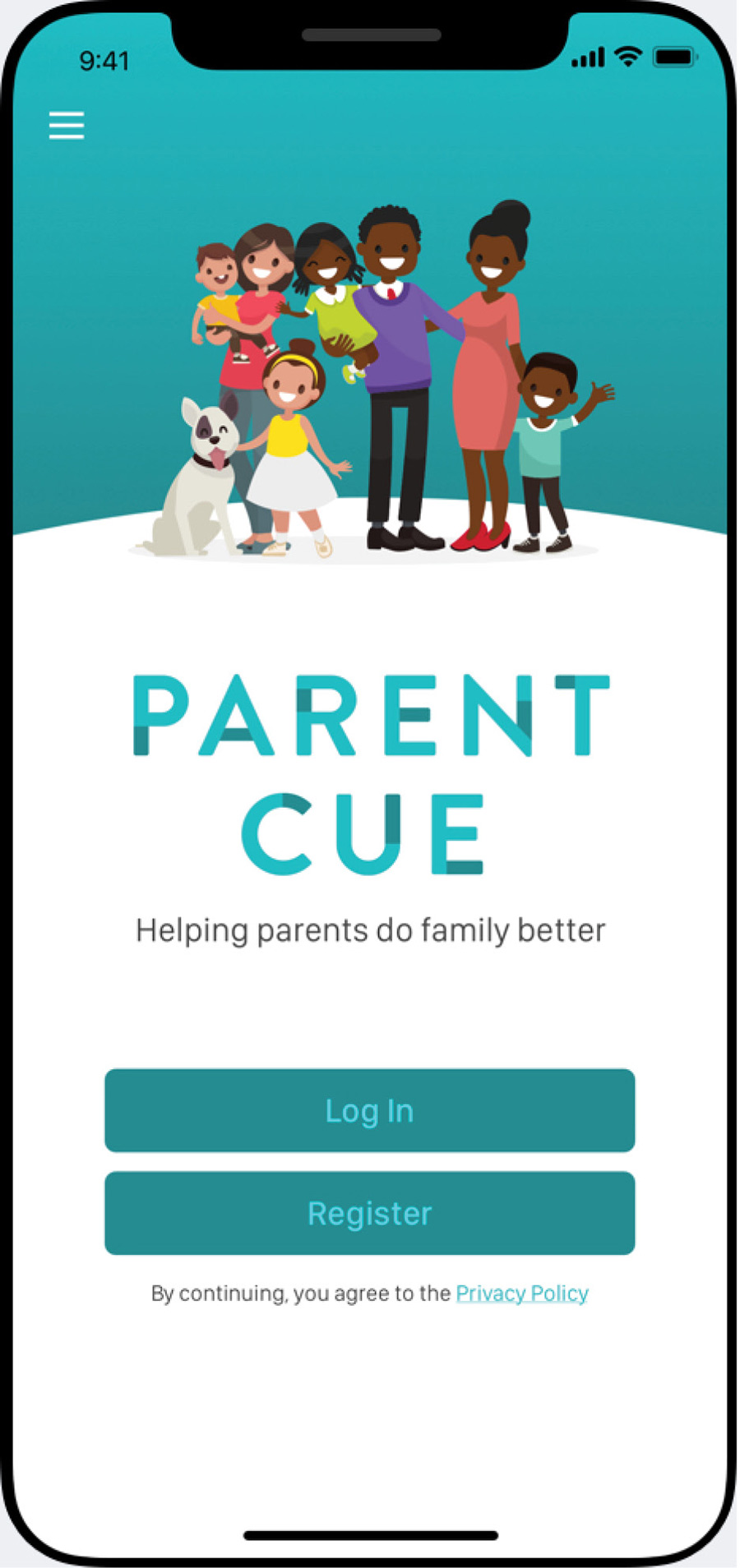
Looking for simple ways to strengthen your relationship with your children? Parent Cue equips parents with age-appropriate devotionals, meaningful conversation starters, and engaging activities that help make faith a natural part of everyday life. Whether at the dinner table, in the car, or before bedtime, Parent Cue provides practical tools to help families build stronger connections and intentionally guide children toward a lifelong relationship with God.

“ …Hollis wasn’t her blood relative, but they were still family. It was the collectiveness of the black experience,” writes Crump. “Something he believed had been transmitted across generations, beginning in ancient Africa where the notion of the individual didn’t exist. There was no I, only we, and together, we’d rise or fall.”
As with many families, some of us roll our eyes at the idea that we move supportively and cohesively. Truly, some of our personal opportunities have afforded us the luxury of feeling removed from the family, yet the challenges that dog our steps find themselves on our doorsteps, even when we thought we moved away.
The case of Nolan Wells, the Mississippi youth who ended up dead after a July 4th boat outing shocks our senses because of the confederated wall of silence surrounding his death among his friends. The case of Karmelo Anthony disrupts our suburban peace because we’ve come to trust when boys will be boys, no one ends up having to fight for their life. Gary, Indiana residents — the majority of whom are black — sustained a three week utility stoppage after a summer storm. And, the administration is stepping up the removal of our Haitian brothers and sisters with weekly deportation flights. Our mission elevates the people by shining a light on these issues, challenging our sense of “truth” and finding spiritual resilience and survivability in it all, together.
A few months ago, a vocal critic of Message used his platform to proclaim to the Christian community that our “progressive” articles encouraged young people to resist ICE. He even associated the ideas within as Marxist.
What we resist is a strict hermeneutic that allows one to read the words of Jesus and the Bible and not internalize an outgrowth of operational love and justice.
In Isaiah 58, the prophet rhetorically laments the slow answer to prayers of God’s people. They think they’re doing everything right. Yet their prayers, their showy feasts and general piety are all ineffectual when it comes to God’s blessings and favor. He’s not impressed. Rather, He’s specific regarding the kinds of things that He wants to see:
Is this not the fast that I have chosen:
To loose the bonds of wickedness,
To undo the heavy burdens,
To let the oppressed go free,
And that you break every yoke?
Is it not to share your bread with the hungry,
And that you bring to your house the poor who are cast out;
When you see the naked, that you cover him,
And not hide yourself from your own flesh?”
God says you want to hear from me? Don’t hide yourself from your own.
A second principle, emerged when Jesus was ministering to the crowds, and someone whispered in His ear: “your mom and brothers are outside . . .” The Bible doesn’t offer the reason why they dropped in on Him. Maybe the whisperer thought everything should stop so that Mary and the family could receive a proper announcement be ushered in to the front and celebrated. Or maybe they needed to have a word with Jesus. Or, maybe, after the intense exchanges between Jesus and the Pharisees, the fact that His family was outside meant they could come get Him. But, Jesus, was not to be diverted from His mission. He took the moment to enlarge our limited understanding of family, as He had regarding the question of “who is my neighbor?”:
“And he answered them, saying, Who is my mother, or my brethren? And he looked round about on them which sat about him, and said, Behold my mother and my brethren! For whosoever shall do the will of God, the same is my brother, and my sister, and mother”(Mark 3:33-35, emphasis supplied).
We may not be blood relatives, but we are family, and together we have work to do.
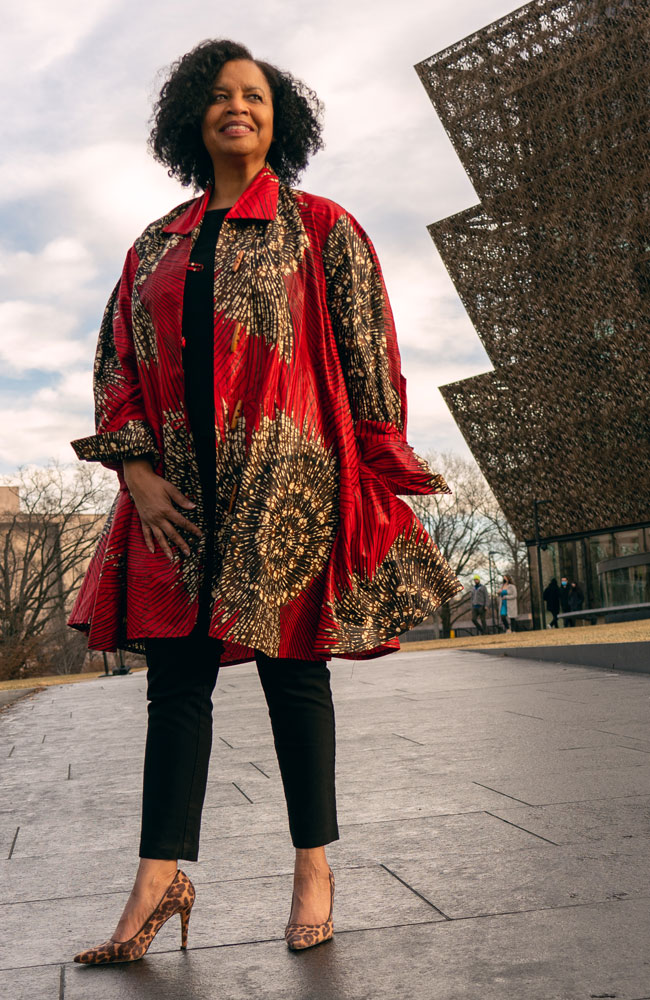
CARMELA MONK CRAWFORD, Esq., is Editor of Message Magazine
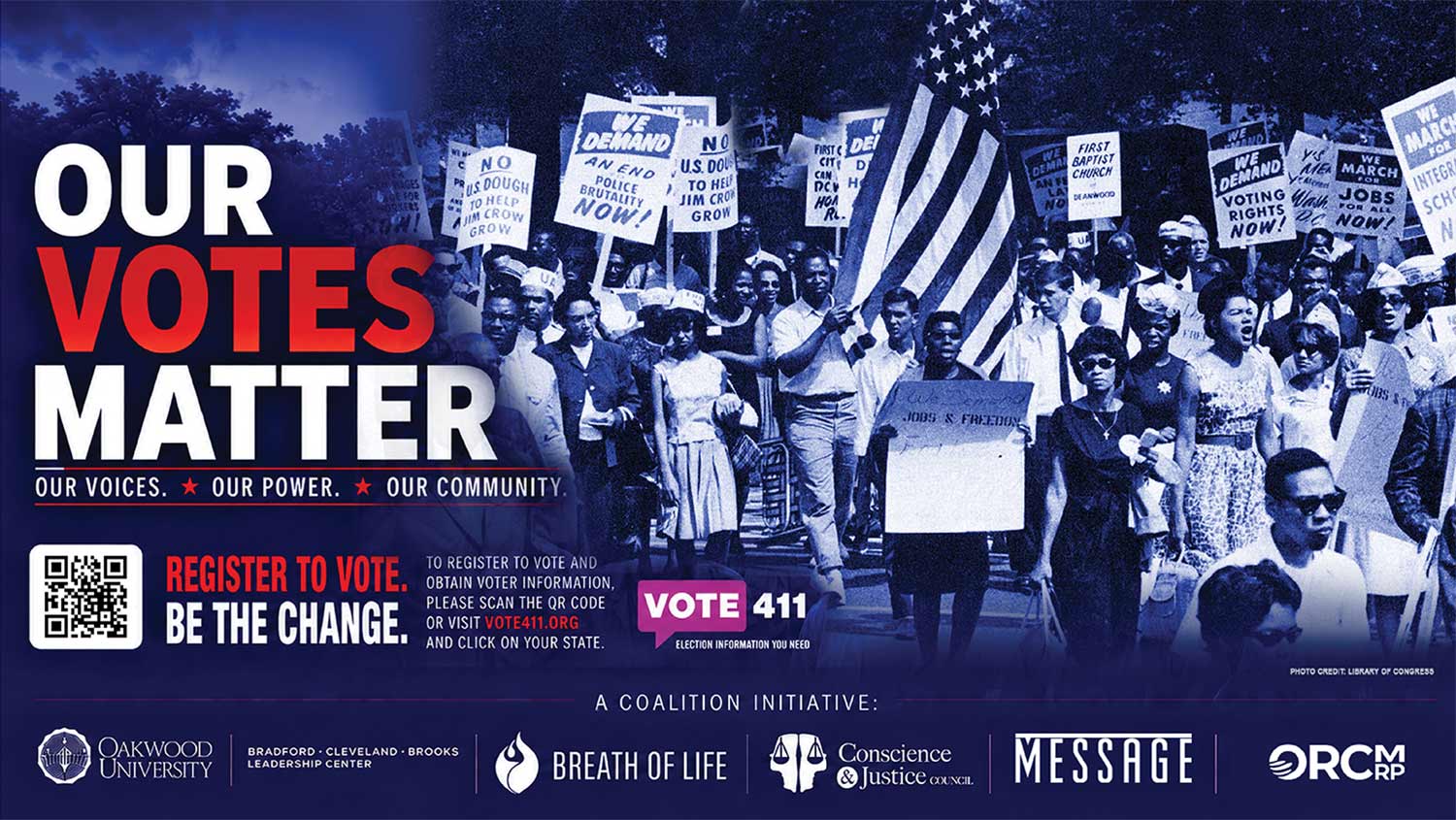
Quotes from noted Americans remind us of the importance of voting.
- “The ballot is stronger than the bullet” said President Abraham Lincoln.
- “Our lives begin to end the day we become silent about things that matter” said Martin Luther King, Jr.
- “Someone struggled for your right to vote. Use it” said Susan B. Anthony.
From Labor Day to Election Day, we are bombarded by political advertising. It is not unusual to receive multiple pieces from different organizations supporting the same candidate in the mail before the absentee ballot is due and again before in-person voting. All because our votes matter.
Despite the outside noise, we know the importance of voting to impact our democracy.
“The vote is precious. It is almost sacred,” said former U.S. Congressman John Lewis. “It is the most powerful nonviolent tool we have to create a more perfect union.”
As our civic responsibility, we know voting requires us to ensure we are registered to vote, and know our polling location, and the issues at stake in the election. That’s why voter education necessitates researching the candidates, analyzing the impact of ballot proposals, identifying the issues, and planning to vote.
The League of Women Voters, www.vote411.org, can assist you in these endeavors. All because our votes matter.
After the second election of President Barack Obama, the Brennan Center issued a report, “The State of Voting in 2014”, prior to the midterm election that year. It noted the impact of voter restrictions such as Voter ID, Voter Registration, Early Voting, and Restoring Voting Rights to People with Past Convictions. As it relates to the impact on black votes, the Brennan Center notes the following:
- Seven of the 11 states with the highest African American turnout in 2008 (Obama’s first election as U.S. President) had new restrictions.
- Nearly 67 percent of the states formerly covered by Section 5 (note U.S. Supreme Court case, Shelby County v. Holder in 2013) of the Voting Rights Act had enacted new restrictions after 2010.
- African Americans relied disproportionately on some of the early-voting opportunities being eliminated.
Once again, this points to the reality that Our Votes Matter.
The Washington Post Fact Checker found that President Donald Trump repeated the claim that the 2020 election was fraudulent 76 times without any press, election officials, or courts to support his assertion.
It’s important to note that even though elections are under the state’s control. The Department of Justice, mainly the Federal Bureau of Investigations, investigates federal crimes that impact the integrity of elections was under the control of President Trump and found nothing to support his claims. Despite this ongoing propaganda, it serves as a stern reminder that our votes matter.
Knowing that voting disinformation represents a real threat to democracy, we must identify resources to verify the veracity of information targeted toward any community as it relates to voting, candidates and ballot proposals. Election Protection, 866ourvote.org, works “365 days to advance and defend your right to vote.” Bot Sentinel, botsentinel.com, identifies deceptive AI information and is a free resource. All because our votes matter.
It’s clear from catch phrase slogans, inspirational quotes from iconic leaders, desire for a fair and free democracy, the election of President Barack Obama, propaganda about voter fraud, and voting disinformation that our votes matter.
In essence, Our Votes Matter because it represents our voices, our power, and our community. To amplify your voice and your community, check out the resources available at Our Votes Matter at cjcouncil.org/resources.
Please make sure you and your community vote no later than Tuesday, Nov. 3, because Our Votes Matter.


For example, suppose that Group A routinely wins the popular vote in State X (say 80% to 20%), but because Group B has gerrymandered the congressional districts, Group B wins 90% of the seats in State X. Proportionally speaking, Group A’s votes count for less than Group B’s in terms of voter will: despite their will expressed in the popular vote (80%), Group A is nonetheless unable to elect the representatives of its choice, securing only 10% of the representation. The democratic problem is real.
On April 29, 2026, the United States Supreme Court decided Louisiana v. Callais, ruling that section two of the Voting Rights Act of 1965 (VRA) did not require the state of Louisiana to draw a second federal congressional district to protect the collective voting power of Black voters. The Court ruled that requiring Louisiana to draw a legislative district to remedy effects of past discrimination against Blacks was an unconstitutional racial gerrymander. The Court interpreted a race-conscious statute, with a race-neutral standard, turning the VRA on its head.
Questions abound. What does Louisiana v. Callais mean for future elections? Was “Bloody Sunday” in March, 1965 all for naught? Has the Black freedom struggle failed? Where do we go from here?
American chattel slavery began in 1619, 157 years before the first founding in 1776. And neither the Articles of Confederation nor the Constitution of the United States ended the slave trade. During the Constitutional Convention in 1787, chattel slavery was hotly debated; W.E.B. Du Bois discussed in “The Suppression of the African Slave Trade” (Dubois: Writings ). The principle of state autonomy prevailed, allowing each state to address slavery on its own, without pressure from the national government.
Slavery thus continued through the nineteenth century. Debates over slavery were so fractious that it led the country to Civil War in 1861. President Lincoln ended slavery by executive order in 1863. Two years later, in 1865, the combat phase of the Civil War ended. But a new, political phase of the war was just beginning.
All three branches of American government played a role in this new, political phase of the Civil War. Congress made herculean attempts to ensure Black citizenship with the Civil War Amendments and enforcement statutes. The Supreme Court would nullify these efforts through decisions that restricted congressional enforcement power. And the President would strike a deal, the Hayes-Tilden Compromise, with a political rival to remove federal troops from the South. The Supreme Court and the President thus paved the way for a reign of terror against former slaves that would last for nearly a hundred years.
Compounding these problems was the denial of the franchise to blacks. Southern states erected barriers preventing blacks from voting such as poll taxes and racial intimidation. The racial intimidation was intense and enduring. Consider that Medgar Evers was assassinated for registering black voters in Mississippi in 1963, 93 years after the ratification of the Fifteenth Amendment. The law changed in 1870. Hearts and minds, however, had a long way to go.
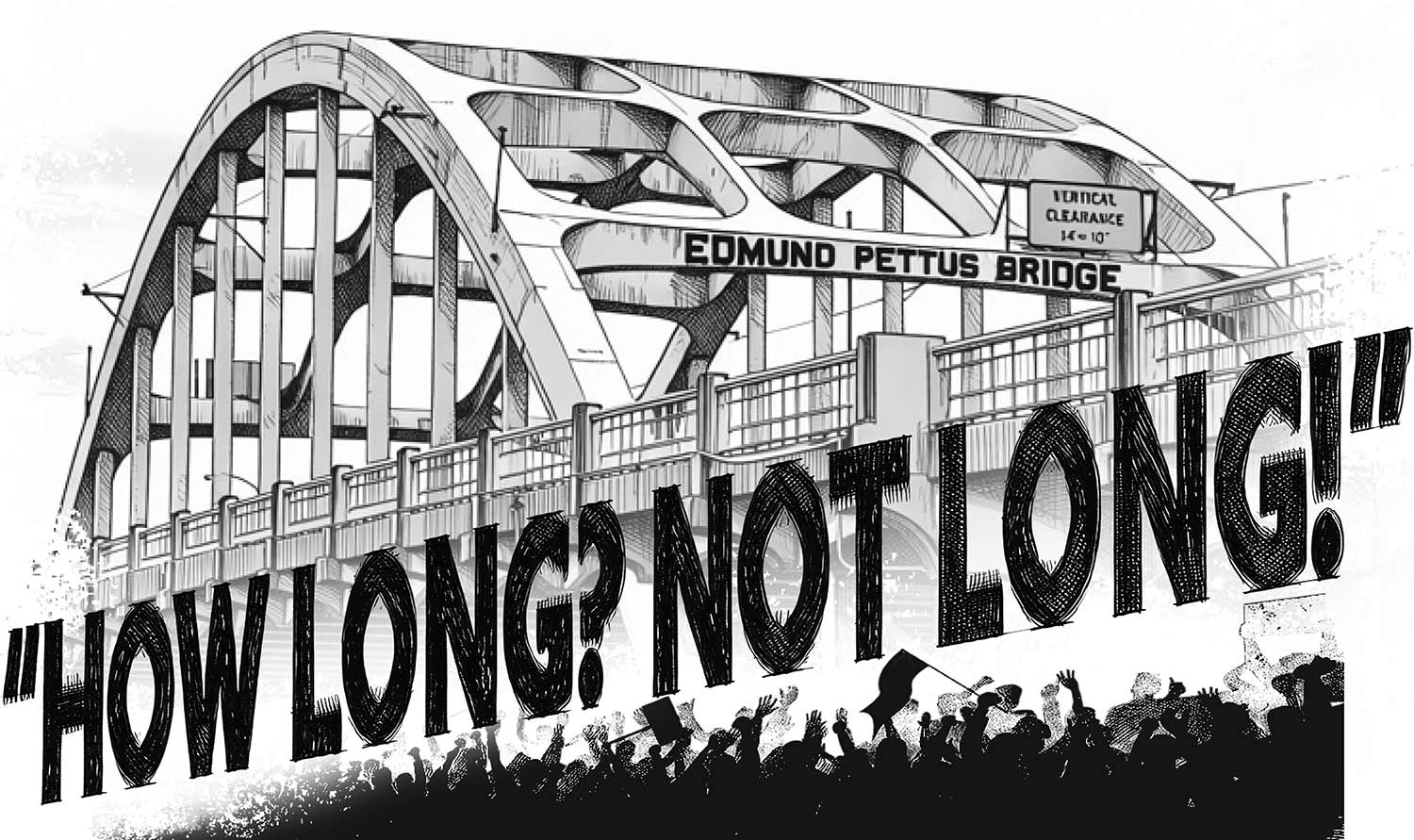
In this speech, King repeated the refrain “How long? Not long,” with the question asking how long injustice would prevail, and the answer replying that justice would soon come. Aided by the medium of television news coverage, King’s words pierced the American conscience. The political will soon emerged for the most significant congressional action since Reconstruction, and President Lyndon B. Johnson signed the VRA into law on August 6, 1965. The VRA provided much-needed federal oversight of southern states with a history of black disenfranchisement.
This cruel irony became tragic in June of 2013, when the Supreme Court decided Shelby County v. Holder. The Court considered a constitutional challenge to two sections of the VRA: section four, which contained the formula for determining whether to apply the preclearance provision of section five. If a southern state with a history of racial discrimination met the criteria of section four, then that state had to submit to the preclearance provisions of section five to have the federal government approve changes to their election laws.
The Court ruled that the formulas used to determine whether a southern state had to submit for preclearance were outdated, ruling section four an unconstitutional exercise of federal power over state autonomy. With section four gone, section five — the preclearance provision — is effectively inoperable. The inoperability of section five has led to what is now called “voter suppression” and it is not limited to southern states. Many states, north and south, have made problematic changes to their election laws in ways that have disenfranchised Black voters. One court found that when changes were made to North Carolina’s electoral laws, they targeted the rights of Black North Carolina voters with “surgical precision.”
A solution to this problem is for Congress to update section four of the VRA with new formulas to trigger preclearance and thus make section five operable again. A bill, the John Lewis Voting Rights Advancement Act, has been proposed in the United States Senate to update the formula and thus reinstate section five of the VRA, but without the political will to secure a veto-proof majority of both houses of Congress, the bill is dead on arrival.
Since 2013, there is no federal oversight on southern states with a history of racial discrimination because the Supreme Court, rather than maintain the forty-eight-year status quo, enabled states to mischievously manipulate state electoral laws. The tragic dimension of King’s homiletic refrain bellows to us: “How long will Blacks’ right to vote be protected?” “Not long, just forty-eight years, from 1965-2013!”
Yes, black people can still vote. No, their collective political power is not the same. For example, with legislatures in southern states with histories of racial discrimination already making sweeping changes to their electoral laws since the Callais decision (Tennessee and Alabama, for example), legislative districts are being manipulated in ways that could completely eliminate any black representation in the House of Representatives, which could bring an end to the Congressional Black Caucus.
Now is the time to reverse Dr. King’s question and answer refrain from tragedy to triumph: “How long will injustice reign? Not long, because our collective courage outweighs our oppression!”


 eeing my father lying on a hospital bed with a myriad of cords vined around him was what I expected given the news of his massive stroke. My brother and I received the call from our cousin that this may be our only opportunity to experience him in a state of coherence. Dad and I had a weathered history. I personally had not spoken to him in two years. When I arrived at his bedside, I knew I needed to make amends, but how? What do forgiveness and reconciliation look like? Were the boundaries I had put in place now going to be barriers?
Forgiveness, boundaries, trust, and reconciliation are interconnected, but they are not interchangeable. Understanding the differences can lead to healthier relationships, wiser decisions, and deeper healing.
This concept is very different from how forgiveness is packaged both to the believer and unbeliever alike. All too often there is an enmeshment baked into our understanding of forgiveness. We feel shamed or coerced to forgive as if the offense never took place. On the contrary, forgiveness in its truest sense is as much an act of justice as it is an act of grace. Forgiveness is an action word that simultaneously releases the desire for personal revenge and aims to hold the offender accountable for their actions.
It does not require denying pain, minimizing wrongdoing, or excusing sinful behavior. Both the Biblical account and modern psychology echo the sentiment that while genuine forgiveness can reduce anxiety, depression, anger, and chronic stress, it does not automatically restore trust or require reconciliation. In other words, forgiveness changes the condition of the heart, but it does not rewrite history or eliminate the need for wisdom. Considering this, establishing boundaries serves an important purpose.
Both Scripture and the literature point to the setting of healthy boundaries as an act of wisdom. Boundaries create the opportunity to give, but not overextend. They afford an opportunity to sacrifice, but not to the point where we are scarred.
There is a misnomer within the broader Christian context that suggests boundaries are not “Christ-like.” This couldn’t be further from the truth.
Throughout the gospel accounts we see Jesus healing, delivering, and fellowshipping with His community but we also see Him slip away and “recharge.” We witness Him asking those whom He desired to heal if they desired the healing themselves first. Jesus understood the connection between their desire and His mercies. In human terms, we would say, “I cannot want something more for you, than you want it for yourself.”
Healthy boundaries leave space for deeper connection, while also teaching others how we want to be treated. Brené Brown puts it this way: “Daring to set boundaries is about having the courage to love ourselves, even when we risk disappointing others.”
Proverbs 4:23 instructs us to “above all else, guard our heart.” It is indeed Christ-like to both serve others and set up guardrails to protect our peace.
Historically, my father and I had not been able to consistently discuss our feelings without an eventual “fallout” of some sort. However, this moment was different. I found myself communicating words that allowed us both to be on one accord. Dad squeezed my hand back after my apology as if in agreement and in that moment, reconciliation had taken place.
One individual can choose to forgive. Two people are required to reconcile. The New Testament uses the Greek word katallage to describe reconciliation, implying a relational nature that requires both parties to agree. Both scripture and relationship research agree that reconciliation requires several essential ingredients:
- genuine repentance rather than empty apologies
- personal accountability without blame shifting
- consistent behavioral change over time
- rebuilding trust through faithful actions
- emotional and physical safety
Forgiveness may happen in a moment. Reconciliation often unfolds over months or even years.

It is important to note that in no context is abuse in any form the will of God, nor does it have a place within the scope of the law of land. Many survivors of domestic abuse have been told that true forgiveness of the aforementioned offenses should result in a return to the relationship. We have learned that unrepentant, unchanged behavior is the indicator that reconciliation is not an option at the time. Forgiveness never requires someone to remain in danger. Scripture never teaches that reconciliation must occur at the expense of truth, justice, or personal safety. Choosing safety is not evidence of unforgiveness. It is an expression of wisdom.
- Forgiveness releases the offense.
- Boundaries protect the heart.
- Trust is earned through consistent follow-through.
- And reconciliation becomes possible only when genuine change has taken root.
It is important to note this progression does not always lead to reconciliation, nor is there a mandate for it to. It is simply a guideline one can follow if reconciliation is their goal.
It turns out my cousin was right — the last moments my brother and I had with our father were indeed his last coherent ones.
I truly believe he held on in hope that reconciliation with his sons would take place. Peace is the product of reconciliation. Peace is what my father desired from his relationship with his sons. Peace is God’s gift for those who seek it. God, through Jesus, has reconciled us to himself and has in turn given us the ministry of reconciliation.


Nobody plans to build an altar at midnight. We imagine family worship being established under better circumstances — when the children are small and compliant, when the marriage is steady, when life has settled into something resembling order. We tell ourselves we will begin when things calm down. But things rarely calm down. And the midnight keeps coming.
Secure us of all our fears.
May angels guard us while we sleep till morning light appears.”
I did not know then that I was being handed something irreplaceable. I only knew that those words meant safety. That they meant home.

When I built my own home, I carried those rhythms with me. We covered morning and evening worship, the hymnal, the Sabbath School lesson studied in every age group represented. Somewhere along the way, even the cat and dog became part of the congregation. Every evening at eight o’clock sharp, and without being called, they would appear. When life got busy and we were at risk of forgetting, they reminded us. Two animals who could not read a single word of Scripture became, in their own way, the most faithful members of our household worship. I tell that story not for the smile it brings, though it does, but because it points to something true: when the altar is established consistently enough, it shapes everything around it. Even the creatures.

“Do not harm yourself, for we are all here” (Acts 16:28).
“The same hour of the night.” There is a holy urgency in that phrase. The jailer did not ask for a week to consider it. He acted in the midnight hour, in the middle of the crisis. This is what rebuilding the family altar can look like when you have been waiting for the right moment. The right moment is the one you are already in.
We are also finding that the empty nest altar, tended faithfully, becomes something new, a place of intercession for the children who are no longer under our roof but are never outside our prayers. The altar does not shrink when the house empties. It expands. It reaches.
And perhaps that is the final word the Philippian jailer has to offer us. His household was changed in a single midnight hour. But the altar that was built that night did not belong only to the people in the room. It belonged to every person who would pass through that house in the years to come, every guest, every neighbor, every child not yet born who would grow up in a home where something holy had happened. The altar you rebuild tonight is not just for now. It is for everyone who comes after. Begin today with what you have. Begin in the hour you are in.


“Resilience is the ability to adapt well to adversity, trauma, or stress. It’s not about avoiding pain, but about learning to grow through it,” according to psychologist Angela Smith. Her words echo timeless Biblical wisdom: “Though he fall, he shall not be utterly cast down; For the Lord upholds him with His hand” (Psalm 37:24, NKJV).
Take the story of Michael, a young professional who lost his job during the pandemic. At first, despair seemed inevitable. But through community support and prayer, he found new direction — launching a small business that now serves his neighborhood. His journey reminds us that setbacks can be the soil where new beginnings take root.
Faith plays a crucial role in this transformation. When we anchor ourselves in God’s promises, we discover that change is not the end — it is the doorway to flourishing. As Jesus said, “I have come that they may have life, and that they may have it more abundantly” (John 10:10, NKJV).
Experts in spiritual health note that young adults often struggle with identity and purpose during times of transition. Karen Johnson, Ph.D., a counselor specializing in faith-based therapy, observes: “When people embrace change as part of God’s plan, they begin to see challenges not as barriers but as opportunities for growth.”
This perspective shifts the narrative from loss to renewal, from endings to beginnings.
Stories of resilience are not confined to individuals. Communities, too, can experience transformation. In Detroit, a local church partnered with neighborhood organizations to create job training programs for young adults. What began as a response to unemployment has blossomed into a thriving network of support, offering hope and stability to hundreds of families. Their testimonies illustrate that faith, when lived out in practical ways, can bring flourishing to entire communities.
The Bible is filled with examples of new beginnings. Joseph, betrayed by his brothers and sold into slavery, rose to become a leader who saved nations from famine. Ruth, a widow in a foreign land, found redemption and became part of the lineage of Christ. These stories remind us that God specializes in turning brokenness into beauty.
Our message is clear: resilience is not just about bouncing back, but about stepping forward into a life renewed by grace. Whether through answered prayers, supportive communities, or personal breakthroughs, each of us can experience a new beginning.
As you reflect on your own journey, consider the words of Isaiah: “Behold, I will do a new thing, Now it shall spring forth; Shall you not know it? I will even make a road in the wilderness And rivers in the desert” (Isaiah 43:19, NKJV).
God’s promise is not only for ancient times — it is for today, for every young adult seeking meaning, hope, and transformation.


heryl had been praying for the same coworker for two years. She wanted to get along. But every Monday, the woman walked into the office and seemed to zero in on Cheryl with precision: cutting remarks, eye rolls, and credit taken for work that wasn’t hers. Cheryl had tried: kindness, distance, and prayer. Nothing seemed to work.
“I started dreading Mondays,” Cheryl told me. “Then I started to feel guilty because I knew what I was thinking about her.”
If you have ever felt that way, caught between the call to love and the reality of a relationship that drains you, you are in good company. Some of the most spiritually mature people in Scripture struggled with difficult people. Paul and Barnabas parted ways over John Mark. David endured years of Saul’s irrational hostility. Even Jesus was betrayed by someone He loved.
The question is not whether you will encounter difficult people. You will. The question is whether you will have a framework for navigating those relationships without losing your peace, your witness, or yourself.
Forgiveness is commanded; it is a decision of the will, a release of the debt, an act of grace extended regardless of what the other person does or says. Trust, on the other hand, is built. It requires a track record of changed behavior. You can fully forgive someone and still set a boundary. These two things are not in conflict. They are both expressions of wisdom.
That coworker. That family member. That neighbor who tests every virtue you thought you had. They may be the very relationship through which God is making you more like Jesus.

- Pause before reacting: the first response is rarely the wisest one.
- Listen for the hurt behind the behavior: difficult people are usually hurting people.
- Set healthy boundaries: they protect the relationship, not just yourself.
- Speak truth with grace: neither silence nor harshness serves the goal of peace.

- Pray for that difficult person daily. Not about them, but for them.
- Identify one healthy boundary you need to establish or maintain.
- Look for one opportunity to extend genuine grace.
- Ask God: What do You want to teach me through this relationship?

☐ I replay the conflict repeatedly.
☐ I seek understanding before responding.
☐ I maintain both kindness and clear limits.




- Demonstrates our care for ourselves and others
- Addresses negative wellness determinatives by zip codes
- Holds decision makers accountable for wellness
- Sets standard against violence, poor schools, housing, food deserts, poverty…
- Promotes an empowerment tool to activate our responsibility for personal and community wellness
he act of voting extends far beyond expressing personal opinions or support for a favorite candidate; it serves as a powerful tool for enacting change, from the local, county, state, and level national platform. One often neglected area where your vote matters is in the context of health and wellness for underserved communities. Understanding the connection between voting and social determinants of health (SDOH) is crucial as it reveals how electoral participation can lead to transformative improvements in health outcomes and quality of life.
- Educate and Organize: Communities can establish education campaigns focused on health literacy and the importance of civic engagement. By informing residents about local health issues, available resources, and the electoral process, they create a more informed electorate ready to advocate for essential health policies. Community forums, workshops, and social media campaigns can mobilize citizens and bolster civic responsibility.
- Build Stronger Networks: Forming coalitions with local organizations, advocacy groups, and health agencies can create a unified voice advocating for essential health needs at the local, state, and national levels. By collaborating with like-minded entities, communities can share resources, increase visibility, and strengthen their collective efforts to address social determinants effectively.
- Engage with Local Representatives: Communities should take an active role in communicating with their elected officials. Organizing listening sessions or town hall meetings allows residents to express their health concerns directly. Understanding how to access representatives and make their voices heard can foster a sense of empowerment while influencing policy decisions.
- Register to vote, now!
- Participate in local, state, and national elections, your health depends on it!
- Develop a health agenda for your elected officials and communicate it with them.
- Become knowledgeable of the social determinants of health concerns in your community.
- Advocate for those who are not eligible to vote currently.


I’m an imposter.
Those birds, the ones God says He cares so much for (see Matthew 6:25-27), live a life more real than I do.
An investigation of sorts was in order. I began to scrutinize my life, not in a judgy way, but in a contemplative I-was-made-for-more-than-this way. Those birds, singing their morning songs, just doing what they were created to do, awakened me.
I grew up with a perfectionist father and naturally developed perfectionistic tendencies. I clearly remember my father standing behind my sisters and me, watching with eagle eyes and making comments as “necessary” as we painted white the mortar lines between cement blocks on the back of the house. It was a stressful way to live.
I thought I had to do everything perfectly to be accepted, to be loved. Nothing was good enough, including myself. That mindset followed me into adulthood.
Insecurity was my middle name. I struggled to know how good was good enough. I longed to be loved for who I was but didn’t believe I ever would be. I tried this, dabbled in that, and basically lived to please others.
Exacerbating the perfectionistic proclivity was the fact that I was trying to find my place in this world, as any child does. The little girl in me became lost in a sea of masks. In a desire to validate myself, I would be whoever anyone wanted me to be. Complacent? Sure. Rebellious? Why not? A follower of the crowd? Absolutely.
The myriad masks led me right into the comparison trap where I remained captive, until recently. Maybe I should cut my hair that way. Perhaps dressing like that would make me more desirable. I should talk more like her since people find her so funny and engaging. Maybe if I… On and on it went. To infinity. And beyond.
I realize now that I became an imposter at a very early age.
The day of my lightbulb moment was the proverbial fork-in-the-road for me. I could continue going down the same path or I could choose a new path, a better path, the path God had for me all along since “before I formed you in the womb I knew you, before you were born I set you apart” (Jeremiah 1:5, NIV).
I chose the narrow path. I chose to be me.
Around this time, God brought an amazing mentor into my life. It was back to school for me as after each gathering she gave me homework. During our very first meeting my mentor asked me, “Who is Tammy?” Talk about a 99-mph curveball I didn’t see coming. The question left me dazed and bewildered; I realized I didn’t know who I was. She told me that was my first homework assignment.
For the next four days, I attempted to tackle my homework assignment and answer the question, “Who is Tammy?” I cried every time; I couldn’t do it. I lived as an imposter for so long that I truly didn’t know the answer. Sure, I could give all the biblically correct answers stating who God says I am, and that would be all true. But that’s not what my mentor was looking for. She wanted me to know what makes me…me. The “me” that no one else can be.
After much prayer and revelation, the answer to that crucial question came into focus. Life is all about discovery, so I’m still working on that one. My mentor said to “go deeper.”
At one point my mentor asked me to name my accomplishments. I was taken aback. Wouldn’t that be prideful? I didn’t want to puff myself up. As though reading my thoughts, she added, “I want you to see how God has been working in your life all along.” Wow. Even though I had been living as an imposter, God still moved, still used me for His purposes and kingdom advancement.
Here’s the thing: living life as an imposter may get you through life, but it won’t be as satisfactory or as amazing. God created the perfect “me” and that’s the me I want to be. This imposter is no more; I’m living the real, genuine me.

Every major decision in Gamblin’s education and career was shaped by her commitment to honor this calling. Although initially planning to study policy, she felt prompted by God to switch her major to African American Studies — a choice that felt risky until she sensed God telling her, “I need you to understand the people I’ve called you to.”
This academic shift helped her understand Black history, identity, and trauma through a spiritual lens and prepared her for future work in racial justice, including roles with the NAACP.
Four and a half years ago, Gamblin felt a new, specific burden: to focus on Black Christian women. Her personal journey and prayer made her recognize the emotional, spiritual, and physical weight that many Black women silently carry while serving as the backbone of their families, workplaces, churches, and communities. Gamblin’s own lived experiences — including severe anti Blackness and sexism in the workplace and seasons of debilitating chronic illness—deepened her compassion and helped her understand the often hidden pain Black women endure.
In August of last year, Gamblin’s long standing informal ministry became a formal nonprofit: Kingdom Daughters, a Christ centered organization dedicated to helping Black women heal from racial trauma. With 15 new strategic partnerships, Kingdom Daughters secured its first grants, launched a podcast, and assembled a team of eight. At least 200 women have already been personally impacted. One of the most meaningful parts of the ministry is the 30 minute connection calls — holding space for pain and breakthrough — held with women seeking support. These conversations often reveal long buried or normalized experiences of racism, colorism, and trauma. Tears, silence, and revelation are common — as is a deep sense of God’s presence. Gamblin describes these moments as glimpses of hope: a reminder that the women’s present pain is not their destination.
In a challenging cultural climate, Gamblin offers a simple invitation to the women she serves: “The Lord is your strength… You do not have to go through this season alone.”




Life can be heavy, and sometimes we need to shake things up. According to a 2023 Pew Research study, nearly 52% of Black women in the US have felt the need to reinvent themselves at some point — professionally, personally, or both. Starting over isn’t just about making changes; it’s about reclaiming your story and stepping into your God-given purpose.
Lamentations 3:22-23 reminds us that because of God’s great love, His compassions never fail. He gives us new opportunities, new ideas, and new hope every morning. Never forget that every sunrise is God saying, “Try again, beloved. You deserve a life that reflects who you truly are.”
As you move from one life phase, space, or creative cycle to another, remember there is no singular way to navigate a life transition. Do what works for you, in your own time and in your own way. That should be your greatest takeaway. As Audre Lorde defined self-care, it is “political warfare.” Be unwavering in caring for yourself. It requires what we call in the human development world: awareness, agency, and action.
Close the Door — End It Completely
“The beginning of wisdom is to call things by their right names.” – Chinese Proverb
“Call a thing a thing.” – Iyanla Vanzant
As renowned psychologist Dr. Tabitha Mpamira cautions, the brain wants you to either be fearful or excited about change, but both conflicting emotions can be true at the same time. Allow yourself to sit in it until you can name all that comes up for you. That is awareness.
Here’s how to close the door:
- Take stock: Ask yourself, What am I carrying from this experience? Identify the lessons, strengths, and values you no longer want to carry. Then let them go.
- Release old habits: Drop routines, beliefs, or roles that no longer serve your growth. Don’t let the dopamine hit of a text chime or email notification keep you tethered to something that no longer serves you. (Go get yourself some methadone for that technology addiction. I’m kidding, but not.)
- Accept the end: Acknowledge closure without rushing to replace it. Sit in it. Grieve it. Then, throw out that stale, moldy bread and move on. As William Bridges suggests in his groundbreaking book Transitions, write an “obituary” for your past as it is dead. Name the dreams, talents, and ideas that went unrealized. It will be a turning point.
- Clear the slate: Tie up loose ends so you don’t carry unnecessary mental weight forward. Think of it like moving out of a house; some things served you well, but they won’t fit the new space. And critically: do not conflate what ended with who you are. A cracked plate that can no longer be used doesn’t define the table. It is not your identity.

Make Space for the In-Between — The Neutral Zone
You do not have to immediately know what comes next. Allow room for uncertainty, rest, reflection, and adjustment. Embrace the pause between what was and what will be. Proverbs 4:23 says it powerfully: “Above all else, guard your heart, for everything you do flows from it.” Stop. Rest. Recalibrate. That is how you move with intention — for yourself, your dreams, and your well-being.
- Resist the urge to panic: Confusion and lack of direction are temporary, normal parts of processing change. I’ll say it plainly: do not panic. Breathe. Move at your own pace. Don’t rush it.
- Gather insights: Use this quiet, unstructured time to listen, learn, and refocus. Chronicle what you are experiencing. It will become a powerful reference as you look back, evaluate, and realign.
Thank You, Next — Your New Beginning
- Set clear intentions: Decide what purpose, goals, and energy you want to carry forward. Journal it. Check and recheck it against your vision. Stay true to you.
- Take small, deliberate steps: Move forward with steady confidence, fully conscious and purposeful in every decision and action.
- Welcome new structures: Build fresh routines and frameworks that support your new direction. This is the time to create a real plan for how you will actualize your goals.
- Identify what you need: Consider what will keep you grounded—information, boundaries, people, time, or professional support. And be honest: not every friend is equipped to support this version of you. Friendship does not equal expertise. Know the difference and seek what you actually need.
- Re-establish anchors: Transitions disrupt familiar rhythms. Return to the small things that create steadiness like sleep, movement, meals, connection, spiritual practices, and familiar routines. They are your stabilizing forces.
- Choose what comes with you: Ask yourself, What values, relationships, and parts of myself do I want to intentionally carry forward and why? The “why” will clarify what truly belongs in your next chapter.
- Enter the new slowly and deliberately: Give yourself permission to learn the new environment rather than immediately master it. Adjustment takes time, and that is perfectly fine.
- Check in and adjust: What you needed at the start of a transition may shift. Schedule a weekly one-on-one with yourself. Ask: How am I doing? What do I need more or less of? Can I tweak how I do this? Do I need something different?
Above All — Turn It Over
The best counsel I can offer is this: turn it all over to God. Every step outlined above is rooted in His Word. He has “plans to prosper you and not to harm you, plans to give you hope and a future” (Jeremiah 29:11). You “can do all things through Christ who strengthens” you (Philippians 4:13). Walk into every room — boardroom, courtroom, or your own bedroom — knowing you are “more than a conquer or” (Romans 8:37). Your setbacks are producing something powerful. Don’t waste the lesson.
Starting over is one of the most courageous and spiritual things you can do. You carry the strength of generations, of those who prayed in the fields, sang in the darkness, and believed God when the odds were impossible. You are their answered prayer.
Every ending is a new beginning. Isaiah 43:1-3, 19 (MSG and NKJV) says it best:
“Don’t be afraid… I’ve called your name. You’re mine. When you’re in over your head, I’ll be there with you. When you’re in rough waters, you will not go down. When you’re between a rock and a hard place, it won’t be a dead end—Because I am God, your personal God, The Holy of Israel, your Savior.”
“Behold, I will do a new thing; now it shall spring forth. . . . I will even make a road in the wilderness and rivers in the desert.”
May God bless you as you choose what you will become.


The suit demands $1 million for each year of Ortiz’s life. It also names the manufacturer of the cruiser’s light bar, and the company responsible for the cruiser’s maintenance. Each was named in a careful calculation, one mindful of the loss of a precious life, the family left behind, and practices or lapses that take life or diminish it.
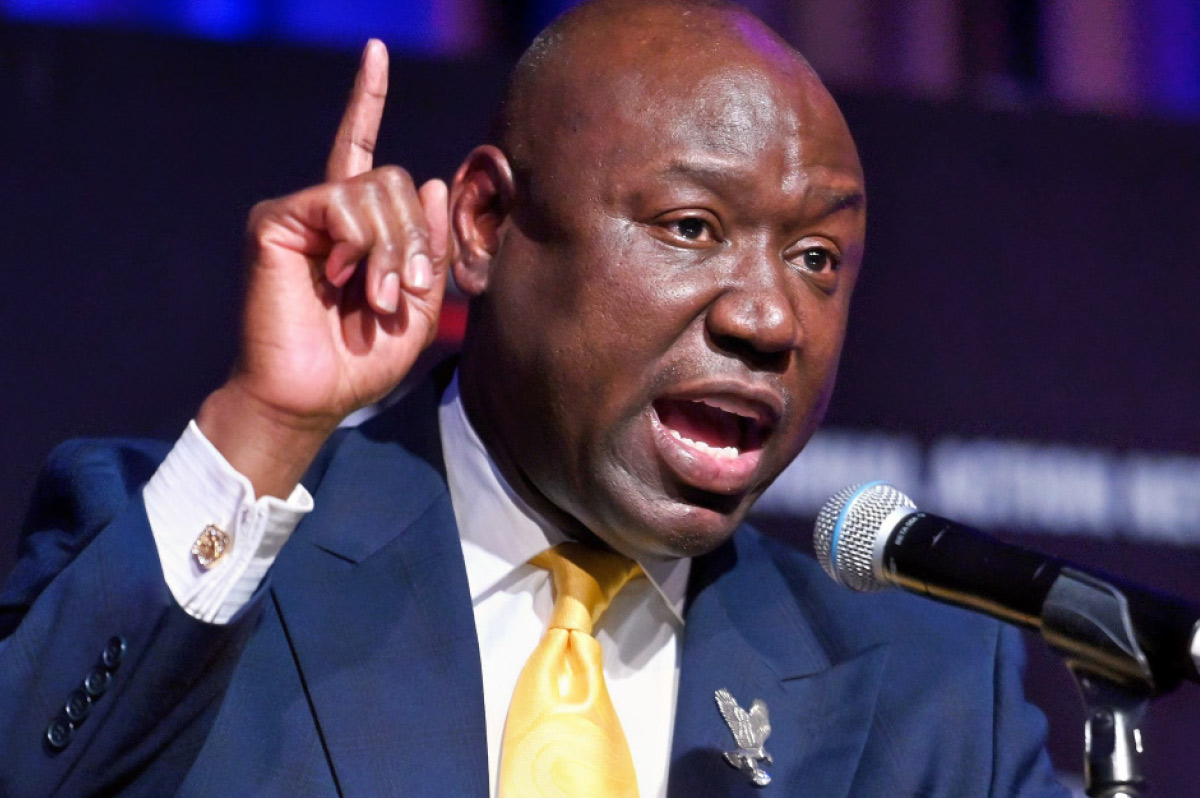
This joint news conference at the Macedonia Missionary Baptist Church in Eatonville, Florida, was one of many such conferences. Crump, nicknamed “America’s Black Attorney General,” is the go-to for families looking for answers after the loss of a loved one. And he is a champion advocate for those seeking justice.
“I think his angle is, let’s ‘make it too expensive to kill a black man or woman,’” said Florida attorney Kimra Major-Morris, whose own law practice teams with Crump to support the families.
“And he is not the one in court.”
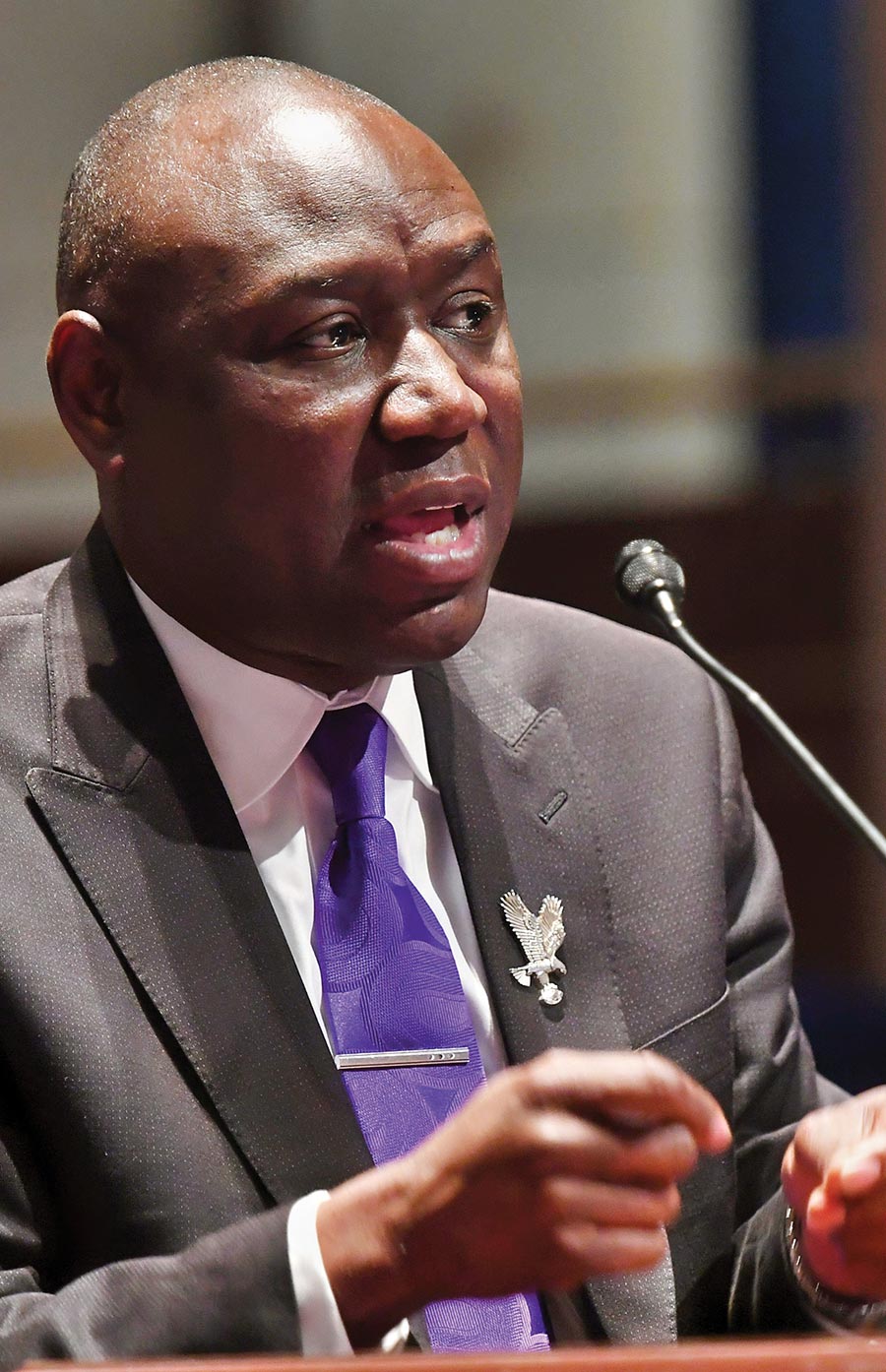
Unfortunately, there doesn’t seem to be an end to the cases and causes that need his firm’s help. He is unashamed about drawing from His inexhaustible source. He grew up in the church, and his faith, above all, trained him to value his mission and purpose.
“I have a praying mother, and had a praying father,” Crump said in a brief interview with Message recently.
“I know who I am, and I know whose I am. God is still on the throne, still in control. I understand the mission for me, and I step out in faith to do the right thing. ‘Thy rod and staff comfort me…’ When we face these attacks, criticism, threats, we don’t veer or vacillate. God is my protector. No weapon shall prosper.”
Crump acknowledged he must bolster the traumatized and broken but beloved society of families who have lost loved ones like this. He represents so many.
“Well, first, the reality is whether it’s Nolan Wells, Trayvon Martin, Ahmaud Arbery, Breonna Taylor, Terrence Crutcher, Tyre Nichols, or George Floyd (and all of the rest), I know that but for the grace of God, there go I. Our life experiences are very complementary.”
Because it could happen to any one of us, said Crump, when we see these cases emerge, the community has to have some sense of identification with people who have lost loved ones, and provide support to the families.
Second, Crump said he is resolute with the families even at this critical time.
“We have to fight for the truth,” he said. “You’re going to have to fight for it. We go into it with eyes wide open, and we are not going to be intimidated for standing up for our children’s future.”
“Black life is just as valuable as white life,” said Crump, and his approach is starting to pay off in change.
Public awareness and public appeal/opinion are the first step to valuing black life, before the case even comes to the actual court of justice. Hence, the press conferences give the public the opportunity to see that the victim was loved and “belonged” to someone. Next, the community creates a bold demand for transparency and accountability in situations and cases that seem to bear “strange fruit.” Crump has shown that by deeper scrutiny and investigation the playing field can be leveled out and justice can take place with great and beneficial results.
For instance, Crump’s involvement in the:
- Lewis Butler Case secured $779 million in a wrongful death verdict (Florida public record)
- Flint Water Crisis helped achieve a $641 million civil settlement for the children affected by the water crisis in Flint, Michigan (Mich. public records)
In addition to such a recovery, protecting families also means protecting the image and reputation of their loved ones, said Major-Morris. Whether it’s their name and face on a T-shirt or other artwork, or a documentary, families should own and be the ones to benefit from the story of their loved one.
“Family needs to control how their loved one shows up.”
“This is my purpose to fight for my people, especially people who have no voice, no platform, no influence. I am an unapologetic defender of black life, unapologetic defender of black power, unapologetic defender of black humanity,” said Crump. “I am in His hand — why do I fear? Why do I worry? I know I’m on right side.”
- When we travel abroad, we have to be cognizant of the stereotypical perceptions that have been fostered of our community, so being vigilant will combat those perceptions that might have been drawn by watching variant social media stereotypes that portray our community in a negative way.
- Continue the “talk” we experienced as teens and young adults:
- “Yes Sir”
- No sudden moves
- Having documents readily accessible and announcing your intent to retrieve them
- Being courteous and overly cooperative, so as not to provoke an unusual reaction that may be deadly from law enforcement.
- The New Talk, says Dr. Hermene Hartman, writing for N’Digo.com (Aug. 11, 2026):
- “I want you to experience the whole world, but I need you to understand the world you are entering… Have White friends. Go to integrated schools. Work wherever your talent takes you. Travel. Compete. Explore. Live fully. But remain aware. Most of all, it says: Come home.”



The first lesson is to strive for great preparation. Before entering Jerusalem, Jesus carefully prepared every detail of His arrival. He instructed two disciples to retrieve a colt that had never been ridden, fulfilling the prophecy found in Zechariah 9:9. Nothing about this event happened by accident. Jesus demonstrated that God’s work requires thoughtful preparation and complete obedience. Likewise, believers should prepare their hearts through prayer, worship, and the study of God’s Word before engaging in His service.
The second lesson is to commit acts of glorious defiance. Jesus’ entry into Jerusalem was an open declaration that He was the promised Messiah. Although He knew the religious leaders opposed Him and that suffering awaited Him, He refused to retreat or compromise. His courage was not rooted in rebellion for its own sake but in complete submission to His Father’s will. The disciples and the crowds also demonstrated boldness by publicly honoring Jesus despite the growing hostility around them.
We are called to the same kind of holy courage. In a world that often rejects biblical truth, believers must stand firm in their faith, openly confess Christ, and obey God rather than yield to fear or public pressure. Such acts of faithful obedience bring glory to God, even when they invite criticism or opposition.
The third lesson is to fulfill God’s purpose for your life. Jesus understood exactly why He had come to Jerusalem. He was not simply entering a city; He was moving toward the cross, where He would accomplish God’s plan of salvation. Every step He took reflected complete obedience to His divine mission. Likewise, every believer has been created with a purpose that brings honor to God. While our individual callings may differ, each Christian is called to love God, serve others, share the gospel, and faithfully use the gifts God has given.
Fulfilling God’s purpose often requires sacrifice and perseverance, but it also brings lasting joy because it aligns our lives with His perfect will. Like Jesus, believers should remain committed to God’s calling regardless of the cost.
The fourth lesson is to go the extra mile in making love’s appeal. Throughout His ministry, Jesus consistently reached out to people with compassion, mercy, and grace. Even during His final journey into Jerusalem, He welcomed the praise of the crowds while continuing to extend God’s invitation to all who would believe. The disciples willingly carried out His instructions, and the people freely expressed their devotion by laying their cloaks before Him. These actions reflected generous love and wholehearted commitment. His followers display that same spirit by serving others sacrificially, offering forgiveness, showing kindness, and faithfully sharing the message of Christ’s saving love. Love is most powerful when it goes beyond what is expected, reflecting the selfless example of Jesus Himself.
In conclusion, when we read Luke 19:28–40, it reminds believers that triumph often follows tears. Jesus entered Jerusalem knowing that the cross would come before the crown, yet He faithfully continued His mission. His example challenges Christians to prepare diligently, stand courageously for what is right, fulfill God’s purpose with unwavering obedience, and go the extra mile in extending His love to others. Those who follow Christ in faithful service can trust that temporary trials will one day give way to eternal victory, for God always fulfills His promises to those who remain devoted to Him.


I laughed at first. It sounded like something straight off social media, the kind of phrase you scroll past on TikTok or Instagram. But the more I sat with it, the more I realized how deeply impactful this concept is to relationships and dating, friendships, fitness goals, self-respect, and our spiritual walk.
The concept of “Match my energy” is a popular phrase and trend across social media platforms. It essentially means, bring the same level of effort, enthusiasm, or vibe that I’m bringing. At its core, the phrase is about reciprocity. Match me, emotionally, socially, romantically, spiritually or professionally. Invest in me; I’ll invest in you.
In our closest relationships, love is not passive. It is responsive. It listens closely. It notices shifts in tone. It senses when someone’s emotional tank is running low. This is called emotional attunement. It is the ability to read and respond to another person’s emotional state. Scripture says, “Rejoice with them that do rejoice, and weep with them that weep” (Romans 12:15).
To rejoice when someone rejoices means matching their joy. To weep when they weep means matching their sorrow. That’s the kind of energy matching I’m referring to.
In friendships and partnerships, emotional care cannot be the job of one person. Relationships thrive on balanced deposits and withdrawals of affection, effort, and grace. When one person is constantly over-functioning, always planning, always pouring, always holding space, resentment quietly grows, rotting roots that can quickly wither the structure of any relationship.
For those who have been giving of their energy to sustain relationships all on their own, resentment quickly builds up because they are waiting for the other person to match their investment. As a result, emotional burnout, and score-keeping can easily become pitfalls of the “match my energy” philosophy.
However, energy matching should be one’s ability to have the insight needed to care for and meet the needs of our partners when their emotional tanks are running low. In those cases, love and connection demand that we still show up, ready to carry the load our partners cannot carry on their own.
It is showing up for our loved ones when they need us to, and meeting them in the caves of their distress. This is healthy energy matching. I see you. I’ll meet you where you are. I’m not score-keeping, withholding emotional affection and intimacy, not passive aggressive, just present, connected and committed.
When I think about my relationship with God, I have come to realize that God never asks us to show up for others in ways He hasn’t already shown up for us.
“Draw nigh to God, and he will draw nigh to you” (James 4:8). God moves toward us. When we are broken, He is near. When we call, He answers. When we fall publicly, He restores publicly.

And if God shows up for us with that kind of faithfulness, our faith walk with God calls us to pray with the same urgency with which we ask Him to answer, to demonstrate the same unconditional love that He demonstrates to us, directing the same love and mercy to others. God’s mercies are new every morning. This level of connection, this level of relationship is being in partnership with God.
That night, as my daughter rolled over and fell asleep, her words lingered in the quiet. Maybe the idea of matching one’s energy is the sacred work of showing up. This is what love looks like in action. It is intention. Because that’s exactly how God shows up for us. He meets us in the valley. He celebrates us on the mountaintop. He never leaves us alone. And what a joy that would be to be in relationship and partnership with God. When we learn to attune our hearts to God and to one another, we stop performing and begin embodying emotional attunement, connection, and love. And that is the sacred work.



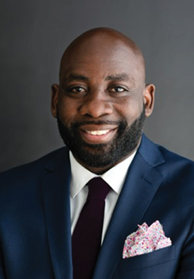
When our children were younger, Gianna and I did our best not to interrupt their daily routines or their bedtimes. As a pastor, there were times when I would leave the house before they woke up and arrived home just after their bedtime. Well-meaning people would tell me that once they got older, spending time with them would become easier, and for a while, I thought this was true.
As our kids grew older, their activities added to the household schedule, which was already somewhat overflowing. Gianna and I found ourselves balancing our own obligations between taxiing our children to their various appointments and after-school activities. Meanwhile, as my church responsibilities grew and my wife’s business grew, the time I thought I would have seemed to get lost to frequent travel and increased business-related demands. It seemed like there weren’t enough hours in the day or days of the week.
But I realized something that I think many people take for granted. In Genesis 2:3, we learn that God rested on the seventh day and made it holy. Then, in Mark 2:27, we further understand that God made the Sabbath for man. Through both verses, we know God purposely set aside time for His children to spend with Him. If an all-knowing God set aside time so that we could spend it with Him, we should make it our practice to do the same for our own families.
In our lives, we become adamant about scheduling doctors’ and clients’ appointments; some of us even have established a scheduled appointment with God through our personal devotion and church attendance. Yet, in our busy lives, we hope that our family time will happen organically. Friends, let’s start prioritizing “appointments” with our families.
I know there is a familiar phrase that says, “the family that prays together stays together,” but I believe we could add more to that. The family that plays together, talks together, eats and laughs together, has a greater chance of staying together. We shouldn’t settle for only having worship or sitting next to each other at church. There is an urgent need to put down our devices and purposely set aside time to focus on our families.
Whether it’s a scheduled board game night, watching old movies in the living room, or an outing to one of the local parks, pull out your calendar and put it on your schedule. It doesn’t have to be hours of set-aside time. Sometimes, a simple 30 minutes can go a long way.
As we continue through the remainder of this year, let’s take the time to make time to spend with our families.

We invite you to watch Breath of Life.
There are many options to choose from…
Atlanta, GA | WATC-TV Channel 57
Huntsville, AL | WAAY-TV Channel 31
Memphis, TN | WANT-TV Channel 24
Montgomery, AL | WNCF-TV Channel 32
Phoenix, AZ | Good News TV • mygoodnewstv.com
Hope Channel
Three Angels’ Broadcasting Network (3ABN)
Word Network
YouTube – YouTube.com/c/breathoflifetv
Facebook – Facebook.com/breathoflifetv
BOL Website – breathoflife.tv/videos/



Jesus speaks in John 14:1-3, saying, “Let not your heart be troubled; you believe in God, believe also in Me.”
In other words, don’t let your experiences cause you to be anxious; don’t let the trauma you experience put you in distress, because if you trust God, then you can also trust Me (Jesus).
- So those of you who are depressed, let not your heart be troubled
- Those of you struggling in poverty, let not your heart be troubled
- Those wanting freedom from oppression, let not your heart be troubled
- Those wanting deliverance from anger, let not your heart be troubled
- Those wanting deliverance from addiction, let not your heart be troubled
- Those wanting redemption and forgiveness, let not your heart be troubled
We are not to be troubled, but remain hopeful because:
“In My Father’s house are many mansions; if it were not so, I would have told you. I go to prepare a place for you. And if I go and prepare a place for you, I will come again and receive you to Myself; that where I am, there you may be also,” (John 14:2-3).
This is the hope you have for a better life, a worry free life, a life where you will never have to experience pain again, a life where you will not have to feel unsafe, or in danger of being abused or neglected, a life where true happiness will flow through your veins and you smile once again and the sound of your laughter will find its way out.
Today’s lesson will discuss the end of all trauma, pain and suffering and the beginning of a life free from misery, suffering and death.
What areas of your life would you like to be rescued from? Why?
When you hear the word “Heaven” what picture is painted in your imagination?

1 Kings 19
- John 14:1-3
- Revelation 21:3-4
- Revelation 1:7
- Matthew 24:36-51
- Revelation 22:17
In what ways are these verses providing hope for you?
How does John 14:1-3 inspire you to persevere now as you face your situation?
Jesus’ return is sooner than you think and may be longer than you like, but never give up because He is coming for you to take you to a new home.
What is the significance of verses 3 and 4 to you? Why?
My friend, what a day that will be when Jesus returns, and we are able to look at Him face to face. The Bible declares that “every eye will see him” (Revelation 1:7). That applies to those who’ve accepted him into their hearts and those who did not accept Jesus into their hearts. Those who’ve asked for forgiveness, and those who did not.
In what ways would your life be different if you knew the day and time Jesus was returning?
What is preventing you from living the way you would live if you knew the exact date and time Jesus was returning?
Looking at your own experiences in this life, what excites you about this verse?
The beautiful thing about Jesus’ return in addition to him taking us to a better and safer place to live, is the fact that He will defend the weak, those who have been wrongfully tried and imprisoned, those who have been dealt with unjustly. God will stand for you and give to those individuals or groups — those who’ve caused pain, abuse, and oppression — the rewards for such evil.
Looking at your life experiences, (your trauma, your decisions, your current situation) what do you long for today?
What are you thirsty for today my friend? Do you thirst for a depression free life? If yes, then Jesus says come. Do you thirst for an abuse free life? If yes, then Jesus says come. Do you thirst for an addiction free life? If yes, then Jesus says come. Do you thirst for an anger free, bitterness free life? If yes, then Jesus says come. He will bring you rest.
My friend, do you want to accept Jesus’ offer for a better life today?

- Invite Jesus to live in your heart.
- Live a life of kindness, respect, and joy towards others.
- If there is a habit, a problem in your life that is holding you back, a sin in your life that you struggle with, surrender it to God right now.
- Accept the gift of Jesus’ righteousness as the true reality of your life right now, at this moment today.

Dear Jesus, I desire to be whole again, I desire to be healed from my pain. Jesus, I want You to live in my heart. I want You to help me to get rid of every bad habit in my life that causes people pain and separates me from You. Jesus, thank you for Your love towards me, and thank You for grace and righteousness. I want to develop a deeper love for You and I desire to be in heaven with You when You come. I surrender my life to You now and look forward to living with You. Wash me so I can be clean. Forgive me for the pain I have caused in Jesus’ name. Amen.

The New Testament presents life as received before it is managed. Everything — breath, strength, opportunity, and resource — is understood as gift rather than possession. Jesus consistently resists the illusion of absolute ownership. He speaks of wealth, time, and power as entrusted rather than earned, and of life itself as something to be given rather than guarded.
Jesus’ own life embodies this posture. He does not cling to status or leverage His power for self-preservation. He lives with open hands — sharing time with the overlooked, attention with the unseen, and compassion with those who cannot repay Him. His freedom comes not from accumulation, but from trust. What He receives, He gives.

Christian faith does not condemn material life, nor does it romanticize scarcity. Instead, it calls for responsibility shaped by love. Time is stewarded when it is given to what restores life rather than exhausts it. Money is stewarded when it serves justice, generosity, and care rather than fear or status. Abilities are stewarded when they are offered for the good of others rather than for self-exaltation.
In Seventh-day Adventist understanding, the idea of stewardship includes the care of the body itself. Human life is not disposable or self-owned. Bodies are places where trust is practiced — through rest, restraint, attentiveness, and respect for limits. Stewardship becomes wholistic: how one eats, rests, works, and relates all become expressions of faith.
Stewardship also resists isolation. What is given is meant to circulate. Generosity builds community. Hoarding fractures it. Jesus’ vision of life undermines systems that concentrate abundance while normalizing deprivation. Faithfulness is measured not by how much is kept, but by how wisely and compassionately life is shared.

Character Shaped by Christ

Christian behavior, then, is not about earning acceptance or proving worth. It is about alignment.
As life is oriented around Christ, patterns begin to change — not through force, but through formation. Desires are reshaped. Priorities are reordered. Responses once driven by fear or self-protection give way to patience, honesty, restraint, and compassion.
This understanding challenges both moralism and permissiveness. Christianity does not claim that behavior is irrelevant, nor does it reduce faith to behavior alone. Actions matter because people matter. Choices shape lives. Harm is real. Love requires accountability. Yet behavior detached from grace becomes distortion. Rules without relationship produce either pride or despair.
So then, behavior includes attentiveness to the whole person. How one speaks, eats, rests, consumes media, relates to others, and uses influence all reflect what governs the heart. These choices are not arbitrary restrictions, but expressions of care — for oneself, for others, and for the life God intends.

Christian behavior also resists cultural pressures that normalize excess, exploitation, or indifference. It calls people to live deliberately rather than reactively. In a world driven by consumption and comparison, restraint becomes a form of freedom. In a culture shaped by outrage, gentleness becomes strength.
Love Lived in Marriage and Family



The Bible presents marriage and family as gifts, not guarantees. They are not portrayed as perfect systems immune to failure, nor as ultimate sources of fulfillment. Instead, they are relational covenants—places where commitment, vulnerability, and responsibility meet. Jesus affirms their value while refusing to romanticize them. He treats relationships seriously because He understands their power to heal or harm.
Marriage, in this vision, is not ownership or hierarchy. It is partnership rooted in mutual self-giving. Jesus reframes authority by redefining greatness as service. Applied to marriage, this means love expressed through faithfulness, restraint, patience, and sacrifice rather than control. Commitment is not sustained by dominance or obligation, but by trust practiced over time.
Family, more broadly, is not limited to structure or biology. Jesus repeatedly expands the definition of family to include those bound together by love, care, and shared responsibility. This does not diminish biological families; it deepens their meaning. Family becomes a place of formation — where values are learned, wounds are revealed, and character is shaped.
Christian Scripture is honest about the fragility of family life. Conflict, failure, loss, and disappointment are not signs of spiritual deficiency; they are part of human reality. Jesus does not condemn broken families, nor does He exclude those whose relationships do not match idealized forms. Instead, He brings grace into complexity — calling people toward healing rather than shame.
Marriage and family also carry a broader purpose. They serve as witnesses to God’s faithfulness in a world marked by instability and disposability. Faithfulness lived quietly — showing up, listening, forgiving, remaining present — becomes countercultural. Love that endures without domination becomes a testimony.
Children, within this framework, are not possessions or extensions of adult identity. They are persons entrusted with care. Formation involves guidance without control, discipline without humiliation, and love without condition. Families become spaces where dignity is practiced and trust is learned.
Importantly, Christianity does not elevate marriage or family above all other callings. Singleness, childlessness, and chosen community are also honored. Worth is not measured by marital status or family structure, but by belonging to Christ.
For those exploring faith, this vision resists simplistic answers. It acknowledges brokenness while holding space for hope. For those who follow Christ, it calls for intentional love practiced daily, not perfection displayed publicly.
Marriage and family, shaped by Christ, become places where love is learned slowly and faithfully. Not flawless, but committed. Not performative, but real. In a world marked by fracture and impermanence, such covenantal love becomes a quiet but powerful sign that restoration is possible.
Activated:
Legacy isn’t what you leave in your will. It’s what you activate while you’re still breathing.
Legacy is about rhythm and not riches. Legacy builds a system your children can stand on, not just inherit. This module is about preserving that — by documenting, teaching, transferring, and protecting what we’ve worked for and what we believe.
Because if we don’t move with intention, systems will keep moving without us.
They Didn’t Wait for Retirement — They Bought the Block
Lisa and Jerome, both educators in Newark, started with a duplex. Then came a triplex. By the time their kids were in high school, they’d purchased four properties on their street. But here’s the twist: they put each home in a trust, tied to a family foundation. Their children don’t just inherit keys — they inherit responsibilities.
Every quarter, the kids help manage books, vet tenants, and attend workshops on asset protection and philanthropy. This isn’t just real estate. It’s real formation.
The Family Meeting That Changed Everything
In Birmingham, the Holloways had one Sunday dinner that shifted the trajectory of three generations. Grandma brought out a binder. Inside: her will, advance directive, funeral instructions, insurance papers, bank accounts, passwords, deeds —and handwritten prayers.
She called it The Book of Peace.
That night, they cried, planned, and made appointments — together. Now every cousin has a folder. Every sibling has a policy. And the next gen knows: money is not a mystery — it’s a ministry.
- If it’s not in writing, it’s not protected.
- Life insurance is not a luxury. It’s a launchpad.
- Your name should live in deeds, not just obituaries.
- Teach the next generation how to receive — and how to grow what’s received.
- Wealth without wisdom breaks a family. But wealth with faith builds a future.
Don’t just leave wealth. Leave instruction.
Don’t just pass on assets. Pass on authority.
Don’t just hope they’ll be okay. Make sure they’re equipped.
This is how we stay alive in the story.
Not just as names on paper, but as foundations in motion.


- What does legacy mean to you right now—not someday, but today? How are your daily financial decisions shaping the foundation for those who come after you?
- Lisa and Jerome built legacy through real estate and responsibility. What are you actively building that could be passed down—not just as an asset, but as a system?
- Have you had a “Book of Peace” moment in your family? If not, what would it take for you to create one—starting with just one document or one conversation?
- What’s one financial or spiritual principle you want your family to carry into the next generation?
- How are you modeling it now?
- Do you have a will, trust, or life insurance policy in place?
- If not, what’s holding you back—and what’s one step you can take this month?
- How often do you talk about money, planning, or purpose with your family?
- How can you make those conversations more regular, transparent, and empowering?
- The Holloways made planning a shared experience. Who in your family or community can you bring to the table to begin this process together?
- What knowledge do you wish you had received earlier about wealth, protection, or planning?
- How can you ensure the next generation doesn’t miss that wisdom? Legacy isn’t just financial—it’s emotional and spiritual.
- What prayers, stories, or values do you want recorded alongside your assets?
- Are you waiting for a “better time” to put your legacy in motion?
- What would shift if you treated legacy as a living practice, starting now?



2 tablespoons olive oil
1 medium onion, diced
1 red bell pepper, diced
1 yellow or orange bell pepper, diced
3 garlic cloves, minced
1 can (14-15 ounces) diced tomatoes, drained
4 cups fresh spinach
3 cups marinara sauce
1 1/2 teaspoons Italian seasoning
1/4 teaspoon red pepper flakes, optional
1/4 cup chopped fresh parsley
Salt and freshly ground black pepper, to taste
2 1/2 cups shredded vegan mozzarella-style cheese
1/2 cup vegan Parmesan
Fresh basil and parsley for finishing
Preheat oven to 375°F. Cook the lasagna noodles according to package directions until just al dente. Drain and set aside. Heat olive oil in a large skillet over medium heat. Add the onion and peppers and sauté for 5-7 minutes, until they begin to soften. Add the garlic and cook for another minute. Add the diced tomatoes, spinach, Italian seasoning, red pepper flakes, parsley, salt and black pepper. Cook until the spinach has wilted. Stir in approximately 1 cup of the marinara sauce and remove from heat. Spread a thin layer of marinara over the bottom of a 9 x 13-inch baking dish. Add a layer of noodles followed by some of the vegetable mixture, vegan mozzarella and a sprinkling of vegan Parmesan. Repeat the layers, finishing with noodles, remaining marinara and cheese. Cover loosely with foil and bake for approximately 25 minutes. Remove the foil and bake for another 10-15 minutes, until bubbling and lightly golden. Allow the lasagna to rest for approximately 10 minutes before cutting. Finish with fresh basil and parsley.
1 medium red onion, thinly sliced
2 tablespoons extra-virgin olive oil
1/2 teaspoon sea salt
1/4 teaspoon red pepper flakes, or to taste
2 tablespoons chopped fresh parsley
1-2 teaspoons agave nectar, for finishing
Preheat oven to 425°F. Wash the squash well. Carefully cut it in half and remove the seeds. Kabocha skin becomes tender when cooked and is edible, so peeling is optional. Cut the squash into approximately 1/2-inch wedges. Arrange the squash and sliced red onion on a baking sheet. Drizzle with olive oil and season with salt and red pepper flakes. Toss gently and arrange in a single layer. Roast for approximately 25-35 minutes, turning once, until the squash is tender and caramelized around the edges. Transfer to a serving dish. Drizzle very lightly with agave and finish generously with fresh parsley.
3 medium beets, roasted, peeled and cut into bite-size pieces
1 cup cherry tomatoes, halved
1/2 small red onion, thinly sliced
1/2 cup crumbled vegan feta
Simple Citrus-Dijon Vinaigrette
3 tablespoons extra-virgin olive oil
2 tablespoons fresh lemon juice
1 teaspoon Dijon mustard
1 teaspoon agave or maple syrup
1/4 teaspoon sea salt
Freshly ground black pepper, to taste

Dawn Patrick Wout is a co-founder, wholistic health coach, and the creative force behind BodyWell Holistic, a nature-centered wellness retreat in Maryland where food, garden, rest and connection come together.
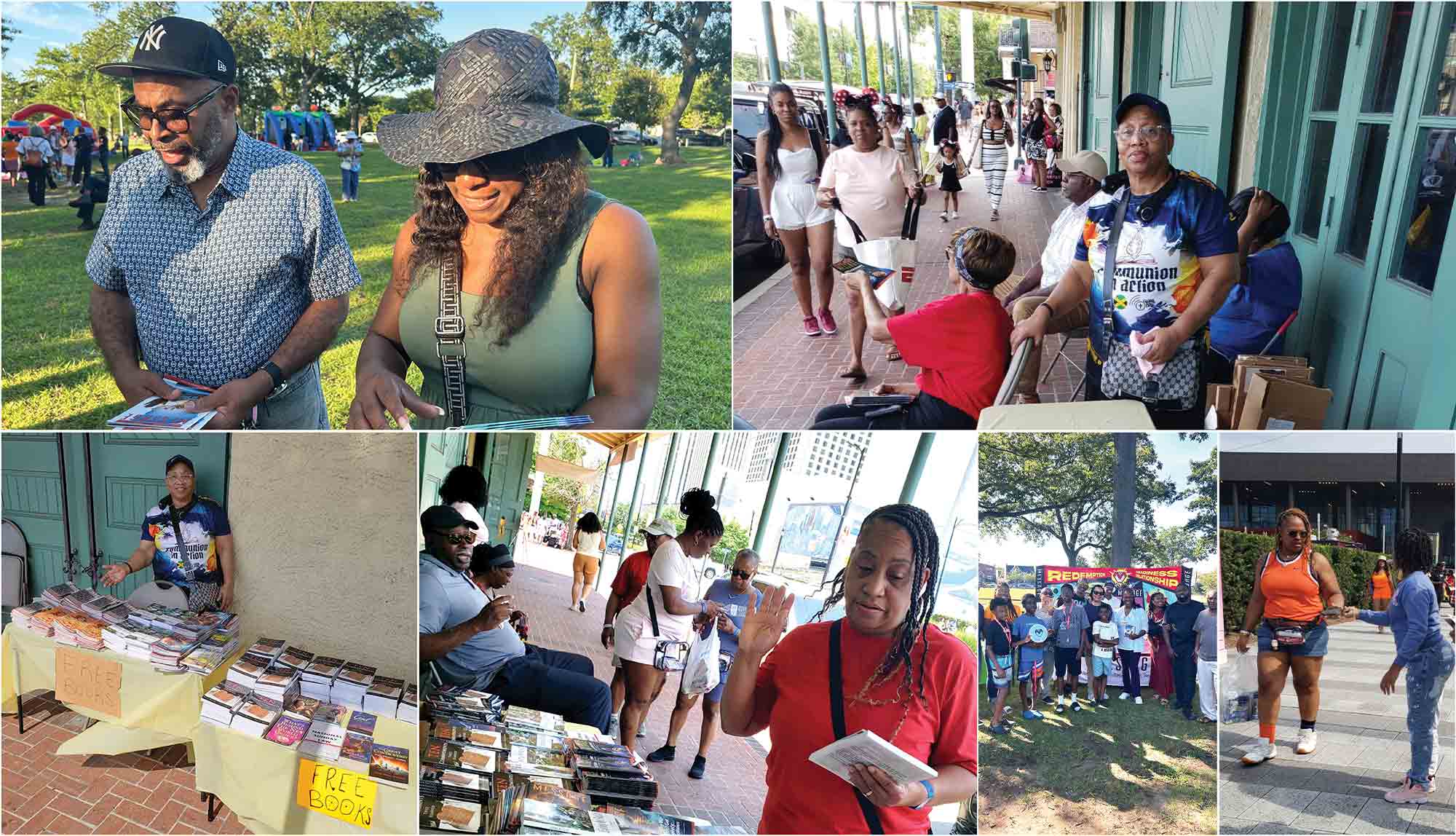

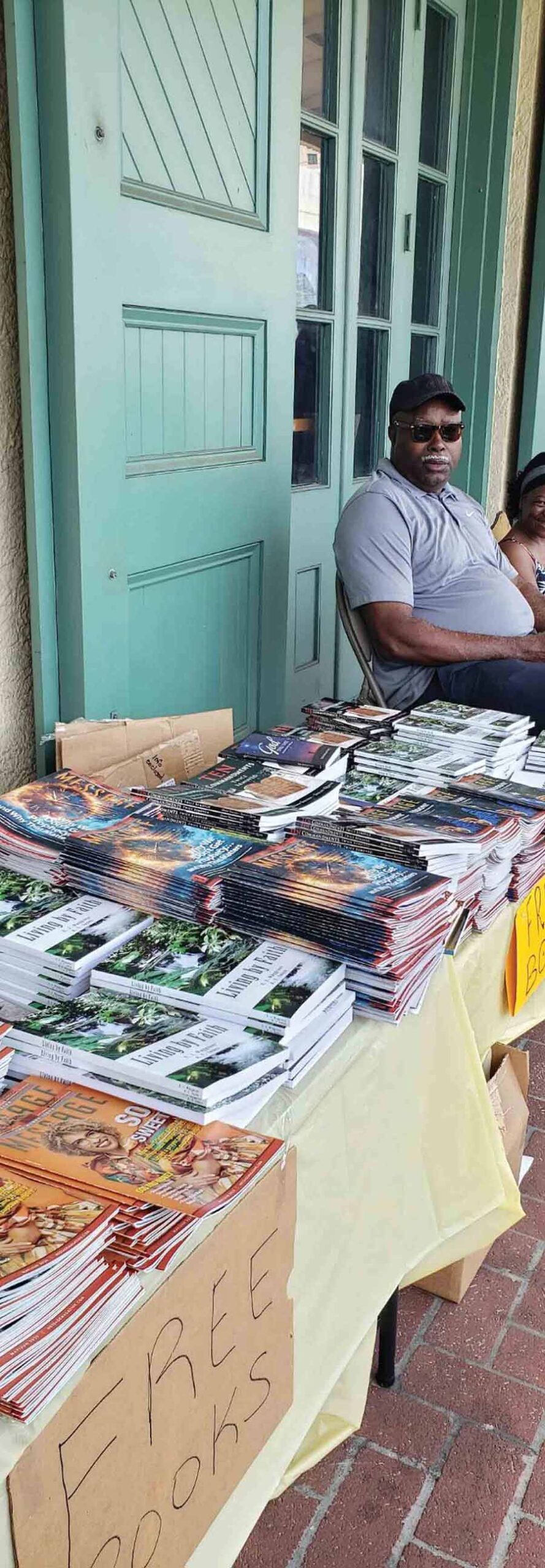
“It is absolutely refreshing to be in that atmosphere, knowing that the word of God is going out, knowing someone’s life will be changed,” said true believer Oscar Charles, who serves as an Elder at United Fellowship Seventh-day Adventist Church. “Someone will never be the same again!”
National Nite Out introduced neighbors and volunteers in the annual community gathering to highlight watchfulness and mutual support in August. In Queens, N.Y. Lisa Quailey, an Elder at the Victory Fellowship Worship Center, rallied sponsors and volunteers, including Pastor Glen Frazier who helped with the Message Resource booth. Upon seeing the support, and the embrace of the community, Quailey felt impressed.
“My heart is full.”
Have an upcoming event for which you would like to share Message? Contact us, [email protected].




Atlanta, GA 30318
 404-799-7288
 http://atlantaberean.com/bomc
 [email protected]
P.O. Box 519
Ashton, MD 20861-0519
301-774-0400 https://www.emmanuelbrinklow.org [email protected]Baltimore, MD 21217-3803
410-669-6350 https://www.bereatemple.org [email protected]Windsor Mill, MD 21244-2042
410-922-0050 https://www.libertysda.org [email protected]7000 South Michigan Avenue
Chicago, IL 60637
773-224-7700 http://www.shilohsdachicago.orgMemphis, TN 38106
901-774-5431 http://longviewheights22.adventistchurchconnect.orgOrlando, FL 32810
407-704-6963 https://www.guilgalsda.org/ministries/community-serviceSaint Louis, MO 63113-1520
314-361-6446 https://bereanmo.adventistchurch.org [email protected] St. Louis, MO 63136-1500
314-868-0707 https://www.northsidesda.org [email protected]