






Message Magazine is trying out a new size and we’re eager to hear your thoughts.

The eloquence of a dedicated life exemplifying the characteristics of God is far more powerful than the eloquence of words. It was therefore, the Godlike character of Jesus and the unselfish prayer He prayed for His tormentors that brought conviction to the penitent thief.
by Ernest E. Rogers,
The Message Magazine, March April 1976


relationship
readineSS
Call 1-800-456-3991 Monday through Thursday 8:00 a.m. to 5:00 p.m. Mountain Time for subscription information or address changes. MESSAGE (ISSN 0026-0231) is published bimonthly Jan/Feb, Mar/Apr, May/June, July/Aug, Sept/Oct, Nov/Dec.
© 2026 by the North American Division of Seventh-day Adventists, 9705 Patuxent Woods Drive, Columbia, Maryland, 21046, U.S.A. Address editorial correspondence to MESSAGE MAGAZINE, 9705 Patuxent Woods Drive, Columbia, MD 21046-1565 U.S.A. All subscriptions are prepaid. If you did not order MESSAGE, it is being sent as a gift from a friend. You will not be billed. To subscribe, mail payment to MESSAGE, 1350 North Kings Road Nampa, ID 83687, U.S.A. or call 1-800-456-3991. Subscription price: one year, $19.95 U.S. currency; single copy, $4.00; overseas, add $10.00 per year for postage. Prices subject to change without notice. Periodicals Postage paid at Nampa, Idaho and additional offices. Vol. 92 No. 2 MARCH/APRIL POSTMASTER: Send address changes to MESSAGE, 1350 North Kings Road Nampa, ID 83687, U.S.A. Printed in the U.S.A.
Unless otherwise noted, Bible texts in this issue are from the New King James Version. Copyright © 1979, 1980, 1982 by Thomas Nelson, Inc. Used by permission. All rights reserved. Statements in this issue attributed by an author to other speakers/writers are included for the value of the individual statements only. No endorsement of those speakers’/writers’ other works or statements is intended or implied.




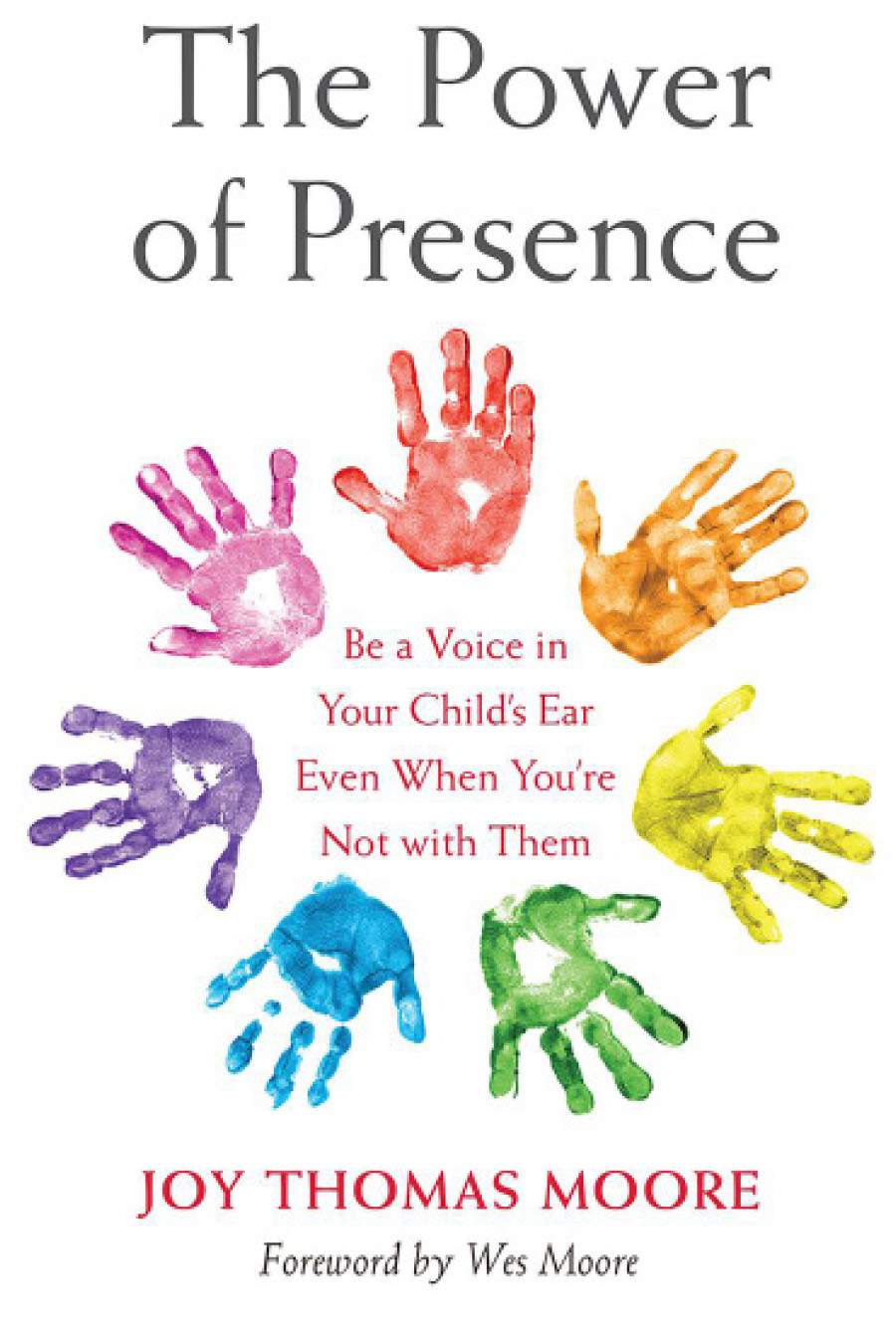
I recently had the opportunity to meet Joy Thomas Moore, the mother of Maryland’s first Black governor, Wes Moore, and that encounter made reading “The Power of Presence” even more meaningful. This book is powerful because it is not theory; it is testimony. Moore writes from lived experience, sharing how a mother’s influence can shape destiny even when circumstances threaten to pull a child in another direction. Her words are rooted in both struggle and hope, offering parents a blueprint for helping their children win in life.

“Falling” is a raw, soul-stirring anthem that captures those fragile moments when life’s weight feels too heavy and faith feels thin. The song speaks to anyone standing on the edge of doubt, heartbreak, or exhaustion, reminding us that we are not alone in the fall and that mercy waits in the morning. It is music for broken hearts and weary souls, the quiet fighters who keep trusting even when they feel themselves slipping. K-Anthony’s music is available on all digital platforms.


Suno has become an unexpected gift in my creative process. I had written several songs and simply wanted to hear how they might sound with a full band behind them. This app did exactly that. With just my lyrics and a simple prompt, Suno generated complete tracks with vocals, instrumentation, and arrangement, allowing my ideas to come alive in ways I could only imagine before. For writers, worship leaders, and creatives who hear music in their heads but lack studio access, Suno becomes a bridge between imagination and expression. It does not replace musicians, but it empowers creators to dream, refine, and share their sound.

couldn’t resist. A November 2025 “Marketplace” report has given me reflux ever since, because it burned with prophetic irritation. The Public Radio International (PRI) production often frames specialized economic news for the uninitiated masses like myself.
The American experience is losing its appeal and standing in tangible ways. Brands as American as “mom and apple pie” like McDonald’s and Coca Cola recently launched ad campaigns distancing themselves from their American-ness. It’s just not cool anymore.
Said host Kai Ryssdal: “The institutions of this economy depend on the institutions of this democracy. The rule of law, fair regulation, recourse when wronged — it’s why people come here, and it’s why businesses invest here.”
International students coming here to study — down 17%, and fewer tourists to the U.S. in 2025 have analysts estimating losses at $12B according to the report. Of course, our current presidential administration with its cuts to foreign aid, student funding, and increasing restrictions on travel and study contributed to these numbers. Thus, how we’ve treated others has a “better than 80% correlation” on global national rankings, according to Simon Anhalt who conducts annual rankings of countries as brands. This, in turn, has a direct tie to revenue and trade.
America, look at you slippin’ now — slipping in the perception that it’s desirable, that it is advanced, that its products are superior. More than anything else, and as implausible as history has shown it to be, our claims that we are the ethical and moral superpower of the world have eroded in recent, drastic and measurable ways.
“America stood for predictability,” said Usha Haley, a professor of management and international business at Wichita State University, and immigrant from India. [The United States was seen as] the shining city on the hill, an educational system par excellence, and the ability to be what you want to be, but most of all, America was a market that you could understand, where data were transparent, where regulation was understandable, where you didn’t have to bribe somebody to get ahead.”
And there, in a nutshell, Haley described the downfall of our preeminence and self-declared primacy. It pivots on justice, ethics, morality, and basic humanity. As Simon Anhalt explained in the Marketplace interview, Japan and Germany —once globally viewed as pariah, after the astronomical life tolls in two World Wars — have taken 80 years to re-brand themselves into the “paragons” they are now.
So shocking are the headlines that declare ICE door-to-door raids, or the accession of a whole other country, or the cruel and capricious threats to opposition. Our nighttime doom scrolling, the angst and the anxiety-filled inertia, I would suggest come from a spiritual instinct. There’s more to this story than the brand analysis Kai Rissdal prophesies.
John, the prophet, journaling a series of visions from God in Revelation, contends that all of humanity’s plans and strategies, ideas and achievements — as they operate in opposition to God’s words, will and works—are destined for a breathtaking failure in the near future (Revelation 14:8; 18:2-5). Babylon (the sum total of corruption and opposition fueled by demonic interests) is fallen, is fallen, declares the heavenly messenger to John, and to us. The falling status of the United States strikes a chord within our psyche, therefore, because it shakes our worldview and sobers our giddy confidence. It reminds us that no matter the aura of invincibility and dominance, every corrupt, abusive and oppressive power will have its comeuppance. We see it in real time as to our own status.
Without saying when, and using plenty of symbolic language to describe the how, the Lord in mercy will exercise His judgment. As for you and me — our task is to live our lives in close relationship with the Lord of love, operating in justice, mercy, and selflessness — the commerce and trade of heaven (Revelation 18:4).
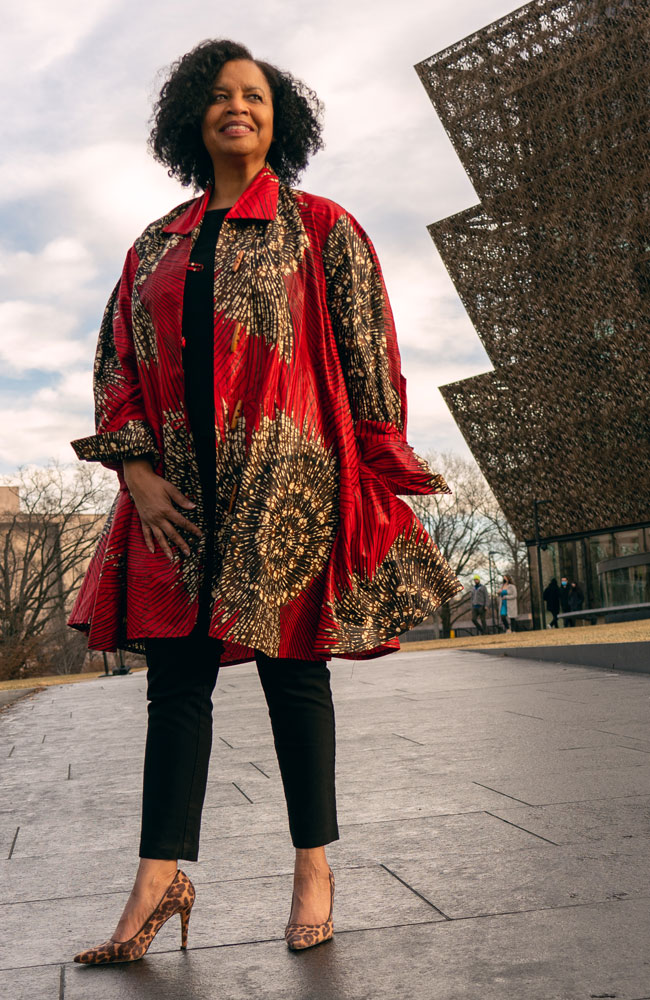
CARMELA MONK CRAWFORD, Esq., is Editor of Message Magazine
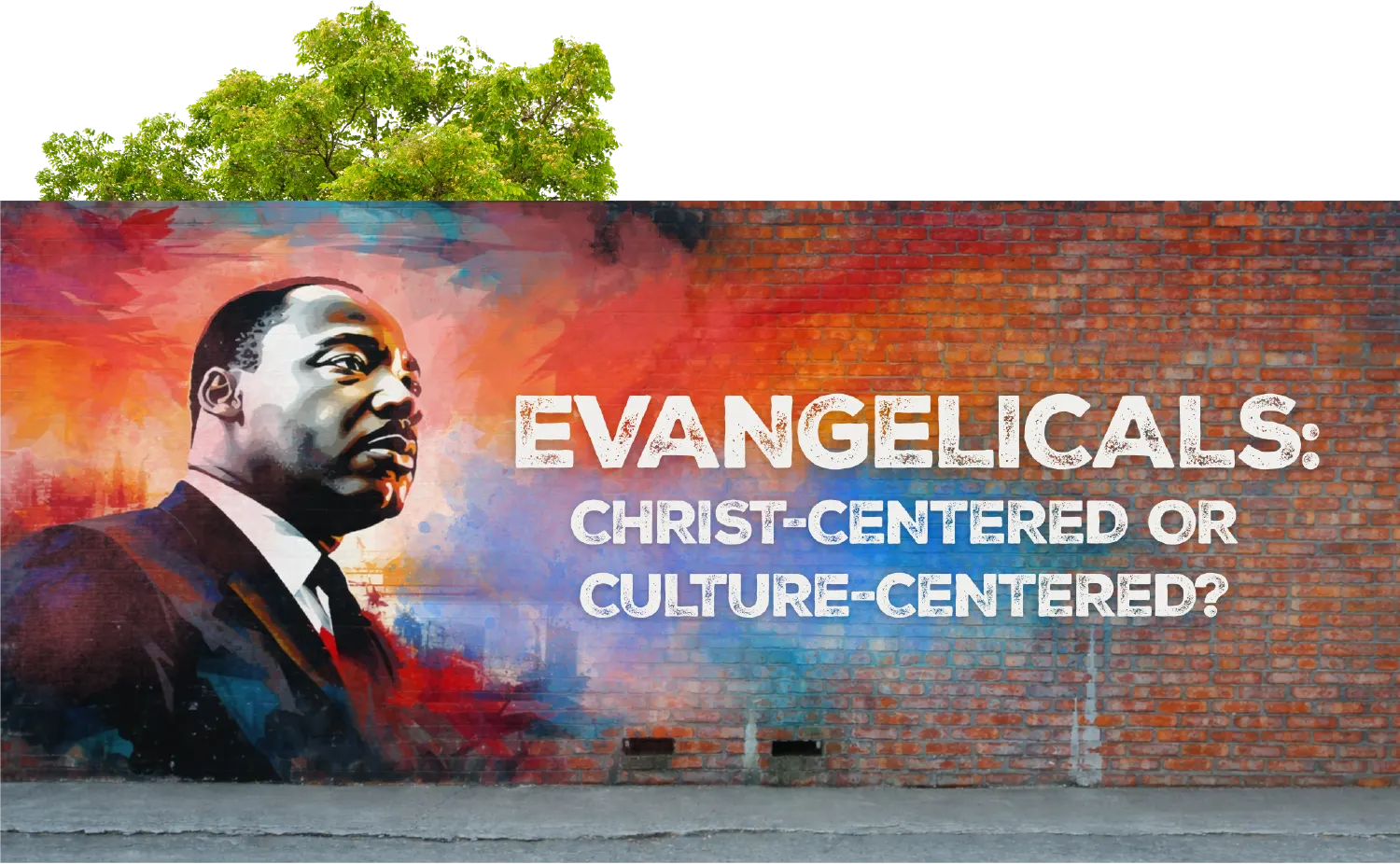

“In short, American religion has become an ‘all or none’ proposition—conservative evangelical religion or none at all,” said Ryan P. Burge, professor of Practice at the Danforth Center on Religion and Politics at Washington University and author of “The Vanishing Church.” “This leaves tens of millions of theological and political moderates with no place to find community and spiritual edification, or to work collectively to solve societal problems.”
Consequently, Christianity now reflects partisanship rather than being the unadulterated gospel of Jesus Christ. Discipleship is translated to mean having a “conservative” perspective rather than followers of Christ’s principles. Through critical and unbiased thinking, it may cast doubt as to whether the Bible is the inspired word of God or a launching pad to form “conservative evangelical religion.”
It begs us to answer two questions: What does “evangelical” mean? How do we identify “conservative evangelicals?”
At the 1992 Republican National Convention, Patrick Buchanan, former presidential candidate and noted conservative commentator, outlined what he thought should be the key elements of a Christian conservative’s values.
In this address, he defined cultural wars as pro-life regarding abortion, using state funds to support private religious schools to ensure Judeo-Christian values in kids, advocating for justices who will follow the constitution and not their policy preference, and limiting marriage as between a male and female.
In framing it as a cultural war over the above listed moral values, Buchanan provided a litmus test to describe “conservative evangelicals.”
“The historical significance of this new axis (“conservative evangelical religion”) has been evident in the ways in which it cuts across age-old divisions among Protestants, Catholics, and Jews,” James Davison Hunter, author of “Culture Wars: The Struggle to Define America.”
“The orthodox traditions in these faiths now have much more in common with each other than they do with progressives in their own faith traditions, and vice versa.”
Although they agree on the tenets of their faith, we can cite this example. Conservative Southern Baptists have more in common with conservative Seventh-day Adventists than non-conservative Southern Baptists. Consequently, conservative Seventh-day Adventists have more in common with conservative Southern Baptists than non-conservative Seventh-day Adventists.
For openness and transparency, it would be a mistake to link “conservative evangelical religion” with Christian Nationalism. “Christian Nationalism is not synonymous with Evangelical Christianity,” said Scott A. Leadingham, Staff writer for the Freedom Forum, an organization whose mission is to “foster First Amendment Freedoms for All.” Christian Nationalism represents an ideology and not a theology. It is not a denomination, or a sect with rules and doctrines. Nevertheless, adherents to Christian Nationalism by various denominational groups.
In considering Dr. Martin Luther King Jr.’s book, “Where Do We Go from Here: Chaos or Community?,” we need to present this question to us: where do we, as evangelicals, go from here: Christ-centered or cultural-centered?


While European countries have a ton of local and provincial Sunday business closing laws — to shut down the sale of liquor to limit crime, etc. — the central motivation and rationale has been mostly secular, with statements about churchgoing never being taken seriously.
But there’s a difference with the Heritage Foundation proposal. It is not just a political advocacy organization. It is also the right hand of the Christian Right in America. Its genesis and inspiration is Christian Nationalism, and it seeks to promote Christian Nationalism through legal and constitutional means.
The unspoken motive for a “uniform day of rest” is to encourage people to go back to church and make people more religious. But the United States has a long history of being a churched people. And yet, their warfare against secularism persists.
The legal framework used by the Heritage Foundation is based on a Supreme Court case that upheld the constitutionality of “blue laws,” which are state laws that prohibit certain commercial activities on Sundays. The Court ruled in McGowan v. Maryland (1961) that while these laws originated from religious tradition, they served a legitimate secular purpose of providing a uniform day of rest and recreation, thus not violating the Establishment Clause of the First Amendment. The case established that laws with religious origins can be constitutional if they have a modern, secular justification.
So, why should calls for a “uniform day of rest” be taken very seriously right now? Because Sunday closing laws (i.e., business closing laws) have been historically connected to Sunday worship laws during the Colonial Puritan era, and in the Southern States in the Post-Reconstruction era.
Sunday laws are a means of getting a foot-in-the-door toward influencing states to legislatively enact restrictive worship laws in violation of the non-establishment clause of the First Amendment. And when you add to this the successful influence Project 2025 has had at the executive level of the federal government so far, and its disastrous effects, one must not be too dismissive of this formal-documented call specifically addressed to federal and state lawmakers.
Key Historical and Common Blue Laws:
- Retail/Commerce: Restrictions on selling “non-essential” items, such as clothing, furniture, and appliances.
- Alcohol Sales: Bans Sunday alcohol sales, a holdover that persisted in many states post-Prohibition.
- Automobile Sales: Prohibitions on selling cars on Sundays, still in place in several states including Illinois, Indiana, and Minnesota.
- Recreation/Labor: Bans on hunting (Connecticut and Pennsylvania), movie theaters, bowling, and professional sports.
- Mandatory Closing: In places like Bergen County, New Jersey, malls and retail stores are still heavily restricted.
HISTORIC CONTEXT & RESEARCH:
- Origins: The first known American, or “blue,” law was implemented in 1617/1619 in Virginia.
- Purpose: Initially religious (Sabbath observance), it was later justified for secular reasons like giving workers a day of rest.
- Decline: Many laws were repealed in the 1980s and 90s, with Pew Research Center studies finding that repeals often led to decreased church attendance and increased or “malfunctioning” behavior, such as higher alcohol/drug use.
- Supreme Court: The Court consistently upheld these laws in the 20th century, ruling they served a valid, non-religious, social purpose.
- Source: “The Devil’s New Playground: The Shopping Mall,” Richard Morin, Pew Research Center, September 13, 2006.
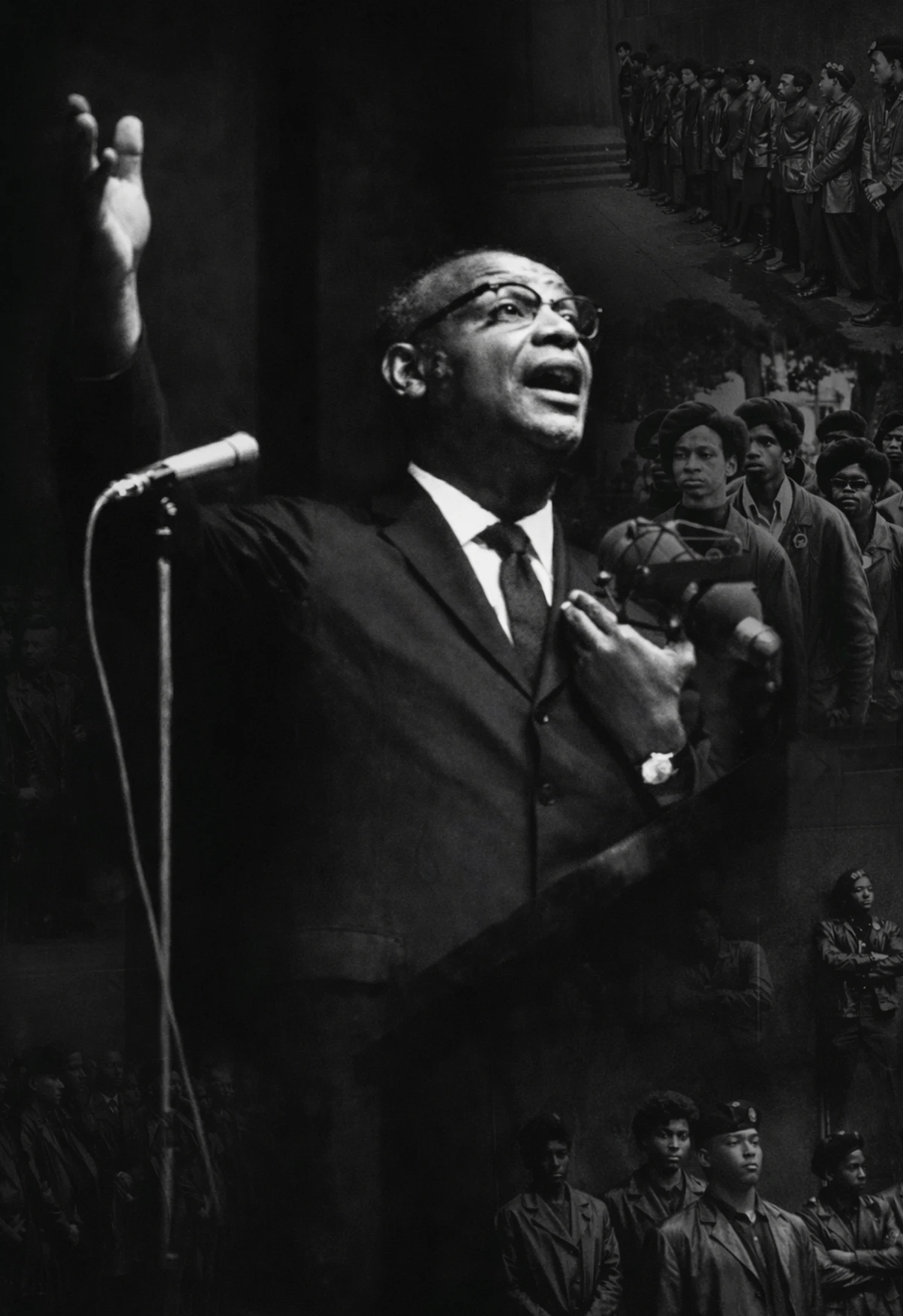
Evangelist Cleveland also sought to bring wholeness to society as part of his gospel mandate. Cleveland conducted integrated revival meetings wherever he went during the dangerous and divisive days of Jim Crow, as well as the Civil Rights and Black Power Movements. This meant seeking wisdom from God and favor from the community.
In 1970, Cleveland launched an outreach campaign in Oakland, California, the birthplace of the Black Panther Party for Self Defense. He already received a permit from the city of Oakland to conduct his meetings but wanted the blessing of the Panthers as well. Cleveland sent one of his associates, Walter Horton, to seek permission from Bobby Seale, one of the co-founders.
Horton was the right man for the assignment because when he arrived at their headquarters, several of the Panthers were outside lifting weights and showing off for spectators. Horton asked if he could jump in. They said yes, then “Horton ripped off his shirt, flexed his muscles, and proceeded to out-lift the best of them” (Cleveland, Let the Church Roll On, p. 51).
When Elder Cleveland went to Detroit, Michigan, he personally reached out to the local Panthers chapter. They interrupted his introduction by saying, “We know you from Oakland,” and asked, “What can we do to help you?” (Let the Church Roll On, p. 52). The Panthers not only provided security for the venue but helped spread the word about the event. Another 300 people were baptized and the church rolled on.
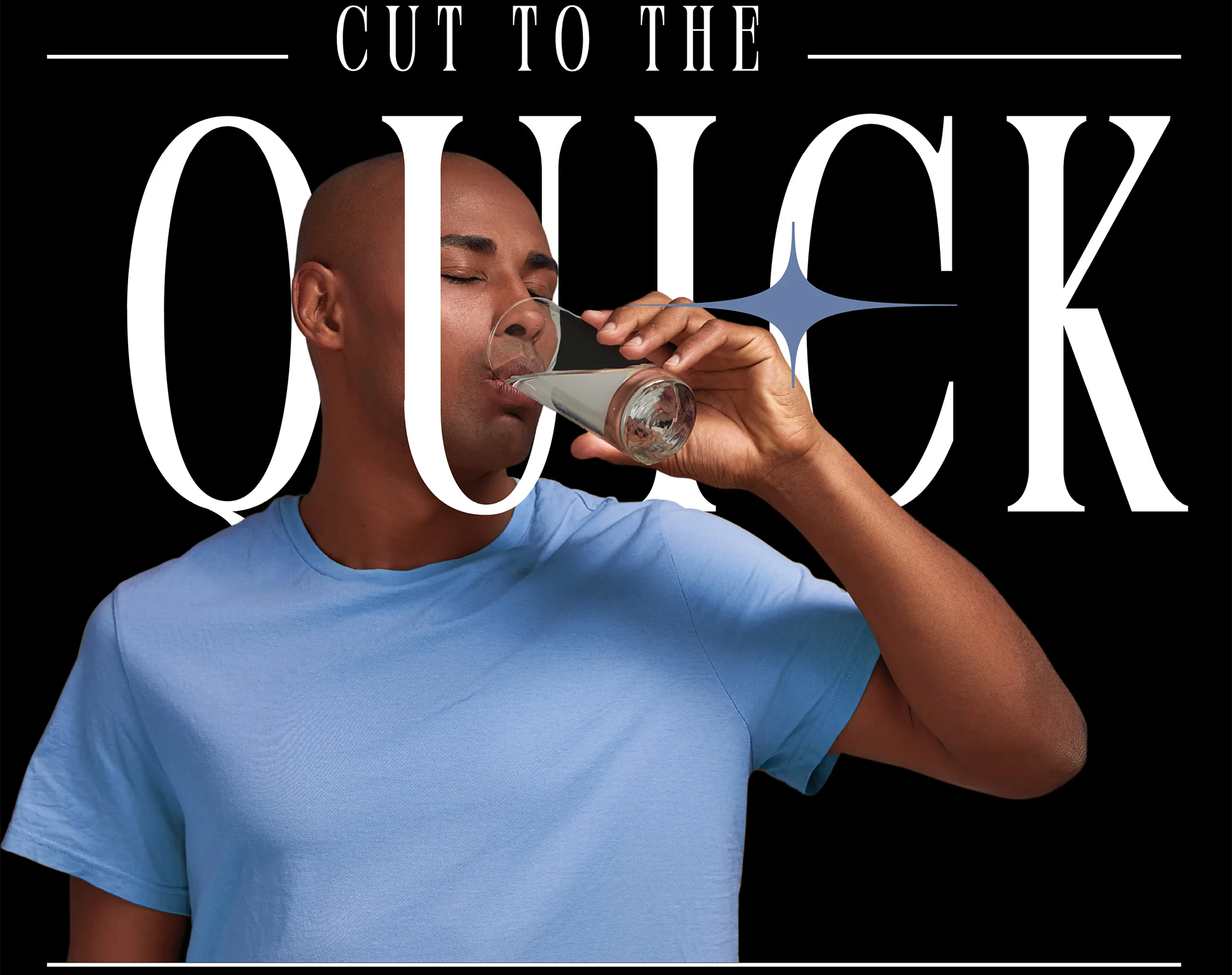

WeirCoxes Ohio State University medical degree, her hospital privileges, the medical practice she operated with husband engineer Kevin Cox as business manager, and stints in West Virginia, Virginia, Georgia, South Carolina, and even a short but enlightening stay in Cuba reinforced for her that amputating and resecting body parts didn’t fix anything.
So, as providence and COVID-19 would have it, most hospitals canceled or postponed elective surgeries leaving WeirCox with extra time on her hands. She used it to become certified in Lifestyle Medicine, and since 2022 has served as medical director for Ucchi Pines Lifestyle Center in Georgia. There the aim is to teach disease prevention, and in some cases reverse it. Founded by medical practitioners Calvin and Agatha Thrash in 1970, Uchhi Pines is both a holdout from simpler times, and a forerunner in wholistic healthcare in use at Cancer Treatments of America, for example.
The Coxes (Kaylene blended her last names into one) stood for the entirety of our Message interview, modeling what they teach and preach in practical health.
 FASTING
So, when people come to Ucchi Pines, we typically — those who are diabetic, those who have cancer and are not cachectic, (meaning they are not very low body weight) — recommend fasting. We recommend three days of fasting, so they can get the full benefits of ketosis for that first week. What are the full benefits? So, one of the things that fasting does, which is powerful for diabetics, it reverses that insulin resistance. So now your body and your cells are more sensitive to the insulin that your pancreas makes. Therefore, your pancreas doesn’t have to work out as hard and put out a ton of insulin to get your blood sugar down.
 SNACKING
Kevin: the common man knows carbohydrates.
Salivary lipase. That’s what’s starting in your mouth, so the process of digestion is starting here.
Then you swallow, and it goes into your stomach. And in your stomach, you have an acid environment, with pepsin and trypsin, which are starting to break down your proteins. It’s in your small intestine where the bulk the bulk of digestion happens. That’s where all the different digestive enzymes are being secreted. Some from your pancreas, some from the wall of the intestines.
The gallbladder is going to shoot some bile in there to help break down fats. All of that is going on in the small intestines. That process takes about four to five hours for the whole process of breaking everything down so that you can absorb these tiny product particles.
It’s like a processing chain, like in a factory, right? Now, when you snack, you put something into your mouth —
Kevin: A healthy snack, an apple!
— which stops the process wherever it is in the digestive tract. So, what’s going on in your small intestine stops. And you start the process again in the mouth, with your saliva. So now you’re starting over.
Now, what’s going on in your small intestines? You stopped breaking stuff down, and now you have these bigger particles that are trying to get through the wall of the GI tract. If they’re not too big, they can get through, but they’re gonna cause damage as they get through. And you’ve heard the term “leaky gut”? That’s one of the problems that can occur. So, your body is going through the digestive process but it’s not completing it every time you snack, which causes other problems with the GI tract.
 Fad and Fiction?
Because of the amazing way that God has designed our bodies, our bodies are designed to heal themselves, right? If you cut yourself, God has designed the body to heal that cut. When we do things harmful, when we’re eating things that are not good for us, initially the body tries to fix the problem.
Initially.
But when we keep doing it, and keep doing it, and keep doing it, that’s when we get into these lifestyle diseases. It’s not an overnight problem. I don’t eat a hamburger today, and I’ve got fatty liver tomorrow.
This is a problem that develops over time, and so, the same thing with the solution.
And so, it really goes back to the basics of nutrition… Exercise. Sleep. Water! Sunshine. I mean, these basic things. Temperance. Not overdoing the good stuff. This is what is going to make a difference.
 Temperance or Moderation?
Moderation in the good. Stay away from everything that is bad.
That’s completely different than… everything in moderation.
 KNOW YOUR NUMBERS
You need to get lab work periodically.
 Supplements
And if we do the things that God has ordained as good for our bodies: eating a healthy diet, getting plenty of exercise, getting plenty of sleep at the appropriate time, getting in enough water, going outside and getting fresh air, those things, if we’re doing those things we should be able to maintain our health.
We see a lot of people who are strong believers in natural health and natural remedies and things, but they’re taking 30 or 40 different supplements every day. I mean, that’s more than what people taken medications, right? Those things are doing stuff, and they may not be doing what you want them to do.
 Food as Medicine
Having, a basic foundation in nutrition is also, very, very important and very vital.
 A Little Bit Country
The health benefits of country living are significant. Of course, all those environmental pollutions that you’re talking about, yes, there are some in the country, but they are so much more concentrated in the cities.
And, so, just the basic environment, without talking about food and changing of diet or anything else, just the basic environment is healthier in the country.
Then there’s the benefit that we don’t like to talk about, but the benefit for our children. Goodness, the cities are terrible places for raising children, and I know I might be getting hate letters now after saying that, but there’s so much our children are exposed to, so much that we never had to deal with when we were children.
If you are in a city, every city in the U.S. must have parks in the city. There are parks. There are areas where there is a tree growing. And so, you need to find where those parks are. And you need to daily go to — daily, not on the weekend every day you need to — go to one of those parks and be around one of those trees.
The benefits of what the trees are doing to decrease pollution and clean the air, that is a real thing. You’ve got to go to a park and spend some time in the park. An hour would be best, but I know that’s not gonna happen, but at least 15 minutes. Go and spend 15 minutes in the park. Every day.
If we cannot get to the country create the environment where you are. And in your house, get some plants. Don’t even grow anything yet! Get some plants. Just take that step.
Whatever your economic station in life, take a step, and bring the country where you are, and go to the park, that’s free, and spend some time in God’s nature.


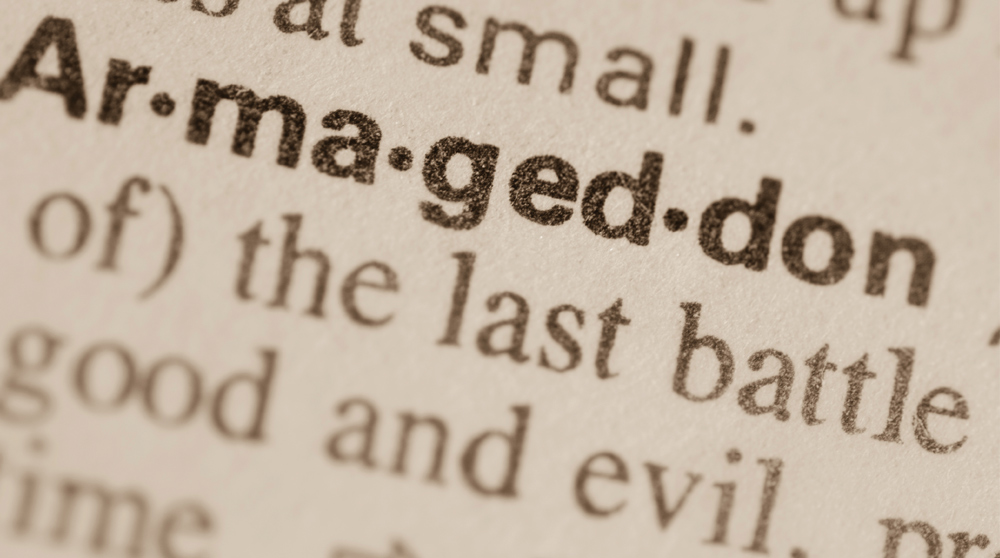
In the midst of these events, some politicians, religious leaders, and interpreters of prophecy have begun suggesting that this moment may mark the beginning of the great conflagration mentioned only once in Scripture —Armageddon (Revelation 16:16).
Armageddon, or Megiddo, is a literal place about fifty miles north of Jerusalem. Biblically inspired imagery isolates this location as the gathering place where the spirits of evil and wickedness in high places will assemble for a final confrontation between good and evil.
In recent days, some military leaders have urged, with apocalyptic certainty, that supporting this war somehow advances the cause of Christ. On March 3, 2026, the Military Religious Freedom Foundation reported receiving more than two hundred complaints from fifty separate meetings in which military leaders allegedly instructed troops that this war was “part of God’s divine plan.” One complaint even claimed that “President Trump has been anointed by Jesus to light the signal fire in Iran to cause Armageddon and mark His return to Earth.”

The language quoted above echoes the rhetoric of crusades and it cultically advances theories of holy war, Christian Nationalism, manifest destiny, and American exceptionalism. In doing so, it feeds the notion that national, military strategy can somehow accelerate the Second Coming of Christ. It also places a dangerous halo — of either demigod status or demagoguery — upon presidential leadership.
Without attempting to argue those theories in detail, this article offers several cautionary reflections for Christian believers to consider as the doomsday clock continues to tick.
In proper context, the book of Revelation presents an overview of Christian church history from a divine perspective. From its fragile beginnings to its marginalized maturity, the church has continually lived under pressure and opposition. The prophetic imagery of Revelation 16 depicts the culmination of global systems of evil aligning themselves against the influence of God.
Seen in that light, some of today’s rhetoric and claims that in this war, a new world order has been established, may indeed sound prophetic. For this reason, caution is still required.
Scripture also urges humility in matters of prophecy. Throughout history, every generation has witnessed wars, crises, and upheavals that seemed world-ending, in the moment. Yet the world remained. Every acorn that falls does not signal the end of the forest.
Jesus Himself cautioned His followers against alarmism (Matthew 28:18–20). Alarmism breeds fear, worry, and desperation. Christ instead directed us, as believers, toward a steady pattern and rhythm of disciple-making.
Disciple-making — during times of peace or during times of war — is the Christian imperative. It cultivates a spiritual confidence that anchors the soul. As mature disciples, we understand that nothing — not even war — can separate us from the love of God.
Prophetic speculation often produces anxiety. Disciple-making produces stability.
As followers of Christ, we are called to see and help the displaced, the hungry, the sick, the impoverished, and the destitute survivors of inevitable human conflicts. That is precisely the work Christ described in Matthew 25:35–36.
During seasons of war and upheaval, we are called to be:
- Peacemakers (Matthew 5:9)
- Prayerful lamenters (1 Timothy 2:1–2)
- Personally compassionate and benevolent (Mark 12:31; Matthew 5:44)
- Good Samaritans (Luke 10:33–35)
- Truth-tellers (Ephesians 4:15)
Preaching a prophetic timeline without a passion to live these principles is nothing more than spiritual pimpology. It uses scriptural metaphor to manipulate, exploit, and monetize the fears of the vulnerable.
True prophecy always carries a call to action. The Word of the Lord never arrives empty-handed; it always arrives with responsibility.
For believers today, that responsibility is courage — courage to speak truth beyond political pressure, courage to maintain moral clarity in the midst of chaos, and courage to let the light of godliness shine through the fog of war.
Micah 6:8 remains a powerful guide: to act justly, love mercy, and walk humbly with God. If lived faithfully, that single verse can help believers project hope instead of hysteria, mercy instead of militarism, prayer instead of panic, and discernment instead of reckless speculation.
- Keep the Gospel central.
The Gospel is the redeeming love of God revealed through the life, death, and resurrection of Christ. Do not preach prophecy detached from Christ. The hard truths of prophecy are not the Gospel itself. We do not live in the shadow of prophecy or the darkness of human aggression. We live in the light of the resurrection and the radiant expectation of Christ’s return. - Create spaces for lament and listening.
Help people rest in the green pastures of their faith so they can bring honest lament before God. True lament leaves room for listening, and God often speaks to the wondering heart that is quiet enough to hear and heed His guidance. - Feed the flock from the storehouse of heaven.
Fear often grows out of a sense of scarcity. When people are grounded in the abundance of God, generosity naturally flows. - Practice peacemaking in daily life.
Most readers of this article will never hear the explosions of war or the cries of the wounded. Yet, we are and shall feel the ripple effects — rising prices, shortages, disrupted energy supplies, and heated public conversations. In those moments, practice peace. - Lead with service and compassion.
War leaves wounded people in its wake. Churches must lead in binding wounds, feeding the hungry, and sheltering those who have been displaced — whether locally or across the world.After the war, young men and women who left home to serve may return carrying invisible wounds of war. Some will struggle with trauma and PTSD. The war may end on paper, but for many veterans the battle continues in their minds and hearts. For them especially, as believers we must practice peacemaking, model de-escalation, and offer trauma-informed care that leads them beside still waters and green pastures of recovery.
- Invest in the evangelism of service.
Challenge yourself — and your leaders — to address real-world problems in your communities first, and then beyond. When the church meets tangible needs, the credibility of the Gospel shines brighter.

This war — and others — may indeed serve as harbingers of prophetic fulfillment. But they must never distract believers from the Gospel imperative.
The task remains the same: to be lights in dark places, bringing smiles to sad faces because the living, loving Lord dwells within us.
May we live and lead in such a way that people marvel at our steadfast, confident, and faithful lives—even as the world is once again shaken by bombs and bullets born from the bastardization of diplomacy.
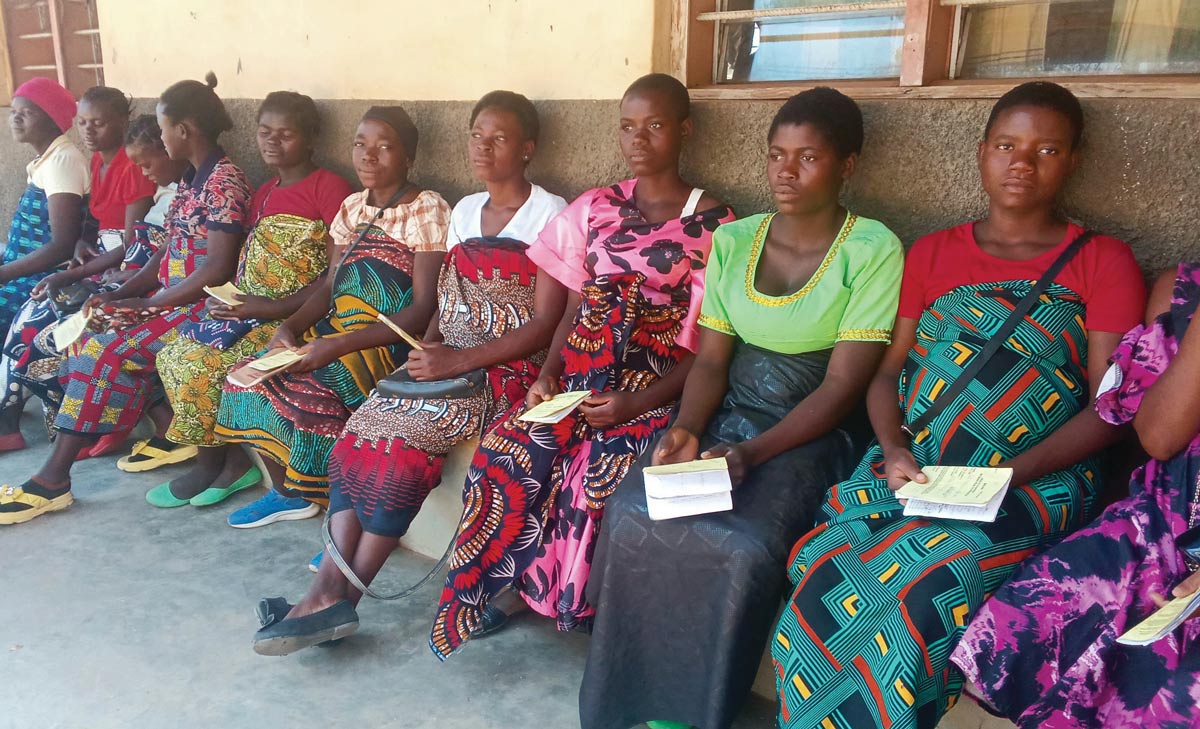



The U.S. government has since 2021 committed itself to provide nearly $20 billion in health programs in Africa with an investment of over $600 million in health assistance in Nigeria alone in 2023.
The Family Planning Association of Malawi (FPAM) closed 211 clinics that are located within the reach of communities after the USAID cuts, affecting 27% of sexual and reproductive health services.
“This is a health crisis,” said Donald Makwakwa, FPAM executive director.
Kandiyani Health Center, one of the FPAM closed clinics in Lilongwe, Malawi’s capital, used to serve more than 800 people on a daily basis. The clinic that provided child immunizations, family planning, HIV testing, neonatal and post-natal care, antiretroviral treatment (ART), and pre-exposure prophylaxis (PrEP) now looks deserted.
Makwakwa said all the country’s health facilities, both public and the Christian Health Association of Malawi (CHAM), have been affected, putting the lives of millions of people at risk.


“USAID was funding our health sector quite a lot,” said Happy Makala, CHAM communications officer.
Makala said USAID funding supported CHAM’s health facilities and training colleges. He said USAID provided support to specific programs such as clinical preceptors for the training colleges, HIV/AIDS, TB, malaria, and family planning.
Rising death toll
While the number of people dying as a result of USAID financial withdrawal may not be certain in Malawi and other countries in Africa due to poor data collection, health experts said the situation is dire.
One health expert, Jason Banda, senior community health nurse and midwife at Kasungu District Hospital, said in an interview that in Kasungu district in the central region of Malawi, 25 maternal deaths were reported between April and November 2025.
“The situation is not good at all. We are losing many lives especially women and those who are defaulting on ART,” said Banda.
Many of those dying are failing to have access to healthcare far away from their communities because they cannot reach district health facilities on time.
Mobilizing local resources as a solution
Africans have now awakened to the harsh reality of international aid dependence. A number of donors, including those in Europe, are reducing their overseas development assistance (ODA) which is coming at a time when many countries in Africa are going through economic crises.
Christian faith and health leaders from sub-Saharan Africa met in November 2025 in Nairobi to discuss ways of investing in the health sector. The leaders called for increased national investment and global solidarity to sustain health in the region, while affirming that “promoting holistic health was a sacred expression of faith and a central calling of the church.”
Malawi’s former Minister of Health Khumbize Kandodo-Chiponda indicated that Malawi was putting up measures aimed at filling in the financial gap left by USAID but this will not be an easy task considering that the country is passing through an economic crisis of its own.
Rev. Francis Mkandawire from Malawi called on the African governments to find ways of sustaining the health systems while working in partnerships with faith-based communities.
Dr Nkatha Njeru, Africa Christian Health Associations Platforms chief executive officer, noted that time to strengthen collaboration with national and local governments “is now.”
“We know that the measures that we are putting in place cannot fill the gulf created by USAID withdrawal. USAID funding was huge. For example, we were in the process of building an extension to our theatre at our Kasungu district hospital with everything approved by USAID but all have now collapsed with aid cuts,” said Banda.
Raphael Mweninguwe is a freelance journalist based in Malawi and has written extensively about education, climate change, the environment, health, agriculture, politics, and the economy.
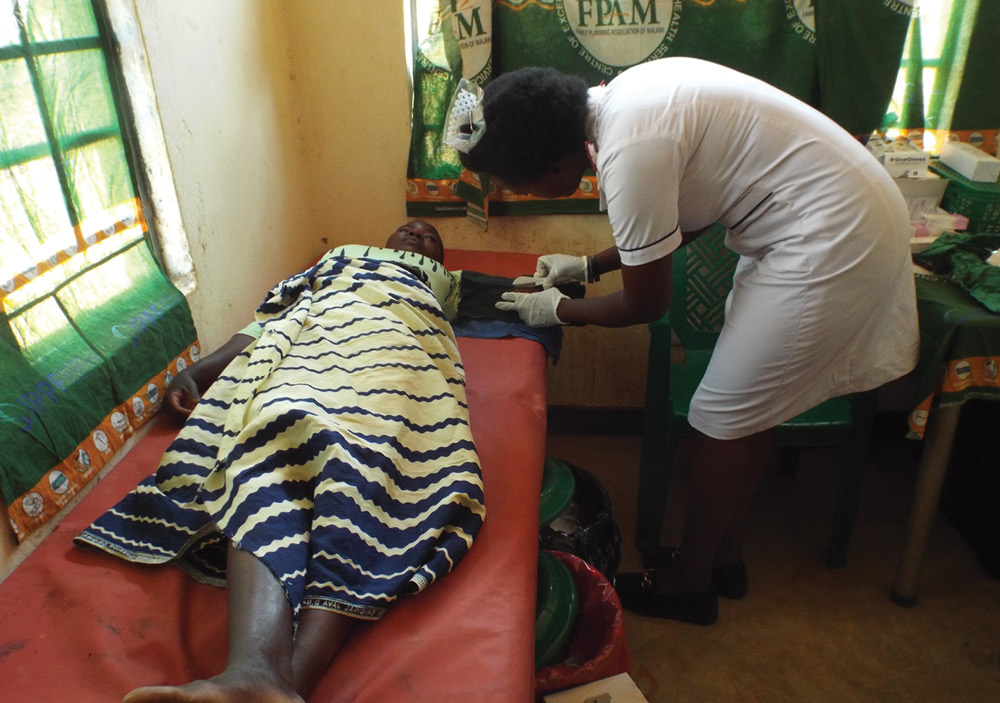
In some cases, patients, especially pregnant women, do not make it to a major hospital due to distance since smaller clinics within their communities are closed. Maternal death is on the rise. The country’s health system is in a coma. This is the situation, not only in Malawi but Africa as a whole.




here are seasons in life when we feel stuck, trapped in patterns we swore we would break, relationships we knew weren’t healthy, or habits that quietly pull us away from who we’re called to be. Samson’s life is a reminder of the tension between our calling and our desires.
In Judges 13, we meet a woman who has lived with the ache of barrenness. Then, suddenly, an angel appears, “…you are going to become pregnant and give birth to a son… the boy is to be a Nazirite, dedicated to God from the womb” (Judges 13:3–5). Before Samson ever took a breath, God had already assigned meaning to his life. This is a reminder that your very existence is one of purpose.
He is set apart for God yet drawn to what harms him.
Chosen to be a light bearer, yet unable to shine light.
He chases pleasure and repeatedly compromises the values he was raised to exude.
He sees a Philistine woman and demands, “Get her for me” (Judges 14:2). He is driven by impulses.
This mirrors the psychological concept of impulsiveness and our reward systems. The brain’s dopamine pathways (the brain’s pleasure center) prioritize immediate gratification over long-term consequences. In addiction science, we call this “short-term reward bias.” Samson is more than rebellious, he is dysregulated. His impulsive cravings often overpower his calling.
How often does that happen to us? Just one drink. One text. One click. One compromise. Rarely do we plan captivity. For some of us, we drift into it. Slowly.
The further away Samson drifted the more he surrounded himself with people who did not share his values. Environment matters. The behaviors, attitudes, and values modeled around us slowly become our own. Behavioral psychology consistently shows that our habits are shaped by proximity. In other words, proximity shapes what habits we adopt and practice.

Based on this principle, if we consistently sit with people who normalize faith, discipline, and accountability, those behaviors become easier for us to adopt. The inverse is also true, if we surround ourselves with people who minimize boundaries, justify harmful habits, or reward impulsiveness. While what may have once been recognized as destructive, over time those patterns quietly become “normal” to us. What once felt wrong begins to feel familiar and acceptable.
So, the question we should ask ourselves is, who reinforces your purpose, and who reinforces your weakness? Do my relationships pull me toward God or away from Him?
For Samson, his reinforcement was Delilah.
“With such nagging she prodded him day after day… so he told her everything” (Judges 16:16–17).
Delilah represents the cycle of enabling. In addiction counseling, we see this often: relationships that soothe, flatter, or manipulate while quietly participating in someone’s destruction. Samson, already vulnerable, confuses intimacy with safety. He perceives that in sharing his hidden power, it would bring closeness, but Delilah’s intent did not align with his. His physical blindness mirrors cognitive blindness. When trapped in compulsive behavior, he has an inability to see consequences clearly.
Many people struggling with addiction describe the same thing: “I knew better, but I couldn’t stop.”
Our calling requires us to align with God’s word and with those who seek to support us, not disempower us.
Yet the story does not end there.
God never leaves us in captivity. In the darkness of prison, Samson finally seeks connection and he prays for it. The act of prayer is a demonstration of our longing for connection with the Savior. He says, “Sovereign Lord, remember me. Please, God, strengthen me just once more” (Judges 16:28).
Recovery and redemption begin with acknowledging our limits and reaching for help beyond ourselves. Twelve-step recovery calls it surrender. Scripture calls it dependence on God. Connection breaks the bonds of captivity. Samson’s final act is one of surrender. And in that surrender, his strength returns. Imagine if surrender was constantly reinforced in our environments and in our habits and behaviors. Imagine how deeply connected our relationship with our Savior would be. This does not mean that we are exempt from challenges or trials, it just means that when we are connected to the Savior the impact of our trials is experienced differently.
Samson’s story reminds us that it’s never too late to come back. I don’t know how you’ve been experiencing captivity. Perhaps you feel captive to anxiety, people-pleasing, overworking, secrets, infidelity, addiction, or pretending you’re fine. Perhaps your captivity may be invisible, psychological or emotional. Our Savior reminds us that, “With his stripes we are healed” (Isaiah 53:5). “If the Son therefore shall make you free, ye shall be free indeed” (John 8:36).
Even after mistakes, God still redeems.
Even after bondage, freedom is possible.
Because the same God who called you is still strong enough to grant you safety, to move you from captivity to connection, to redemption.

Masterclass

Five Places That Will Change the Way You See the World — and Yourself


he had never left the country. Sixty-three years old, faithful in the same church, and quietly certain that the world’s great places were for other kinds of people. Then one evening her granddaughter pulled up a virtual tour of Jerusalem’s Old City and pressed play. Forty minutes later, she was weeping.
“I didn’t know,” she kept saying. “I didn’t know it was a real place.”
The world God made is staggeringly large, achingly beautiful, and full of things that expand the soul simply by being encountered. Most of us live inside a very small radius of what is actually available to us. Not because we are incurious, but because nobody ever sat down and said: the world is yours to explore, and you don’t even need a passport to begin.
“Curiosity about God’s creation is a form of worship. Every culture carries a facet of His image that no other culture carries in quite the same way.”
Proverbs 25:2 says, “It is the glory of God to conceal a matter; to search out a matter is the glory of kings.
Acts 17:26–27 tells us God placed every nation in its exact location “so that they would seek Him.” The diversity of this earth’s places and peoples is not accidental. It is an invitation. Every culture carries a facet of the image of God that no other culture carries in quite the same way. When we encounter them, we encounter a part of God’s creation.
If Not in Person, Visit Virtually
YouTube documentaries, Google Earth virtual tours, museum digital collections, and streaming series have made the world’s wonders accessible to anyone with a laptop or smartphone. A grandmother and her granddaughter are on a sofa. A small group around a television. A Sunday school class exploring a new continent each month. The world has never been more accessible.
Here are five places worth your attention, each one chosen not just for its beauty, but for what it teaches.








Choose one of the five destinations that call to you.
Step 2:
Search its name on YouTube and find a virtual tour or documentary.
Step 3:
Read one short article about its history or spiritual significance.
Step 4:
Share what you discovered with someone, a grandchild, a friend, a small group. Optional: find a traditional recipe from that culture and cook it together.
Make it an experience, not just a screen. Then pick your next destination.


E = Environment

nvironment impacts your ability to survive and thrive in your sphere of existence or surroundings. The air you breathe, the water you drink and/or bathe in, the noise and sounds surrounding you, and so much more has profound ramifications on your ability to experience wholeness.
I was reared in the great state of New York, in the small city of Poughkeepsie, specifically in the Smith Street housing projects. The invisible yet powerful redlining of the housing authority segregated black and brown people into “projects” scattered throughout the city.
The residents within the 10-building projects shopped at white-owned corner grocery stores which had no fresh produce, but aisles of canned foods.
We walked to the local public schools, played on the baseball field at one end of the projects and the outdoor, concrete basketball court on the opposite end.
The most prominent natural attraction there was a body of water called Morgan Lake.
The downside of Morgan Lake was its proximity to where we lived. At the time, the lake’s elevation was 213 feet above sea level with a shoreline of 0.8 miles. Morgan Lake would constantly flood during heavy rain and wreak havoc in our neighborhood. The Projects were sitting targets for flooding. The soiled water flowing outside and possibly inside of the buildings caused mold and mildew accumulation which, at minimum, is an associated catalyst for mold sensitivities leading to the development of childhood asthma (American Academy of Pediatrics, aap.org, retrieved online January 2026).
Our air quality also competed with the potent odors from our local industrial plants. We had a paper mill and a fruit pastry-filling plant. The combination of both plants’ daily productivity caused an unusual smell in the air.
Further, each of the ten building units had its own trash incinerator furnace for the residents to empty their own trash at-will, and all the buildings’ walls and floors were covered with lead-based paint.
As a child, I vividly recall having bouts of wheezing, chest tightness and difficulty breathing while engaged in sports activities.
Dr. Benjamin F. Chavis Jr. (1982), civil rights leader, coined the phrase “Environmental Racism.” This term exposes the intentionality behind the placement of waste facilities and other polluting landfill hazards in communities largely populated by unserved and underserved individuals and families.
Sadly, in recent years, environmental racism was demonstrated in our urban communities.
In 2014, in order to cut costs local officials in Flint, Michigan decided to change the community’s water source from Lake Huron to the heavily polluted Flint River. The Flint Water Supply Plant, having been inactive for decades and not treated with anti-corrosion chemicals, was incapable of handling a new water source. The water corroded lead pipes and leached toxic metal via water into homes, causing high blood lead levels and irreversible neurological damage in children. (www.cdc.gov; TheEnvironmentalBlog.org, April 8, 2025)
Baton Rouge and New Orleans, known as ‘Cancer Alley’ (Human Rights Watch, hrw.org, January 25, 2024) — because of the prevalence of fossil fuels, petrochemical plants and other chemical industries, with their toxic and hazardous waste products and emissions — were placed where large populations of black and brown people reside.
Further, according to the Pre-Collegiate Global Health Review (pghr.org, May 16, 2024) “Asthma Alley,” specifically located in zip codes such as in Bronx, New York, has one of the highest rates of hospitalizations and deaths caused by asthma among children and young adults. Of this population, more than 50% are African American and Hispanic. Poor air quality, air pollution, and noisy highways in the Bronx are significant contributing factors to this infamous distinction.
What can we do about these atrocities to humanity? God’s word clearly states that He wants all His people, every race, kindred, tongue and age, to have life in abundance (John 10:10). He assures us that He wants to DELIVER us from the bondage of debilitating health, pain, diseases, suffering, etc. Christ wants to know from each of us: Do you want to be healed?
A proactive approach to respond to your environment begins with intentional awareness and the development of an individual assessment of your surroundings. This exercise is intended to help you develop a framework for your personal enlightenment, and to utilize as a tool to combat environmental inequalities for yourself and to advocate for your community.






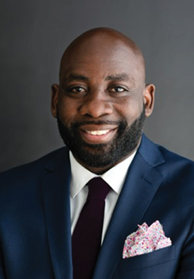
This reminds me of how many of us are determined to live. Some of us think that if we focus solely on the spiritual without incorporating the physical, we’ll be fine. I’ve come to learn throughout my pastoral career that it’s more connected than most people think.
This past January, I announced to our congregation at the Oakwood University Church that we would start the New Year under the theme “New Normals.” Like previous years, we were committed to 21 consecutive days of prayer, devotion, and spiritual renewal. But when I announced a “Daniel Fast” and a secular media fast, the sanctuary was engulfed in “pin drop” silence.
This kind of reaction isn’t foreign to me. Often, when we talk about renewal in our church spaces, we focus on spiritual health; there’s less emphasis on the rest. We’ll commit to reading the Bible in a year but ignore moderation when it comes to our favorite donut shop. We’ll plan to have a more consistent prayer life, but we may become stagnant in our physical movement or daily exercise. We’ll make pledges to study or to do faith-based journaling, but we’ll stay up into the wee hours of the morning doomscrolling on our mobile devices.
There is a misconception that even if we abandon our physical and mental health, we’ll be fine as long as we attempt to perfect our spiritual health. Oftentimes, when we are physically or mentally unwell due to our own choices, it’s difficult to sustain the necessary focus to maintain our spiritual health. In the same vein, we can’t spend hours in the gym, eat only healthy foods, run various marathons, and spend little to no time with God throughout the day.
Friends, our total health is important. Daniel 1 teaches us that the right choices in diet can help one physically thrive, while Daniel 3 and Daniel 6 teach us that our determination to serve God can lead to life-saving outcomes.
As we enter the second quarter of 2026, let’s continue our commitment to our whole health; in body, in mind, and in spirit.

We invite you to watch Breath of Life.
There are many options to choose from…
Atlanta, GA | WATC-TV Channel 57
Huntsville, AL | WAAY-TV Channel 31
Memphis, TN | WANT-TV Channel 24
Montgomery, AL | WNCF-TV Channel 32
Phoenix, AZ | Good News TV • mygoodnewstv.com
Hope Channel
Three Angels’ Broadcasting Network (3ABN)
Word Network
YouTube – YouTube.com/c/breathoflifetv
Facebook – Facebook.com/breathoflifetv
BOL Website – breathoflife.tv/videos/



- When was a time your anger caused you to do something you’ve regretted?
- What are warning signs that show you that your anger is boiling up?
- Where in your body do you feel anger?

- On any given day, we all have experienced stress. It may have lasted a moment as you are driving down the road and suddenly must hit your brakes for a deer running right in front of you or a child whose ball bounced into the road, or a careless driver who cut you off. Your stress may have lasted a few days as you sought to finish your final paper or a significant project for work. Maybe your stress lasts for weeks or even months as a result of experiencing a divorce, the death of a loved one, or financial struggles. At some point in life, we all have experienced stress.
- Stress is a physical or emotional tension we feel that arises from an experience that causes us to become angry, frustrated, nervous and experience different levels of anxiety. Stress can be either good or toxic. It can be good when you’ve just been hired for a new job or a promotion, or toxic as when we experience challenges that are frequent, overwhelming and continued. Examples of toxic stress may include experiencing abuse, neglect, or violence.
- It is important that we properly manage our stress levels and reduce toxic stress as much as possible. Toxic stress may cause us anger, driving us to act in ways we would later regret. For this reason, the Bible advises that it is OK to be angry, angry at injustice, angry at oppression, angry when evil has been done. However, while we may have the right to be angry, we should not use our anger as fuel for vengeance.
- This study will review the story of Cain and Abel and how toxic stress can affect our judgment causing us to act irrationally and do things out of anger (Ephesians 4:26-27). But with God’s help we have tools to help us reduce toxic stress and find peace.

- Genesis 4:1-16
- Ephesians 4:26-27
Read Genesis 4:1-5: What kind of a sacrifice did Abel offer to God?
Read Genesis 4:1-5: What kind of sacrifice did Cain offer to God?
Read Genesis 4:5-8: What was the cause of Cain’s anger?



The New Testament makes a striking claim: creation comes into being through Jesus.
He is not introduced merely as part of the created order, nor as a distant supervisor of it, but as the One through whom life itself is called into existence. This means creation is not random, indifferent, or hostile. It is personal. It originates in intention, intelligence, and care.
Creation, then, is not only an event in the distant past; it is an expression of God’s character. The same Jesus who heals the sick, welcomes the rejected, and restores dignity to the broken is presented as the One who speaks worlds into being.
The creative act reflects the same power and compassion and self-giving love revealed in Christ’s life.
Now look at His creation.
This understanding reshapes how the natural world is viewed. Creation is not merely raw material to be exploited, nor a god to be worshiped.
- It is a gift, valuable because it comes from God and entrusted to humanity for care.
- The world is neither disposable nor divine; it is purposeful, good, and worthy of stewardship.
- Human beings, within this vision, are not accidents of biology nor owners of the planet. They are participants, creatures formed within creation and entrusted with responsibility toward it. To bear God’s image is not a claim of superiority, but a call to reflect God’s care, creativity, and restraint.
- Violence against creation ultimately reflects a misunderstanding of the Creator.
Distortion
The world we experience now bears signs of fracture, decay, injustice, suffering, and death. But these realities are not attributed to God’s design. Instead, they are understood as distortions of what was intended. Jesus’ ministry of healing and restoration is not separate from creation theology; it is its continuation. In restoring bodies, communities, and lives, Jesus gives a glimpse of creation being set right.
Future promise
This is why creation and redemption belong together: the same Christ who brings life into existence is the One committed to renewing it. The hope of salvation is not an escape from the physical world, but its healing and restoration.
John 1:1-3, 14, Ephesians 3:9, Hebrews 1:2
The Bible presents humanity as intentionally created, formed with dignity, agency, and relational capacity. Human beings are not accidents of nature nor disposable parts of a larger system. They are created for relationship: with God, with one another, and with the world they inhabit. To bear God’s image is not to possess divine power, but to reflect God’s character, care, creativity, responsibility, and love.
Yet Scripture is equally honest about fracture. Our human story quickly devolves in mistrust, alienation, violence, and loss. This brokenness—more than superficial or behavioral– reaches into thought, desire, memory, and will. Humanity is not simply wounded; it is divided within itself.
Sin distorts how humans see God, each other, and themselves. It bends love inward and turns power outward. It fractures both personal integrity and communal life.
Jesus restores the brokenness.
Jesus enters this reality not as an observer, but as a participant. He fully shares human life, its limits, pressures, and vulnerabilities, without surrendering trust in God.
His humanity is not an escape from ours, but its healing. In Jesus, humanity is lived as it was meant to be: dependent without shame, obedient without fear, loving without domination.
This is why can’t define humanity by failure, nor deny failure’s seriousness. Instead, we define humanity by Christ.
Jesus reveals what humanity looks like when fully aligned with God’s purpose. He becomes not only Savior, but standard, not to condemn humanity, but to restore it.
Importantly, this restoration does not erase human limitation. Followers of Jesus do not become divine, flawless, or free from struggle. But they are reoriented. Through relationship with Christ, a new pattern of life begins to take shape, one marked by humility, growth, accountability, and hope. Human worth is no longer measured by productivity, purity, or power, but by God’s commitment to restore what was broken.
1 Corinthians 15:22, Romans 5:12, Psalms 51:5
The Bible describes human history as unfolding within a larger moral struggle over the character of God and the meaning of freedom. At the center of this conflict is a fundamental question: Is God trustworthy?
Is life sustained by self-giving love, or secured through control and coercion?

- Deception becomes the primary weapon.
- Fear replaces trust.
- Control replaces communion.
- Humanity becomes both a participant in and a casualty of this struggle.
When Jesus entered the conflict — deliberately — His life revealed what God’s rule looks like when expressed without force.
- He heals without demanding allegiance.
- He forgives without leveraging shame.
- He confronts injustice without mirroring its violence.
In doing so, Jesus unmasks the false logic that equates power with domination. The cross stands at the center of this conflict.
History’s most decisive power transfer
There, competing visions of power collide: One side relies on threat, accusation, and death to maintain control. The other absorbs violence without returning it. Jesus does not defeat evil by overpowering it, but by revealing it.
In allowing injustice to exhaust itself upon Him, He exposes the moral bankruptcy of systems built on coercion and fear.
The resurrection confirms that this way of life, truth without violence, love without manipulation, is not fragile or doomed. It is vindicated. God’s response to the cross declares that self-giving love, not force, defines reality. Evil is revealed as temporary, parasitic, and ultimately self-defeating.
This conflict continues in human experience. It appears wherever truth is distorted, where power is abused, where people are reduced to means rather than treated as ends. But it also appears wherever people choose trust over fear, honesty over advantage, and compassion over control. Every human life becomes a site where this struggle plays out, more than cosmic spectacle, as daily moral decision.
Romans 8:37, Hebrews 1:9; John 14:6, Ephesians 6:12, Hebrews 2:17

- Jesus’ life matters because it reveals what trust in God looks like when lived under real conditions. He did not live removed from human limitation, but within it. He experienced hunger, fatigue, grief, temptation, and pressure. Yet He lived without surrendering to fear or self-protection. His obedience is not driven by threat or reward, but by confidence in the goodness of God. In Him, humanity is lived without distortion.
- The death of Jesus matters because it confronts the deepest rupture in human experience. Violence, injustice, betrayal, and shame converge at the cross. Jesus does not avoid these realities or explain them away. He absorbs them. His death is not a tragic misunderstanding, nor merely an example of moral courage. It is an act of reconciliation. By allowing sin’s full weight to fall on Him without returning it, Jesus breaks its power to define reality.
- The cross also exposes false images of God. It reveals that God is not the author of violence, nor the one who demands suffering to be appeased. Instead, God is the One who enters suffering to heal it. Jesus does not save by force, but by faithfulness. He does not overcome evil by becoming more violent than it, but by revealing its emptiness.
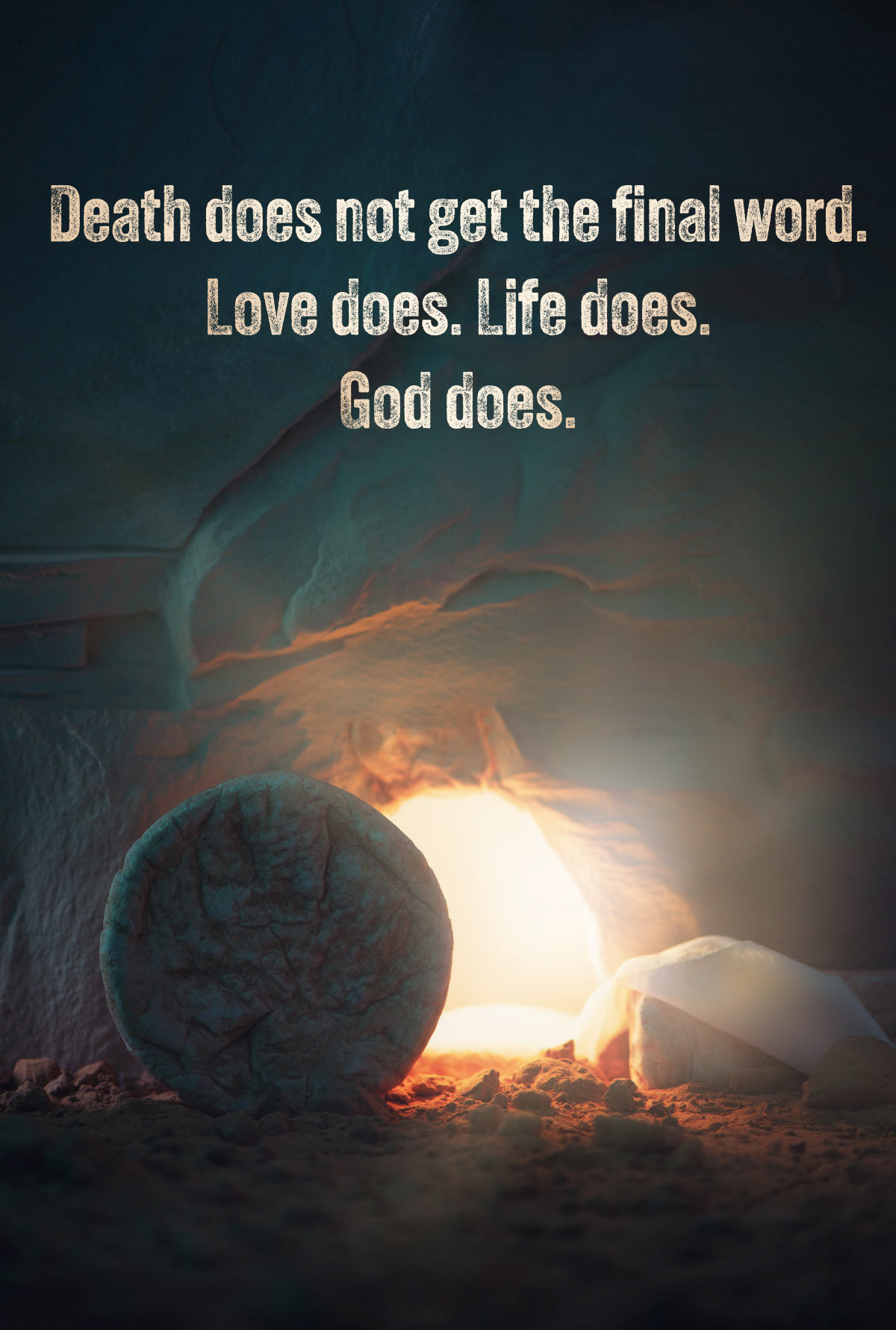
- The resurrection completes what the cross reveals. It is God’s response to injustice, suffering, and death—not denial, but reversal. The resurrection affirms that Jesus’ way of life was not naïve or defeated, but true. Death does not get the final word. Love does. Life does. God does.
Importantly, the resurrection is not presented as escape from the physical world, but as the beginning of its renewal. Jesus rises embodied, not abstracted. This affirms that bodies matter, history matters, and creation itself is included in God’s saving purpose.
Together, the life, death, and resurrection of Jesus form the heart of the Christian story. Salvation is not reduced to legal transaction or spiritual technique. It is relational, restorative, and transformative. Humanity is reconciled to God not by being argued into submission, but by being loved back into trust.
Revelations 5:2, 5; John 3:16; 1 John 4:8; Isaiah 55:7; Romans 3:23, Romans 6:23; Romans 3:25
Salvation begins not with human effort, but with response. It is the act of trusting Jesus, receiving what He has already accomplished and allowing that reality to reorient life from the inside out. This trust is not intellectual agreement alone, nor is it emotional enthusiasm. It is a relational turning: a movement away from self-protection and toward reliance on Christ.
But salvation does not stop there. The same grace that forgives also transforms. A new direction begins to take shape, slowly, unevenly, and honestly.
Habits are confronted.
Relationships are reoriented.
Scripture describes this as sanctification: a growing alignment between who a person is becoming and who Jesus already is.
Importantly, salvation does not erase struggle. Followers of Jesus still face temptation, doubt, suffering, and failure. What changes is not the absence of conflict, but the presence of hope. Salvation does not promise control over life’s outcomes; it promises companionship within them. Christ does not save by removing humanity from the world, but by renewing humanity within it.
At its core, salvation is about restoration. It restores trust where fear once ruled. It restores meaning where emptiness dominated. It restores direction where confusion prevailed. Above all, it restores relationship with God, with others, and with oneself.



Wealth Activated isn’t about hype. It’s not about chasing trends or comparing bank balances. This is a spiritual, strategic, no-nonsense guide to reclaiming control in unpredictable times. Whether the economy is on fire or in free fall, we still have choices. We still have power. We still have faith, and we’re about to use all three.
In this four-part series, we’ll strip away the noise and get down to the business of real wealth, the kind rooted in clarity, community, and conviction. From creating crisis-proof budgets to turning chaos into capital, from spotlighting black faith-based wealth builders to building legacy while we live, this series is about activation. No waiting. No hoping. Just movement.
You won’t need a finance degree. You won’t need a six-figure income. You just need the courage to start, the vision to believe, and the discipline to stay the course.
Because financial freedom is not a myth. It’s a method. And even now — especially now — it’s still within reach.

- What does financial stability look like for you — not in theory, but in your current real-life situation? How do you define it, and what emotions come up when you think about it?
- Have you ever had to activate a fallback program before? What worked, what didn’t, and what would you do differently now?
- What are the top three essential expenses in your life right now, and what are three that could go if necessary? Be honest with yourself about what’s truly necessary for your wellbeing.
- What fears or anxieties arise when you imagine a financial crisis? How can clarity and preparation help you respond to those feelings with power instead of panic?
- Do you currently have a system or are you running on hope and vibes? What’s one immediate step you can take this week to begin creating your “two-pocket” plan?
- In what ways has your faith helped you navigate past financial challenges? How can the same faith inform your budgeting and planning now?
- How often do you review or reset your budget? Could a weekly check-in shift your mindset from reactivity to intentionality?
- Who in your community can support your financial growth, and who might need your support? How can you cultivate mutual strength and accountability?
- When you think about teaching the next generation, what financial principles do you want them to inherit from you? How does this influence the way you build and manage money today?
- What would it mean for you to be “crisis-proof” financially; not just surviving, but anchored in peace and prepared for possibility?



There is no downside to eating and drinking high-value nutrients.
One day in a bookstore, I got “Fresh Fruit and Vegetable Juices” by N.W. Walker. I read several chapters that night. I read enough to have an epiphany that I needed live enzymes in nutrient-rich fresh homemade juices. Changed my life! The very next day I bought a $300 juicer. Walker recommended you start with carrot juice for a few days, then gradually add other vegetables and fruits of your choice. So I started with carrot juice that same day! After drinking a glass, I realized that about five hours had passed, and I had not felt any hunger. Hmm.
Then I figured out a cycle that was happening in me. When my cells signaled for nutrition, they were not getting what they needed. The cells signaled my brain for nutrition. My brain thought “Eat.” My mouth desired hot and heavy foods, [which I ate]. My stomach felt full but my cells were not satisfied with nutrients.
However, within five to six hours of drinking carrot juice, and realizing that I was not hungry, I understood that the right thing happened. The cells sent a message to my brain for fuel. My brain chose high-quality, high enzyme, fresh juice. My mouth swallowed. My stomach processed it. And, my cells were satisfied. I did not feel hungry. Try it.
Some of my favorites then were peanut butter and jelly, burritos (I was living in California), those boxes of 5-minute macaroni and cheese, grits, pancakes, potato chips . . . You get the picture. I was usually hungry.
The first day that I drank carrot juice, being highly nutrient-dense, my blood did not send signals to my brain that I was hungry. Instead, since real nutrients were delivered to my cells, my cells were satisfied. I knew then that what I mistook for hunger was a call for nutrients.



“We can’t change how people think and feel about us,” said Childers in a recent conversation, “but we can do something about us and for us.”
Childers found herself filling that gap 15 years ago when, after picking up her daughter from an after school program, a 14 year old student, Byron Milus, needed a ride home. He didn’t mention who would meet him. So, Childers brought him home for the evening, unaware it would mark the beginning of a lifelong ministry of refuge.
Soon after, the Childers — already raising five biological children — took in another teen, Larry, who needed rescue from being used as a drug mule. They later welcomed Milus’ sister, Larrisha. For more than 25 years they would co-parent more than 29 young people, offering safety, structure, and love. Childers’ passion comes from her own childhood experience of being taken in by an uncle and his wife when she was very young. She understands personally the healing that can happen when someone opens their home and their heart.
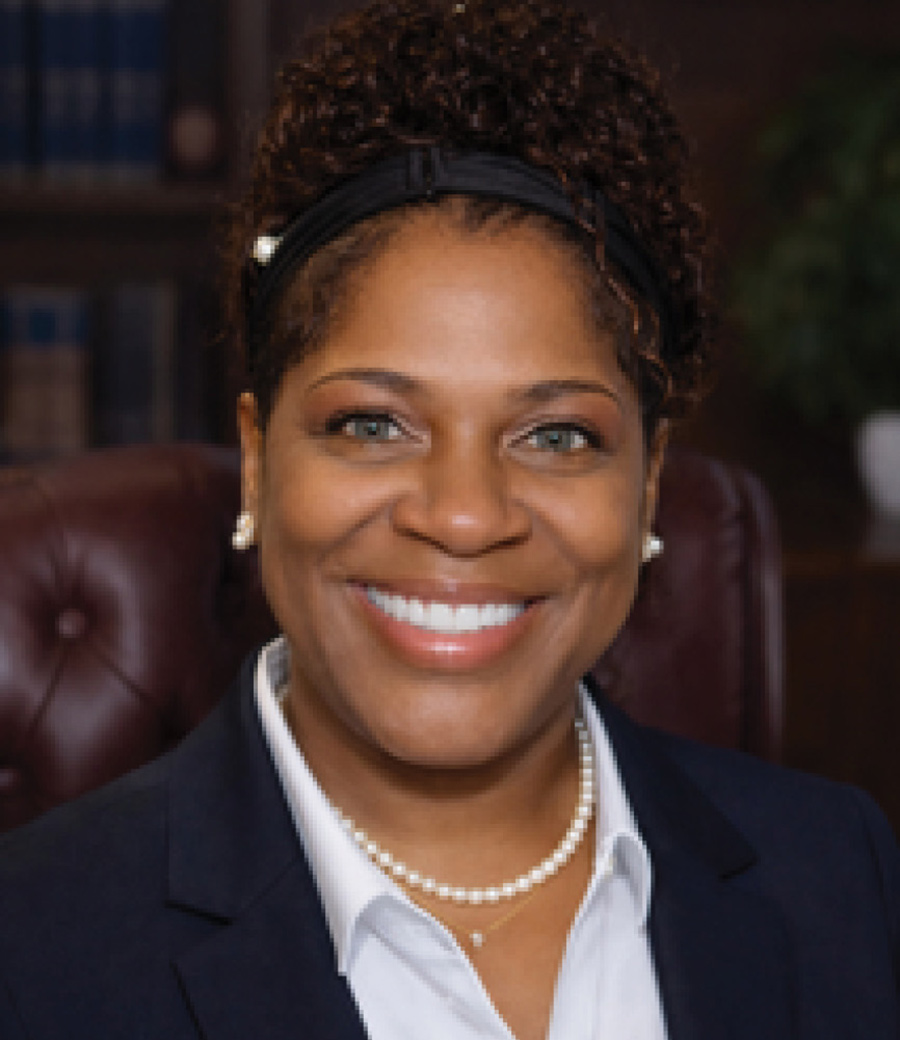
PLF’s reach extends far beyond Waco. In 2013, Childers took 32 youth on a life changing trip to Washington, D.C. Her work has been recognized by senators, the mayor, and the City Council. The organization’s annual “Christmas and Cheers” fundraiser draws more than 300 businesses and community partners.
When asked what keeps her going after 16 years of running PLF, Childers answers: “I was that kid that was given away and passed along, living in dark rooms, dark hallways until my uncle came and found me.”
As for what she tells her youth in a challenging cultural climate, her message is one of resilience and faith:
“The challenge is the win. You are always going to be [challenged]; you already know that. Keep pushing through to the win and remember to put your mask on first.”



You can watch our interview with Williams on our YouTube channel, the video to “Just Like Selma,” and sign up for the national hymn sing to document how your group learns and sings the song.
Organizers invite partnerships, screenings, hymn sings, or campaign participation:
[email protected]
JustLikeSelma.com


 @neworksproductions
Let us know, too! [email protected]
Check out our brief roundtable session with Dr. David Sedlacek, author of our “Hope for the Hurting Heart” series.





Atlanta, GA 30318
 404-799-7288
 http://atlantaberean.com/bomc
 [email protected]
P.O. Box 519
Ashton, MD 20861-0519
301-774-0400 https://www.emmanuelbrinklow.org [email protected]Baltimore, MD 21217-3803
410-669-6350 https://www.bereatemple.org [email protected]Windsor Mill, MD 21244-2042
410-922-0050 https://www.libertysda.org [email protected]7000 South Michigan Avenue
Chicago, IL 60637
773-224-7700 http://www.shilohsdachicago.orgMemphis, TN 38106
901-774-5431 http://longviewheights22.adventistchurchconnect.orgOrlando, FL 32810
407-704-6963 https://www.guilgalsda.org/ministries/community-serviceSaint Louis, MO 63113-1520
314-361-6446 https://bereanmo.adventistchurch.org [email protected] St. Louis, MO 63136-1500
314-868-0707 https://www.northsidesda.org [email protected]