


The New Testament makes a striking claim: creation comes into being through Jesus.
He is not introduced merely as part of the created order, nor as a distant supervisor of it, but as the One through whom life itself is called into existence. This means creation is not random, indifferent, or hostile. It is personal. It originates in intention, intelligence, and care.
Creation, then, is not only an event in the distant past; it is an expression of God’s character. The same Jesus who heals the sick, welcomes the rejected, and restores dignity to the broken is presented as the One who speaks worlds into being.
The creative act reflects the same power and compassion and self-giving love revealed in Christ’s life.
Now look at His creation.
This understanding reshapes how the natural world is viewed. Creation is not merely raw material to be exploited, nor a god to be worshiped.
- It is a gift, valuable because it comes from God and entrusted to humanity for care.
- The world is neither disposable nor divine; it is purposeful, good, and worthy of stewardship.
- Human beings, within this vision, are not accidents of biology nor owners of the planet. They are participants, creatures formed within creation and entrusted with responsibility toward it. To bear God’s image is not a claim of superiority, but a call to reflect God’s care, creativity, and restraint.
- Violence against creation ultimately reflects a misunderstanding of the Creator.
Distortion
The world we experience now bears signs of fracture, decay, injustice, suffering, and death. But these realities are not attributed to God’s design. Instead, they are understood as distortions of what was intended. Jesus’ ministry of healing and restoration is not separate from creation theology; it is its continuation. In restoring bodies, communities, and lives, Jesus gives a glimpse of creation being set right.
Future promise
This is why creation and redemption belong together: the same Christ who brings life into existence is the One committed to renewing it. The hope of salvation is not an escape from the physical world, but its healing and restoration.
John 1:1-3, 14, Ephesians 3:9, Hebrews 1:2
The Bible presents humanity as intentionally created, formed with dignity, agency, and relational capacity. Human beings are not accidents of nature nor disposable parts of a larger system. They are created for relationship: with God, with one another, and with the world they inhabit. To bear God’s image is not to possess divine power, but to reflect God’s character, care, creativity, responsibility, and love.
Yet Scripture is equally honest about fracture. Our human story quickly devolves in mistrust, alienation, violence, and loss. This brokenness—more than superficial or behavioral– reaches into thought, desire, memory, and will. Humanity is not simply wounded; it is divided within itself.
Sin distorts how humans see God, each other, and themselves. It bends love inward and turns power outward. It fractures both personal integrity and communal life.
Jesus restores the brokenness.
Jesus enters this reality not as an observer, but as a participant. He fully shares human life, its limits, pressures, and vulnerabilities, without surrendering trust in God.
His humanity is not an escape from ours, but its healing. In Jesus, humanity is lived as it was meant to be: dependent without shame, obedient without fear, loving without domination.
This is why can’t define humanity by failure, nor deny failure’s seriousness. Instead, we define humanity by Christ.
Jesus reveals what humanity looks like when fully aligned with God’s purpose. He becomes not only Savior, but standard, not to condemn humanity, but to restore it.
Importantly, this restoration does not erase human limitation. Followers of Jesus do not become divine, flawless, or free from struggle. But they are reoriented. Through relationship with Christ, a new pattern of life begins to take shape, one marked by humility, growth, accountability, and hope. Human worth is no longer measured by productivity, purity, or power, but by God’s commitment to restore what was broken.
1 Corinthians 15:22, Romans 5:12, Psalms 51:5
The Bible describes human history as unfolding within a larger moral struggle over the character of God and the meaning of freedom. At the center of this conflict is a fundamental question: Is God trustworthy?
Is life sustained by self-giving love, or secured through control and coercion?

- Deception becomes the primary weapon.
- Fear replaces trust.
- Control replaces communion.
- Humanity becomes both a participant in and a casualty of this struggle.
When Jesus entered the conflict — deliberately — His life revealed what God’s rule looks like when expressed without force.
- He heals without demanding allegiance.
- He forgives without leveraging shame.
- He confronts injustice without mirroring its violence.
In doing so, Jesus unmasks the false logic that equates power with domination. The cross stands at the center of this conflict.
History’s most decisive power transfer
There, competing visions of power collide: One side relies on threat, accusation, and death to maintain control. The other absorbs violence without returning it. Jesus does not defeat evil by overpowering it, but by revealing it.
In allowing injustice to exhaust itself upon Him, He exposes the moral bankruptcy of systems built on coercion and fear.
The resurrection confirms that this way of life, truth without violence, love without manipulation, is not fragile or doomed. It is vindicated. God’s response to the cross declares that self-giving love, not force, defines reality. Evil is revealed as temporary, parasitic, and ultimately self-defeating.
This conflict continues in human experience. It appears wherever truth is distorted, where power is abused, where people are reduced to means rather than treated as ends. But it also appears wherever people choose trust over fear, honesty over advantage, and compassion over control. Every human life becomes a site where this struggle plays out, more than cosmic spectacle, as daily moral decision.
Romans 8:37, Hebrews 1:9; John 14:6, Ephesians 6:12, Hebrews 2:17

- Jesus’ life matters because it reveals what trust in God looks like when lived under real conditions. He did not live removed from human limitation, but within it. He experienced hunger, fatigue, grief, temptation, and pressure. Yet He lived without surrendering to fear or self-protection. His obedience is not driven by threat or reward, but by confidence in the goodness of God. In Him, humanity is lived without distortion.
- The death of Jesus matters because it confronts the deepest rupture in human experience. Violence, injustice, betrayal, and shame converge at the cross. Jesus does not avoid these realities or explain them away. He absorbs them. His death is not a tragic misunderstanding, nor merely an example of moral courage. It is an act of reconciliation. By allowing sin’s full weight to fall on Him without returning it, Jesus breaks its power to define reality.
- The cross also exposes false images of God. It reveals that God is not the author of violence, nor the one who demands suffering to be appeased. Instead, God is the One who enters suffering to heal it. Jesus does not save by force, but by faithfulness. He does not overcome evil by becoming more violent than it, but by revealing its emptiness.
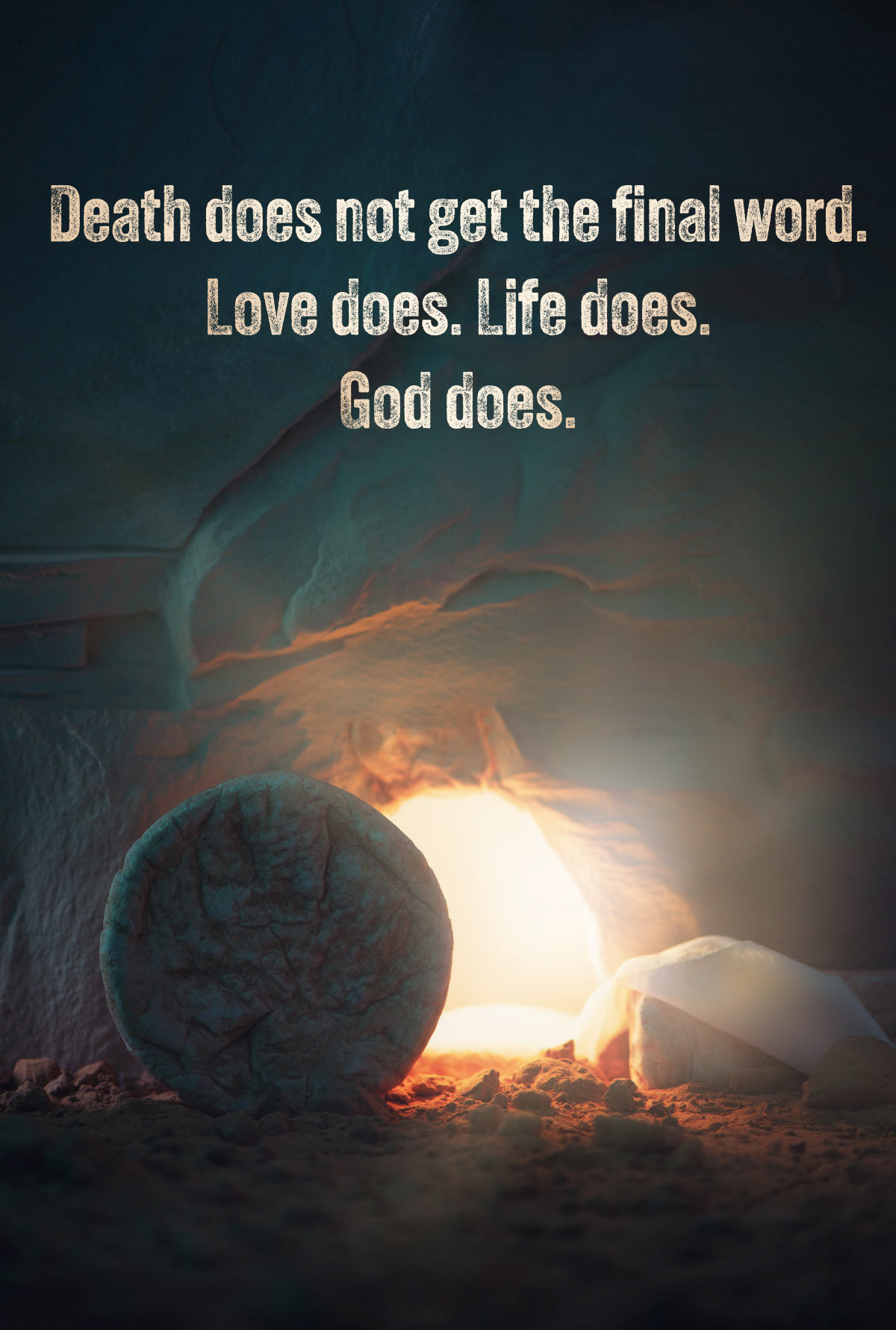
- The resurrection completes what the cross reveals. It is God’s response to injustice, suffering, and death—not denial, but reversal. The resurrection affirms that Jesus’ way of life was not naïve or defeated, but true. Death does not get the final word. Love does. Life does. God does.
Importantly, the resurrection is not presented as escape from the physical world, but as the beginning of its renewal. Jesus rises embodied, not abstracted. This affirms that bodies matter, history matters, and creation itself is included in God’s saving purpose.
Together, the life, death, and resurrection of Jesus form the heart of the Christian story. Salvation is not reduced to legal transaction or spiritual technique. It is relational, restorative, and transformative. Humanity is reconciled to God not by being argued into submission, but by being loved back into trust.
Revelations 5:2, 5; John 3:16; 1 John 4:8; Isaiah 55:7; Romans 3:23, Romans 6:23; Romans 3:25
Salvation begins not with human effort, but with response. It is the act of trusting Jesus, receiving what He has already accomplished and allowing that reality to reorient life from the inside out. This trust is not intellectual agreement alone, nor is it emotional enthusiasm. It is a relational turning: a movement away from self-protection and toward reliance on Christ.
But salvation does not stop there. The same grace that forgives also transforms. A new direction begins to take shape, slowly, unevenly, and honestly.
Habits are confronted.
Relationships are reoriented.
Scripture describes this as sanctification: a growing alignment between who a person is becoming and who Jesus already is.
Importantly, salvation does not erase struggle. Followers of Jesus still face temptation, doubt, suffering, and failure. What changes is not the absence of conflict, but the presence of hope. Salvation does not promise control over life’s outcomes; it promises companionship within them. Christ does not save by removing humanity from the world, but by renewing humanity within it.
At its core, salvation is about restoration. It restores trust where fear once ruled. It restores meaning where emptiness dominated. It restores direction where confusion prevailed. Above all, it restores relationship with God, with others, and with oneself.