






Message Magazine is trying out a new size and we’re eager to hear your thoughts.

[K]now that your prayers can influence God. Elijah’s prayer affected the very course of nature. Through his prayer he disrupted an organic process for three and a half years. God can, and will do whatever we’ve asked Him to do, if we’re earnestly praying specifically within his will. I know you’re only human, but this can’t be your excuse. It’s not foolish to think that God would insert Himself into the difficulties you’re dealing with—physical, social, emotional, and spiritual, if you would only pray.”
by Hugh Wesley Carrington
Message Magazine, Nov./Dec. 2016


relationship
readineSS
Call 1-800-456-3991 Monday through Thursday 8:00 a.m. to 5:00 p.m. Mountain Time for subscription information or address changes. MESSAGE (ISSN 0026-0231) is published bimonthly Jan/Feb, Mar/Apr, May/June, July/Aug, Sept/Oct, Nov/Dec.
© 2026 by the North American Division of Seventh-day Adventists, 9705 Patuxent Woods Drive, Columbia, Maryland, 21046, U.S.A. Address editorial correspondence to MESSAGE MAGAZINE, 9705 Patuxent Woods Drive, Columbia, MD 21046-1565 U.S.A. All subscriptions are prepaid. If you did not order MESSAGE, it is being sent as a gift from a friend. You will not be billed. To subscribe, mail payment to MESSAGE, 1350 North Kings Road Nampa, ID 83687, U.S.A. or call 1-800-456-3991. Subscription price: one year, $21.95 U.S. currency; single copy, $4.00; overseas, add $10.00 per year for postage. Prices subject to change without notice. Periodicals Postage paid at Nampa, Idaho and additional offices. Vol. 92 No. 6 NOV/DEC POSTMASTER: Send address changes to MESSAGE, 1350 North Kings Road Nampa, ID 83687, U.S.A. Printed in the U.S.A.
Unless otherwise noted, Bible texts in this issue are from the New King James Version. Copyright © 1979, 1980, 1982 by Thomas Nelson, Inc. Used by permission. All rights reserved. Statements in this issue attributed by an author to other speakers/writers are included for the value of the individual statements only. No endorsement of those speakers’/writers’ other works or statements is intended or implied.



Media That Takes You Higher

Gospel icon Donnie McClurkin is preparing to close the recording chapter of his celebrated career with Finally, expected in October 2026. His new single, “Lord, I Thank You,” invites us to pause and express our gratitude to God. For decades, McClurkin’s music has encouraged listeners across cultures, communities, and generations.

Sometimes a new perspective begins with a step outside the familiar. Having traveled to more than 100 countries, Lisa Stone shares stories of courage, curiosity, and connection. Part travel memoir and part practical guide, this book offers encouragement for anyone standing at the edge of a step they are afraid to take.


Good stewardship starts with knowing where your money goes. Steady Ledger is a budgeting app for iPhone and iPad that lets you manually record income and expenses, set category budgets, and review your spending. It does not require a bank connection and includes iCloud sync across your Apple devices. It offers a practical way to become more intentional about managing the resources God has entrusted to you.


Either one could strike a deal in exchange for informing on the co-defendant. In doing so, one could get out, leaving the other to serve the time. If they each keep their mouths shut, a consistent silence in the face of questioning could mean they each go free. If they both cut a deal, they could lessen both of their potential sentences.*
“Game theory can be described as the mathematical study of decision-making, of conflict and strategy in social situations,” according to a BBC.com news magazine feature. “It helps explain how we interact in key decision-making processes.”
I didn’t know there was a science to something like this, so I was interested to hear “Professor” Jiang Xiuqin, a Canadian Chinese high school mathematics teacher, employ Game Theory to a number of world issues: war, economics, politics. The professor predicted the election of Donald Trump, and the initiation of the war in Iran, hence his large following on YouTube.
Nevertheless, just when I was understanding “game theory” as a potentially useful example in the moral arc of the universe, I learned that theorists recognize the utility of “tit for tat” when you get burned, just so you’re not seen as “weak.” And, because acting on selfish impulse is the way of the world, the constant state of stalemate has a name in game theory and is known as the “Nash Equilibrium.”
My eyes were glazing over watching all this. I woke up when I heard Jiang — fingers hovering over a map, and a laser in the other hand — admit that only a move of God could save us from our impulse for mutual destruction. At last, I agree with that.
The teachings of Jesus go beyond this earthly orientation for self-interests and self-preservation. This is not machine learning, and you can’t run this through the models and come up with this. No artificial intelligence could compute the advantage and motivation to act with His level of love.
See the Sermon on the Mount, and the counterrevolutionary moves Jesus advocated: the idea of going the second mile, extending grace in the face of rebuke. Or what about the idea of loving an enemy, and doing good to them that hate you? The “paradoxical power,” as Dallas Willard calls it in his now classic “The Divine Conspiracy,” unleashes unpredictable and far-reaching results.
The teachings of Jesus inspired the movements of leaders such as Gandhi, Martin Luther King, Jr., and others. These secrets of history-altering love and grace will be our study for eternity. They inspire us to seek the good of others, while enduring, or in spite of their calculations. Jesus played some kind of intergalactic chess. This is the revolutionary seed of universal change. One drop of dangerous goodness created the gospel of win-win.
It is why the irresistible gospel will be preached into all the world (Matthew 28:19).
Remember to let your salt season, not overpower (Matthew 5:13).
Let your light glow, not glare (Matthew 5:14-16).
Let your love hang in the air like a subtle, unforgettable fragrance.
*Disclaimer: this is a hypothetical to illustrate a point, not intended as legal advice, and I’m not sure how this plays out in a real-life, high-stakes criminal case.
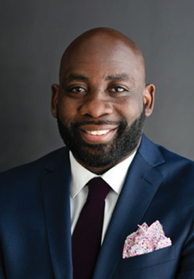
With this issue of Message, I say so long as editor of this historic platform. With my whole heart I welcome my friend, former pastor, and long-time Message contributor Dr. Rashad Burden. May the voice of Message continue to ring in praise of the wisdom and ways of Jesus Christ.

DR. RASHAD BURDEN

CARMELA MONK CRAWFORD, Esq., is Editor of Message Magazine


“Many of us thought that lack of standards for human rights the world over was one of the greatest causes of friction among the nations,” said Eleanor Roosevelt, United Nations Human Rights Commission chairperson. “And that recognition of human rights might become one of the cornerstones on which peace could eventually be based.” To inspire and motivate people around the world for peace, Roosevelt believed that UDHR would provide the moral force to support and encourage respect for human rights and prevent war. Although the UDHR passed, it was not legally binding and lacked measurements.
Amnesty International and Human Rights Watch represent two recognized international research organizations that investigate and report global human rights abuses. Since 2025, both organizations continue to sound the alarm about human rights abuses in the United States of America.
The alarm relates to immigrants, democracy, weaponization of government against political enemies, cuts to foreign aid, and fueling authoritarianism.
Through investigative research, Human Rights Watch noted that immigration raids and mass arrests distressed and overwhelmed asylum seekers. This included the disappearance of Venezuelan nationals to an infamous prison in El Salvador. Additionally, Human Rights Watch raised concerns about civil rights and other anti-discrimination protections that compromised democracy, threatened charitable tax status through nefarious criminal investigations of political opponents, and fueled authoritarianism through misinformation in the U.S. State Department’s annual report on human rights around the world.
“Together, we can use our influence,” argues Ken Roth, former executive director of Human Rights Watch. “From advocating with world leaders to sharing the truth of what’s happening on the ground — to help stop repression around the world.”
This is not the time to be silent or indifferent, aloof or exclusive, or dismissive and lacking compassion. Rather, it is time to be vigilant and view human rights as an everyday essential.



Mr. Corlies was a different story. Neither he nor his whip had a soft side. He used to be a Quaker but would rather be banned from the Friends than free us. Most Quakers were peaceful, but everyone knew about Corlies’ bad temper. Such a shame, since he was rumored to be my daddy.
One day in November of 1775, he called my name and didn’t get an answer.
“Titus!”
But that’s the day I chose liberty or death. If it’s good enough for Patrick Henry, then it’s even better for me!
I left New Jersey and headed South to freedom. That might sound backwards to you, but the British governor of Virginia announced that any slaves who helped them fight would be freed. They called it Dunmore’s Proclamation, but I called it justice. It made the “Patriots” hotter than fish grease, but I was happier than a hog wallowin’ in fresh slop.
When I joined Dunmore’s Royal Ethiopian Regiment, the first thing I had to survive was smallpox. The Regiment didn’t last long and didn’t win many battles, but the uniforms made it worthwhile. The last thing some of those enslavers saw was “Liberty for Slaves” inscribed on our sashes.
Later, I was transferred back to the Sandy Hook area of New Jersey. A bunch of us freedmen, along with some white loyalists, formed the Black Brigade. We weren’t considered real troops, but we had some real fun with real guns. They called us “irregulars” back then. Today, we’d be called guerrillas.
When I unenslaved myself, Corlies paid for want ads in Philadelphia and New York newspapers to try to get me back. After I joined the Black Brigade, my name was in the papers again. But old Corlies didn’t want none of “Colonel Tye.” That’s what they been calling me since I started leading the Brigade on nighttime raids. Even when the “regulars,” like the Queen’s Rangers, joined forces with us, they followed Colonel Tye’s command.
We captured several Patriot militia officers, freed their slaves, and took their cattle and horses. Sometimes we took their furniture, food, clothes, and bedding and hauled it away in their own wagons. The Black Brigade stayed faithful ‘til the end of the Revolutionary War. The survivors – 49 men, 23 women, and 6 children – relocated to Nova Scotia in 1783.
And that’s not all. People like me still live rent-free in patriotic heads of America. When y’all’s Founding Fathers complained about “domestic insurrections” in the Declaration of Independence, they were talking about guys like Colonel Tye. They refused to understand that we didn’t care about arguments between Patriots and Loyalists. We were fighting for liberation from both sets of enslavers. Like the song says:
And before I’d be a slave, I’d be buried in my grave,
And go home to my Lord and be free!


What Will You Do When Your Moment Comes?

6,000 Years of Mayhem and Brutality in The Name of “Righteousness”
What Will You Do When Your Moment Comes?




“If cruelties were inflicted during the revolutionary war, it was owing to the policy pursued by the French commanders, which compelled them to use retaliatory measures. For who shall expostulate with men who have been hunted with bloodhounds… whose relations and friends have been hanged on gibbets before their eyes, have been sunk by hundreds in the sea—and tell them they ought to exercise kindness toward such mortal enemies?”


 ince ChatGPT’s release in November 2022, our day-to-day lives have shifted. Artificial Intelligence (AI) is being implemented into everyday life, whether we consciously recognize it or not. The more I use AI and its benefits, the more wary and apprehensive I feel. I don’t want to deprive myself of a tool that can be incredibly useful, especially in a world where not using it might put me at a disadvantage. However, I don’t want to ignore the environmental, ethical, and human consequences of its use.

God created us with our own will and the capacity to express ourselves, not as emotionless robots. AI is created to mimic human intelligence, raising an important question: What does this mean for our identity as humans? Are we humans because we have free will?
Biblically, as humans, we were created in the image of God, the Imago Dei. Large Language Models (LLMs), such as Claude, Gemini, and ChatGPT, aren’t fully capable of imitating human intelligence, yet many people turn to AI for some form of companionship. According to a Pew Research study, one in three adults under 50 say they use AI chatbots daily. Furthermore, one in five adults under 30 say they have turned to a chatbot for emotional support or advice.

“Chatbots have a propensity to mirror their users’ input and cannot challenge their harmful thoughts as a mental health professional would.”
AI systems and algorithms increasingly influence what we see and consume, helping shape our values, character, and worldview.
So if AI is shaping our values, character, and worldview, where is it learning these values from?
Humans build and train AI using human-centered data. This means human biases can enter the system, both intentionally and unintentionally. When someone creates something, their character inevitably reflects in it.
- A major Stanford University study showed that LLMs can reproduce workplace biases against older women. When asked to generate a resume for a hypothetical woman, AI minimized her experience and portrayed her as younger.
- When algorithms were used to predict recidivism risk, according to a 2016 ProPublica study, black defendants were almost twice as likely as white defendants to be incorrectly classified.
Bias can enter the AI at many stages, including data collection, data labeling, model training, and deployment. Yet, millions of daily users take whatever AI gives them as fact without a second thought.
One example of this showed up in a Pew Research study. Upon searching in Google, AI summarizes the search. That search and synopsis may appear before links to other sources, primary sources, and news sources. The study found that when this summary is present, only 8% of people click a link for more information — ostensibly to pursue their own research. Without the AI summary, that number rose to 15%. Most of us take AI’s word for it.

Time magazine interviewed Kenyan worker Richard Mathenge, who described spending months labeling toxic material, including hate speech and depictions of violence, while reportedly being paid less than $2 an hour. The nine-hour workdays and steady stream of malevolence left many of the workers with psychological effects from their work.
As the demand increases, so does the demand for data centers, electricity, and water needed to operate them. The International Energy Agency projects significant growth in data-center energy consumption by 2030.
For Christians, this raises another question: if God calls us to steward His creation, are we doing that responsibly?


Before typing something into an AI chatbot, we should ask ourselves whether we would be comfortable handing that same information directly to the company operating it.
One of the main dangers of AI use comes when we offload our learning to machines. Taking shortcuts isn’t something new. AI has just made it easier for students and harder for teachers to detect.
- We have seen cognitive offloading before. For instance, a 2020 study from McGill University found that “The greater use of GPS, the greater decline in spatial memory over time.”
- Our increasing reliance on AI threatens to deprive us of something much more important: our ability to think critically. A 2025 study from the MIT Media Lab, ‘Your Brain on ChatGPT,’ compared participants who used LLMs to write an essay with those who used no artificial assistance. Their findings showed that participants using LLMs showed up to 55% less neural activation.

AI can make wars easier to wage, allowing us to carry out cyberattacks, deploy drones and robots, create deepfakes, and conduct mass surveillance. We can already see many of these in action, making it an ever-present, legitimate concern.
Even more concerning is how digitized our world has become. Carl McRoy, NAD publishing director, often says, “He who controls the past controls the present, and he who controls the present, controls the future.”
According to The Washington Post, Anthropic’s “Project Panama” was a covert initiative to train their LLM “Claude.” Internal documents filed in court described the operation as an “effort to destructively scan all the books in the world.” This entailed spending millions of dollars to source, acquire, and splice the spines off potentially millions of books for scanning.
Fahrenheit 451, a book by Ray Bradbury, depicts a dystopian future American society where books are outlawed and “firemen” burn them. If everything is in the LLM, do we need books? What happens when those who control it decide what it can output?
AI can be a great tool for the benefit of all of humanity, but it can also cause much harm. Jacob Coxon, a researcher at both Anthropic and OpenAI, recently resigned. Coxon posted his issues on X: “They are racing straight to self-improving superintelligence and gambling with our lives.”
When the creators of these AIs warn us about their capabilities, we should pay attention. From the dangers the AI itself poses to us to the dangers the user poses, we need to be careful.
When thinking about self-improving AI, it is not difficult to comprehend the power it could create. “Power tends to corrupt, and absolute power corrupts absolutely,” written by English historian Lord Acton, stands true today.


Karl Bailey, Ph.D., psychology program director and professor of psychology at Andrews University, put it best in my interview with him: “Use artificial intelligence with friction.”
Don’t obey the tool; use the tool.
“A knife is a wonderful tool that can bring people together as well as create opportunities,” said Dr. Kylene Cave, Ph.D., assistant professor of English at Andrews University. “But we can also use that same tool for terrible things. It all comes back to humans.”
Her emphasis was simple. Keep the “human in the loop.”

As mentioned earlier, people are turning more and more to AI as a friend and companion, but they are also turning to it for problems and dilemmas which may have previously led them to a pastor, friend, or faith community.
Bailey introduced me to the concept of a “wicked problem”: a problem difficult to solve because of its complexity or constantly changing requirements.
What sets apart a phenomenal pastor is the ability to observe their congregation’s needs and create a sermon specifically responsive to those needs. AI can generate a sermon in seconds, but it can’t replace the relationship between a pastor and his people.
As you continue to use AI, think about how and what you use it for. Use it ethically, conscientiously, and as Bailey says, “with friction.”
“With great power comes great responsibility.”
AI is a powerful tool, but it is still a tool. The responsibility for how we use it, and what we allow it to replace, remains ours alone.

 elievers and non-believers searching for happiness and the meaning of life sometimes find they still deeply lack true joy, peace, mental clarity, and true health.
With a background in medicine, it is natural for me to relate medicine, health, gardening, nutrition, and food to a spiritual message and vice versa. Viewing life through this lens of growth and wellness constitutes the opposite of a “fast-food” lifestyle; it requires patient cultivation, much like a well-tended garden.
The parallel between our physical well-being and our spiritual preparedness emerges in scripture. In an era filled with rapid cultural shifts and prophetic urgency, many believers are relying on “fast-food” spiritual content—quick headlines and surface-level take — rather than cultivating deep, biblical discernment.
Scripture commands us to “love the Lord your God with all your heart, with all your soul, with all your mind, and with all your strength” (Mark 12:30). Loving Him with our entire mind and strength means we must move past superficial habits and apply three practical “tillage tools” to our daily lives:
This process is a cooperative partnership with God. Guided by the Holy Spirit, we must intentionally downsize schedules or desires that are not necessarily sinful but crowd our lives. They prevent us from making room for true spiritual fruit like love, joy, and peace (Galatians 5:22). Simultaneously, we must submit when God sovereignly prunes the blind spots we cannot see — using life circumstances, physical limitations, or the conviction of His Word to clip away the old nature. By actively yielding to His shears rather than fighting the trim, we clear the space needed to recognize the prophetic signs of our times and cultivate unshakeable readiness.
This ongoing, deep internal work prepares us to practice our faith outwardly — whether encouraging others or serving in any capacity—victoriously managing any traces of resentment, anger, frustration, bitterness, pride, envy, or jealousy. Because our servitude shifts entirely to the Lord Jesus to please Him rather than man, we fulfill the truth of Colossians 3:23, “[a]nd whatever you do, do it heartily, as to the Lord and not to men.”
Without this precise balance, a person can remain incredibly busy with outward activities, yet internally decay while holding onto an unredeemed old nature.
A Prophetic Call to Purpose

The Bible predicts a time when falsehoods, lies, and deceptions will dominate the social and political landscape. It’ll be hard to tell what is true from what is false. In his letter to the Thessalonians, the Apostle Paul describes an end-time wickedness that brings deception to the masses causing many to “believe a lie” (2 Thessalonians 2:7-12). Perhaps more concerning, he says that because many don’t want to receive God’s truth, God will ultimately turn them over to “strong delusions that they should believe a lie.”

What is happening?
Prior to the cataclysmic events of the flood, God began to withdraw His Spirit from the hearts of unbelieving men. Slowly but certainly, God’s Spirit was being withdrawn from the earth. Without the restraining influence of the Spirit, the Bible records that the thoughts of men were “evil continually” (Genesis 6:5).
If the presence of the Spirit makes one loving, joyful, peaceful, patient, gentle, good, faithful, meek, and temperate, then the absence of the Spirit makes one hateful, angry, turbulent, impatient, rough, evil, faithless, boastful, and intemperate (Galatians 5:19-23).
Unfortunately, this describes so much of what we see in our world today. As in Noah’s time, God’s Spirit once again is being withdrawn.



In other words, while others may reject God’s power, those who want to receive God’s truth, power, and presence can be filled with a last-day outpouring of the Spirit. The good news of our time is that the Spirit is available for all who desire to receive (Luke 11:13). You don’t have to be vulnerable to the deceptions and falsehoods around you, because the personal presence of God’s Spirit will illuminate your understanding.
God’s people in the last days will not be deceived because of two fundamental realities. They’re standing on God’s Word. David said, “Thy word is a lamp unto my feet and a light unto my path” (Psalm 119:105). Paul said, “And from a child you have known the scriptures which are able to make you wise unto salvation” (2 Timothy 3:15). A sure safeguard from the confusing voices and narratives in our world is the Word of God. Only by reading it, studying it, and applying it to our lives can we find the clarifying path to God’s truth for our times.
But secondly, God’s people will not be deceived because, like the wise virgins in Matthew 25, they have oil. Amidst the darkness of midnight, the wise virgins ensured they had an extra supply of oil to keep their flame burning through the night. The oil is the Holy Spirit. Only by seeking the presence of God’s Spirit in their lives do the wise receive the daily outpouring needed for the darkness of the moment.
Luke continues, “And has anointed me to preach the gospel to the poor, heal the broken, preach deliverance to the captives, and recovering of sight to the blind, to liberate the oppressed” (Luke 4:18). From that Spirit-empowered moment, Jesus’ entire ministry focused on setting people free and delivering them from spiritual, physical, social, and political bondage.
The Spirit anointed Jesus to liberate broken, oppressed, and marginalized people. In like manner, the Spirit-anointed mission of Jesus’ church today is the work of liberation. Jesus reminds us that the final measure for fitness for God’s kingdom is not our theology but our missiology:
“When I was hungry, you fed me, when I was thirsty, you gave me a drink. When I was a stranger or immigrant, you gave me refuge, when I was naked, you clothed me. When I was sick and in prison, you came to me” (Matthew 25:35, 36).
Like Jesus, the Spirit empowers us to set people free.
Today amidst the confusion and darkness in our world, God is looking for men and women who are ready to receive His Spirit. He offers it freely to whosoever will. Is the Spirit withdrawing from you, or is it pouring out on you? When believers receive God’s Spirit, like Jesus, it empowers them for the mission of liberation (John 8:36). This is the work of the church for our time. Will you allow God’s Spirit to use you today to be an agent of light, truth, and liberation?


aymond almost walked away from the Bible because of Jephthah.
He had been raised in the church, faithful, until the Sabbath afternoon he read Judges 11 in a quiet moment between services. Jephthah: a judge of Israel, a man Scripture describes as a mighty warrior whom the Spirit of God came upon. He made a rash vow to God and then followed through on it in a way that cost his daughter her life.
Raymond closed his Bible, set it on the nightstand, and didn’t pick it up again for three months.
“If God allowed that, if that’s in the Bible, what kind of God is that?”
Raymond’s crisis is more common than we admit. The Old Testament is full of stories that disturb us. Lot’s daughters. Samson’s recklessness. David’s adultery and murder. Jacob’s deception. The slaughter of the Canaanites. Many believers quietly skip these passages. Others stumble over them and never recover. And still others simply pretend they aren’t there. But these stories are in Scripture precisely because God wants us to wrestle with them.
Ancient texts routinely airbrushed their heroes. The Bible does something startlingly different: it tells the truth. That unflinching honesty is itself a form of revelation because a God who deals honestly with human failure is a God who can be trusted. God did not put these stories in Scripture to scandalize us. He put them there to save us from the illusion that faith means perfection.
Here is a liberating distinction that changes everything: description is not the same as approval. When the Bible describes what Samson did, it is not endorsing it. When it records what Jephthah vowed, it is not celebrating it. The narrative camera records the scene. The moral lens is supplied by the whole counsel of Scripture. This means we must ask different questions when we encounter a troubling passage. Not just “What happened?” but “What does this reveal about God’s character?”
When we ask those questions, Jephthah’s story stops being a scandal and becomes a sobering portrait of what happens when we make vows out of fear rather than faith.
That is the spiritual genius of the Old Testament’s holy messes. They mirror human nature in its full complexity—ambitious, fearful, faithful, faithless, broken—and they show us a God who keeps showing up anyway.

Don’t skip the hard stories. Sit with them. Ask the deeper questions. Let them disturb you, and then let them teach you. Even in a mess, God speaks. Especially in the mess, God speaks.

When reading a difficult story, ask:
- What does the story reveal about God, not just about the human characters?
- What happened, not what should have happened; distinguish description from approval.
- What are the consequences? God’s moral commentary is often in what follows.

STUDY: Scripture’s own explanation of why these stories exist. “Now all these things happened unto them for examples: and they are written for our admonition…” (1 Corinthians 10:11).
EXPLORE: Bible Project videos on Old Testament narrative, and the SDA Bible Commentary narrative sections for a scholarly Adventist perspective.
REMEMBER: More than one-third of the Old Testament consists of stories with over 3,000 named individuals, most of whom are imperfect. That’s grace to receive.

Why didn’t God remove these stories? Because truth is one of the Bible’s greatest signs of authenticity.
Why do biblical heroes fail so badly? To remind us that salvation is by grace, not perfection.
Lord, give me the courage to sit with difficult passages rather than avoid them. Teach me to hear Your voice even in the stories that unsettle me. Show me grace where I expect only judgment, and truth where I expect confusion. Speak to me, even in the mess. Amen.



Isaiah 58 reminds us that authentic spirituality includes freeing the oppressed, feeding the hungry, sheltering the homeless, clothing those in need, and caring for others. Health, wholistic health, therefore, cannot be separated from compassion and community.
Re-education becomes especially important when misinformation is embedded in tradition, culture, or family practices. Do you rely on folklore or inherited remedies? No shame. Accurate health information was not always accessible, but now we seek and implement correct information. That challenges the beliefs we’ve held for generations sometimes. Consequently, wellness requires us to receive new information, correct misconceptions, and establish healthy relationships with God, ourselves, and others.
This work also requires us to examine who controls the narrative. Just as historian Carter G. Woodson, in The Mis-Education of the Negro, challenged an educational system that marginalized African American history and culture, health re-education demands a different look. Understand whose stories have been included, whose have been omitted, and how those omissions affect present realities.
This creates a present-day challenge and opportunity. How do we implement a comprehensive health program with communities whose historical experiences and present challenges have not been fully acknowledged?
The answer begins with recognizing that health is more than diet, exercise, and medical care. For communities affected by slavery, discrimination, poverty, inadequate housing, food insecurity, limited access to healthcare, and medical mistrust, wellness must also address the conditions that keep people captive.
Martin Luther King Jr. observed that “of all the forms of inequality, injustice in health is the most shocking and the most inhumane.” Health disparities remain a serious concern, including disproportionate burdens of diabetes, heart disease, and cancer in African American communities.
Create Your Own Zone
The Blue Zones provide another useful framework. Research popularized by Dan Buettner identified common practices among communities with unusually high longevity: natural movement, purpose, adequate rest, healthy eating patterns, strong family relationships, belonging, and meaningful social connections. Loma Linda, California, is recognized as a Blue Zone community.
Jesus declared, “I have come that they may have life, and that they may have it more abundantly” (John 10:10). Re-education teaches us that God desires more than mere survival. He desires that we thrive.
Our responsibility is to examine our narratives honestly, reclaim neglected history, correct misinformation, and communicate God’s health principles in ways that bring freedom to individuals, families, and communities. We must tell our stories truthfully and ensure that the health message reaches those who need it most.
May re-education become transformative—leading us from information to understanding, from understanding to action, and from action to deliverance rooted in wellness.



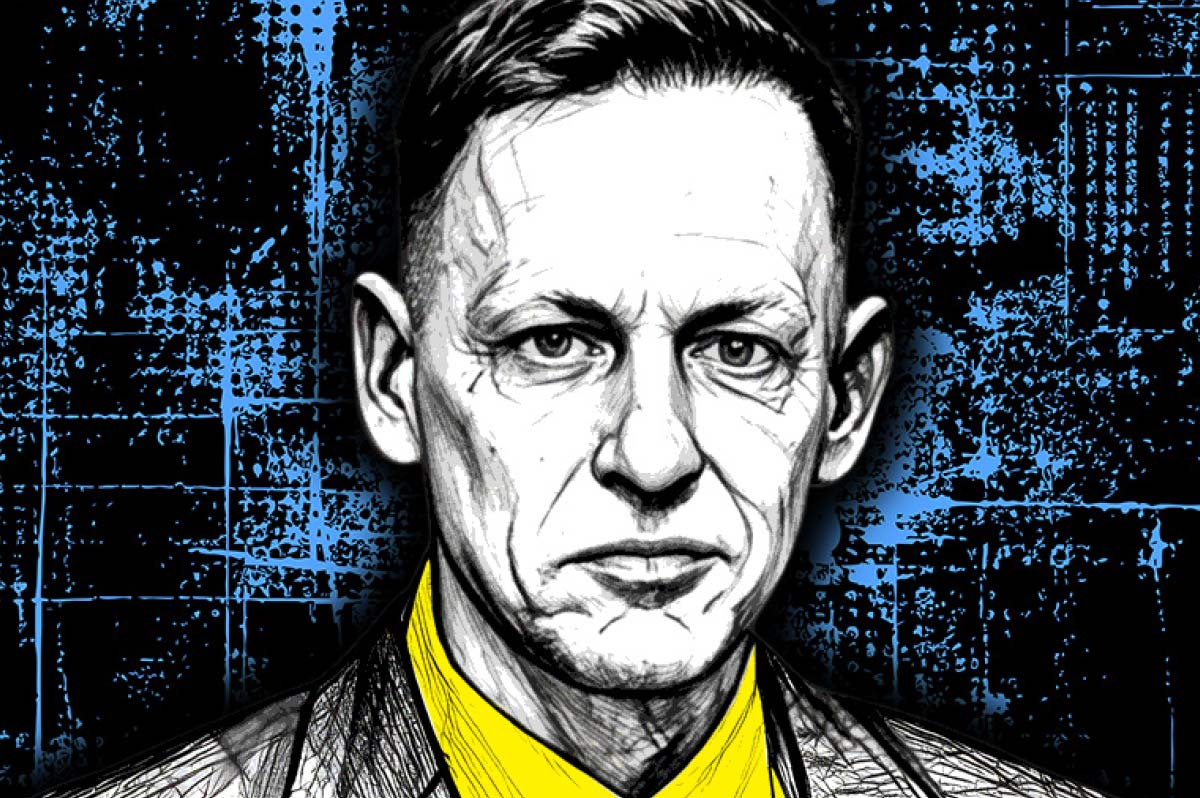
Peter Thiel claims to know the identity of the Antichrist of Bible prophecy. (Sort of.)
Then he really got ambitious and took his show on the road – to the very doorstep of the Vatican, in Rome! There, through another four-part series of lectures, Thiel engaged a secretive cohort of attendees regarding his thoughts on the Antichrist. And people got nervous, for a variety of reasons.
First, Vatican authorities got nervous – because they were fully aware of the long-term historical attempts to associate the Catholic Church with the Antichrist. Knowing that it was rumored that the lectures might be hosted under their auspices, Vatican officials determined it wiser to distance themselves from Thiel, and issued a statement that the lectures were “not part of any of our institutional initiatives.”
Protestant theologians got nervous, too, because it’s not often that technocrats with deep-pockets go venturing into the mysteries of biblical apocalyptic literature. The Rev. Dr. Matthew Fox, an Episcopal priest, put pen to paper to counter Thiel’s assertions, and even challenged him to a debate. Other ministers followed, wary of this well-funded, but admittedly unorthodox perspective on an ancient biblical concept.
But undaunted, Thiel announced that he would bring his Antichrist lectures to the veritable buckle of the Bible Belt, Nashville, Tennessee. Accordingly, there has been a stirring among southern preachers regarding what Thiel might be saying. But I’m not here to evaluate their concerns; I’m writing to tell you why I believe that you should be concerned, too!


So, when Peter Thiel talks, people are listening; and what he is saying about the Antichrist has people both listening and talking. And what he is saying is both novel and concerning. Whereas traditional conversations about the Antichrist centered in identifying unsavory, villainous personalities as the possible paragon of ultimate evil, Thiel has taken an approach that totally shifts how people might perceive both the Antichrist and the Christ, too!
Placing technology at the heart of his premise, Thiel proposes that anything – or anyone – that opposes the growth and use of technology’s impact on human concerns must be viewed as a potential Antichrist. In his own words, “in the 21st century the Antichrist is a Luddite* who wants to stop all sciences” (*i.e., someone opposed to technology).
But the more dangerous part of that assertion is the part that is left unsaid, but is logically at the heart of Thiel’s thoughts. Assuming that the Antichrist is to be interpreted as that which opposes Christ (our Savior), then Thiel is basically placing technology in the position of being a “Savior” – because those who oppose technology (savior) are the Antichrist, in his view.

But there is a subtle form of idolatry introduced in Thiel’s thinking, because he is ascribing to the inventions of human hands traits and properties only to be attributed to God. While technology may be a tool that can be used to benefit humankind; it is only God who saves! Science may provide answers and avenues for relief and comfort; but it is God alone who is our deliverer!
But Thiel’s considerations elevate technology to a deified status – and modern humanity is beginning to buy into his thinking. Yes, even we are beginning to perceive that our technology saves us!
We perceive ourselves to acquire omnipresence through our Zoom meetings, and omniscience is just a few keystrokes away when we access Google. Unfailing direction comes to us through our satellite-based GPS systems, our mobile phones bring us food through Door Dash, and our internet connections keep us company at night.
We have become so dependent upon our technologies, and so adoring of our devices that in many ways we worship them. And if “worship” can be defined as the bestowing of worth and value upon something with praise and submission, then many of us are closer to Thiel’s mindset than we may wish to believe.
Think about how people speak – in almost reverential tones – about their new iPhone, or their car, or their computer; then ask yourself how often you hear those same people speak about God in similar fashion?
From this perspective, Thiel goes on to offer that anything that mitigates against the growth of our technologies, and your right to free access to them – and them to you – is an Antichrist. So when the Pope Leo XIV warned against the potential dangers of Artificial Intelligence, Peter Thiel said that he was a “useful idiot (for the Chinese).” And he has often singled out young environmentalist Greta Thunberg as “a legionnaire(s) of the Antichrist” – because of her opposition to rampant technological advancement.
By inviting us to adore and protect technology, and to castigate and vilify those who warn against the possible dangers of technology, Thiel is turning human morality and ethics on its head! Whenever “things” (i.e., material items constructed to serve humankind) are elevated above everything else, that is a materialism that leads directly to idolatry.
From the very beginning humankind has been seduced by the notion of claiming the prerogatives and power that might make one sovereign. The baseline seduction to the mother of all who live on earth lies in the satanic siren’s song of a serpent, who beguilingly says,
“You will not surely die. For God knows that when you eat of it your eyes will be opened, and you will be like God, knowing good and evil” (Genesis 3:4, 5 ESV).
Our technology promises to supply us with the accoutrements of Divinity; we can defy time (“you will not die”), become hyperaware (“eyes…opened”), and become flawlessly discerning (“knowing good…evil”). Indeed, accompanied by our technology, we seem poised to take on God-like status!
This is a trait of that entity listed in scripture that stands in opposition to God and Christ that we call Antichrist. It comes with an arrogance and a defiance that brooks no resistance.
“Who is like the beast,” comes the query in the last book of the canon; “and who can fight against it?” (Revelation 13:4).
This sort of reliance on, and confidence in, our technology demonstrates itself more often than we may be aware. It shows up when our cable or streaming is interrupted, or when we cannot connect to the ubiquitous internet; we can become enraged and intolerant when we are severed from tools of pseudo-divinity. Our smartphones and smartwatches are our shepherds; they lead us into Amazon; they restore our subscriptions! And like Thiel, we are beginning to perceive that anyone, or thing, that disconnects us from our technology must be the enemy.
Sadly, many others are beginning to perceive life through a Thiel-like lens, with a bias towards technology. Based in Silicon Valley, the ACTS 17 Collective now exists as a sort of missionary group with a mission to “Acknowledg(e) Christ in Technology and Society,” (ACTS). It was formed by Trae and Michelle Stephens, a wealthy couple heavily involved in the world of technology.
Trae happens to be a business partner of Thiel’s – and an arms dealer as well. But he professes to love God, and he is a titan of technology, committed to protecting it and channeling it for good. Hence, he regards his making of war weaponry thusly, “…if you’re approaching it with a heart of peace, I think it’s very different on a mystical level than approaching it with a heart at war.”
But what Thiel, Stephens and those who subscribe to the messianic potential of technology fail to recognize is that our “things” (i.e., technology) have no moral core, andtherefore are not capable of being salvific. In fact, like all things made by human hands, our technologies are only tools that serve to extend the works and purposes of the human heart.
And so does our billionaire friend, Peter Thiel.
Recently, Thiel was musing aloud on a podcast about morality and offered some thoughts about the relative nature of good and evil when it comes to evaluating technology:
“If you’re evil, you’re at least competent. And if you’re evil, you’re not bad. And therefore, maybe you’re actually kind of good because you’re at least getting something done.”
Granted, he may have been philosophically addressing the notion of good and evil as absolute terms, but his words leave a bit too much wiggle room for me regarding how we should live and act.
The problem with Thiel’s thinking isn’t because he is pro-technology, because technology can be a good thing. The real problem is that he elevates human invention far too high, attributing to it qualities that belong only to the One who becomes the target of the anthem of praise found in Revelation 5:9 –
“You are worthy… For You were slain, and have redeemed us to God by your blood out of every tribe and tongue and people and nation…”
To do other than that will tend to lead into the judgmental pursuit of figuring out who to accuse and blame – which leads away from the very Christ that one may be professing to serve. And there is nothing more “Antichrist” than that.
“Little children, it is the last hour; and as you have heard that the Antichrist is coming, even now many antichrists have come” (1 John 2:18).
“For many deceivers have gone out into the world who do not confess Jesus Christ as coming in the flesh. This is a deceiver and an antichrist” (2 John 1:7).
The word itself is simply reflective of any person or power that would supplant the Christ from His rightful position; it literally means “against Christ.” Moreover, the passages clearly show that an Antichrist isn’t limited to one person or occurrence, because man had already appeared!
For better or for worse, many people conflate the Antichrist with other entities set forward in scripture, like:
- The Little Horn Figure in Daniel 7
- The “Man of Sin” – spoken of by Paul in 2 Thessalonians
- The Beast of Revelation 13
While the connection between those three entities is indirect, like the Antichrist they do all stand in opposition to God, and therefore can be labeled as “against Christ.”
The problem arises when people set about trying to figure out the “who,” rather than the “what.”



“Some of us who have already begun to break the silence of the night have found that the calling to speak is often a vocation of agony, but we must speak. We must speak with all the humility that is appropriate to our limited vision, but we must speak.”
King is well known for his doctrine of direct action, non-violent resistance (See Martin Luther King Jr., Letter from the Birmingham Jail, April 16, 1963. Click Here). Using this principle, King and his followers advocated for racial desegregation, voting, and civil rights for African Americans in the United States. Yet, non-violent resistance was just one strategy. Fewer are familiar with the what King coined the violence of silence. King, realizing that African-Americans alone could not achieve desegregation, invited others of good will to join the cause while also condemning those, who through their silence, helped to perpetuate the system of racial discrimination.
While jailed for protesting segregation, King, from his cell, chided his white ministerial colleagues.
“We will have to repent in this generation not merely for the hateful words and actions of the bad people but for the appalling silence of the good people.”
- when one should speak, but does not,
- when one is silent in the face of evil and injustice,
- when one hides out of convenience or expediency.
It is then that the passivity of silence can be as deadly as the commission of a violent act. Examples of this violence of silence, may be found both in the Bible and in modern Christian history, proving its universality and its continued relevance.
“If we let him thus alone, all men will believe on him: and the Romans shall come and take away both our place and nation. And one of them, named Caiaphas, being the high priest that same year, said unto them, Ye know nothing at all, Nor consider that it is expedient for us, that one man should die for the people, and that the whole nation perish not” (John 11:47-50).
There is no doubt that words do matter. The words of Christ were always inspiring toward life but the words of Caiaphas incited violence and death. Inspired by hate speech, armed agents of death came to arrest Jesus, the Prince of Life. Words do matter.
But, on the night of Christ’ arrest, there was not only the violent hate speech of Caiaphas, but also the violence of silence committed by Peter. When he should have stood with Christ, Peter denied Him.

“The ultimate measure of a man is not where he stands in moments of comfort and convenience, but where he stands at times of challenge and controversy” (On Being a Good Neighbor, The Papers of Martin Luther King Jr. Volume VI. (King Institute, 2007)).
King called this the silence of betrayal (Beyond Vietnam, sermon delivered April 4, 1967 at the Riverside Church).
Six weeks later, leadership’s regrettable response was:“Agreed, That the chairman be asked to inform Richard Iwata that we do not feel that as a religious organization we can interfere in the matter referred to in his correspondence, since it is essentially of a political or government nature.”
We know that King would have questioned this violence of silence. This is from Address at the Fourth Annual Institute on Nonviolence and Social Change at Bethel Baptist Church, December 3, 1959:
“History will have to record that the greatest tragedy of this period of social transition was not the strident clamor of the bad people, but the appalling silence of the good people.”
During the rise of the National Socialists in Germany, many in the church supported Hitler’s regime as ordained by God. Because of “his personal dedication and his abstinence from tea, coffee, alcohol, and meat, practices shared by the Adventists, [therefore] he was welcomed as a savior” wrote Christine King, in The Nazi State and the New Religions: Five Case Studies in Non-Conformity, (New York: Edwin Mellen Press, 1982), 92.
In his book, The Silent Church: Human Rights and Adventist Social Ethics, (New York: Macmillan Press and St. Martin’s Press Scholarly Division, 1998) pp. 17-18, Zdravko Plantak further uncovered lamentable cooperation. The president of the East German Conference argued that it was bad for the image of the Church when some members refused to salute the swastika flag or use the Hitler salute. Soon the Adventist Church would lead the German welfare program, support forced sterilization, and exclude persons of Jewish background from fellowship. Thus, during one of the greatest periods of hatred, out of expediency, many were silent.
“He who passively accepts evil, is as much involved in it as he who helps to perpetrate it. He who accepts evil without protesting against it, is really cooperating with it” (Beyond Vietnam).
- Black History is called Critical Race Theory and is being outlawed in classrooms.
- The Civil Rights Division of the Department of Justice, which protects civil liberties and prosecutes hate crimes, has been gutted.
- The FBI, the agency which investigates hate crimes, is being eviscerated.
- Diversity, Equity, and Inclusion initiatives have been replaced by the propagation of the myth of meritocracy.
- Attempts have been made to undo birthright citizenship guaranteed by the Fourteenth Amendment of the U.S. Constitution.
- Mass deportation of immigrants is threatened as new concentration camps are opened.
- Lynching deaths of African Americans, a national traumatic wound reopened, is resurging.
During this pivotal moment in the history of our nation, we are challenged to vociferously repudiate the demons of violence and hatred. We must not be silent, run for cover, and pretend that if we choose to ignore the obvious, then it does not exist. Neither can we retreat into apocalyptic passivism which posits that all these things are just signs of the end and Jesus will fix it all when He returns.
But God intervened and declared, “Lo, I come: in the volume of the book it is written of me, I delight to do thy will, O my God: yea, thy law is within my heart. I have preached righteousness in the great congregation: lo, I have not refrained my lips” (Psalm 40:7-9).
Into the crisis came the Christ,
- declaring love in a world of hate,
- peace in a world of war,
- hope in a world of despair,
- life in the face of death,
- truth in the face of lies.
Two thousand years after His ascension, the life of Christ still speaks above the vitriol of small-minded men, and the language of love booms louder than the megaphone of bigotry and hatred.
- King faced the moral moment on a balcony in Memphis.
- Rosa Parks faced the moral moment on the back of a bus.
- Heather Heyer faced the moral moment on a back street in Charlottesville.
This now is our moral moment. Pray, we must, but calling upon our God to act and refusing to act when God calls upon us is spiritual schizophrenia at best, and downright hypocrisy at worst. The God we serve not only is moved by injustice but also moves against injustice. We also learn from Scripture that in the time of moral and spiritual crisis, God not only moves into action, but also He moves people into action.
- God called upon Moses to demand of the most powerful ruler in the world the release of the Hebrew captives.
- God called upon Esther to foil the genocidal plot to destroy the Jews perpetrated by the racist Haman.
Each had to decide to accept the call of God to speak. Silence would have been violence. Your voice matters. Words matter. Lives matter. Truth matters.
As King preached the word, he quipped in a sermon, “Remaining Awake Through a Great Revolution” (March 31, 1968):
“There comes a time when one must take a position that is neither safe nor politic nor popular, but he must take it because his conscience tells him it is right.”

 t was one of those mornings.
The kind where the alarm fails and panic wakes you before your nervous system can fully regulate itself.
“Ahhhh, we’re late.” I jumped out of bed already behind schedule. Instead of my usual off-key worship songs echoing from the shower, I was shouting instructions to my little one from across rooms. Anxiousness charged in like a bulldozer, and irritability followed like its brunch-bestie, uninvited and loud.
By the time we reached the door, my ten-year-old had the biggest attitude. And I snapped at her. I saw the tears forming but kept my eyes on the clock.
Then it came out of my mouth, fast, sharp, and familiar,
“Something is wrong with you. It must be!”
The West Indian default mother, long buried under parenting books and gentle-parenting intentions, had been resurrected. Alive. Loud. Destructive.
“Nothing is wrong with me,” my daughter yelled back. “My brain is perfectly fine. Don’t say that to me.”
Silence fell heavy, and inside me, a war erupted. The default self was ready to clap back. The reformed self whispered, that baby is hurting. Correction felt justified. Compassion felt risky. Pride wanted authority. Love wanted repair.
We drove in silence for miles. At a stoplight, I finally asked, “Are you okay?”
She shook her head no.
“What did you hear me say when I said, ‘Is something wrong with you?’”
“It sounded like you were saying I was stupid,” she answered, softly, “like I wasn’t smart enough to think.”
That moment broke me.
That phrase, “something is wrong with you,” didn’t start with me. It came from my mother. She used it when she was overwhelmed. And I remember how it silenced me. How it made me retreat. For a long time, I believed what those words implied. I believed I was stupid, and now I too was repeating a cycle I had sworn to break.
Yet there I was repeating it. So I apologized. I explained what I meant: “I needed you to slow down and think carefully about what you were doing.”
“Why didn’t you just say that? Why did you have to say it like that?”
She was right.
Somewhere beneath my frustration was a desire to silence her, to reassert power when my authority felt challenged. And that realization forced me to confront a hard truth: awareness alone doesn’t break cycles. Intentional behavioral change does.
This same dynamic doesn’t stop with children; it shows up in marriage too.
When stress is high and emotional regulation is low, spouses often default to inherited scripts:
“What’s wrong with you?”
“You’re too sensitive.”
“You always do this.”
“You never think.”
These statements trigger shame and defensiveness. Instead of addressing behavior, they attack identity. In marriage, this erodes emotional safety, the very foundation of intimacy.
Paul exhorts couples, “Do not let any unwholesome talk come out of your mouths, but only what is helpful for building others up according to their needs” (Ephesians 4:29).
This moment was a classic example of emotional dysregulation under stress. When overwhelmed, the brain defaults to learned patterns, often rooted in childhood. Neuroscience tells us that under threat, the prefrontal cortex (responsible for reasoning and empathy) goes offline, while the amygdala (responsible for survival responses) takes over.
In children, identity-based statements — “something is wrong with you”—are especially harmful because their sense of self is still forming. Repeated messages like these can become internalized beliefs, shaping self-esteem and future relationships.
James 1:19 offers both psychological and spiritual wisdom: “Everyone should be quick to listen, slow to speak, and slow to become angry.” This isn’t passive parenting or permissive love; it’s regulated leadership.
“Do not conform to the pattern of this world, but be transformed by the renewing of your mind” (Romans 12:2). Transformation requires pause, reflection, and repentance.
Parents and guardians are cautioned specifically: “Do not provoke your children to anger, but bring them up in the discipline and instruction of the Lord” (Ephesians 6:4).
Discipline without dignity provokes uncertainty within us and leads to reactive, dysregulated behaviors; instruction rooted in love does the opposite. It restores the dignity lost in translation.
And perhaps most tenderly, Psalm 34:18 reminds us that “The Lord is close to the brokenhearted.” When we repair after rupture, whether with our children, or our spouses, or our close friends, we mirror God’s nearness.
That morning changed my parenting forever.
Because I fought against my default and chose not to remain silent because of anger, I spoke. The very act of speaking shifted what could have been a repeated cycle into the transformation of our relationship. My daughter was able to enter school feeling seen instead of shamed. That day, a cycle lost its grip.
Cycles don’t break because we know better. They break because we do better.
May we parent, partner, and live with words that heal. And may the last voice our loved ones hear before they face the world remind them not of what’s wrong with them, but of who they are and whose they are. May they know that they are “fearfully and wonderfully made” (Psalm 139:14). May they know their identity in Christ.



In most of our churches, the old-school work ethic has taken its rest. In many of our churches, we cannot find individuals who are committed to serving or doing anything that does not boost their ego or personal standing. Individuals who will serve expecting nothing in return are often in the overwhelming minority. I say let us bring back old-school dedication and work ethic.
The church that purports to follow Jesus is in a dark place when forums devoted to prayer and the study of the Word are often avoided. Churches are rarely called into seasons of fasting and prayer.
Where is the fervent call for primitive godliness? Why aren’t our lamps trimmed and burning? How have we allowed prayer meeting, Sabbath School, and the “young people’s” meetings to die on our watch? These were the roots of a strong church. When the roots of a church are strong, the fruit is going to be obvious and abundant: high standards, great participation, and worship that honors God.
“We’ve got to “finish the work” they said back when.
It is alarming because it is the reason the church was established. The church was supposed to be a dynamic missionary enterprise fueled by love for God and a desire to see others know Him.
Somewhere along the line, it became more important to grow our personal empires than His kingdom. We feel very little burden for lost people.
I pray that there would be a revival of old-school commitment and dedication, where we give and sacrifice personal time during the week to make sure that the work of Jesus Christ is able to grow. I welcome a return of old-school evangelism, where each member feels compelled to tell someone else of the loving grace and salvation of Jesus Christ. We can never get old-school fruit if we don’t go back to our old-school roots.

We invite you to watch Breath of Life.
There are many options to choose from…
Atlanta, GA | WATC-TV Channel 57
Huntsville, AL | WAAY-TV Channel 31
Memphis, TN | WANT-TV Channel 24
Montgomery, AL | WNCF-TV Channel 32
Phoenix, AZ | Good News TV • mygoodnewstv.com
Hope Channel
Three Angels’ Broadcasting Network (3ABN)
Word Network
YouTube – YouTube.com/c/breathoflifetv
Facebook – Facebook.com/breathoflifetv
BOL Website – breathoflife.tv/videos/



In scripture we find that Jesus approached our brokenness wholistically. His mission statement is beautifully summarized in Luke 4:18-19:
“The Spirit of the Lord is upon me, for he has anointed me to bring Good News to the poor. He has sent me to proclaim that captives will be released, that the blind will see, that the oppressed will be set free, and that the time of the Lord’s favor has come.”
Jesus borrowed his mission from Isaiah 61. When Jesus said that the Spirit of the Sovereign Lord was upon him (Isaiah 61:1), that truth became evident at his baptism when the Father declared of Him: “You are my dearly loved Son, and you bring me great joy.”
Many of us try to manage our own lives and the lives of others through excessive controlling behavior. We try to manage our own pain through addiction rather than experiencing the “God of all comfort who comforts us in all our troubles” (2 Corinthians 1:3). Those who are truly poor in spirit are those who have come to the end of trying to manage their own lives and the lives of others. They have admitted their powerlessness and accepted that God is able to do what they cannot. They “let go and let God.”
The courageous face and embrace their lives as they really have been, and in doing so, mourn the losses they have experienced. It is through the pain of those losses that healing comes. God said that his favor will come to those who are mourning and that a crown of beauty awaits those who have only previously experienced the crumbs and ashes of life.
Is your church a safe community for you to find hope and healing? Are there other safe people in whom you can confide? Do you have the courage to go to counseling, if needed?
Just know, you are worth it.

After His resurrection, Jesus does not withdraw from humanity. He entrusts His mission to His followers while remaining personally involved in its fulfillment. Scripture describes this continued involvement through the language of mediation — not as distance, but as commitment. Jesus stands with humanity, representing human life before God, and Jesus stands with God, extending grace toward humanity.
This ongoing work reveals itself often through the imagery of a sanctuary — not as an architectural blueprint, but as a relational reality.

Jesus, as the center of this work, does not repeat His sacrifice or add to it. His life and death are complete. What continues is their application — the patient, faithful work of restoring trust, healing conscience, and bringing human lives into alignment with God’s purpose. Forgiveness is not a vague declaration; it is an ongoing reality experienced as Christ engages individual lives and histories.
This vision also affirms accountability without fear. Scripture speaks of a time when truth is fully revealed — not to shame, but to heal. Light exposes what harms, not to destroy those who have been wounded or have wounded others, but to bring clarity, justice, and restoration. Jesus’ role in this process is not that of accuser, but of advocate. He does not stand against humanity; He stands for it.
In Adventist understanding, this work highlights God’s commitment to transparency and justice. He does not ignore or bury evil. He names, addresses, and brings it to an end. At the same time, mercy is not compromised. Jesus holds them both together — truth without cruelty and grace without denial.
This ongoing work also grounds hope. History is not drifting aimlessly, nor is it spiraling out of control. It is moving toward resolution. The same Jesus who lived among humanity and gave Himself for its healing remains invested in its future. What has begun will be completed.

For those exploring faith, knowing this aspect of Jesus’ work reframes judgment not as threat, but as hope that truth matters and healing will be complete. For those who follow Christ, it offers confidence that growth, repentance, and restoration are not futile or unseen.
Christ’s ongoing work means that grace is not exhausted, justice is not abandoned, and hope is not wishful thinking.
Hope Made Visible

This hope is intentionally grounded in visibility and reality. Scripture speaks of His return as personal, unmistakable, and shared — not secret or symbolic. It is described as an event that restores truth publicly and ends the long confusion between power and goodness. What has been trusted in faith becomes visible in fact.
Importantly, the return of Jesus is not framed as terror for the faithful or triumphalism over others. It is framed as liberation. For those who suffer injustice, it promises that wrongs will not have the final word. For those who have lived in faithfulness, it affirms that trust was not misplaced. For creation itself, it signals renewal rather than abandonment.
Adventist faith emphasizes watchfulness rather than speculation. The purpose of this hope is not to generate fear, obsession, or prediction, but to shape character and ethics in the present. Expectation is meant to produce attentiveness—how people live, treat others, and steward life now matters precisely because the future is coming.

The return of Jesus is not about ending the story abruptly, but about completing it faithfully. It is the moment when love is no longer contested, truth is no longer obscured, and hope becomes sight. Until then, faith lives alert, grounded, and active—trusting that the One who came once will come again, and that nothing entrusted to Him is ever lost.
Rest, Memory, and the Promise of Life



The Bible describes death as real, final, and serious—but not ultimate. It is not presented as a friend, a spiritual upgrade, or a hidden continuation of conscious life. It is an enemy, a rupture, a consequence of a world out of alignment. Yet it is an enemy Jesus has already faced and defeated.
Jesus’ own experience of death reshapes how it is understood. He does not bypass it or minimize its weight. He enters it fully. His death is real, complete, and irreversible by human means. But His resurrection reveals that death does not have the final word. Life does — not abstract life, but embodied, restored life.
Scripture speaks of death as a state of rest rather than awareness. The dead are not described as watching, wandering, or suffering elsewhere. They are described as sleeping — held in God’s care, preserved in God’s memory, awaiting restoration. This language does not diminish the seriousness of death; it guards the hope of resurrection. The future is not sustained by human consciousness, but by God’s faithfulness.
The resurrection promised to believers is not symbolic or spiritualized. It is bodily and real. Just as Jesus rose embodied, those who trust Him are promised renewed life when He returns. Identity is not dissolved; it is restored. Loss is not erased; it is answered. What was broken is healed, not forgotten.
This vision protects against two common distortions. One is despair — the belief that death ends meaning entirely. The other is illusion — the belief that death is merely transition without loss. Christianity insists on both truth and hope: death is grievous, and death is temporary.
Adventist faith emphasizes resurrection because it centers hope where Scripture places it — not in immortality of the soul, but in faithfulness of God. Eternal life is not a human possession; it is a gift given at the right time. Hope is not sustained by speculation about the afterlife, but by trust in the One who calls the dead back to life.
For those exploring faith, this vision offers honesty without fantasy. It refuses to trivialize loss or spiritualize grief. For those who follow Christ, it offers comfort grounded in promise rather than imagination. The dead are not lost; they are kept.
The promise of resurrection transforms grief. It does not eliminate sorrow, but it anchors it. Love does not end in absence. Memory is not erased. Life is not wasted. The future belongs not to death, but to the One who has already stepped through it and returned.


The Bible speaks of a period in which truth is fully brought into the light — not to satisfy curiosity or exact revenge, but to bring clarity, accountability, and healing to a fractured moral universe. This time is described as a pause between Christ’s return and the final renewal of all things. It is not a continuation of chaos, but a necessary step toward restoration.
In this vision, Jesus remains central. He is not an executioner driven by anger, nor a detached observer. He is the One through whom judgment and mercy meet. The exposure of evil is not about humiliation, but about ending deception. Lies lose their power when truth is fully known. Harm loses its justification when accountability is complete.
This period also affirms God’s transparency. Scripture does not present God as demanding trust without explanation. Instead, it depicts a process in which the justice of God’s actions is made clear — where every question about fairness, mercy, and responsibility is addressed openly. Faith does not require blind acceptance; it invites understanding.
Evil itself is revealed as parasitic rather than eternal. With no independent life, no creative power, and no future, it is finally exposed and collapses under its own weight. The end of evil is not arbitrary punishment, but the natural consequence of truth finally reigning without resistance.
Importantly, this reckoning does not prolong suffering. It brings it to an end. Those who have trusted Christ are not subjected to fear or uncertainty, but to assurance. What they have endured is acknowledged. What they have lost is not ignored. Justice becomes not a threat, but a promise that love will not be mocked forever.
Adventist faith emphasizes that this process leads to final resolution, not perpetual torment. God does not sustain evil endlessly to demonstrate power. He brings it to an end to restore peace. Judgment, in this sense, is an act of mercy toward the universe — removing what destroys so that life can flourish without fear.
The end of evil is not a spectacle of power, but the restoration of trust. It is the moment when fear finally loosens its grip, when deception loses its voice, and when peace becomes possible without threat. In Christ, justice does not destroy hope — it completes it.
Life Restored in the Presence of Christ

The Bible describes a future in which God does not discard the world He made, but remakes it. The fractures that define human experience — death, injustice, alienation, fear — do not persist indefinitely. They are brought to an end. What was broken is restored. What was lost is returned. What was wounded is healed.
At the center of this restored world is Jesus. He does not rule from a distance or reign through force. He dwells with humanity. The separation between the divine and human that has defined so much of history is finally removed. God is not merely believed in; God is present. Life is no longer lived by faith alone, but by sight, trust fulfilled, and relationship completed.
This restored world is not static or artificial. It is described as vibrant, embodied, and relational. Work continues, creativity flourishes, and community deepens. Life is not reduced to endless worship detached from meaning, but lived fully without fear of loss or harm. Joy is not fragile. Love is not threatened. Time is no longer an enemy.

Adventist faith emphasizes the physical reality of this future. Eternal life is not disembodied existence or spiritual abstraction. It is life lived fully — grounded, relational, and whole. Creation itself participates in renewal. The world becomes what it was always meant to be: a place where trust replaces fear and love is unthreatened.
This future is not earned through perfection or secured through escape. It is received as gift. Entry into this restored life is grounded in relationship with Christ, not performance. What endures is not achievement, but trust.
For those exploring faith, this vision reframes Christianity as hope for the world rather than retreat from it. It does not dismiss the present, but redeems it. For those who follow Christ, it anchors endurance. Suffering is not final. Love is not wasted. Faithfulness is not forgotten.


She acquires wool and flax, transforms raw materials into finished goods, sells linen garments, supplies merchants, secures food from distant places, directs labor, evaluates land, purchases a field, and invests her earnings in a vineyard. She recognizes the value of her merchandise, provides for an extended household, assists people in need, and speaks with wisdom. Her comparison to merchant ships places her within a world of long-distance procurement and exchange. Her purchase of land demonstrates control over capital, while her vineyard converts profit into productive property.
The description translated in the Bible as a “virtuous woman” conveys strength and capability, substance, resources, excellence, and valor. Yet later interpretations often narrowed this commercially accomplished woman into a dutiful wife defined principally by domestic service. The chapter presents something far more expansive. She is a manufacturer, merchant, investor, land purchaser, agricultural entrepreneur, household executive, and community provider.
A market matriarch was more than a seller at the final point of exchange. Her authority grew from commercial knowledge, control of resources, organization of labor, command of relationships, and responsibility for collective survival. She connected producers, transporters, merchants, households, and consumers. Through her moved commodities, credit, information, cultural knowledge, and opportunity.
Like the woman of Proverbs, Eliza inhabits an economy larger than the household. Her labor connects production, transportation, negotiation, distribution, profit, and communal provision. She embodies women who moved through Charleston’s streets, wharves, waterway, kitchens, market spaces, and households; negotiated the portion of their profits demanded by enslavers; retained earnings; maintained independent households; supported relatives; reinvested in commerce; and sometimes accumulated enough capital to purchase liberation.
Through Eliza, women too often recorded only as property, vendors, badge holders, occupations, or legal problems recover intellectual and emotional lives. Music, performance, visual art, costume, and historical research allow their economic authority to be encountered through a woman who thinks, remembers, calculates, negotiates, loves, resists, and sings.
Internationally acclaimed soprano Brandie Inez Sutton stars as Eliza. Karen Chilton is the librettist, and Armand Hutton is the composer. Internationally acclaimed artist Jonathan Green serves as set and costume designer, translating the visual language of African-descended Lowcountry life onto the stage. Dr. Kim Cliett Long serves as historian and historical researcher, grounding the production in the documented economic, maritime, and cultural history of Charleston’s African American market women.
The world premiere of Eliza, A Chamber Opera will take place on December 16, 2026, at the Koger Center for the Arts at the University of South Carolina in Columbia, South Carolina. There, the commercial woman described in Proverbs 31 and the African market matriarchs of Charleston will meet in a contemporary theatrical form. Eliza gives their ancestral continuum a face, a voice, and a stage.

CENTRAL INQUIRY
How can the commercial knowledge of African market women, the woman of Proverbs 31, the market matriarchs of Charleston, South Carolina, and the dramatic character Eliza be understood as one evolving continuum of female economic authority?
- Why is the definition of a market woman as simply “a woman who sells goods” historically inadequate? Identify at least five additional economic functions.
- How did control of transportation, credit, pricing, and information expand a market woman’s authority beyond the point of sale?
- What distinguishes a market matriarch from an individual vendor? Your answer should address authority, transmission, community responsibility, and intergenerational influence.
- Why should matriarchy not be limited to biological motherhood, marriage, or age?


 s the air becomes cooler and the days grow shorter, nature reminds us that life has rhythms. There are seasons for planting, seasons for harvesting, and seasons for resting.
Our bodies have rhythms, too.
Yet so often, we move through our days without paying attention to what our bodies are asking of us. We rush through meals, ignore our need for rest, and sometimes become so accustomed to feeling tired or overwhelmed that we forget what it feels like to be truly nourished.
I often speak about “Coming home to your body.” For me, this is more than a beautiful expression. It is an invitation to reconnect with ourselves—to listen, to become more intentional, and to recognize that caring for our bodies is not something we do only when something goes wrong.
It is something we practice every day.
I can still hear him reminding us at the dinner table:
“This is a healthy plate — look at the colors!”
This recipe celebrates the warmth, color, and simplicity of seasonal eating.
1 medium yellow onion, chopped
2 carrots, chopped
3 garlic cloves, minced
1 tsp cumin powder
1 tablespoon freshly grated ginger
2 tablespoons extra-virgin olive oil
4 cups low-sodium vegetable broth
1 cup unsweetened coconut milk
½ teaspoon ground turmeric
¼ teaspoon ground cinnamon
½ teaspoon sea salt, or to taste
Freshly ground black pepper
1 tablespoon fresh lemon juice
Fresh parsley or toasted pumpkin seeds for garnish
Add garlic, cumin, ginger, turmeric, and cinnamon. Stir for approximately 1 minute, allowing the spices to become fragrant.
Add the cubed butternut squash and vegetable broth. Bring to a gentle boil, then reduce heat, cover, and simmer for 25–30 minutes, or until the squash is tender.
Remove from heat. Using an immersion blender, carefully blend until smooth and creamy. Alternatively, blend in small batches using a countertop blender designed for hot liquids.
Stir in the coconut milk and return to low heat for several minutes. Add lemon juice, salt, and black pepper to taste.
Serve warm, garnished with fresh parsley or toasted pumpkin seeds.
Perhaps it is also:
“What does my body need from me today?”
- More rest?
- More nourishing meals?
- More time outdoors?
- A little less rushing?
- A little more attention to the habits that shape our everyday lives?
Coming home to your body does not require perfection. It begins with awareness, followed by small, intentional choices.
And sometimes, those choices begin right at the kitchen table.
Nourish well. Live intentionally. Come home to your body.



Atlanta, GA 30318
 404-799-7288
 http://atlantaberean.com/bomc
 [email protected]
P.O. Box 519
Ashton, MD 20861-0519
301-774-0400 https://www.emmanuelbrinklow.org [email protected]Baltimore, MD 21217-3803
410-669-6350 https://www.bereatemple.org [email protected]Windsor Mill, MD 21244-2042
410-922-0050 https://www.libertysda.org [email protected]7000 South Michigan Avenue
Chicago, IL 60637
773-224-7700 http://www.shilohsdachicago.orgMemphis, TN 38106
901-774-5431 http://longviewheights22.adventistchurchconnect.orgOrlando, FL 32810
407-704-6963 https://www.guilgalsda.org/ministries/community-serviceSaint Louis, MO 63113-1520
314-361-6446 https://bereanmo.adventistchurch.org [email protected] St. Louis, MO 63136-1500
314-868-0707 https://www.northsidesda.org [email protected]