

Mr. Corlies was a different story. Neither he nor his whip had a soft side. He used to be a Quaker but would rather be banned from the Friends than free us. Most Quakers were peaceful, but everyone knew about Corlies’ bad temper. Such a shame, since he was rumored to be my daddy.
One day in November of 1775, he called my name and didn’t get an answer.
“Titus!”
But that’s the day I chose liberty or death. If it’s good enough for Patrick Henry, then it’s even better for me!
I left New Jersey and headed South to freedom. That might sound backwards to you, but the British governor of Virginia announced that any slaves who helped them fight would be freed. They called it Dunmore’s Proclamation, but I called it justice. It made the “Patriots” hotter than fish grease, but I was happier than a hog wallowin’ in fresh slop.
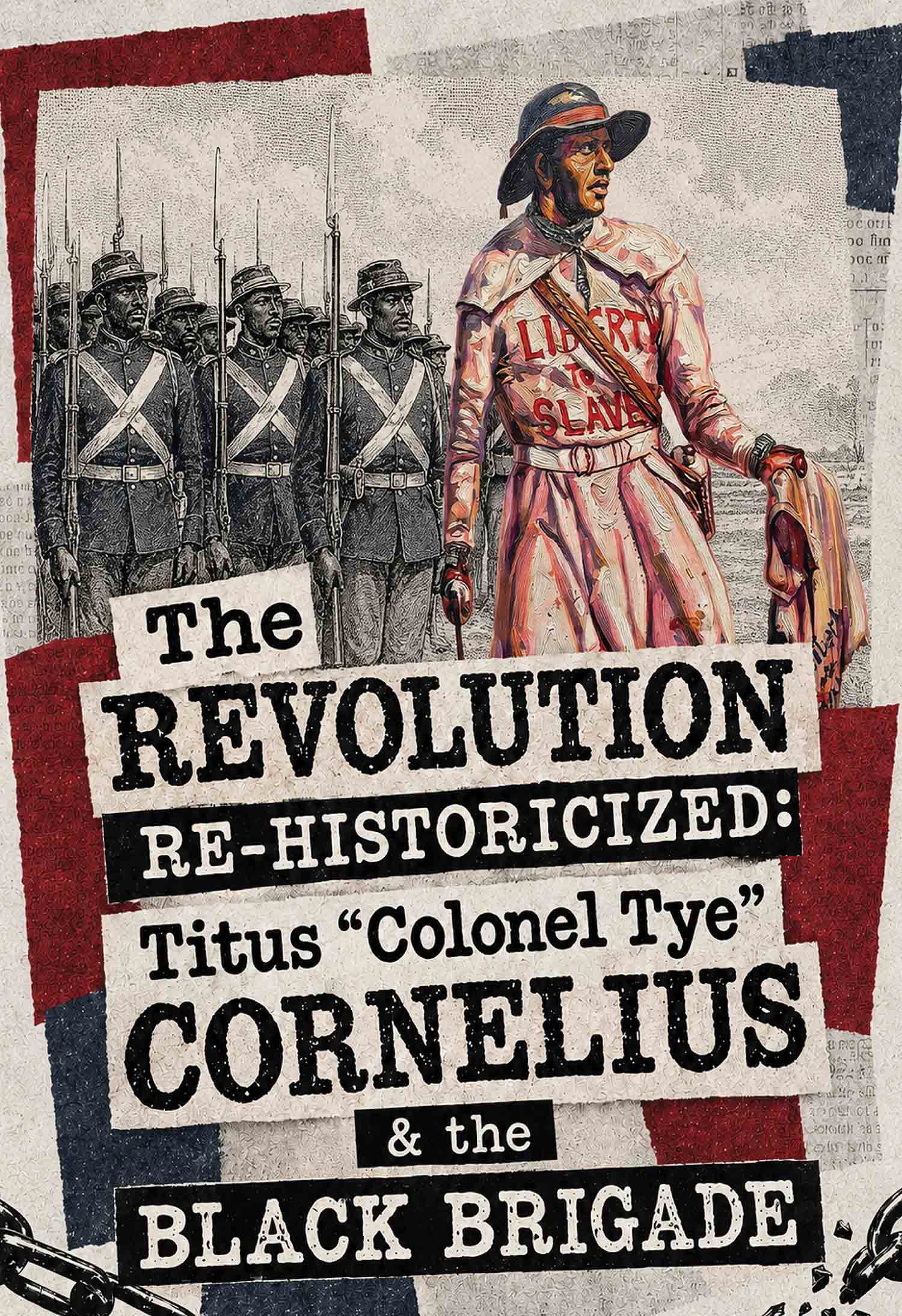
When I joined Dunmore’s Royal Ethiopian Regiment, the first thing I had to survive was smallpox. The Regiment didn’t last long and didn’t win many battles, but the uniforms made it worthwhile. The last thing some of those enslavers saw was “Liberty for Slaves” inscribed on our sashes.
Later, I was transferred back to the Sandy Hook area of New Jersey. A bunch of us freedmen, along with some white loyalists, formed the Black Brigade. We weren’t considered real troops, but we had some real fun with real guns. They called us “irregulars” back then. Today, we’d be called guerrillas.
When I unenslaved myself, Corlies paid for want ads in Philadelphia and New York newspapers to try to get me back. After I joined the Black Brigade, my name was in the papers again. But old Corlies didn’t want none of “Colonel Tye.” That’s what they been calling me since I started leading the Brigade on nighttime raids. Even when the “regulars,” like the Queen’s Rangers, joined forces with us, they followed Colonel Tye’s command.
We captured several Patriot militia officers, freed their slaves, and took their cattle and horses. Sometimes we took their furniture, food, clothes, and bedding and hauled it away in their own wagons. The Black Brigade stayed faithful ‘til the end of the Revolutionary War. The survivors – 49 men, 23 women, and 6 children – relocated to Nova Scotia in 1783.
And that’s not all. People like me still live rent-free in patriotic heads of America. When y’all’s Founding Fathers complained about “domestic insurrections” in the Declaration of Independence, they were talking about guys like Colonel Tye. They refused to understand that we didn’t care about arguments between Patriots and Loyalists. We were fighting for liberation from both sets of enslavers. Like the song says:
And before I’d be a slave, I’d be buried in my grave,
And go home to my Lord and be free!