









Message Magazine is trying out a new size and we’re eager to hear your thoughts.

Editor
Carmela Monk Crawford
[email protected]
Graphic Design
Erica Keith
www.ericakeith.com
Subscriber Services
Pacific Press Publishing Assoc.,
Virginia Ramsey 1-800-456-3991

Roger Bernard
Marvin Brown
Carlton Byrd
Virgil Childs
Eugene Lewis
Garth Gabriel
Alva James-Johnson
Benjamin Jones
Eldeen King
Kenneth Manders
Michael Owusu
Calvin Preston
Trevor Kinlock
Calvin Watkins
relationship
readineSS
Call 1-800-456-3991 Monday through Thursday 8:00 a.m. to 5:00 p.m. Mountain Time for subscription information or address changes. MESSAGE (ISSN 0026-0231) is published bimonthly Jan/Feb, Mar/Apr, May/June, July/Aug, Sept/Oct, Nov/Dec.
© 2018 by the North American Division of Seventh-day Adventists, 9705 Patuxent Woods Drive, Columbia, Maryland, 21046, U.S.A. Address editorial correspondence to MESSAGE MAGAZINE, 9705 Patuxent Woods Drive, Columbia, MD 21046-1565 U.S.A. All subscriptions are prepaid. If you did not order MESSAGE, it is being sent as a gift from a friend. You will not be billed. To subscribe, mail payment to MESSAGE, 1350 North Kings Road Nampa, ID 83687, U.S.A. or call 1-800-456-3991. Subscription price: one year, $19.95 U.S. currency; single copy, $4.00; overseas, add $10.00 per year for postage. Prices subject to change without notice. Periodicals Postage paid at Nampa, Idaho and additional offices. Vol. 91 No. 3 May/June POSTMASTER: Send address changes to MESSAGE, 1350 North Kings Road Nampa, ID 83687, U.S.A. Printed in the U.S.A.
Unless otherwise noted, Bible texts in this issue are from the New King James Version. Copyright © 1979, 1980, 1982 by Thomas Nelson, Inc. Used by permission. All rights reserved. Statements in this issue attributed by an author to other speakers/writers are included for the value of the individual statements only. No endorsement of those speakers’/writers’ other works or statements is intended or implied.




Face it, for life and all that it consists of is God’s gift. Stewardship is for all of life. It involves the wise and unselfish use of the body-temple, time, talent, money and all material possessions.”
by Harold L. Lee
Message. March-April 1975

In “Black Grief/White Grievance,” Dr. Juliet Hooker explores the stark contrast between black grief, a public mourning for lives lost to racial injustice, and white grievance, a reactionary resentment toward racial progress. She argues that while black communities mourn in pursuit of justice and recognition, white grievance fuels backlash, reinforcing systemic inequality. Through historical and political analysis, Hooker reveals how these opposing responses shape democracy, policy, and racial dynamics in America. This book can be found on Audible or Amazon.


Todd Dulaney’s album, “Promises: The Best of Todd Dulaney (Live)” features some of his most impactful worship songs, including “Pulling Me Through,” “Victory Belongs To Jesus,” and “Your Great Name.” Known for his ability to infuse Scripture into music, Dulaney delivers a powerful worship experience that resonates deeply with listeners. This collection not only showcases his musical talent but also his dedication to creating an atmosphere of praise and worship. His music can be found on any digital platform.

Loretta Merritt’s latest single, “I Got a Friend,” is a heartfelt gospel track that has quickly resonated with listeners. Co-written with multi-platinum songwriter Makeba Riddick-Woods and produced by four-time Grammy Award-winner Rickey Offord, the song blends soulful melodies with uplifting lyrics, celebrating the unwavering support and love found in faith. Merritt’s powerful vocals convey a deep sense of gratitude and joy, making “I Got a Friend” a standout addition to contemporary gospel music. The song reminds us that God is always with us, offering love, care, and protection, especially during challenging times. Merritt’s music can be found on all digital platforms.


Very good budgeting app for people who like to know exactly where their money is going, how much they spend each month, and want to save for meaningful goals.

 n a world where economic uncertainty meets spiritual searching, the concept of stewardship is undergoing an inobtrusive revolution. The heart of this shift is a simple truth: it is not just about giving, it’s about living.
Giving is worship. It’s about offering our lives entirely to God, who gave us everything. He entrusts His people with time, talents, and treasures — not for hoarding, but for sharing. It is not about funding anyone’s ministry; it’s about forming a relationship. As Revelation 14:7 declares, we are called to “worship Him who made heaven and earth.” That worship includes how we manage our finances, our health, our time, and how we care for the world around us.
“Seek first the kingdom of God,” Jesus said, “and all these things shall be added to you” (Matthew 6:33). Jesus gave us an invitation to live by faith, knowing that God provides, not always as expected, but always in the ways we need. And, real generosity, illustrated Jesus, flows not from abundance but from the heart (Matthew 6:21). Our management, our giving, our stewardship is about more than resources; it’s about relationship.
To navigate this lifestyle, many churches now teach the “7Ts,” a framework that encompasses both spiritual and practical applications:
Time Devote time to God through personal worship while managing time wisely for family and service.
Temple Spiritually, we operate knowing we are God’s temples, and practically, we honor God by caring for our health.
Talent We operate in our gifts and use our skills for God’s work, real employment, and the care of the planet entrusted to us.
Treasure Not only are we returning tithe and giving offerings joyfully, we’re closely managing our finances with integrity.

Theology How we understand stewardship is a core biblical teaching, not simply a church policy, or a pastor’s appeal for money.
Testimony Sharing of what God has done, is doing, and will do in our lives by faith strengthens us all.

Faith is the answer. That means you return tithe and give offering from a limited income. When limited income is not a challenge, then use your faith by exercising talents while volunteering at a food bank, for example. This faithful act of simply trusting that God will provide no matter what—the stewardship of crisis calls us to walk by faith, not by sight.
A couple recalled their early days of marriage in college. They were barely able to afford food but faithfully returned tithes and gave an offering. On several occasions, groceries appeared at their doorstep unannounced and unsolicited. “God never failed us,” they said, “ even to this day.”
What does God want from you? Not perfection. Not abundance. Just faithfulness with your time, your gifts, your finances, your story. That is the revolution in a world desperate for hope.
 emembering the way in which propaganda was used to persecute Jews and others by the Aryan nation, we must consider the implementation of Project 2025 through Presidential Actions, Executive Orders by the U.S. President.
Propaganda thrives on a lack of critical thinking skills, history shows. History also teaches us the amazing speed at which public sentiment changes. It didn’t take long after the Nazis blamed the Jews and others for the Nazi’s problems, that the public soon embraced dictatorship over democracy.
It can be argued that the influence of today’s Christian Nationalism, the policy recommendations found in Project 2025, and their implementation through Presidential Actions, Executive Orders operate together as propaganda. We already see Project 2025 framing the biggest beneficiaries of diversity, education, and inclusion as black people (when that is not true), or heralding the return of America back to God, or making “America Great Again” as a way to restore national pride.

- The Presidential Action, Executive Order for Ending Radical and Wasteful Government DEI Programs and Preferencing, seeks to eliminate Diversity, Equity and Inclusion (DEI), an action recommended in the foreword for Project 2025, and in Chapter 18: Department of Labor and Related Agencies.
- The Presidential Action, Executive Order for Restoring Accountability for Career Senior Executives seeks to elevate the leader and loyalists. This order directly aligns with Project 2025’s Section 1: Taking the Reins of Government and the Unitary Executive Theory, which justifies the expansion of presidential powers by deconstructing the administrative state.
- The Presidential Action, Executive Order for Restoring Truth and Sanity to American History represents a dog whistle for white supremacy and links to the foreword in Project 2025.
The proposal to eliminate funding for the National Public Radio (NPR) and Public Broadcasting System (PBS) and the Presidential Action, Executive Order on Preserving and Protecting the Integrity of American Elections both represent a threat to free, independent speech, democracy, federal laws, and State’s rights.
To prevent propaganda from threatening democracy, we need a vibrant and engaged electorate. J.E. Fowlers, author of “Democracy at Risk: The Dangers of Project 2025,” suggests the following actions: “vote in every election, stay informed and educated, join advocacy groups, communicate with elected officials, participate in community organizing, advocate for policy reforms, support independent media, and stand against injustice.”
The metaphor of shouting through stone illustrates how current issues are often traceable to the past. Zinyeka’s challenge was to be passionate enough about something to exercise the patience and physical effort required for creating stone sculptures that connect the past, present, and future.
Gladman wanted people to “realize that the animals should be kept, not hunted.” He further stated, “In my work, I want to show what had become impossible is once again possible – that man and nature can embrace”
The Zinyeka legacy also lives through family members Gladman taught the craft to: Thomas, Jethro, Joram, and Odreck Zinyeka. Some of these sculptors are now mentoring other young artists. Building a network of family and friends on the foundation of living stones is reminiscent of a Carpenter who celebrates humanity, makes the impossible possible, and helps humans embrace the earthly as well as the heavenly (Ephesians 2:19-22; 1 Peter 2:4-5).

The metaphor of shouting through stone illustrates how current issues are often traceable to the past. Zinyeka’s challenge was to be passionate enough about something to exercise the patience and physical effort required for creating stone sculptures that connect the past, present, and future.
Gladman wanted people to “realize that the animals should be kept, not hunted.” He further stated, “In my work, I want to show what had become impossible is once again possible – that man and nature can embrace”
The Zinyeka legacy also lives through family members Gladman taught the craft to: Thomas, Jethro, Joram, and Odreck Zinyeka. Some of these sculptors are now mentoring other young artists. Building a network of family and friends on the foundation of living stones is reminiscent of a Carpenter who celebrates humanity, makes the impossible possible, and helps humans embrace the earthly as well as the heavenly (Ephesians 2:19-22; 1 Peter 2:4-5).

 n recent years, diversity, equity, and inclusion (DEI) have become essential components of corporate culture. Many companies implemented DEI initiatives, understanding the value of a diverse workforce in driving innovation, improving employee satisfaction, and fostering an inclusive environment.
However, rising political tensions in various regions are increasingly putting DEI initiatives at risk of being undermined. The Trump administration’s executive orders are forcing companies to take a stance. While some companies, such as Costco, continue to publicly embrace DEI as part of their corporate values, others are retreating, attempting to remain neutral.
At the core of this polarization is an attempt to skew the language itself with some politicians arguing that DEI is either too politically motivated or that it undermines meritocracy. The result is they have convinced people that the terms diversity, equity, and inclusion are inherently exclusive, and create an unfair advantage for identity groups such as people of color and women. Operating under an “us versus them” mentality, some suggest that DEI is about hiring underrepresented populations over their peers regardless of qualifications.

Businesses have retreated into silence, undermining the very goals of inclusion and equity that DEI programs are designed to promote.
As political leaders continue to scrutinize corporate DEI policies, fear of retaliation is shaping corporate behavior. Companies in politically charged regions are often caught between trying to uphold their commitment to DEI and meeting the demands of local governments. Some companies have scaled back or abandoned DEI training programs altogether, fearful that they may be seen as partisan or overly progressive. Others have avoided making public statements on DEI issues so as not to alienate potential customers or employees. The result is a chilling effect, making companies reluctant to take bold action on DEI initiatives despite internal support.
Some studies even cite businesses that fail to address these concerns create risks of losing talent and revenue to competitors who are seen as more progressive. This same study highlights that 50% of Gen Zs and 43% of millennials say they have rejected an assignment or project based on their personal ethics or beliefs. There is a strong desire to have DEI as a core value, not just an initiative.
Simultaneously, people who do not want DEI initiatives are negatively citing businesses that address these issues. This could create some legal risks and an environment where businesses are in a lose-lose situation. If a company embraces DEI, it risks being accused of pushing a political agenda. If it avoids DEI, it faces the backlash of some consumers and employees who will cite the company for folding to a political agenda. Therefore, politicians have orchestrated “mass racial hysteria,” by politicizing the well-being and identities of humanity.
Despite the challenges posed by the political landscape, companies can take steps to continue properly advancing DEI. First and foremost, businesses should commit to long-term strategies that include standing by your core company values, embedding them into the way you do business, and ensuring that leadership at all levels is accountable for driving progress.
Additionally, companies should engage with employees, customers, and stakeholders to help mitigate the risk of backlash and maintain a focus on creating a workplace where all individuals are treated with fairness and respect. Silence and lack of transparency give space for internal stakeholders to create their own narratives about where the company stands.
Ultimately, the political winds may continue to shift. But companies that remain steadfast in their commitment to investing in, valuing and celebrating their employees will be better positioned to create positive change and lead the way toward a more inclusive future where everyone can thrive.
vs.
Doubt:
Faith vs. Doubt:
 oubt whispers, “What if God doesn’t come through?” “What if I fail?”
Faith responds, “God is faithful!” “Keep moving forward!”
These two forces battle for control of our thoughts, emotions, and decisions. Which will you allow to win?
Faith is a Game-Changer
Remember, faith in God and His promises is not blind optimism; it is a confidence anchored in God’s promises. Hebrews 11:1 reminds us, “Now faith is the substance of things hoped for, the evidence of things not seen” (NKJV). Faith produces peace, resilience, and courage. Doubt, by contrast, fuels fear, anxiety, and inaction.
Doubt may knock at the door, but faith is the key to the door of victory. Don’t go digging up doubt when you desire to cultivate faith.
- When doubt arises, do I dwell on it or replace it with truth?
- Am I feeding my faith through prayer, Scripture, and faith-building influences?
- Do I take steps in faith even when I don’t see the full picture?


oax, fake, fraud, imposter, phony, pretender.
Solomon, one of the richest people to ever live, makes a general observation about rich and poor people in Proverbs 13:7 (NIV). It says, “One person pretends to be rich, yet has nothing; another pretends to be poor, yet has great wealth.”
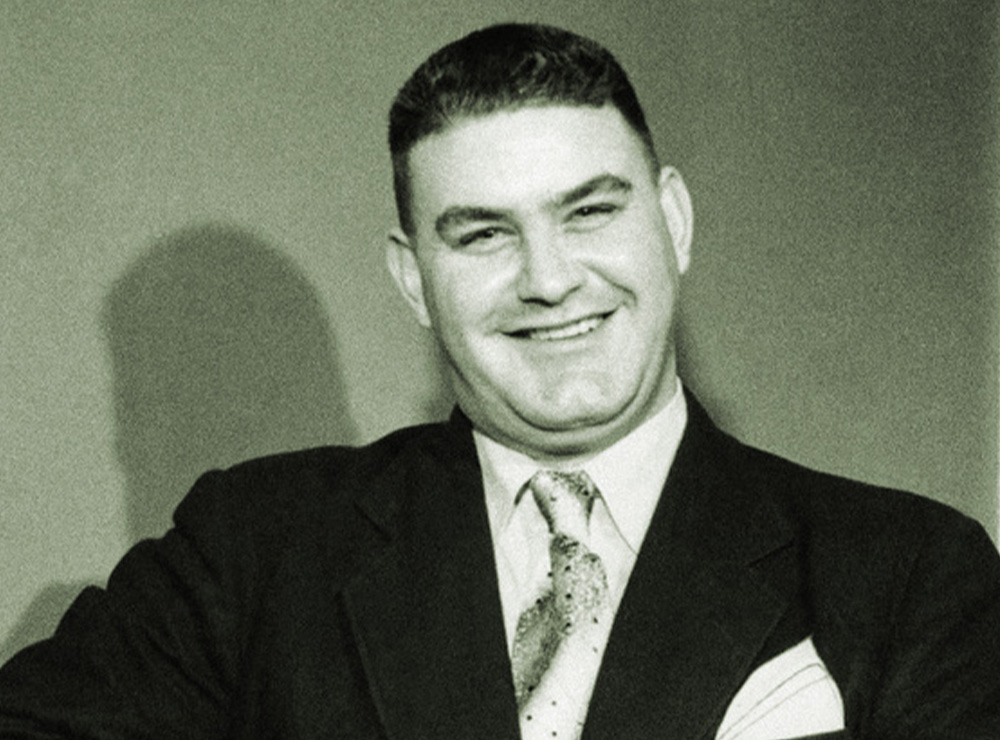
One group pretends for better, the other for worse. One of the greatest pretenders in history was a man named Ferdinand Demara. He faked his way into many professions including, but not limited to: a civil engineer, an attorney, a monk, an academic dean, a parenting expert, a prison warden, and a naval surgeon during the Korean War.
Shockingly, Demara had success as the only “surgeon” on a naval destroyer where he saved the life of every patient that he operated on, including one that required major chest surgery. Apparently, Demara had a photographic memory and every time a patient was brought to him, he would go into his personal quarters, speed-read the steps for the needed procedure, and emerge to perform the surgery with a 100% rate of survival.
With “success” comes attention, and too much attention makes pretenders discoverable. This was the case with Demara as he became infamous for his trickery.
Clothes, shoes, new cars, furniture, vacations, and the like. Like eating empty calories, the “riches” temporarily fill the belly, but offer no real nutrition for the long-term. Eventually this type of pretending will come to light, and many times it can be embarrassing.
Then, there’s another group of people who pretend to be poor. It’s not that they really are poor, but they simulate poverty with their financial decisions. They may not necessarily buy the latest and the greatest, but they buy what they need without needing to impress others with what they have.

For people who pretend to be rich, there is hope! When someone who doesn’t have much actually pretends like they have less than what they have (Read: lives below their means), then they have a high chance of actually being rich. If you invest just $100/month in stock market mutual funds from the age 27 to 67, then you can have $1,176,476 just in time for retirement (assuming a 12% return). That’s millionaire status with a small consistent investment. Imagine what you can do investing more than $100 every month.
Your investing habits tend not to be seen by everyone else, so you’ll have to be OK with that.
If displaying your economic status is your goal, then you’re likely to pretend to be rich. If building long-lasting wealth is your goal, then you’ll have to pretend to be poor. Solomon’s advice? Be a Pretender and build something that lasts!


 hen in January 2025, President Donald Trump called for the elimination of Diversity, Equity, and Inclusion (DEI) related initiatives within federal agencies, he extended the call for private companies to do the same. As a result, many companies from Amazon to McDonalds have pulled their DEI policies from their websites and announced rollbacks.
Jamal Bryant, Pastor of New Birth Missionary Baptist Church in Stonecrest, Georgia extended his own call in response. He urged Christians to sign a petition urging a 40-day Target boycott, or fast, in response to the enforcement and compliance with Trump’s initiative.

“We’re going to break the spirit of racism and sexism. The spirit is encroaching back into our community, back into our country and back into our corporations who are intending to take us back into the 1950s.”
Target may have been first on Bryant’s list because its retreat from DEI is highly contradictory to its previous statement of support of it in 2021. That’s when the company pledged its solidarity with the black community after the death of George Floyd in 2020.
“Target’s committed to co-creating an equitable future for all… and today, we’re proud to announce we’re investing $100 million through 2025 to help fuel economic prosperity in Black communities across the country. We’ll do it by supporting local, Black-led organizations to ensure that resources are specifically designed for the communities they serve,” (Target, 2021).
The corporation also committed to increasing black representation in stores in regards to employees and products by 20%, “building on the initial $10 million commitment we made in 2020 after the murder of George Floyd.”
Now, however, corporate communications signal a cooling off in corporate social justice fervor. “Throughout 2025, we’ll be accelerating action in key areas and implementing changes with the goal of driving growth and staying in step with the evolving external landscape… Current actions include: Concluding our three-year diversity, equity and inclusion goals… Concluding our Racial Equity Action and Change (REACH) initiatives in 2025 as planned.”

Bryant continued, “What I am asking for is a quarter of a billion dollars to be invested in Black banks so that our Black businesses can scale. Target has 10 distribution centers near HBCUs, and I’m asking them to partner with the business departments of these institutions.”
African Americans spend more than $12 million at Target, and “because of how many dollars are spent there and the absence of commitment to our community,” Target is the first place to begin in getting our economic power back.
According to the Charlotte Post, Bryant’s fast has made a dent in Target’s traffic and bottom line to the tune of $12.4 billion. He plans to call for many more boycotts from other companies.
Also, some businesses did not support the boycott. April Showers, founder of Afro Unicorn, urged her customers to continue shopping at Target to ensure black-owned businesses remain valuable and viable.
As consumers, it is important to know where our dollar is valued. Yet, we must think about the effects our actions have on those we are trying to help. If you are interested in viewing the petition, you can find it at targetfast.org.

 obert Henley, director of the Innovus Center in Altamonte Springs, Florida, and his son, Brenden, spear-headed an initiative that took 10 individuals from Oakwood University to the National Society of Black Engineers (NSBE) convention in Chicago, Illinois this past March. The individuals sought internships at major companies that were recruiting students and graduates.
Smith: You are passionate about teaching and developing students to excel in science, technology, engineering, mathematics (STEM), and robotics. You do so for those not identified as your typical bright scholars but for individuals who never thought they had a talent or knack for the sciences or interest in those fields. Where did that passion come from?
Henley: I’ve always had a passion for teaching. I received my master’s in education, but I believed a turning point in my life was when my wife, who is a physician, experienced a situation with our son who was in the second grade. The teacher described him as being disruptive [because he] couldn’t keep still. She suggested that he be tested for Attention Deficit Disorder (ADD). His grades were faltering, and the stigma of another black male child having a learning impediment because of being labelled ADD/ADHD was something that my wife and [I] had to address. Although we placed him on medication, we found that he wasn’t the same confident, happy little boy that he once was. My wife and I worked with him patiently and continuously and found that he had a different set of learning skills that didn’t fit into the traditional learning method.

Henley: The traditional learning model is based on telling the student what needs to be known on a subject through talking or lecturing, then the student memorizing the information and applying it to the subject matter presented. But our son exhibited learning skills that were more hands-on or problem-based learning,
Smith: How did you see signs of improvement in his behavior and grades?
Henley: I started to enroll him in more robotic camps and saw how much he was excelling with robotics. He started to learn programming to build robots to solve various problems. I learned that [there are] different models of learning based on Howard Gardner’s theory of multiple intelligences; meaning that people have different ways of learning and using intelligence. When my son made the connection of taking a more hands-on approach to his learning, his grades and self-esteem skyrocketed. The more I saw the connection, the more I learned about robotics and the STEM effect.

Henley: Here are some stats: Research by the World Economic Forum estimates that 65% of children entering primary school will find themselves in occupations that today do not yet exist. Minorities make up less than 5% of the STEM-based workforce, according to the U.S. Dept of Labor 2012 Statistics.
Smith: At what age are you implementing these skills and what outcomes are you seeing?
Henley: We are engaging students from K-12, and we are seeing astonishing results. Students at Innovus have been hired to redesign BioTissue model holder[s] in partnership with a company called Minimally Invasive Solutions. We have partnered with Loma Linda University’s Biomechatronic research and other health care and engineering companies. We have STEM camps that offer a business incubator for student startup companies. I say we are cultivating “innovators” at our learning centers. Proverbs 18:16 states, “A man’s gift makes room for him, and brings him before great men.”
But a proposal included in the infamous Project 2025, written and provided by the conservative think tank, Heritage Foundation, could make honoring the Sabbath more difficult.
Project 2025 is a political plan with ideas about how the U.S. government should be run. Several news outlets note that the current Trump administration has adopted or implemented many of the ideas therein. One idea in the plan (on p. 589) calls for giving workers extra pay for working on Sunday, calling it “the Sabbath” and saying laws should encourage rest on that day.
That might sound OK at first; after all, who doesn’t want a little more rest and a little more money?
But for people who worship on Saturday, like Seventh-day Adventists and many others, this is a big red flag.
If employers are encouraged to give special treatment to Sunday workers, then people who rest on Saturday could:
- Be pressured to work on the Sabbath to keep their jobs.
- Be seen as “different” or even disobedient to the new standard.
- Lose the freedom to worship without consequences.
It’s happening again, only this time it’s under the label of “family values” and “American tradition.”
When the government pushes religious rules, it can take away our God-given freedom. That’s not just bad policy. It’s dangerous for everyone.
- Learn the facts. Go to project2025.org and adventist.org/the-sabbath to understand what’s really being said, and share that with others.
- Talk to others. Start conversations in your church, family, and friend circles about what the Sabbath means and why this law matters.
- Pray for boldness. Like Daniel, stand strong even when the laws change. Pray that God will use your voice.
- Contact your lawmakers. Write letters or call your representatives and let them know how implementing such a policy would violate religious freedom.
- Use your vote. Elect leaders who protect everyone’s right to worship, no matter the day.
The Bible tells us: “Remember the Sabbath day, to keep it holy” (Exodus 20:8). That’s a command from God, not the government.
So let’s defend the Sabbath with love, truth, and boldness. Let’s show the world what real freedom looks like — freedom in Christ.

Belief


That’s exactly what Mignon Francois did long before she sold more than 5 million cupcakes, long before her storefront in Nashville became a national destination, and long before “Made from Scratch” hit best-seller lists.
Back then, Francois was in the dark — literally.
“We didn’t have electricity on a regular basis,” she remembers. “I used to have to go to the Kroger and buy water just to fill up the tub. We ran our house on a generator because we couldn’t afford electricity from the electric company.”
The Francois home and marriage was crumbling after 21 years. She was a stay-at-home mother of six, unsure of how she would provide for her children. There was no paycheck, no savings, and no plan.
“I was the household manager,” she said, “but that role doesn’t come with benefits or backup.”
Her husband had just asked for a divorce, and the emotional and financial strain was overwhelming.
Francois didn’t have a savings account. She didn’t have baking skills — not even out of a box. What she did have was $5, a nudge from God, and what she now describes as “a recipe for success.”
“God said, ‘Go make cupcakes.’ And I thought, I don’t even know how to bake! But He kept waking me up at 3:17 a.m., so I started reading the Bible at chapter 3, verse 17 in every book.”
Francois took God’s wake-up calls seriously. Every day she opened her Bible, seeking direction. She started in Ephesians and walked through Scripture, chapter 3, verse 17, book by book. She remembers God saying, “I’ve given you a lot of ideas before, and you always drop the ball. This is the last one. If you want to live, do everything I’ve shown you.”
Out of chaos, came clarity.
“Even if you don’t have love in your household, I love you,” she heard God say. “Count it all joy when you experience trials of many kinds,” she repeated in the midst of crisis.
“I would just say, ‘I declare joy.’ That was my sentence. Because what I learned in the process was — we don’t talk about how we feel. We feel how we talk about.”
SUCCESS
Blessed

“This is just cupcakes, right?” Francois considers the potential in her baking to save people’s lives. Whether for a birthday, a wedding, or a lonely Tuesday, Francois hopes each treat will offer something more than flavor. It can carry a sense of love, and remembrance.
“Cake takes you back to a time and place where someone gave you something made with love,” Francois said, thinking of her grandmother, who used to make her favorite coconut cake. “It takes time to make cake. You can’t just throw cake together.”

“The refrigerators I needed one day are not the refrigerators I needed on day one.”
That line — what you need one day is not what you need on day one — has become a guiding principle for new entrepreneurs. “Start from where you are,” she says. “Don’t despise small beginnings, because in the Master’s hands, little becomes much.”


That choice, especially in a product-based business, stands out.
Sabbath, rooted in the biblical commandment to rest, is observed by Mignon from sundown Friday to sundown Saturday. That means the business closes its doors during what could be prime weekend hours simply because that’s what God instructed her to do.
“What somebody else does with their business is between them and God,” she says. “But Sabbath was one of the instructions God gave me.”
The result? The decision to rest on Sabbath has ministered to others—some of whom now observe Sabbath themselves after seeing the blessings in Francois’ life.
She recalls a moment when a four-year-old memorized the fourth commandment and came in for a cupcake. That one seed of obedience has grown into ripples of influence.

Readers from across the world — India, Africa, Los Angeles, and beyond—have reached out, telling her they see themselves in her story.
To the mom who feels overwhelmed, Francois offers this:
“All you have is all you need to get from where you are to where it is you want to be. You’ll either leave this earth because you fulfilled your purpose or because you ignored it.”
It’s a sobering truth but a hopeful one.
Because Francois didn’t just survive, she declared joy. She didn’t just bake, she built. And every cupcake she sells is sprinkled with a testimony of what happens when obedience meets opportunity.
So, what’s the thing God’s been waking you up about?
Don’t hit snooze. The recipe for your breakthrough might just be waiting in the kitchen.
 @iammignonfrancois
 @mignon.francois
 @MignonFrancois
 @Mignon.Francois

When they were out of my view, I carefully walked on the rocks but I slipped and landed feet first in the bed of urchins. Soaking wet and trying to grab a rock, I kept slipping. The pain of urchin spines entering my flesh was agonizing and left me feeling vertiginous. I prayed that someone would hear my scream but I was growing hopeless and exhausted, so I mustered a faint 911, Help! The chances of them hearing me was almost impossible but as I was about to go down again, someone grabbed me! One of my uncles heard a faint cry, found me and pulled me out of danger. I couldn’t save myself but I could always count on my uncles for help! Surviving the incident, I learned valuable lessons about the saving grace of God through Jesus His Son.
“911 what is your emergency?”
Sin is our emergency!
But although it is our emergency it doesn’t mean that God was not able to help. “Surely the arm of the LORD is not too short to save, nor his ear too dull to hear. But your iniquities have separated you from your God; your sins have hidden his face from you, so that he will not hear. For your hands are stained with blood, your fingers with guilt. Your lips have spoken falsely, and your tongue mutters wicked things” (Isaiah 59:1-3, NIV).
Adam and Eve’s feelings of helplessness after their fall down sin’s slippery slope was the reason for their 911 call to God; yet God answered their call and dispatched Himself as the rescue team!
David, the King and the man after God’s own heart, praised God for answering his 911 calls, “I sought the Lord, and he answered me; he delivered me from all my fears” (Psalm 34:4, NIV).
The Apostle Paul shares this rescue plan like this, “But God demonstrates his own love for us in this: While we were still sinners, Christ died for us” (Romans 5:8, NIV).


The Bible starts with a story of rambunctious, bountiful and joyous creation. The ultimate creative, we meet the Godhead standing in front of a canvas beyond the scope of human hands. All stand with bated breath as God utters: “Let there be…” (Genesis 1:3-25) and suddenly, as if unlocked from some unseen prison, that which God calls is unleashed. Light, land, stars, insects, fish, and baboons leave God’s imagination and step into frolicking reality. Where there was emptiness, there is fullness, where there was quiet, the bray of donkeys and the crow of roosters.
While hawks soar majestically overhead and worms burrow furiously underneath, God, who “commanded and they were created” (Psalms 148:10) chooses to close the distance between Themselves and this creation. Methodically, specifically, and in contrast to the grandiose creation that preceded it, God sculpts man in the divine image and likeness. From the dirt emerges a lifeless figure, but into that figure God breathes a part of Their very Self (Gen 2:7). And suddenly a masterpiece (Ephesians 2:10) opens its eyes and sees his Maker.
Before the day is over there are two of them, living sculptures that contribute song and laughter to a symphony that they did not compose but will help conduct (Genesis 2:15-23). But first, there is celebration, as the very good work of God’s hands rests with God from Divine labor (Genesis 2:1-3).
A knowledge of our beginning is imperative to facing our present. The creation story is a reminder that there is a Creator. “It is he who made the earth by his power, who established the world by his wisdom, and by his understanding stretched out the heavens” (Jeremiah 10:12, NRSV). Well may we stand in awe and echo the psalmist in “considering God’s heavens, and the work of God’s hands”…and listen for the answer to the question “Who are [we] that you are mindful of [us]?” (Psalm 8:3,4).
Creation doesn’t only teach us about God. It teaches us about ourselves.
Between Good and
Evil And, we’re caught
in the middle.

This intense conflict some call “The Great Controversy,” originated in Heaven between Michael the Son of God and Lucifer aka Satan/Serpent who allowed pride to enter his heart. This is how God describes the heart of Lucifer.
“You said in your heart, ‘I will ascend to the heavens; I will raise my throne above the stars of God; I will sit enthroned on the mount of assembly, on the utmost heights of Mount Zaphon. I will ascend above the tops of the clouds; I will make myself like the Most High’” (Isaiah 14:13-14, NIV).
With that pride, Satan raged war against God to try to usurp Him from His throne.
“Then war broke out in heaven. Michael and his angels fought against the dragon, and the dragon and his angels fought back. But the dragon was not strong enough, and they lost their place in heaven. The great dragon was hurled down—that ancient serpent called the devil, or Satan, who leads the whole world astray. He was hurled to the earth, and his angels with him” (Revelation 12:7-9 NIV).
Genesis Chapter 3 details the events and scenes when the war encroached upon Earth and humanity.
Eve stood at the precipice of humanity’s first encounter with the Great Controversy. Though armed with God’s truth, the beauty and mystery of the serpent captured and enchanted her, leaving her susceptible to the serpent’s deceitful tactics. Unknowingly her resolve weakened with every lingering glance and enchanting appeal to sample the forbidden fruit. And she did!
Immediately her eyes were opened, and after she shared it with Adam, guilt and shame enveloped them. They became hopeless that the horrifying reality of the devil’s lies was inescapable. Their choices to believe the enemy and doubt God, holds profound significance for each of us.
Adam’s bloodline carries the propensity to sin. Sadly, we’re all stuck in the middle, unwilling participants in this battle. Our allegiance shapes our choices, influences our actions, ultimately defining who we are. We have to choose whose side we’re on, and there’s no neutral ground!
With every desire and choice, some days we emerge victorious but other days we suffer great loss as we yield to temptation.
Thankfully, we know how the story ends.
“Sin came into the world because of what one man did. And with sin came death. So this is why all people must die—because all people have sinned…Many people died because of the sin of that one man. But the grace that people received from God was much greater. Many received God’s gift of life by the grace of this other man, Jesus Christ” (Romans 5:12-15, ERS).
In our darkest moments we can remain confident that on the cross, Jesus our Redeemer and Savior secured the ultimate victory for us.
“I have said these things to you, that in me you may have peace. In the world you will have tribulation. But take heart; I have overcome the world” (John 16:33 ESV).
That victory, the devil cannot snatch away! Yes! We are assured that the Great Controversy will conclude in favor of all those who cling to Jesus. What was stolen in Eden will indeed be restored in heaven! So, stand firm, united in faith, for the promise of redemption is still ours to claim!
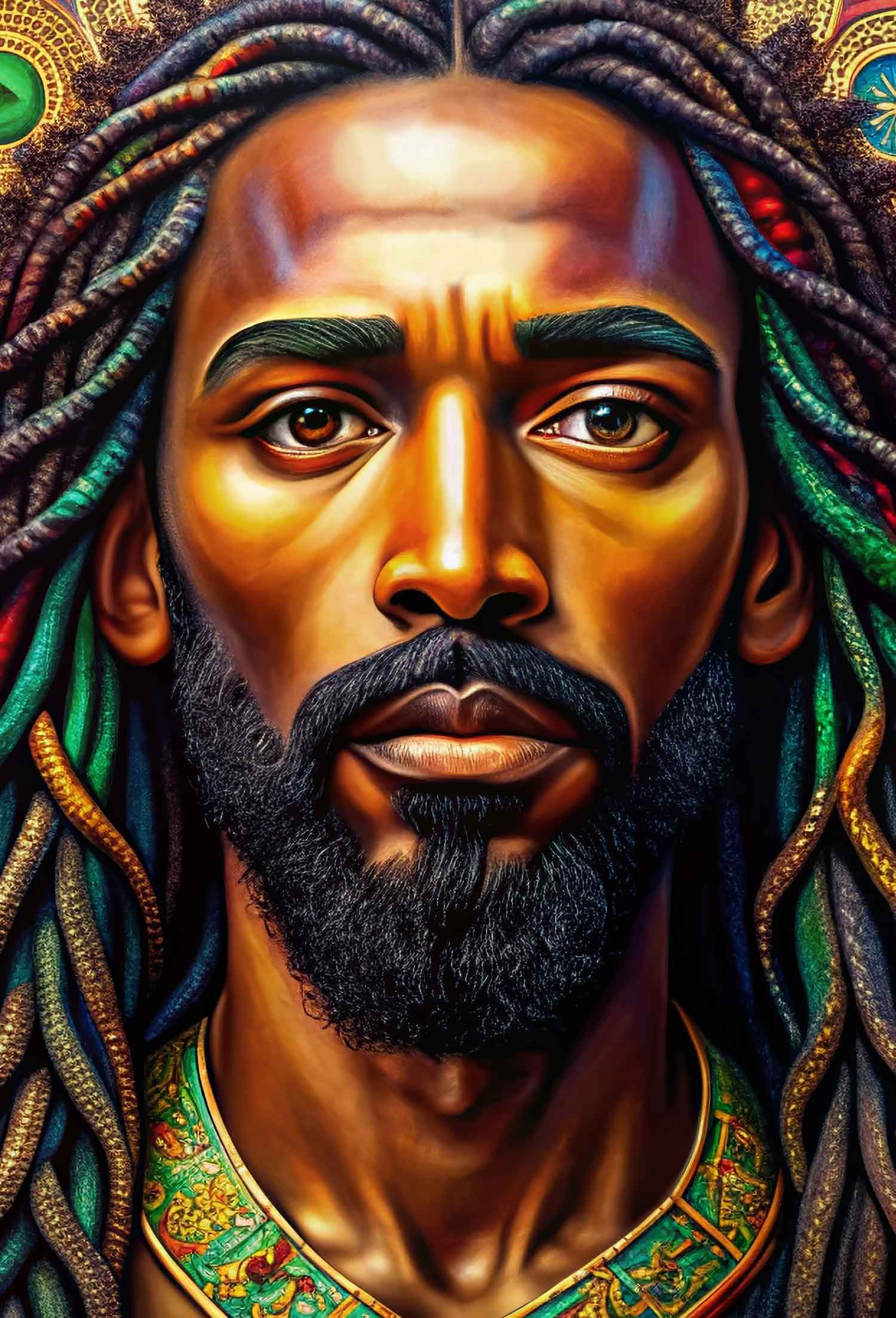

“He has come from above and is greater than anyone else. We are of the earth, and we speak of earthly things, but he has come from heaven and is greater than anyone else” (John 3:31, NLT).
Jesus was born into a poor family, to a single mother, and a stepfather, and they lived a life of humility not luxury.
Later on, to save Jesus from being murdered under an executive order issued by King Herod, they fled Bethlehem becoming refugees in Egypt.
“Then Herod, when he saw that he had been tricked by the wise men, was in a furious rage, and he sent and killed all the male children in Bethlehem and in all that region who were two years old or under, according to the time that he had ascertained from the wise me men,” (Matthew 2:16, RSV). Throughout Jesus’ earthly life and ministry:

His canvas was split into two halves: the left side, a deep, consuming black, depicting symbols of sin and suffering: bottles of alcohol, people overcome by anger and fear, scenes of violence, distress, and confusion.
The right side, in stark contrast, a radiant, brilliant white, a place of pure joy. Light beamed from every corner. Angels filled the space with laughter. Connecting these two sides was a long staircase, uneven in its steps with varying levels of height and depth, stretching from darkness into light and at the center stood a glorious throne, radiating beauty and majesty.
Captivating was the movement in the center. A young boy—his shoulders heavy, his expression burdened—was climbing the stairs, each step transforming his posture. But with each step his countenance changes from sadness to hope. Simultaneously, coming down from the right side, meeting him on the steps, was a man. His eyes filled with compassion. With love, His arms outstretched and hands reached out. This man was Jesus! God deeply loved us so He gave us Jesus to save us.
“For God so loved the world that he gave his one and only Son, that whoever believes in him shall not perish but have eternal life” John 3:16, NIV.
The room fell silent. Then he said, “This is salvation!”
“There is hope for humanity — we just have to take the stairs.”


(John 3:16-17, ESV).

 y family likes to play board games, but my dad especially likes to play Uno with me. In Uno I have to make quick decisions, should I play this card now or wait? It’s kind of like the same thing in my life. When I spend time with God praying and doing my devotion, I learn how I can stop and ask God, “What should I do?” The more I pray, the better I get at listening to Him, just like how I get better at Uno the more I play.
I also play Monopoly with my mom. Now this game is long, very long and can get discouraging. I have to study the board and make good decisions. If I make a bad choice, I end up losing. I’m glad in real life, when I make mistakes; Jesus doesn’t want me to stay stuck in my mistakes, He doesn’t want me to lose. Instead, He encourages me with His words, He forgives me and reminds me that I am more than a conqueror.
Growing in Christ isn’t always easy. At first, it’s hard to know what’s right, things can feel confusing. But prayer shouldn’t be something we do only when we need quick help; prayer is how we grow in our relationship with Christ. Because the more time we spend with Him, the more we learn to trust Him and the Holy Spirit will begin to live in us, giving us strength to make good choices. You too can make the right moves by reading the Bible, praying, singing, going to church, volunteering, and being kind. When we do this, we grow in Christ and let His love shine through us and into the world!


 he word “ecclesia” comes from the Greek word “ekklēsia,” which means “gathering of those summoned.” The ecclesia’s roots can be traced back to the Homeric agora, where the people would meet. In sociology, the term ecclesia refers to a religious group that most members of a society belong to. What about the church building itself? Those definitions did not talk about an address. Those definitions did not talk about a building’s design structure, amenities, and service types and times. What those definitions do speak about is people gathering who had been called and who have some kind of common belief as it pertains to God. But, what about the church building itself?
The COVID 19 pandemic caused church buildings to physically close. But, it showed that the church (the people) can continue on through creativity, intentionality and passion. The church must be understood as people gathering together, of like mindedness to do the will of God (Matthew 18:20). Once we embrace that, the focus will be discipleship and true transformation in Jesus, as opposed to an address of a building alone.


Unfortunately, the history of rebellion repeats. However, God finds a man named Abram who covenants with Him to share in His mission to bless humanity with salvation and prosperity. Great!
But even Abraham’s descendants continue the cycle of loyalty and rebellion, thus creating disappointment for God and the continued need for a remnant of loyalists. Despite these challenges, God never gives up on humanity. Great!
At this point though we have to ask if God will ever have a people who don’t give up on and rebel against Him?
Revelation 12:17 says “Yes!” This text lets us know that in the end God will have a people who keep His commandments and who hold onto the testimony of Jesus.
Great! What does this mean? Jesus explains in John 14:9-31 that those who keep His commandments will
- be inhabited by the Father, Son, and Holy Spirit
- do greater works than Jesus Himself
- have their (mission-oriented) prayers answered, and so much more.
In other words, God will have a people who desire to remain vitally connected to Him — fully engaged with Him in life and His mission of salvation, deliverance, transformation, and dynamic growth. The remnant are those in whom, with whom, through whom, and for whom God will do His greatest work of deliverance and final destruction of evil. This is not just great — it is extraordinary! Count me in! How about you?

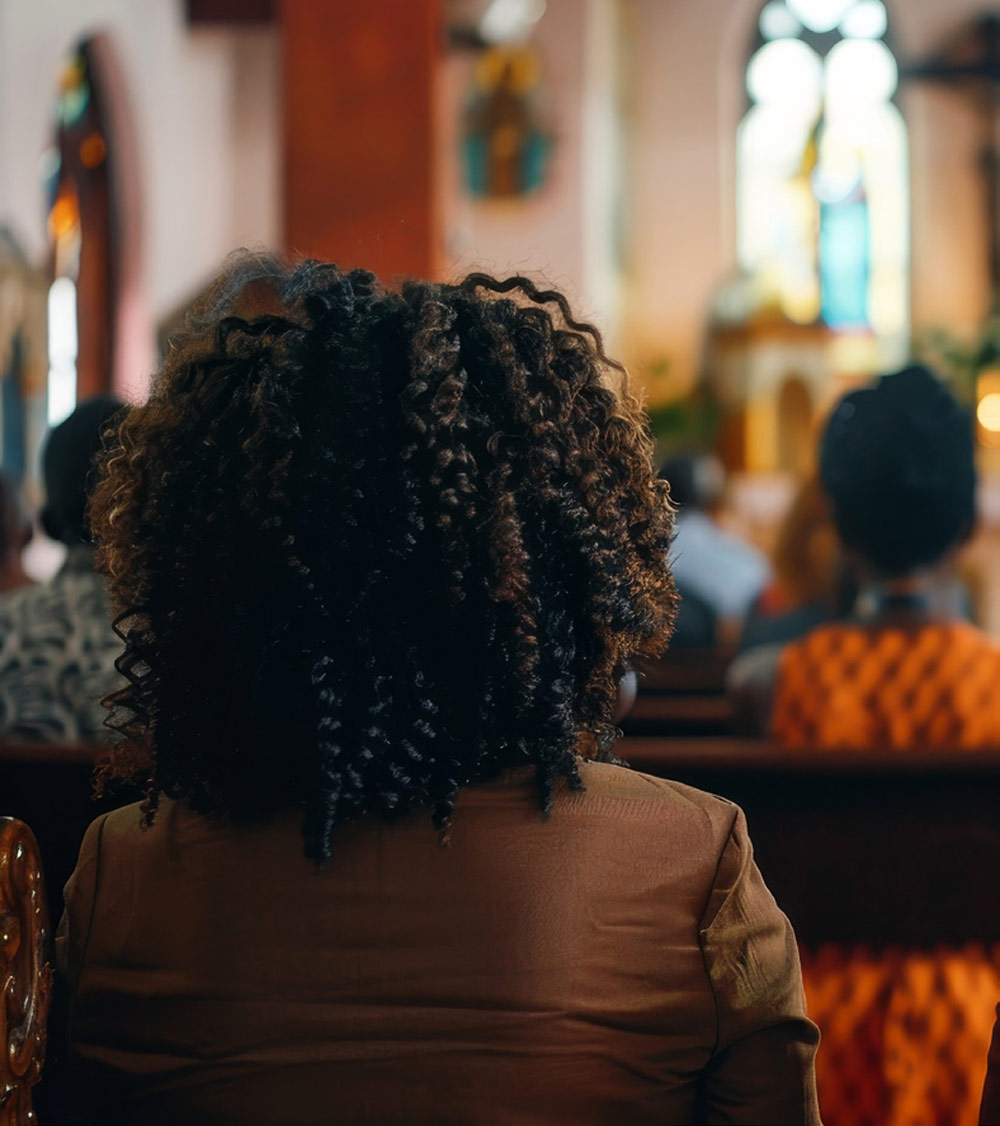
 s a clinical psychologist, I see cases of intergenerational trauma often. Unhealed wounds that regenerate to create patterns of disconnection. I am no stranger to this either. As a child, I struggled with self-esteem and emotional connection with my mother. While she was a good mother her love was demonstrated by her sacrifice for her family but not demonstrated through emotional availability thus, an invisible wall of separation was created in our relationship. As a parent myself, I became intentional and deliberate about self-reflection and self-awareness. I learned how to emotionally validate, listen with compassion, and love through my daughter’s mistakes. I was determined to break the cycle.
The church, as described in 1 Corinthians 12:12-27, is designed to function as one body, with many members, each with a unique role, diverse yet unified, reflecting the beauty of God’s creation. However, when division takes root, it mirrors the psychological cycles of dysfunction that can pass from generation to generation. Just as unresolved division in the church leads to fragmentation and broken fellowship, we see this division in our relationships too. But God calls us to healing, inclusivity, and intentional restoration by breaking cycles of exclusion and separation.
When I think about a dysfunctional church, it’s the one with invisible walls of division between believers. These divisions and cycles of disunity cause certain voices (those who hold less power and privilege i.e. youth, women) to be silenced. But healing requires recognizing these fractures and intentionally working toward inclusivity and equity.
A healthy church grows when it embraces change, breaks cycles of division and unifies itself by a shared purpose. A conscious effort to change must be made by learning to listen, affirm, and embrace generational differences. True unity reflects the divine oneness of God and this is our calling as believers.
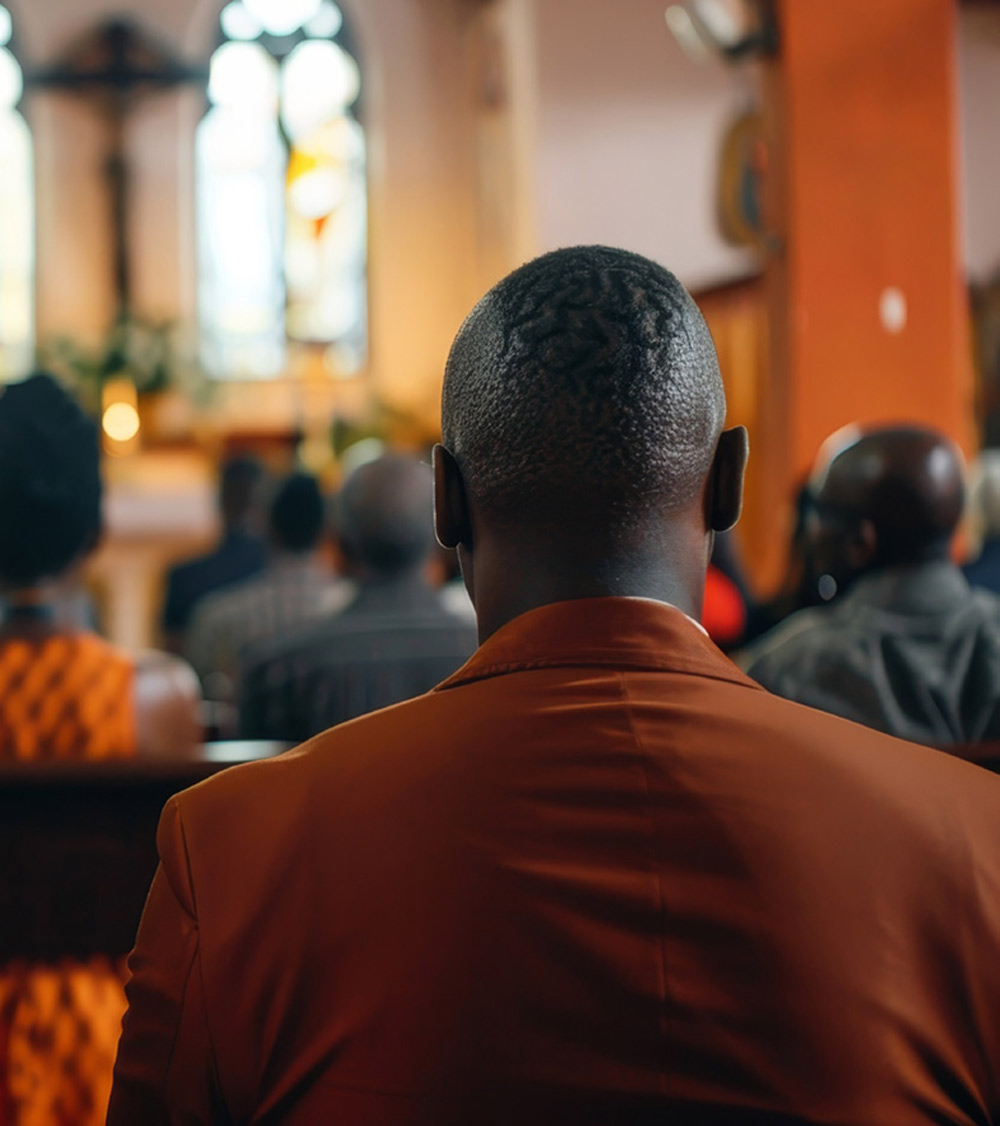
 have seen how dysfunction in the body affects the entire body. When there is disruption in the Central Nervous System (CNS), the place that houses the brain and spinal cord, which controls how we think, move, feel, and learn, it leads to confusion, disarray, and inefficiency.
Much like disunity in the church breeds conflict, exclusion, and weakened witness, the body no longer functions within its purpose. Our God calls us to holistic harmony and shared purpose, where diversity is embraced, and every member contributes to the greater whole. In Christ, we are a new creation, bonded not by sameness but by shared faith, purpose, and mission. When the CNS functions properly, all body parts work in harmony, responding efficiently to the brain’s instructions.
True biblical unity and proper functioning of the body embraces diversity, ensuring that every member is valued and has equitable participation in the mission of the church. Paul reminds us in Galatians 3:28 that “There is neither Jew nor Greek, slave nor free, male nor female, for you are all one in Christ Jesus” (NASB1995).” This is God’s model for inclusion. God calls us to holistic unity, where distinctions of race, culture, socioeconomic status, and gender are not barriers but beautiful expressions of His diverse creation.
Just as a neurologically healthy brain functions through synchronized efforts, a unified church reflects the divine oneness of God, fostering healing, belonging, and shared purpose for all. Our call is to reflect the inclusive love of our Savior.


- When was a time when you were the only one in a group who did not do something because it seemed wrong to you?
- The Bible declares that a gentle answer will turn away wrath, but harsh words only stir up anger (Proverbs 15:1). Does that work in “real life?”
- The Bible also declares conceming Jesus that “He was oppressed and treated harshly, yet he never said a word. He was led like a lamb to the slaughter. And as a sheep is silent before the shearers, he did not open his mouth” (Isaiah 53:7, NLT). Can this relate to the fight against our modem oppression?

Oppression is when people are treated in an unfair and cruel way and are prevented from having opportunities and freedom. There are four levels of oppression.
Ideological oppression occurs as one group asserts it is better than another and has a right to control the other. Members of that group see themselves as superior, strong, noble, intelligent, hardworking, deserving more, and considered to be the chosen while the other group is considered to be weaker.
Institutional oppression occurs when those assumed rights to control are adopted into society’s institutions. As a result, laws, practices, schools, hiring processes and politics etc., have these ideas rooted in their core.
Interpersonal oppression occurs when the group that believes it is superior disrespects and mistreats those they consider inferior. This results in personal harassment, threats, violence, belittling, ignoring their needs, racist jokes, stereotypes and many other demeaning behaviors.
Internalized oppression occurs when members of an oppressed group interalize the ideas that they are inferior and believe the negative messages that they are worthless, stupid, lazy, unwanted and weak.

- Daniel 3
- Proverbs 15:1
In today’s lesson we will study Daniel Chapter 3 where Shadrach, Meshach, and Abednego faced oppression because of their belief in God. These lessons will give you four principles that are beneficial when faced with any kind of oppression.

Read Daniel 3:1-12
In what ways have Shadrach, Meshach, and Abednego’s beliefs been challenged? In what ways have your beliefs been challenged and you experienced oppression as a result? Have you ever compromised yourself to get along with someone or to keep the peace?
Read Daniel 3:13-18 and Proverbs 15:1
- How did Shadrach, Meshach, and Abednego respond to their oppressor?
- What lessons could you apply to your life from Shadrach, Meshach, and Abednego’s response to their oppressor?
- Don’t be afraid of the consequences of standing up for your beliefs.
Read Daniel 3:19-25
What injustices did Shadrach, Meshach, and Abednego face because they stood up for what is right? How might they have wanted God to intervene? When was a time you desired God to intervene on your behalf against your oppressors, but He allowed you to go through it instead?
Read Daniel 3:26-30
In what ways was the faith of Shadrach, Meshach, and Abednego affected when they were escorted to the fiery furnace? How did the stance of Shadrach, Meshach, and Abednego impact King Nebuchadnezzar? In what ways will your faithfulness to your beliefs influence those around you? Do you believe your cry for justice, peace, and awareness against oppression will make a difference?





If you’re unfamiliar with the viral clip, it depicts Sapp directing ushers to close the doors as he calls for a specific offering. While this act is not uncommon in some churches and faiths, especially during large events, some unfamiliar with this practice, mixed with the out-of-context clip, were outraged.
The narrative changed from him asking for the doors to be closed to locking the congregation in the room and forcing them to give offerings. Soon, commenters were accusing the singer of collecting funds for himself. And some grouped all pastors into the nefarious act of lining their pockets with money from financially struggling congregants. Even when Sapp and the pastor of the event released public statements addressing the misunderstanding, the indictment of pastors and church offerings stood at the forefront of social media frustration.
After pastoring for over 20 years in the age of social media, I’ve learned not to get caught up in the fervor of internet outrage. However, I do find it interesting that this incident revealed the fears, frustration, or incorrect assumptions about the “church’s” money.
The phrase “God doesn’t need my money” is one of the most common refrains that pastors hear. It’s also true. The Almighty, who created the universe, the Alpha and Omega, the One who loves us so much that He sent His only Son to die for us, doesn’t need a single penny to do the magnificent.

Giving should not be the result of a hostage situation. It shouldn’t come from the hope that God will bless us or the fear that if we don’t, He will curse us. And contrary to popular belief, giving your money doesn’t prove you have a great relationship with Him.
I would be remiss if I didn’t acknowledge that human beings can make a mess of things. Some individuals mismanage funds, take advantage of their congregants, or allow greed to drive their offering demands. But these behaviors shouldn’t make us label giving to all churches or events as bad or pointless. We are allowed to use discretion, pray, and let the Lord guide us in our personal decisions.
The simplest answer is found in 2 Corinthians 9:7, which says, “Each of you should give what you have decided in your heart to give, not reluctantly or under compulsion, for God loves a cheerful giver” (NIV).
Let’s not get caught up in the chaos of social media’s arguments of a year-old clip. The best way to approach giving is through our hearts.

We invite you to watch Breath of Life.
There are many options to choose from…
Atlanta, GA | WATC-TV Channel 57
Huntsville, AL | WAAY-TV Channel 31
Memphis, TN | WANT-TV Channel 24
Montgomery, AL | WNCF-TV Channel 32
Phoenix, AZ | Good News TV • mygoodnewstv.com
Hope Channel
Three Angels’ Broadcasting Network (3ABN)
Word Network
YouTube – YouTube.com/c/breathoflifetv
Facebook – Facebook.com/breathoflifetv
BOL Website – breathoflife.tv/videos/

“And wheresoever he taketh him, he teareth him: and he foameth, and gnasheth with his teeth, and pineth away: and I spake to thy disciples that they should cast him out; and they could not.”
“He answereth him, and saith, ‘O faithless generation, how long shall I be with you? how long shall I suffer you? bring him unto me.’
“And they brought him unto him: and when he saw him, straightway the spirit tare him; and he fell on the ground, and wallowed foaming.
“And he asked his father, ‘How long is it ago since this came unto him?’ And he said, ‘Of a child.
“‘And ofttimes it hath cast him into the fire, and into the waters, to destroy him: but if thou canst do any thing, have compassion on us, and help us.’
“Jesus said unto him, ‘If thou canst believe, all things are possible to him that believeth.’
“And straightway the father of the child cried out, and said with tears, ‘Lord, I believe; help thou mine unbelief’.
“When Jesus saw that the people came running together, he rebuked the foul spirit, saying unto him,’ Thou dumb and deaf spirit, I charge thee, come out of him, and enter no more into him.’
“And the spirit cried, and rent him sore, and came out of him: and he was as one dead; insomuch that many said, ‘He is dead.’
“But Jesus took him by the hand, and lifted him up; and he arose” (Mark 9:17-27, KJV).

By Ellen G. White
“It is faith that connects us with heaven, and brings us strength for coping with the powers of darkness. In Christ, God has provided means for subduing every sinful trait, and resisting every temptation, however strong. But many feel that they lack faith, and therefore they remain away from Christ.
“Let these souls, in their helpless unworthiness, cast themselves upon the mercy of their compassionate Saviour. Look not to self, but to Christ. He who healed the sick and cast out demons when He walked among men is the same mighty Redeemer today. Faith comes by the word of God.
“Then grasp His promise, “Him that cometh to Me I will in no wise cast out.” John 6:37. Cast yourself at His feet with the cry, ‘Lord, I believe; help Thou mine unbelief.’ You can never perish while you do this — never.

Notice the care and concern that Jesus utilized as He assessed the situation. The man was overwhelmed, but Jesus was at peace. Can you remember a time when you felt like this man?

One of the key details in the text is that the disciples had already tried to expel the evil spirit from the boy. The man has come to Jesus because he is both frustrated and exhausted. Recall a situation where you had exhausted all your options.

This ordeal was without question deeply frustrating for the disciples, as well given the fact that they had recently been given power to heal. How do you manage this kind of frustration?

I love how in this story the man acknowledges that his faith is weak. Just like the paralyzed man, sometimes our faith may struggle but we can still receive God’s blessing. How do you maintain faith when you are in a crisis?

The disciples failed the man in crisis. Notice how the scribes made a bad situation worse. Never forget that some people detract from your faith. Make a list of five people that inspire you to increase your faith. Commit to staying connected with them.

The Transfiguration is evidence that the man can safely trust that Jesus can do anything. Reflect on a time in your life when God’s power was undeniable.

You may be in a crisis of faith right now, but God did it before, and God can do it again. Make a list of three occasions where you were astounded by God’s providence. Then tell God, “I believe. Help my unbelief.”


We know that the Apostle Paul states that the love of money, not money, is the root or cause of all evil (1 Timothy 6:10). He then clearly denounces running after or striving for money.
Christ doesn’t skirt around the discussion about money but comes clean on its realities. Bible examples include those with big money who are being foolish, thieves, the dishonest, and the unhappy. So, conversing with His disciples, Jesus offers a heads up.
One important note, here. This ruler stated that he tithed. Tithing is about our integrity. But it is in the giving of offering, the sacrificial side of benevolence, that we gain power to be free from selfishness. This is how we separate ourselves from earthly possessions.
So, Christ delivers a Word for us, “It’s hard for a rich man to be saved” (Matthew 19:23). This does not suggest that the rich cannot be saved. It’s just hard! And we might need to put a serious check on seeking after riches. Why? The deceitfulness of wealth chokes the spiritual life, home and family life, relationships, and so much more.

Some may say, “I don’t love money.” However, we don’t mind saying how much we love the things that money can do and buy, or the lifestyles it affords. Some literally believe that they will be happier if they had money, or the things which come from having money. But considerable research over the years has shown that, “Money bears an extraordinarily weak and tenuous relationship to human happiness.” Also, “those planning to be another Warren Buffett might benefit from knowing that the man himself has said that he felt just moderately happier than when he did not have billions of dollars in his bank account” (The Harris Poll Thought Leadership Practice. Americans & Billionaires Survey. August 2022). Besides, In His first sermon Jesus taught us how to be happy (Matthew chapter 5-7), yet so many regard His blessings lightly for lack of appeal.

Atlanta, GA 30318
 404-799-7288
 http://atlantaberean.com/bomc
 [email protected]
P.O. Box 519
Ashton, MD 20861-0519
301-774-0400 https://www.emmanuelbrinklow.org [email protected]Baltimore, MD 21217-3803
410-669-6350 https://www.bereatemple.org [email protected]Windsor Mill, MD 21244-2042
410-922-0050 https://www.libertysda.org [email protected]7000 South Michigan Avenue
Chicago, IL 60637
773-224-7700 http://www.shilohsdachicago.orgMemphis, TN 38106
901-774-5431 http://longviewheights22.adventistchurchconnect.orgOrlando, FL 32810
407-704-6963 https://www.guilgalsda.org/ministries/community-serviceSaint Louis, MO 63113-1520
314-361-6446 https://bereanmo.adventistchurch.org [email protected] St. Louis, MO 63136-1500
314-868-0707 https://www.northsidesda.org [email protected]