

Top 5 Subversive Tracks · Side A

The Revolution Will Be Re-historicized

If we could sample history, it would have more than just liberative lyrics.

by Carl McRoy

Liner Notes — the Founders’ Greatest Hits

01
“Give Me Liberty or Give Me Death”
Patrick Henry
02
“No Taxation Without Representation”
James Otis
03
“Hang Together, Or Hang Separately”
Benjamin Franklin
04
“These Are the Times That Try Men’s Souls”
Thomas Paine
Track 01
The Crew & the Soundtrack
“G

ive Me Liberty or Give Me Death” by Patrick Henry has been among the top 10 subversive tracks of the American Revolution for the last 250 years — trading the #1 slot with other bangers like “No Taxation Without Representation,” “Hang Together, Or Hang Separately,” and “These Are the Times That Try Men’s Souls.”

That crew produced lots of liberative lyrics for the percussive soundtrack laid down by the drummers and fifer portrayed in the “Spirit of ’76.” For instance, check out these lines from Patrick Henry’s letter to John Alsop on January 13, 1773:
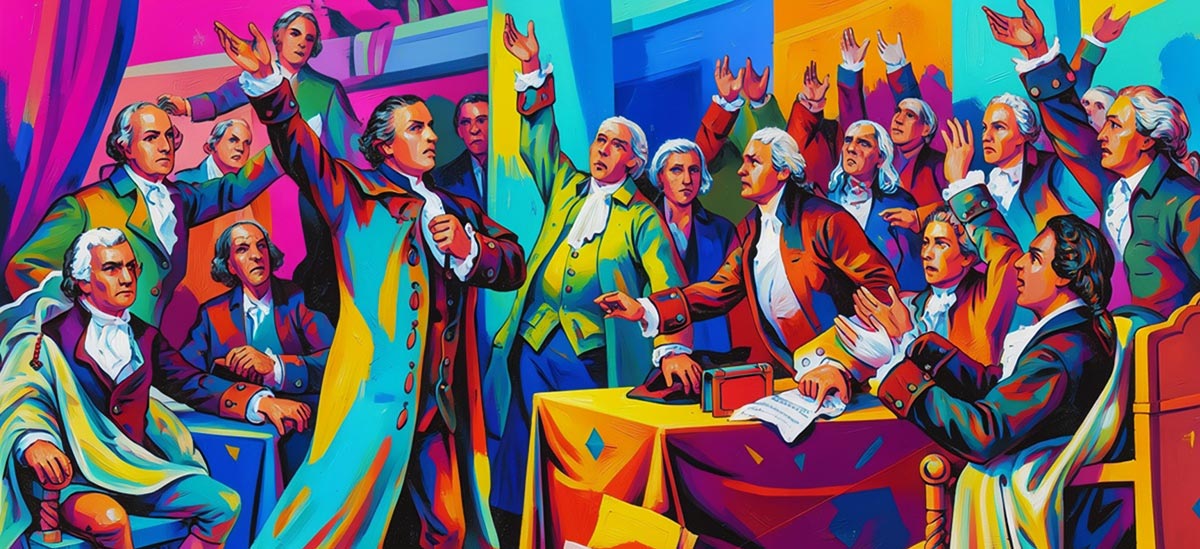
“It is a debt we owe to the purity of our religion, to show that it is at variance with that law which warrants Slavery.”
— Patrick Henry, 1773
Colorful painting of 18th-century men in an assembly hall. A central figure stands with one arm raised as if speaking to the group while others observe.
The African American Freedom Timeline
by Christopher C. Thompson
1693–1739
1693
Spain decrees freedom in Florida
King Charles II grants freedom to enslaved people who reach Spanish Florida — the first government policy of black freedom in what becomes the U.S., 172 years before American emancipation.
1693
Virginia Slave Codes
Slavery codified as permanent, hereditary, race-based. Strips legal rights; criminalizes education and assembly. Becomes the legal template across British colonies.
1738
Fort Mose founded
Gracia Real de Santa Teresa de Mose — the first legally sanctioned free black town in North America. 100+ Gullah freedom seekers form a militia under Spanish protection.
1739
Stono Rebellion & Negro Act 1740
The largest slave revolt in colonial America, marching toward Spanish Florida, is crushed. Backlash produces the harshest colonial slave code ever written.
Track 02
Anti-Slavery Enslavers?!
U

nfortunately, Patrick confessed in the same letter that convenience overruled his Christian conscience. Mr. Henry still kept 98 humans in bondage on his three slave-labor camps, otherwise known as plantations, when he died in 1799. His wife and children divvied up their inheritance, further traumatizing the enslaved by separating their families.

Many of the Founders wanted to keep themselves from slavery, yet wanted to keep slavery for themselves. It’s hard to tell if they sought to embody irony or murder it. Consider George Washington’s Letter to Bryan Fairfax, August 24, 1774:

“[W]e must assert our rights, or submit to every imposition that can be heaped upon us… and… will make us as tame, and abject slaves, as the blacks we rule over with such arbitrary sway.”
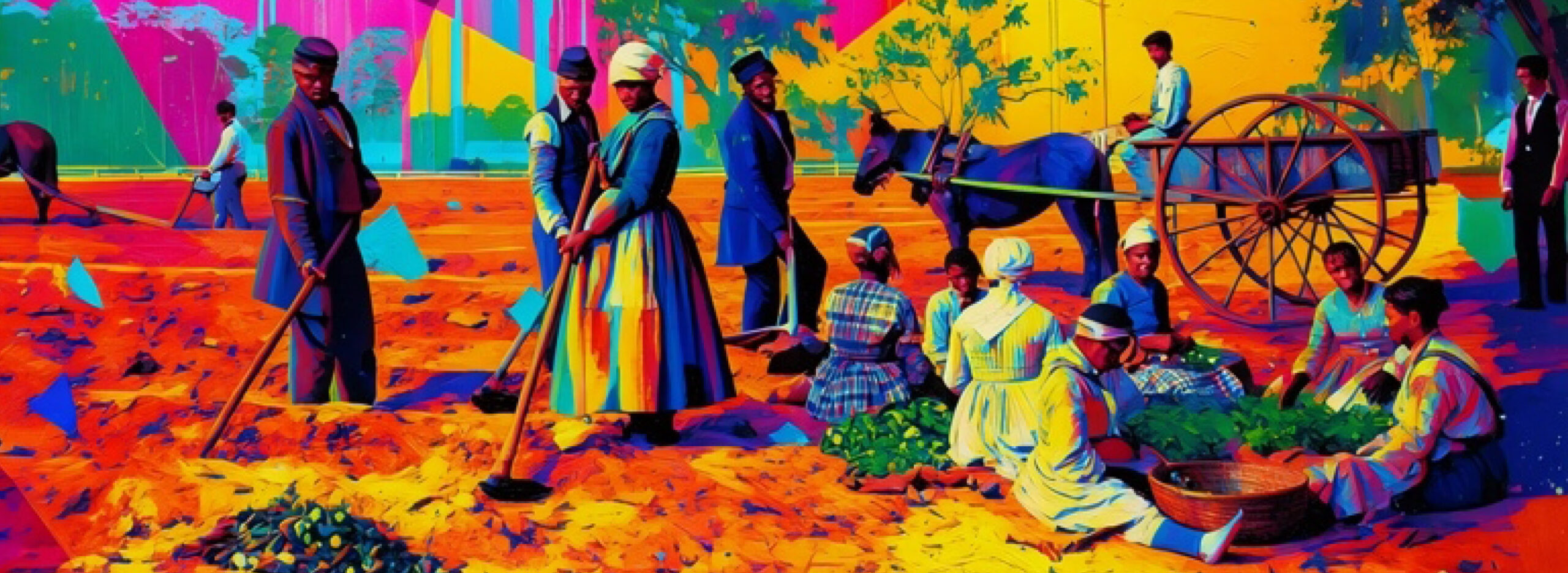
Vibrant painting of Black men and women working in a field with hoes. A horse-drawn cart and a figure on a horse appear in the background.
So he led a war against Britain to avoid becoming like the hundreds of people he personally denied unalienable rights to? The cherry tree hero “owned” 123 humans when he died and left it up to his wife to free them upon her death.
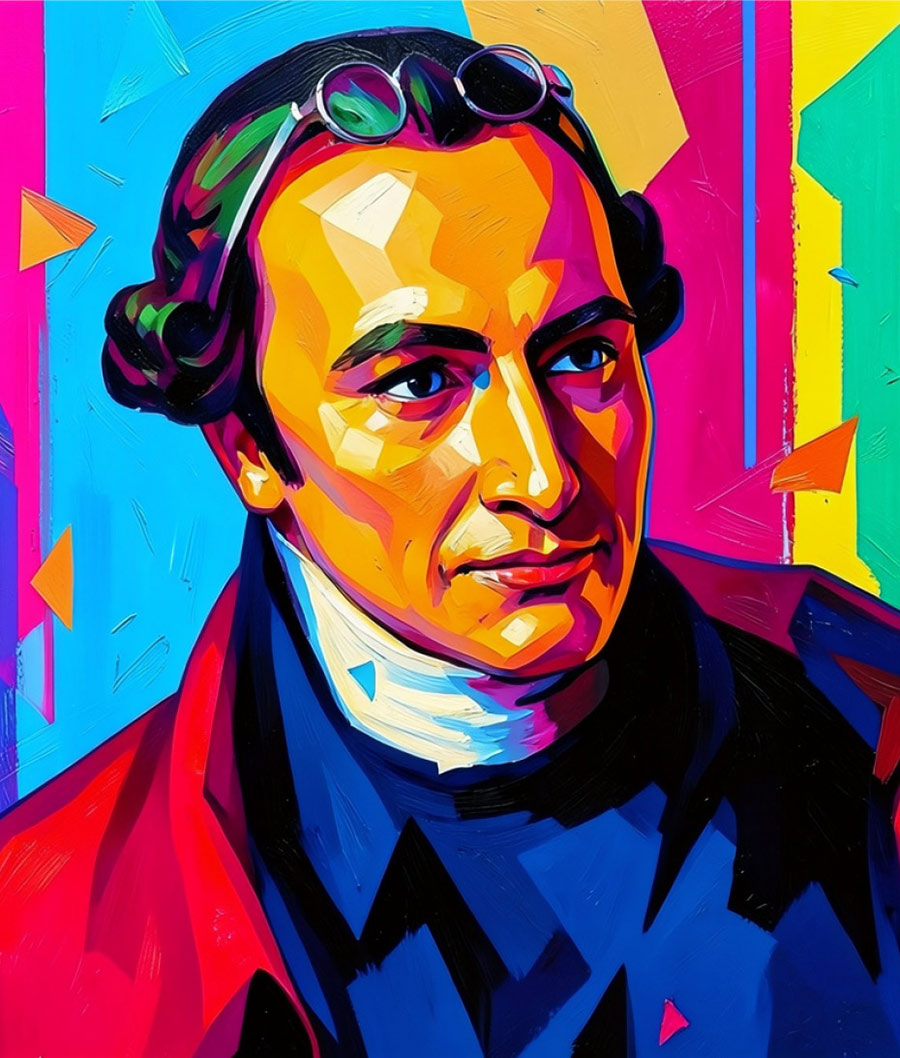
Stylized, multi-colored portrait of Patrick Henry with spectacles resting on his forehead, set against a bright geometric background.

Patrick Henry
98 enslaved at death · 1799
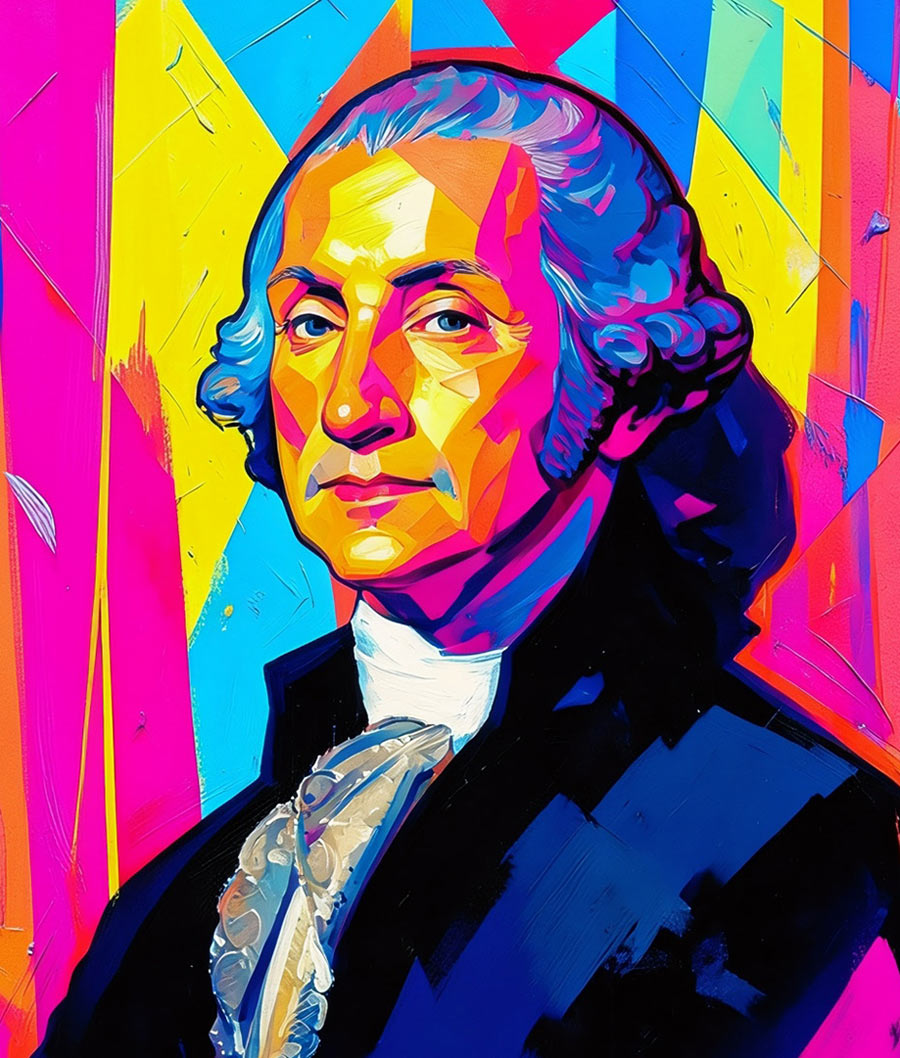
Vibrant painting of George Washington in 18th-century attire with pink, yellow, and blue highlights and geometric patterns.

George Washington
123 enslaved at death · 1799
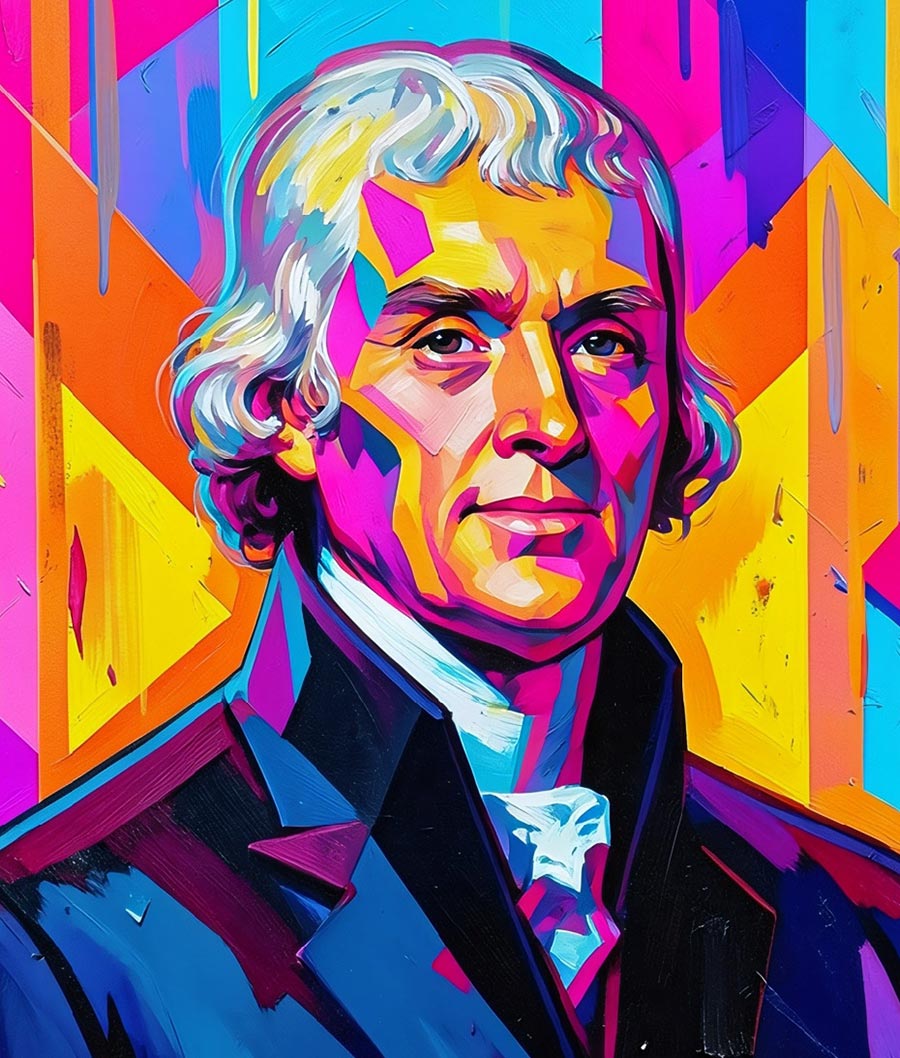
Multi-colored portrait of Thomas Jefferson wearing a dark coat and cravat, rendered with vibrant geometric shapes.
Thomas Jefferson
600+ enslaved across his life
Thomas Jefferson condemned King George III in the original draft of the Declaration of Independence because:
“he has waged cruel war against human nature itself, violating its most sacred rights of life and liberty… captivating and carrying them into slavery in another hemisphere… this piratical warfare… of the Christian king of Great Britain.”
Naturally, this complaint was deleted from the official Declaration because the majority of the signatories were enslavers and all 13 colonies had legalized slavery by the beginning of the Revolution.
Jefferson enslaved more than 600 humans during his life. He freed five through his will.
— $107,000 in Debt · 130 Sold at Auction
The African American Freedom Timeline
1775–1799
1783
Black Loyalists betrayed
When Britain loses, thousands of black Loyalists face broken promises. About 1,200 eventually sail to Sierra Leone in 1792, where exploitation and re-enslavement await.
1787
Free African Society founded
Richard Allen & Absalom Jones organize the first major black mutual aid organization in America in Philadelphia — the groundwork for independent black religious and civic life.
1790s
Black Seminole communities form
Formerly enslaved Gullah refugees form deep alliances with Seminole bands in Florida. Autonomous villages. The Seminole name itself comes from the Spanish word for “runaway / wild free person.”
1800
Gabriel’s Rebellion, Virginia
Gabriel, an enslaved blacksmith, plans to capture the governor and force emancipation. Betrayed; he and 25 co-conspirators are executed. Becomes a lasting symbol of organized Black resistance.
Track 03
The Real Revolution
T

he real revolution of the Revolutionary War was black freedom. Attempting to quell the undercurrent of black liberation was part of the reason the “Patriots” were fighting against their government.

Slaveholding Founders’ real dilemma wasn’t over the morality of slavery, but the preservation of it. First, they were nervous that the British legal system might be leaning toward abolition. They were also alarmed that white British colonizers were promising freedom to black slaves if they revolted against white American colonizers who were revolting against the British.

“The black must be discharged.”

— Lord Mansfield · Somerset V. Stewart · 1772
Somerset was born in 1741 in West Africa, but enslaved in America from 1749 to 1769 to Charles Stewart. When they went on a trip to England, Somerset got baptized in 1771 and was blessed with abolitionist godparents. He gave himself the name James and decided that since he was free in Christ, he would be free, indeed.

Somerset v. Stewart became the trial of that era on both sides of the Atlantic. “The black must be discharged,” ruled Judge William Murray (aka Lord Mansfield).

Enslavers filled colonial newspapers with complaints that their slaves were running away to England for freedom. Some were as outraged by this court decision as they were about the Stamp Act.

Lord Dunmore (or John Murray as his mama called him) issued a Proclamation in 1775 to offer freedom to blacks if they would join the British military to fight their former masters.
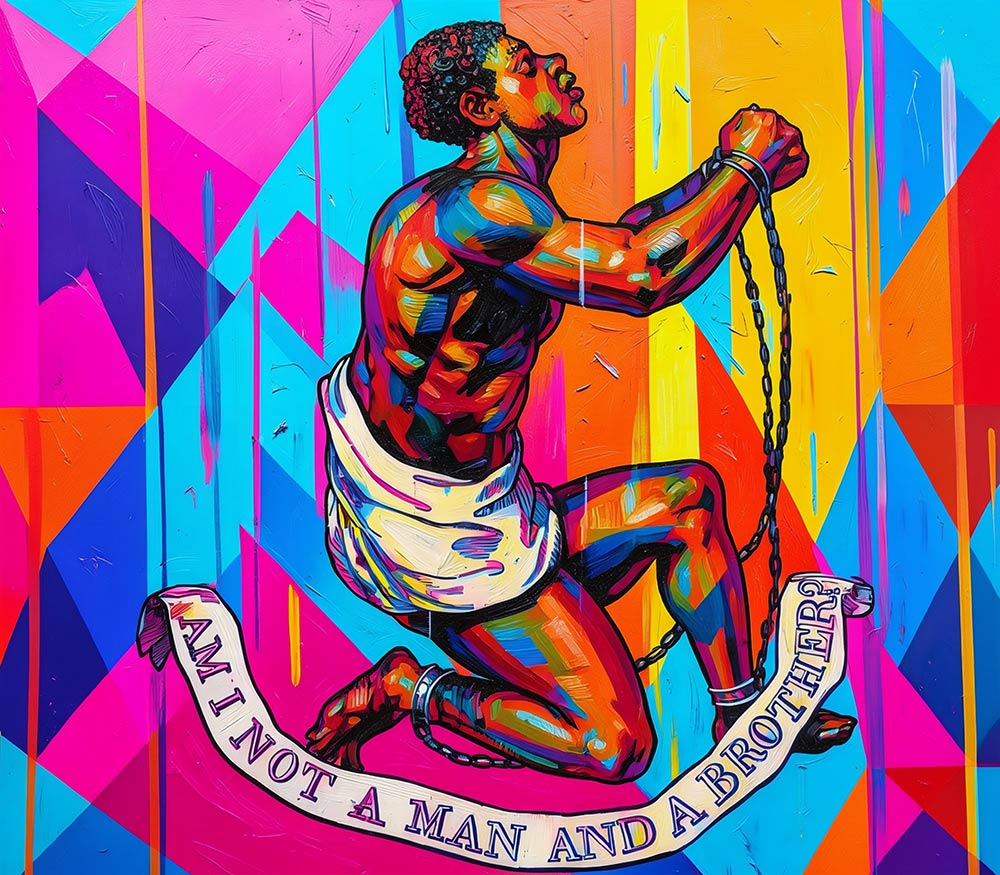
Vibrant painting of a kneeling Black man in chains. A banner at his feet reads “AM I NOT A MAN AND A BROTHER?”
Profile 01
Ralph Henry
Patrick Henry’s slave. Joined the Ethiopian Regiment, married a fugitive from Philadelphia, named Miney, evacuated to Nova Scotia, then Sierra Leone in 1792 — putting the entire Atlantic between himself and the “land of the free.”
Profile 02
Harry Washington
Self-emancipated from George Washington on July 24, 1776. Served as a corporal in the British Black Pioneers. Evacuated to Nova Scotia (1783), then Sierra Leone (1791). Exiled in 1800 — and elected leader by the exile community.
The African American Freedom Timeline
1816–1865
1816
AME Church organized
Under Bishop Richard Allen, the AME Church becomes the first Black-controlled national religious institution in America — a network functioning as schools, organizing spaces, and sanctuaries.
1857
Dred Scott v. Sandford
The Supreme Court rules that Black Americans (free or enslaved) have no standing in federal court. Taney declares Black people have “no rights which the white man was bound to respect.”
1863
Combahee River Raid
Harriet Tubman leads 150 Black Union soldiers up the Combahee in a midnight raid. They liberate 727–756 enslaved people in a single night — the largest single liberation of the Civil War.
1865
Juneteenth & 13th Amendment
June 19: Union forces announce freedom in Galveston. December 6: 13th Amendment formally abolishes slavery — ending an institution that had existed on American soil for 246 years.
Track 04
What If the Traditional Revolutionaries Had Been Real Revolutionaries?
I

t has been estimated that 20,000 self-emancipated black men served the British military during the Revolutionary War. Additionally, up to 80,000 black men, women, and children fled for their freedom when British forces occupied places like Charleston, Norfolk, and New York City. The Continental Army eventually enlisted about 6,000 blacks after General Washington’s initial resistance to the idea.

The delusion of white supremacy kept Americans from uniting all their inhabitants by giving everyone something worth fighting for.
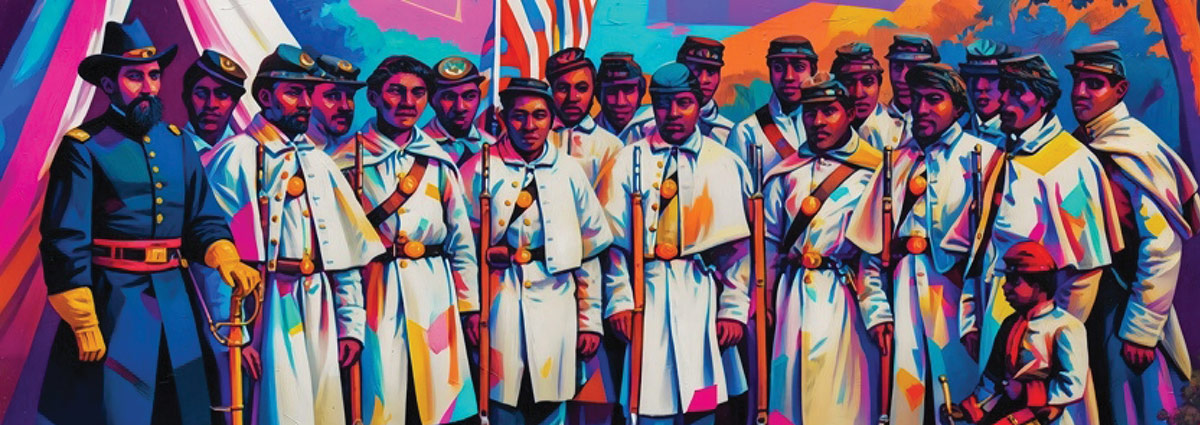
Colorful painting of a group of Black soldiers in 19th-century military uniforms standing beside a white officer in front of a tent.

The Counterfactuals

What if those 100,000 people would have stayed because “All Men Are Created Equal” really meant All?

What if America had abolished slavery in 1776 instead of half the country fighting to keep it in the 1800s?

What if a nation that lights up the sky to celebrate their violent overthrow of the British didn’t insist on peaceful gradualism for minority rights?

What if America had abolished slavery before Britain, France, Mexico, and Haiti in the West?

How much greater would America be if it weren’t still devouring itself with the cancer of white supremacy that caused the Civil War — and still hasn’t been cured by all the bloodletting since?

How much more brightly could this supposed city on a hill shine before the world?
The African American Freedom Timeline
1868–1923
1868
14th Amendment ratified
Citizenship granted to all persons born or naturalized in the U.S. — directly overturning Dred Scott. Becomes the constitutional foundation for nearly every subsequent civil rights advance.
1896
Plessy v. Ferguson
The Supreme Court upholds “separate but equal,” legally justifying Jim Crow for 58 years. Justice Harlan writes in lone dissent that “the Constitution is color-blind.”
1898
Wilmington Coup
A white supremacist mob of 2,000 overthrows the elected biracial government of Wilmington, NC — the only successful coup d’état in American history.
1921
Tulsa Race Massacre
White mobs aided by city officials and the National Guard attack Greenwood District — the wealthiest black community in America. Thirty-five blocks burned. 100–300 killed. Suppressed for 75 years.
Track 05
The Declaration of Revelation
A

small group of abolitionists pondered questions like these as they formed the Seventh-day Adventist Church. For them, this wasn’t political — it was prophetic. They believed that Jesus was coming soon and were announcing the judgment hour so that all people can be prepared (Revelation 14:6–7). One of the things that troubled them the most was professed Christians maintaining unjust structures and trafficking in slaves as described in Revelation 18:13.
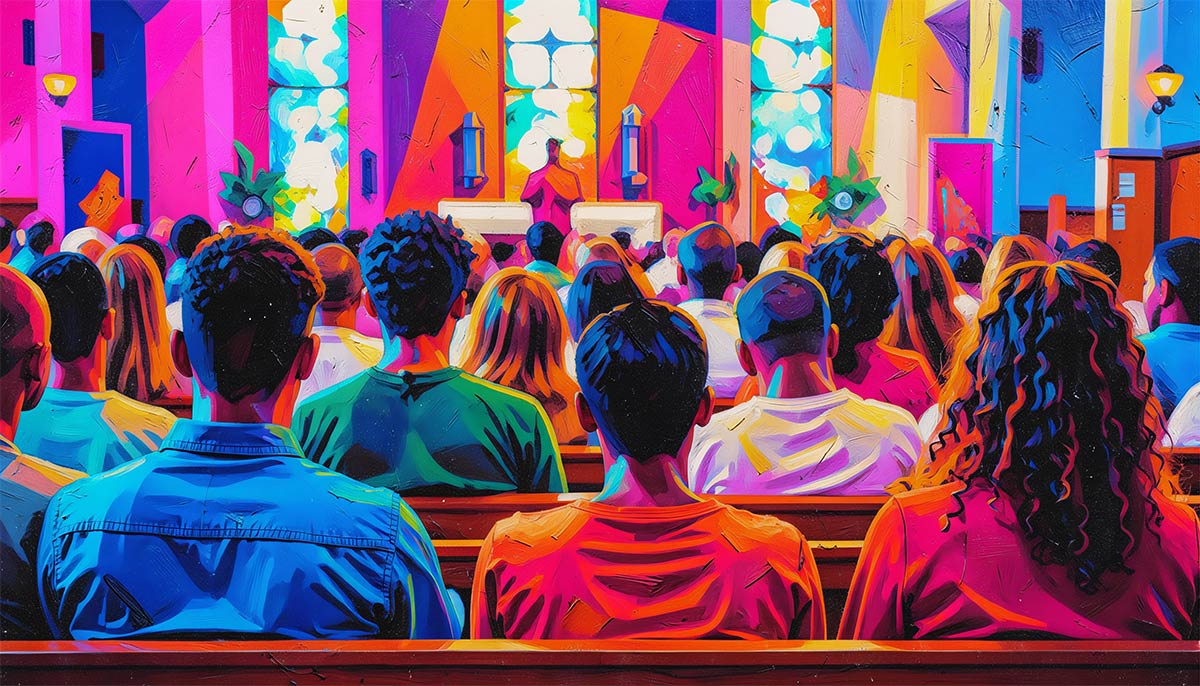
“Professing to be a Christian nation, the people… have set at naught the precepts of Christianity, in their treatment of their colored brethren… until the patience of the Father of all appears to have been exhausted.”

— Uriah Smith · 1861
“Protestants… speak as a dragon… Protestants aid in making and carrying out laws, that hold men in slavery… Lamb-like in profession; but dragon-like in its laws.”

— John N. Loughborough · 1854
“The two-horned beast appears in two phases — with the gentleness of a lamb and the fierceness of the dragon… the inconsistency of sending forth to the world the doctrine of the equality of all men… and the upholding by law all the evils of American slavery.”

— Ellen G. White · 1884
Lamb-like in profession; dragon-like in its laws.
— The Adventist Witness, 1854
Vibrant painting from the perspective of a seated congregation in a church, looking toward a figure at the pulpit and stained-glass windows.
The prophetic critique made in the 1860s is not finished business. The UN’s March 2026 resolution naming the transatlantic slave trade humanity’s gravest crime — supported by 123 nations — only opens the door. CARICOM’s 10-Point Plan walks through it: apology, repatriation, health, education, technology, debt relief. Recognition without repair is another empty promise.
Carl McRoy is the director of Literature Ministries for the Adventist Church in North America.
The African American Freedom Timeline
1954–Present
1954
Brown v. Board
The Supreme Court rules unanimously that “separate educational facilities are inherently unequal,” overturning Plessy. Thurgood Marshall, arguing for the NAACP, wins the defining case of his career.
2013
Black Lives Matter founded
After the acquittal of George Zimmerman, Patrisse Cullors, Alicia Garza, and Opal Tometi launch BLM — the largest civil rights movement since the 1960s.
2021
Juneteenth federal holiday
President Biden signs legislation making Juneteenth a federal holiday — the first new federal holiday since MLK Day in 1983.
2021-24
Reparations movement
The 100th anniversary of Tulsa sparks the most serious national reparations debate since Reconstruction. Evanston becomes the first U.S. city to pay reparations. HR 40 returns to debate.

Dr. Christopher C. Thompson is an ordained minister, university professor and community developer. His latest book is entitled Choose to Dream: Lessons on Leadership and Living Your Best Life.