

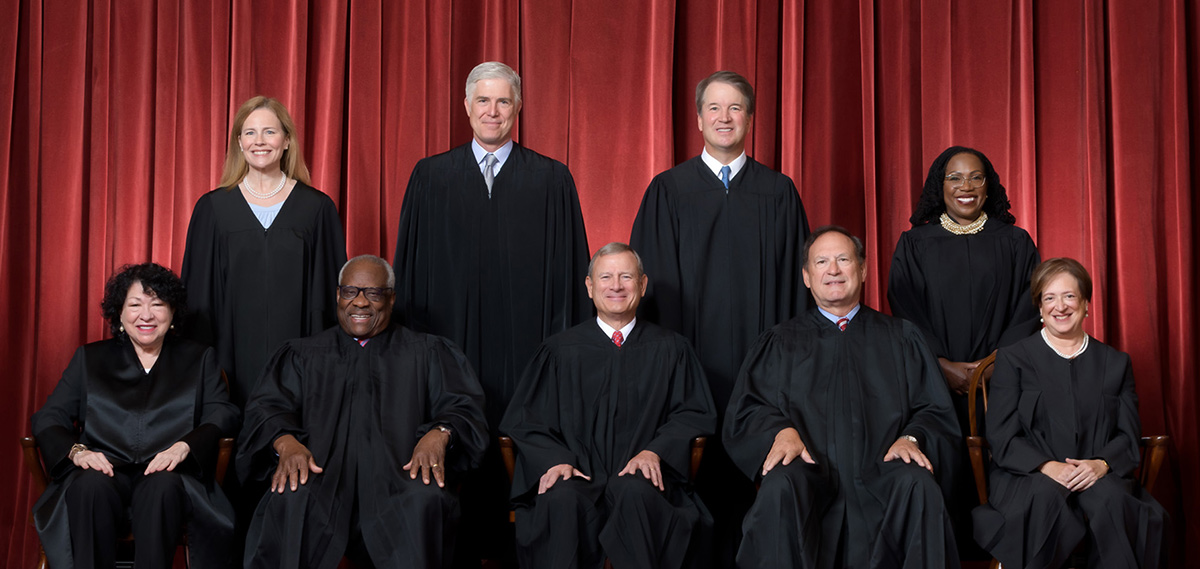
 n April 1, 2026, lawyers representing the Trump Administration went before the U.S. Supreme Court to challenge the historical understanding of birthright citizenship. This doctrine enshrined in the 14th Amendment of the U.S. Constitution guaranteed that anyone born or naturalized in America, was a citizen of the United States.
Trump Administration lawyers argued that the high court should reinterpret the meaning of the words, “subject to the jurisdiction thereof” to mean only those who hold full political allegiance, not merely physical presence. On the surface, this appears to be just another spasm in the cyclical American nativist movement. However, a closer look at administration arguments reveals a malicious scheme to undermine and redefine American citizenship.
The administration tipped its hand when it admitted white South Africans, while denying other, truly oppressed people from Africa, Asia and Latin America. In doing so, the administration also used its power to determine eligibility.
Rights are like air; you don’t miss them until they are gone. Understanding where this right came from can help us understand why it is vitally important that we protect it.
Many Americans had anxiously waited to see if Lincoln would carry out his threat made 100 days earlier, when he signed the preliminary version of this measure. He had given the wayward southerners 100 days to end their rebellion or potentially face losses valued at billions of dollars: the men, women and children they enslaved, their “human property.”
Within two years, the process started by Lincoln had concluded as Congress enacted the 13th Amendment, officially ending the long nightmare of slavery. However, ending slavery was the easy part. Determining what to do with African Americans exposed the racism that characterized the paradox which is America.
Emancipating the nearly four million African Americans from chattel slavery highlighted a problem present from the founding of the nation. As those 55 white men representing 12 of the 13 disjointed colonies came together to write the Constitution, the disagreements between the Federalist and Anti-Federalist nearly tore the new nation apart. The document that the “Founding Fathers” created left several important questions unanswered. The architects of the constitution ignored the nearly 800,000 Africans in their midst.
After the Revolutionary War, several statewide movements to emancipate their enslaved residents erupted, making slavery a regional issue with national implications. The status of blacks remained shrouded in legal and ethical limbo. The 10th Amendment gave states all of the powers not specifically designated by the federal government. States had the right to determine citizenship rights for African Americans. Americans received citizenship from the states, and this citizenship was then accepted by the federal government. Therefore, Americans had a form of dual citizenship in which you were a citizen of the state wherein you resided, and then a citizen of the US.
In 1857, an enslaved man named Dred Scott sued his owners for his family’s freedom. His owner, a military doctor, had taken the Scotts to Wisconsin and Illinois, two states where slavery was constitutionally outlawed. You know the story of how Dred Scott’s case went all the way up to the United States Supreme Court.
In his infamous and devastating opinion Chief Justice Roger Taney concluded: “A free negro of the African race, whose ancestors were brought to this country and sold as slaves, is not a “citizen” within the meaning of the Constitution of the United States… Consequently, the special rights and immunities guarantied (sic) to citizens do not apply to them. And not being “citizens” within the meaning of the Constitution.”
In other words, African Americans could not be citizens nor be extended citizenship rights. Ignoring the undergirding principles of equality and freedom enshrined in the Constitution, the high court said Africans, though born and nurtured in America, could not be extended the rights, privileges and immunities of citizenship.
Even after being forcibly wrenched from their African homelands and forced to work as chattel slaves, African Americans were legally nonpersons and aliens in America.
- First, they wanted to enshrine equality before the law. Therefore, they armed American citizens with the ubiquitous “Equal Protection” clause. This weapon ensured that every American citizen would receive equal, impartial justice from the courts.
- Second, they wanted to end dual citizenship. Federal citizenship superseded state citizenship and your rights and status as an American, cannot be abridged by state power. The 14th Amendment was clear; anyone born or naturalized in the United States is a citizen of the United States and the state wherein they reside.
Yale Law Professor Keith Whittington argues the 14th Amendment did not invent birthright citizenship — it only reaffirmed the right after it was denied to black Americans in the Dred Scott case. Whittington argues that before Dred Scott, birth on United States soil alone was enough to prove citizenship. Before the 14th Amendment, the exceptions for ambassadors and the like were narrow, not a general rule denying citizenship to outsiders.
Current defenders of birthright citizenship relied on Whittington’s writings during their oral arguments. Democratic legislators point to a 1952 statute that granted birthright citizenship using the same language as the Amendment. They argued the 1868 meaning of “subject to the jurisdiction thereof” does not matter, because the public, in 1952, thought birthright citizenship included the children of undocumented immigrants.
In many ways, this fight mirrors the debates currently raging within Christianity. In Acts 16:31 (Amplified Version) says,
“And they answered, ‘Believe in the Lord Jesus [as your personal Savior and entrust yourself to Him] and you will be saved, you and your household [if they also believe].’”
Once we accept Christ, we become a part of His kingdom and family. Though we may still be dealing with sin and other issues, we remain part of His divine plan. 1 John 3:2 in the Living Bible says, “Yes, dear friends, we are already God’s children, right now, and we can’t even imagine what it is going to be like later on. But we do know this, that when he comes we will be like him, as a result of seeing him as he really is.”
We are citizens of God’s kingdom when we accept Christ. Don’t allow anyone to try to take that citizenship from you. Paul tells us in Galatians 3:29,”
“And if ye be Christ’s, then are ye Abraham’s seed, and heirs according to the promise.””
You may not look, sing, talk, or worship like those who have come before, but if you are reborn, you are a citizen. Citizenship gives you rights, privileges and immunities. It is vitally important that the courts hold the line in this case for birthright citizenship. As Dr. King said, “a threat to justice here is a threat to justice everywhere.” If we allow our rights as citizens to be chipped away, we will soon look up and find that they are all gone. This must be the mountain we are willing to die on. This fight is about maintaining the US Constitution as it is written.