







What Children Bring to the Table
Message Magazine is trying out a new size and we’re eager to hear your thoughts.

Sooner or later all must answer this question, for it is pertinent, it is pointed, it is personal. All must reckon with Jesus. It doesn’t matter whether you are a down-and-outer or and “up-and-outer.” It doesn’t matter whether you are a believer or an unbeliever. It doesn’t matter whether you are a fundamentalist or a modernist. It doesn’t matter whether you are a saint or a sinner—YOU MUST DO SOMETHING WITH JESUS! The question comes to all with equal force “What shall I do . . . with Jesus which is called Christ?”
Your eternal destiny will not be determined by your social register; it will be determined by your spiritual register—whether your name is written in the Lamb’s book of life. Your eternal destiny will not be determined by how you stand in the sight of your friends; it will be determined by your standing in the sight of your God.”
by W.R. Robinson
Message October, 1975, p. 30

Editor
Carmela Monk Crawford
[email protected]
Graphic Design
Erica Keith
www.ericakeith.com
Subscriber Services
Pacific Press Publishing Assoc.,
Desiree Gilbert 1-800-456-3991

Roger Bernard
Marvin Brown
Carlton Byrd
Virgil Childs
Eugene Lewis
Garth Gabriel
Alva James-Johnson
Benjamin Jones
Eldeen King
Kenneth Manders
Michael Owusu
Calvin Preston
Trevor Kinlock
Calvin Watkins
relationship
readineSS
Call 1-800-456-3991 Monday through Thursday 8:00 a.m. to 5:00 p.m. Mountain Time for subscription information or address changes. MESSAGE (ISSN 0026-0231) is published bimonthly Jan/Feb, Mar/Apr, May/June, July/Aug, Sept/Oct, Nov/Dec.
© 2018 by the North American Division of Seventh-day Adventists, 9705 Patuxent Woods Drive, Columbia, Maryland, 21046, U.S.A. Address editorial correspondence to MESSAGE MAGAZINE, 9705 Patuxent Woods Drive, Columbia, MD 21046-1565 U.S.A. All subscriptions are prepaid. If you did not order MESSAGE, it is being sent as a gift from a friend. You will not be billed. To subscribe, mail payment to MESSAGE, 1350 North Kings Road Nampa, ID 83687, U.S.A. or call 1-800-456-3991. Subscription price: one year, $19.95 U.S. currency; single copy, $4.00; overseas, add $10.00 per year for postage. Prices subject to change without notice. Periodicals Postage paid at Nampa, Idaho and additional offices. Vol. 91 No. 5 SEPTEMBER/OCTOBER POSTMASTER: Send address changes to MESSAGE, 1350 North Kings Road Nampa, ID 83687, U.S.A. Printed in the U.S.A.
Unless otherwise noted, Bible texts in this issue are from the New King James Version. Copyright © 1979, 1980, 1982 by Thomas Nelson, Inc. Used by permission. All rights reserved. Statements in this issue attributed by an author to other speakers/writers are included for the value of the individual statements only. No endorsement of those speakers’/writers’ other works or statements is intended or implied.




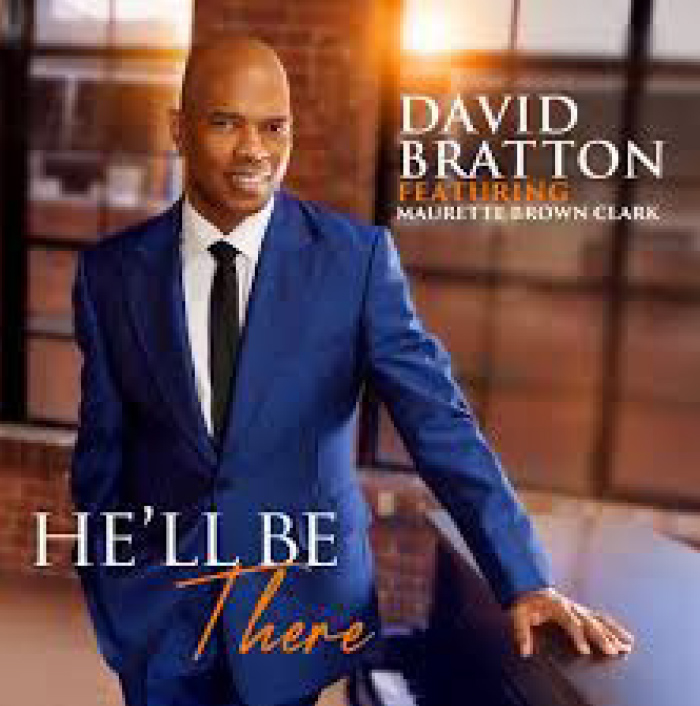
David Bratton, the gifted songwriter behind the beloved anthem “Every Praise” is back with another powerful musical offering, “He’ll Be There,” featuring the incredible Maurette Brown Clark. Bratton has a passionate way of writing music that not only uplifts but deeply ministers. “He’ll Be There” is a soul-stirring gospel experience that reminds us of God’s constant presence, no matter what we face.
“This is a song I wrote around the time I had prostate surgery. God gave me hope that I would get through it. Three days later, I was playing basketball. God showed me how much He was there.” – David Bratton

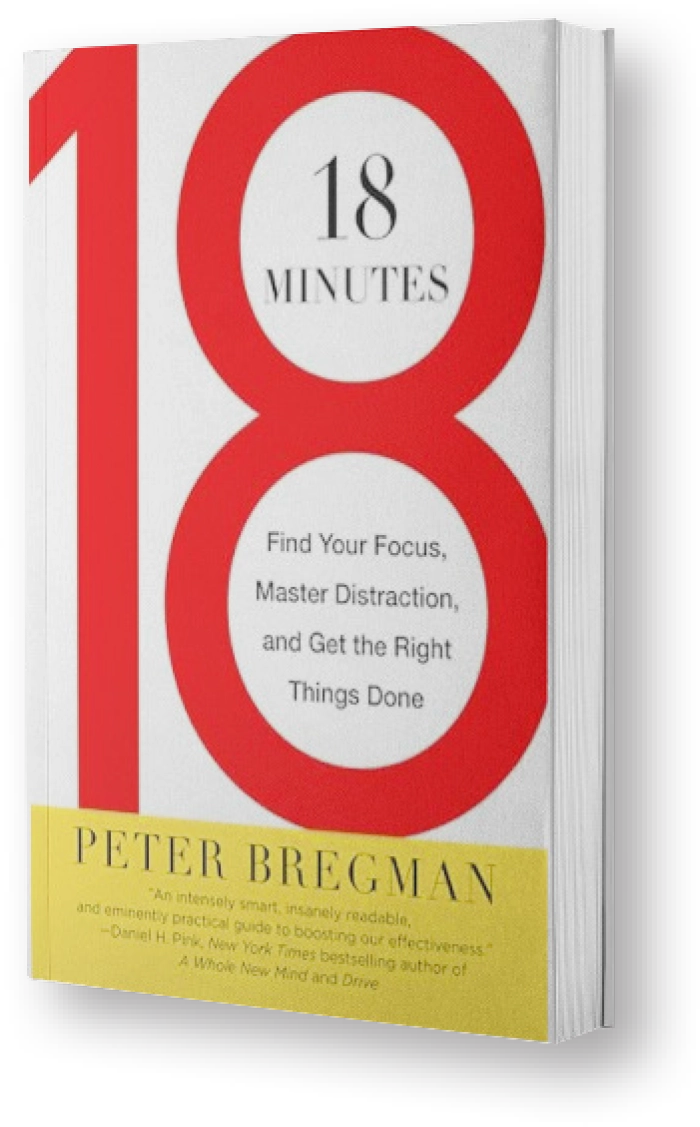
“18 Minutes” really challenged the way I think about time, focus, and purpose. What stuck with me most is his 18-minute daily framework—it’s simple but powerful. This book helped me become more intentional with my time, more aware of distractions, and more focused on what truly matters.
One quote that really hit home for me was:
“We waste so much time trying to be someone else, or doing what we think we’re supposed to do, that we miss the opportunity to be ourselves.”
Helping returning citizens is a true passion of mine, and “The Returning Citizen’s Survival Guide” is a powerful resource in that mission. Frank Patka writes from experience, offering practical, no-nonsense guidance on housing, jobs, healthcare, and more. Whether you’re reentering society or supporting someone who is, this book is a lifeline, and a great tool to spark ideas for the future.

 athan the prophet would have had after-hours access to his king. In my imagination his determined gait echoed in the torchlit hallways of David’s palace. Then, shoving the monarch’s reposing body on the royal mattress, the prophet starts abruptly, relaying a message crafted by the Lord, Himself. A parable:
Poor man has a sweet lamb that the family loves so much she sleeps in the bed at night and eats from their table. She’s part of the family. When the rich man entertains a traveling friend one evening, however, the rich man doesn’t select from his own vast herd to prepare a meal for his guest—no. He has spied the frolicking pet at the poor man’s house. Determined to have her, and because he could, he commandeered his way in past the strong arm of the father, the objections of the mother, and the tears of the babies. He seizes the lamb, kills it, and serves it to his guest for dinner.
End of story. Nathan waits.
David erupts at the thought of this miserable injustice and through his righteous clenched teeth declares:
“As the Lord liveth, this man shall die!”
That’s when Nathan turns to David, his king, and says to him, “Thou art the man.”
This moment stands alone in its dramatic and prophetic force. Expecting a child any day now from his stolen wife, the king thought he got over.
“Few individuals in David’s reign wielded the influence or had the guts to confront him on his sin” John Maxwell posits about Nathan the prophet. One of the most famous gut checks in the Bible, and David did not see it coming. It was a sho nuff “straight lick with a crooked stick.” The content was so strategically embedded as to protect the prophet, because, you know, messengers can lose their jobs these days, if not their heads. But if you read it as simply a response to David’s infidelity with Bathsheeba, you may have missed its broader application.
This evergreen parable inspired by the God of love and justice, illustrates that He stands witness. A parent, a spouse, organizational leader, corporate executive or head of state without godly restraint, fears to cross no line. David’s sexual impropriety was but one in a series of moral lapses. Always a power play, sexual “conquest” is but one symptom of an individual who craves, and is drunk with power.
Consider: David’s woeful accession and appropriation to himself of another man’s wife. How David manipulated and strung along Uriah, playing him for a fool as part of his cover up. Witness the sexual exploitation of Bathsheeba’s body, and the resulting pregnancy. Then came a veritable hit put on one of the nation’s elite and valiant soldiers. The collusion among trusted advisors, implicating all in the heinous plot. Finally, watch David simply move Bathsheeba into the palace—under the appearance of normalcy.
Up until Nathan’s visit, David could both live with himself, and sleep at night just fine, apparently. That the parable’s imagery includes the details of a closely held relationship between the family and its one lamb, can also be expanded. Though he had and could have anyone he wanted, power drives the rich man to seize the lamb, and David to seize Uriah’s wife. Gaming the system, and exploiting the advantage, scorching the earth and her people — rather than a kingdom tactic, repulses the sensibilities of a compassionate God.
“The poor are the oppressed and the afflicted, those who cannot defend themselves against the powerful,” wrote James Cone in the seminal “God of the Oppressed.” “They are the least and the last, the hungry and the thirsty, the unclothed and the strangers, the sick and the captives. It is for these little ones that the gospel is preached and for whom liberation has come in the words and deed of Jesus.”
Recently, when the richest Americans received tax breaks in the hundreds of thousands of dollars per household, their windfall was funded by cuts to programs and supports we tend to value and hold close like: food for low income individuals and their children, healthcare for elderly and disabled, housing, and educational access. Yet, we feel powerless to protect these.
I can’t help but notice that thousands of years before John the Baptist heralded Jesus as “the lamb who takes away the sins of the world,” and Jesus told the story of the lost sheep, or the sheep and the goats, and John the Revelator saw the victorious “Lamb” open the mysterious seals that preceded the terrible wrath of God, Nathan employed the same motif, a seemingly defenseless lamb. Yet, it rings true, somehow, that Jesus the lamb of God centers Himself in stories in and around vulnerable people. (See Exodus 22:21-23, Matthew 25:31-40). You may have mixed feelings to know that He really was right there when they “did it unto you.” I find that it gives me comfort and hope, knowing that no injury or imposition will have gone unregistered in heaven, and that He will repay.
In the meantime, we work, in the prophetic tradition of a Nathan. We work smart to drive home an awareness of the representative responsibilities of those in power, in contrast to an abuse of power. Use your 5 Calls app to reach elected officials, or sign a Change.org petition. Visit, call, and talk to those in power to persuasively gain what would seem like an impossible conviction for change.
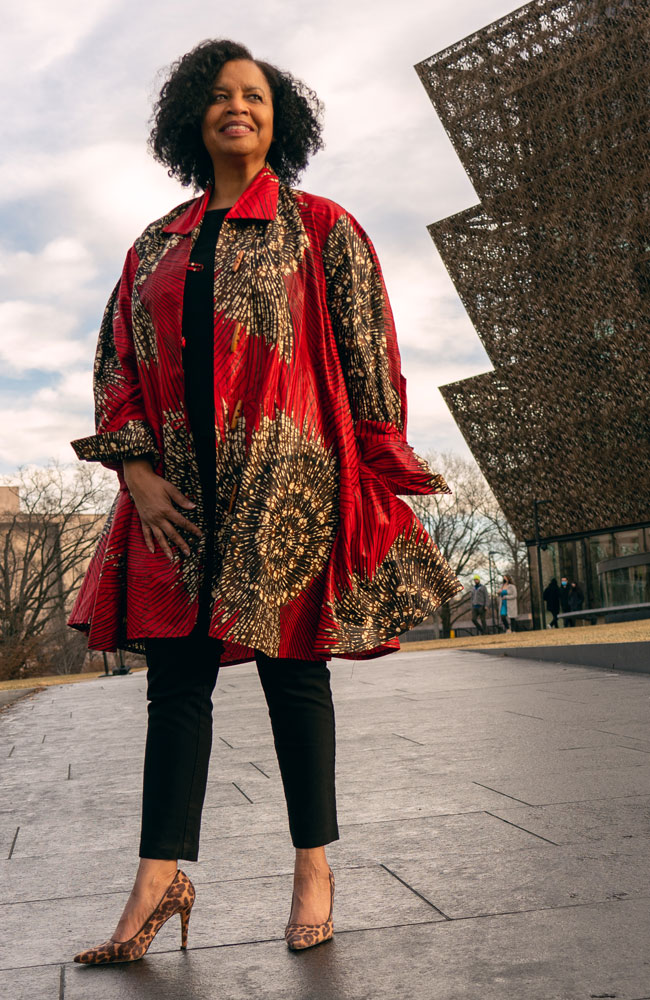
CARMELA MONK CRAWFORD, Esq., is Editor of Message Magazine

According to a March 2025 report by the Integrated Food Security Phase Classification (IPC), more than 1.1 million people in Gaza —half the population — are experiencing “catastrophic” levels of food insecurity, meaning they are facing famine-like conditions. Entire families are subsisting on flour and water, with no access to fruits, vegetables, or protein.
Unlike chronic food insecurity caused by economic inequality or systemic poverty, Gaza’s crisis is acute and largely human-caused. Here, hunger is weaponized as a tool of war, disrupting food supply chains and deliberately weakening civilian morale. The World Food Program has described the situation as “unprecedented in modern history.”

“Injustice anywhere is a threat to justice everywhere,” said Martin Luther King Jr. Likewise, hunger is an affront to justice everywhere. In a world capable of feeding everyone, it is not a question of supply, it is a question of compassion and resolve.
- Support humanitarian organizations like World Central Kitchen, United Nations Relief and Works Agency, or Doctors Without Borders working in Gaza.
- Donate to local food banks or volunteer at a shelter or pantry in your own community.
- Advocate for policy change, including stronger social safety nets, a permanent expansion of the Child Tax Credit, and international pressure to end hunger as a weapon of war.


This environment led to disparities in homeownership that affect Blacks, Asians, and Hispanics to this day. Fortunately, the Covenant Homeownership Act was enacted in 2023 to help people who have been impacted by racist practices of the past.
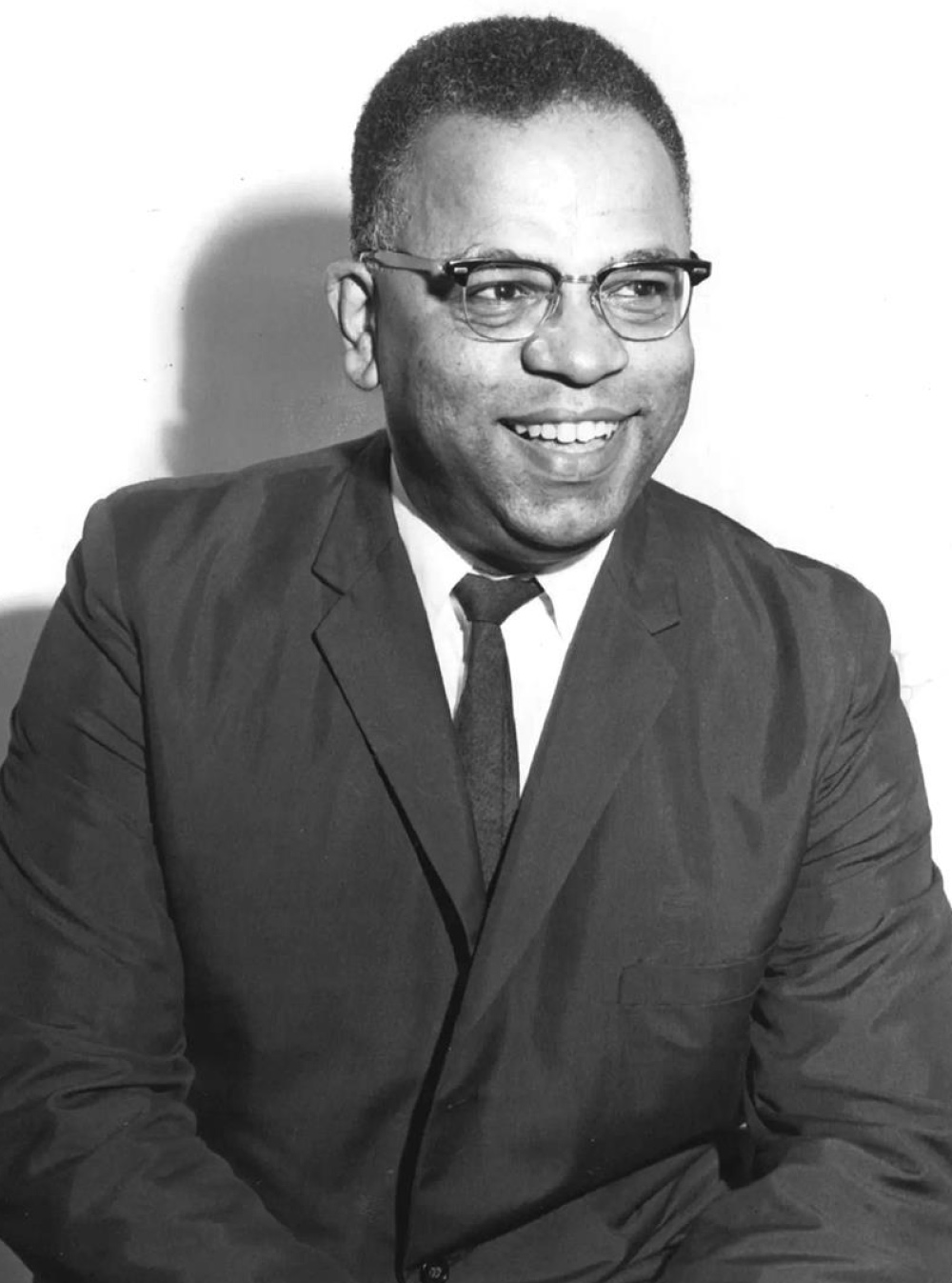
McAdoo minimized ornamentation. This revealed the geometric shapes and clean lines formed by the structural materials, like steel, concrete, and stones. These looks were integrated with the natural landscapes of their surroundings to make them scenic from inside and out. Likewise, in his role as an activist, McAdoo stripped away facades from racist structures, opened up more space, and shone the light of truth to attract more people inside.
Homes designed by McAdoo were featured in the “Home of the Month” section of The Seattle Times in 1955-56. His excellence in small scale projects brought larger commercial and government projects to him throughout his career. On more than one occasion, he used his access and leverage to purchase property for black people who were excluded from doing so themselves.

His passion for affordable housing led to him moving his family to Jamaica in 1961-62, where he worked with USAID to design modular housing that could be sourced from materials within Jamaica, and largely assembled by unskilled laborers. Then McAdoo moved to Washington, DC, to help establish the Latin American Division of USAID, and work on the design team for the Kennedy Center for the Performing Arts.
In 1964, McAdoo resumed his private practice in the Seattle area, and also became president for the Seattle chapter of the NAACP until 1969. During that time, he also had a weekly radio show that addressed societal issues, including housing affordability and discrimination. Although Benjamin McAdoo died in 1981, architects and activists alike are keeping his legacy alive through the University of Washington’s Benjamin McAdoo Research Collective that started in 2021.




On July 4, 2025, only one Republican physician in the United States Congress was willing to stand as H.R.1 was signed into law. It passed in both the United States House of Representatives (218-214) and Senate (50-51) with only Republican support.
The bill may be “beautiful” for the wealthiest Americans. However, it will be disastrous for many as the “not-so-beautiful bill,” as coined by Dr. Rand Paul of Kentucky, is set to add trillions to our national debt while decreasing funding to numerous social safety net programs, notably healthcare.
Of the 21 physicians currently in Congress, 17 in the House of Representatives and four in the Senate, 14 voted “Yes,” all of whom are Republicans. In voting for the bill, these physicians, government servants, and representatives forsook their Hippocratic Oath to “First Do No Harm” and “Respect Human Life.” Instead, they pledged their allegiance, not to a party or their constituents, but to a ruling class of billionaires governed by the love of money. As a result, they will pierce themselves (and millions of others) with many sorrows (1 Timothy 6:10).
We have been called to not only care for ourselves, but to be our sibling’s keepers.
Medicaid currently covers 71 million individuals who must meet certain qualifications. Included are low-income families, qualified pregnant women and children, children in foster care, people with disabilities, seniors with low income, parents/caregivers with low income, and individuals receiving Supplemental Security Income (SSI). It also covers those with certain diagnoses such as end-stage renal disease on dialysis, HIV/AIDS, and cancer. There will also be cuts to the Health Insurance Marketplace program (under the Affordable Care Act best known as “Obamacare”) that serves 24 million Americans who work; many are pre-retires, part-time workers, independent contractors, and small business owners. Notably, both programs cover a large portion of rural America.
Many individuals on Medicaid work but are not provided with commercial health insurance by their employer and cannot afford it on their own.
Unlike the federal government (which will add $3.4 trillion to the federal debt due to this bill), state governments must balance their budgets. When less federal funding is provided for state-run Medicaid programs, the states must fill in the gap. If they cannot, covered services will decrease and people will be removed from the program to make ends meet.

Furthermore, we know that those without insurance are far less likely to seek timely medical care. Twenty percent of adults without insurance, in comparison to 5-7% with insurance, went without needed care because of the cost. The cost of healthcare can be financially debilitating as medical debt accounts for 66.5% of bankruptcies in America, with more than a half million people filing every year for this reason alone.
These cuts are proposed to decrease government spending by $1.1 trillion on Medicaid, Medicare and The Affordable Care Act (Obamacare) over the next decade. More than $1 trillion of the cuts are to come from Medicaid alone.
How is it that the federal government is cutting funding, yet our debt is increasing? Show me your budget and I’ll show you your values. Our checkbook shows our treasures to be big business, border control and billionaires. Forty-six and a half billion is set to construct the border wall that Mexico was “supposed” to build. Another $45 billion is allocated to detention centers for immigrants in custody with an additional $30 billion to fund Immigration and Customs Enforcement (ICE) agents. Finally, the top 20% of income earners will receive a disproportionate amount of the extended and new tax savings.
The consolation prize is $50 million to support rural hospitals. This is a drop in the bucket as the cost to run even a small hospital is estimated to be in the 10s to 100s of millions of dollars a year. The closing of facilities will not only lead to increased death and morbidity for the people these centers serve, but also to economic disaster as the local hospital is often a major economic engine keeping these communities financially viable. The $50 million is too late to save Curtis Medical Center and will be too little to save others.
Left out completely is targeted funding to support urban healthcare centers, which carry the load of providing uncompensated care to a diverse population in our larger cities. These safety net facilities are also in jeopardy.
One recent example is the closing of two Atlanta, Georgia hospitals by WellStar Health System (Atlanta Medical Center and Atlanta Medical Center South) in 2022. Their closings have put increased financial and capacity pressure on Grady Memorial Hospital, the sole remaining Level 1 trauma center in the city. This means longer wait times and decreased access to care for all in the community. This is especially critical in what we deem as the “golden hour.” It is the time immediately after a medical emergency when timely intervention can significantly improve a patient’s survival and decrease long-term complications.
The American Hospital Association (AHA) noted the financial strain on hospitals.
The National Academy for State Health Policy (NASHP) cited apprehensions about operational challenges states will have in implementing the bill’s requirements, especially as it relates to eligibility verification and data systems.
The National Medical Association (NMA), the nation’s collective voice of African American physicians, is alarmed because the bill will expand healthcare disparities and “harm our communities for decades to come.”
Non-profits such as Planned Parenthood are worried that the “bill will restrict access to essential healthcare services for low-income individuals, particularly those who rely on Medicaid for services like birth control, cancer screens and mental health care.” This is especially true as the Supreme Court decided in a June 2025 ruling that states can block the organization from receiving Medicaid funds, even if patients are seeking care unrelated to an abortion. Imagine how this will impact states like West Virginia where half of all births are funded by Medicaid.
This scenario will have broad consequences outside of that for the patient and their family. Someone will have to pay for the $204 billion in increased uncompensated care: $63 billion for hospitals and $24 billion for physicians. That someone is most likely you. Again, as states must balance their budget, the additional expenses will be laid at the feet of state taxpayers via an increase in income, sales, and/or property taxes.
My support of lifestyle modifications comes from personal experience. When faced with my own health challenges, my physicians were amazed at my rapid recovery and attributed it to years of a plant-based diet and regular exercise.
One other note, H.R.1 passed without compromise or input from members of any other party, because Republicans control the House of Representatives, the Senate, the White House, and the Supreme Court. While I have called out my fellow physicians in Congress, 50 Senators (with a tie breaking vote from the Vice President) and 218 Representatives voted for this bill. Your vote, or lack thereof, can change the course of your life and has changed the country.
My duty is not only as a physician to my patients, but as a daughter whose Heavenly Father requires much for the much I was given. I am to look after the orphans and widows (James 1:27), give openly to the needy and poor (Deuteronomy 15:11), and to consider the needs of others (Philippians 2:4). The parable in Luke 16:19-31 is a cautionary tale.


 few days after Nate’s proposal, I heard a voice telling me clearly in my spirit “Nate is your husband.”
“What?!” I screamed from the recesses of my mind. I didn’t even really like Nate! Certainly not enough to want to marry him! I’d only decided to pray about his proposal to fulfill all righteousness. How could this be?
Well, I kept on praying that day and kept hearing the same thing in my spirit: “Nate is your husband.”

I just so happened to catch him shirtless in the apartment he shared with his brother when I dropped by from an outing, so we could go grab dinner together. As soon as I got there, he quickly put on his shirt and we left. I do remember feeling disappointed about him covering up (hey, I’m a believer, not blind!).
But here’s the thing: my relationship with Nate was so rocky that, within the first couple of months, I found myself crying over some of the issues I was having with him. Nate had a jealous streak a mile wide – maybe because of his rather sexually-liberal lifestyle as a teenager and young adult. He hated meeting my male friends, despite the fact that I openly introduced him to them as my boyfriend. He would say again and again that he didn’t believe in platonic relationships between men and women.
Something else Nate used to do that I found rather worrisome was his insistence on my submission. He would quote Ephesians 5:22 to me saying “Kaye, I am your husband; you have to submit to me.”
“Dude, you’re not my husband yet,” I thought as I rolled my eyes, internally.
Beyond these though, was his anger. Within the first three months of our relationship, it was clear to me that he had serious anger management issues. Hey, I’m a quick-tempered person myself, but I was a whole lot better at not allowing the anger to get the better of me than he was.
One day, after having just returned home for a brief visit after three months working out of town, I excused myself from him and my friend who had come to see me with her fiancé. I wanted to go say hi to my dad who had just come home from work. Certainly, it wasn’t going to be a one-minute “Hello, Dad.” I honored my father by spending a couple of minutes with him, enquiring about his health and whether my mom had been treating him right!
I returned only to find that Nate had left. In fact, my friend explained that he had muttered angrily that I’d been out of town for three months, yet apparently hadn’t missed him enough to spare any time for him. He had stormed off to his car without another word, said my friend. Her fiancé confirmed that he had driven off with a screech of his tires.
I was due to travel back to my duty station two days later. I went to his place hoping we could talk about what had happened, but he wasn’t in. I didn’t see him again until I was about to set out to return to work out of town.
“Lord, if I said I still wanted to marry Nate, You would know it for the bald-faced lie it is, because You know my heart. Lord, I believe I heard You clearly telling me Nate was my husband, but please Lord, just allow me to make this one request. Please give me a man with a gentle temper — one who doesn’t anger easily.”
I broke things off with Nate and even though he tried for us to get back together, I was resolute. A few months after that breakup, a senior colleague of mine — Boone, who had always been interested in me, openly expressed his desire for a relationship and ultimately marriage. Remembering my experience with Nate, I didn’t just ask to hear from the Lord — I sought a sign also, just to be double sure.
Boone and I have been married for twenty-two years, with four children —two of whom are adults now. I can count on one hand the number of times he has raised his voice to me. I asked the Lord for a mild-tempered man, and that’s exactly what I got.
Was it really the voice of the Lord I heard telling me “Nate is your husband”? I believe so, with all my heart. However, dare I say that Nate, like King Saul, lost his kingdom because of his refusal to own up to his mistakes and make amends?
The Bible asks us to prove all things (1 Thessalonians 5:21), to test every spirit (1 John 4:1).
Even when God has chosen someone for you, if that person refuses to walk worthy of that call, the Lord always has a back-up plan. After all, He is the Master Strategist.
Look to Him in all things, all of the time.
 hat morning changed everything. I stood there blindsided, breathless, fighting desperately for my life while trying to digest what was unfolding right before my eyes. The hands of my husband that had once held and protected me were now callously and mercilessly strangling me.
The pernicious effects of alcohol from the night before had taken its toll on him as it permeated the atmosphere and manipulated him to nearly end my life that morning. Just when I thought I would take my last breath in my helplessness and apparent defeat, the Lord placed my oldest daughter in my view. She appeared to be praying and internally fighting as she witnessed my struggle. She inspired me and instantly activated my maternal prowess to live for my baby girls. I needed to be there for them and be a testimony of God’s omnipotence and saving grace.
This explosive domestic event caused a shift in the trajectory of my life and the lives of my two daughters. Bonds were severed, hearts were torn, and lives were broken, while we were abruptly uprooted from our comfort zone and placed at an unwelcome crossroad that morning. I would have never imagined waking up to this appalling and menacing entanglement with the love of my life — the person I considered to be my safe space. I felt like I had been sleeping with the enemy.
That day marked the beginning of the girls’ and my journey of adversity, opposition, loss, and isolation. Unbeknownst to me, the internal upheaval that transpired that morning stripped the lid off of Pandora’s box and exposed secrets that took my breath away and almost tempted me to feel hopeless. From that day forward, I was relentlessly bombarded with unforeseen and unimaginable discoveries that surfaced and spoke volumes that I was dealing with more than just a domestic incident in my current crisis. Spiritual warfare was staring me right in the face leaving me terribly flummoxed as it attacked me from multiple angles.
At this time, my situation was looking pretty dismal, but God! This catchphrase, “But God,” has been my mantra in every seemingly insurmountable situation because I’m aware that no one “but God” can deliver me in these situations.
I survived. Not just that morning, but the days that followed as I adjusted to my new reality as an instant single mom. I survived the silence and shame from friends and family who felt uncomfortable with my new family profile.
I survived the stigma from being both a professional and a victim — the weight of “Professional Stigma” and “Helper Syndrome.” These are the unspoken beliefs that personal struggles, particularly those involving domestic violence and mental health, are incompatible with being a competent professional. That professionals should be emotionally resilient, even immune to such societal concerns.
I survived the manipulation and gaslighting from my then husband about that horrific morning, because there had been no prior history of physical abuse in our marriage. Or, was I simply unaware of the intangible and subtle ways abuse can manifest? In this struggle, I learned that abuse has many faces: emotional, verbal, mental, physical, spiritual, sexual, and financial.
It is far more prevalent than most of us realize. That’s why our counseling — my counseling — and education focused on healthy relationships among families, friends, co-workers, and significant others, and was nothing short of revolutionary.
I also survived the misunderstanding and ridicule from both the church community and the system, neither of which fully grasped the precarious nature of our situation. Both could benefit from education, awareness, and compassion in these areas. Navigating the social system in search of resources to meet our basic needs gave me a whole new perspective. As a healthcare provider, I had no idea how unsettling and often insensitive the process is. I never imagined how scarce and difficult it is to find real help for individuals broken by relational, social, or financial crises.
As for the church, abuse is a topic too often swept under the rug, as if silence will make it disappear. There is a deep and troubling denial, an unwillingness to acknowledge the reality and prevalence of abuse, even within its own walls. This left me feeling broken, isolated, and misjudged. Ironically, we were treated like villains, when, in truth, we were the victims.
In the meantime, I had no earthly idea of the magnitude of anguish and heartache the girls and I would suffer along this journey, but I knew the omnipresence of our Heavenly Father would suffice in these difficult times. Residing in the “secret place” of the Most High God was our refuge and respite from the storm. Here we could spiritually refuel while God nurtured, healed, and revived us so that we didn’t look like what we were going through. Hallelujah!
Here, devoid of distractions, we could clearly hear Him speak to us words of wisdom and instruction to help us navigate through this storm. When all hope seemed gone because the typical earthly strongholds we relied on daily by default disappointed us, my God proved Himself to be more than enough. I was quickly reminded that God trumps every earthly stronghold — one’s village, the legal system, and the church. He is the Stronghold par excellence, the true “Rider” or “Ride or Die.”
God has given the biblical charge that we are to bear each other’s burdens in Galatians 6:2 and help each other on our heaven-bound journey. And by divine orchestration, my wound of affliction morphed into a womb of life birthing my nonprofit organization in 2019 – Three Women And A Vision, Inc. (TWAAV), which focuses on the ministry of reconciliation and social service advocacy. The three women are my two daughters and myself, of course, and by God’s grace, we aspire to make a permanent footprint in this world that fosters a culture of healing, reconciliation, unconditional love, and forgiveness.

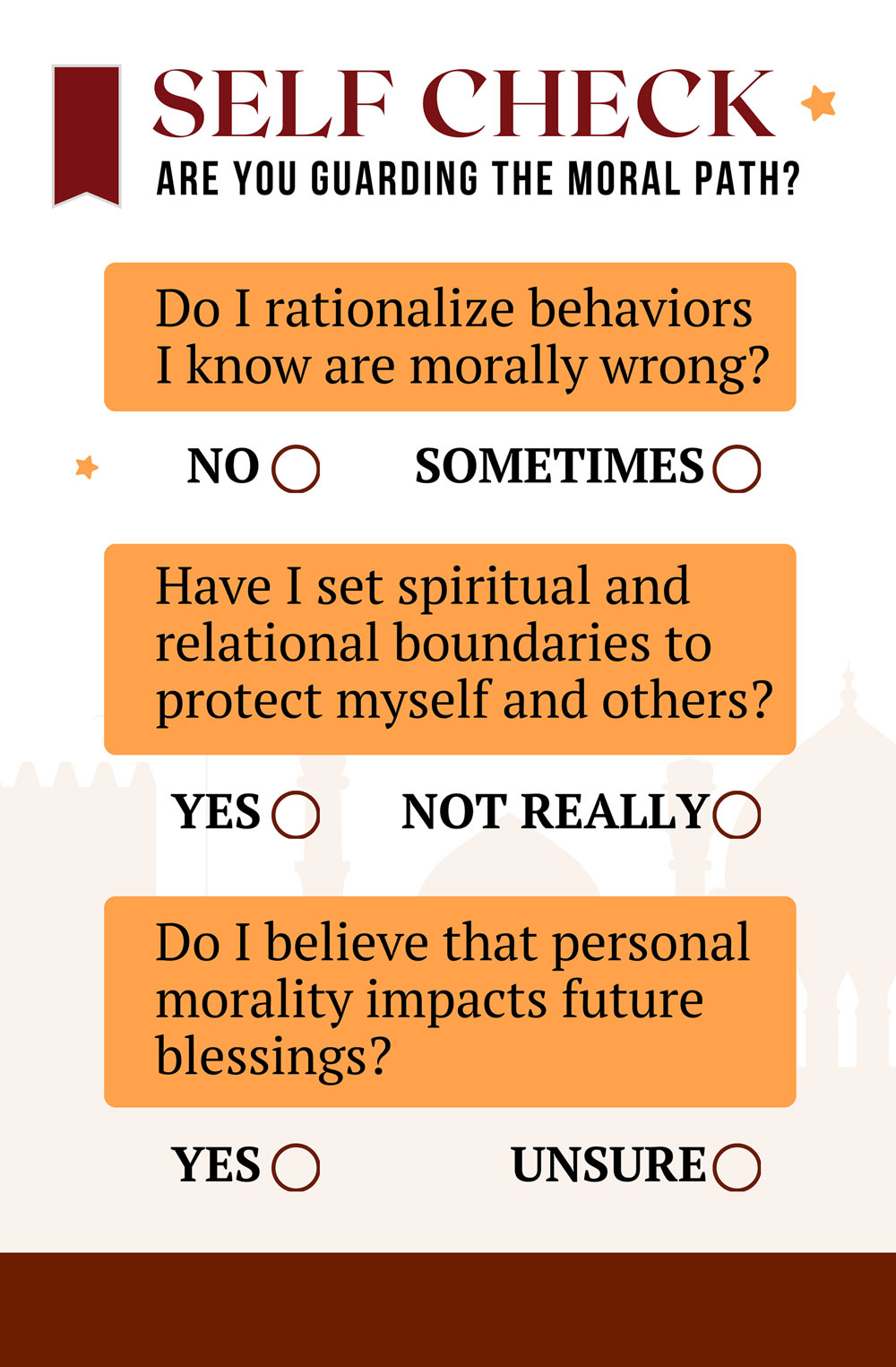
Morality Versus Immorality
Consequences of One Wrong Turn: Why Morality Matters
“He who covers his sins will not prosper, but whoever confesses and forsakes them will have mercy” (Proverbs 28:13, NKJV).
David had it all: anointing, authority, acclaim! Chosen by God, celebrated by the people, a leader armed with a heart for worship and poised for a stellar reign and a life of greatness. But one night, when kings were at war, David stayed home! He made a choice that tragically altered the course of his life and his family.
The story of David and Bathsheba (2 Samuel 11) isn’t just about temptation — it’s about trajectory. One decision to ignore God’s law led to a descending path of adultery, deceit, murder, and cover-up. The consequences were devastating: a child lost, a home in turmoil, and generational pain.
See the consequences of morality or the lack of it:

The story of David and Bathsheba (2 Samuel 11) isn’t just about temptation — it’s about trajectory. One decision to ignore God’s law led to a descending path of adultery, deceit, murder, and cover-up. The consequences were devastating: a child lost, a home in turmoil, and generational pain.
See the consequences of morality or the lack of it:
Immorality Has a Ripple Effect
Sin doesn’t stay contained. David’s secret act with Bathsheba became a public and domestic disaster. His son Amnon would later mimic his father’s sins with tragic results. What we excuse in private often erupts in public, and those around us suffer the collateral damage.
David’s story reminds us that moral decisions are never just personal. Each choice builds or breaks trust, safeguards or sabotages legacies. The price of immorality is often higher than anyone ever expects.
Thank God for grace. We can remember David, not for the ignominy of his fall but for the example of his restoration. He owned his failure, he turned to God, and he accepted the consequences. True morality is not sinlessness but choosing virtue and sincerely and humbly returning to God when we fall.
Conclusion:
The lesson is clear: immorality always takes more than it gives. It promises pleasure but delivers pain. It whispers freedom but chains the soul. Like David, we each stand at a crossroads where one step can shape destiny. Choose the narrow path. Morality matters — because your future and your family depend on it.
Morality Protects More Than Just You
David’s story reminds us that moral decisions are never just personal. Each choice builds or breaks trust, safeguards or sabotages legacies. The price of immorality is often higher than anyone ever expects.
God Forgives, But Consequences Remain
The lesson is clear: immorality always takes more than it gives. It promises pleasure but delivers pain. It whispers freedom but chains the soul. Like David, we each stand at a crossroads where one step can shape destiny. Choose the narrow path. Morality matters — because your future and your family depend on it.

 arah Velasquez, co-founder of the Suicide Prevention Support Group Purposeful Life in the Light, experienced a devastating loss when her 22-year-old daughter died by suicide on February 13, 2017.
Her daughter was vibrant, free-spirited, full of life, a nature lover with a deep affection for dogs. No one saw it coming.
This heartbreaking experience transformed Sarah’s understanding of suicide. She now gently reminds others: “Just because someone is smiling doesn’t mean they aren’t in pain.”
Holding on to hope, Sarah believes that her daughter’s life — and death — carry meaning. Today, she supports other parents through their own journeys of grief, shame, and guilt, offering comfort through shared experience and empathy. Every holiday, she sets a plate at the table for her daughter and softly says: “You are never forgotten. . . and we will forever love you.”
Public health data show that suicide is the third leading cause of death among black youth ages 15 to 24 in the United States. Between 2008 and 2019, suicide attempts rose significantly among young adults ages 18 to 25. Alarmingly, suicide rates among black young adults ages 18 to 24 increased by 37% from 2018 to 2021.
A 2020 report from the Congressional Black Caucus Emergency Taskforce on Black Youth Suicide and Mental Health titled, “Ring the Alarm: The Crisis of Black Youth Suicide in America,” highlights the gravity of the situation. According to the report:
“Among youth aged 10 to 19, suicide is the second leading cause of death. In 2017 alone, over 3,000 youth in this age group died by suicide. Over the past decade, the suicide death rate for black youth rose from 2.55 per 100,000 in 2007 to 4.82 per 100,000 in 2017. Alarmingly, black children under 13 are twice as likely to die by suicide as their peers, and black boys age 5 to 11 are more likely to die by suicide compared to their white counterparts. The suicide death rate among black youth is increasing more rapidly than any other racial or ethnic group.”
While research on suicidal thoughts and behaviors in black youth has shown mixed results, recent data underscores growing concern. A study using the CDC’s Youth Risk Behavior Survey — a national assessment of adolescent health —found that suicide attempts among black adolescents increased by 73% between 1991 and 2017. During the same period, suicide attempts resulting in injury rose by 122% for black adolescent boys, suggesting an increase in the use of more lethal means.
Historically, black youth have not been seen as a high-risk group for suicide, but emerging trends tell a different, more urgent story.
Several factors contribute to the frequency of attempts, and their lethality.
- Racial Trauma: Ongoing exposure to racism causes chronic stress, fear, and emotional pain. This trauma can lead to anxiety, depression, social isolation, PTSD, and an increased risk of suicide.
- Mental Health Stigma: Deep-rooted distrust in the healthcare system, shaped by historical abuses such as the Tuskegee Syphilis Study, continues to delay diagnosis and treatment in black communities.
- Discrimination and Suicidality: Research published in BMC Public Health shows that young black adults who experience frequent discrimination are more likely to report suicidal thoughts or attempts. In contrast, those who hold positive attitudes toward seeking mental health support are 34% less likely to attempt suicide and 35% less likely to experience suicidal ideation.
- Poverty and Psychological Distress: Due to systemic inequities, black Americans are disproportionately affected by poverty, which increases vulnerability to mental health challenges.
- Residential Segregation: Historically rooted segregation continues to limit access to quality education, employment opportunities, and healthcare, exacerbating both economic hardship and emotional strain.
- Barriers to Care: High costs and limited access to affordable mental health services often prevent individuals from receiving the care they need.
- Compounded Effects: The intersection of racism, poverty, and mental health stigma can intensify feelings of hopelessness, disconnection, and worthlessness.
- Intergenerational Trauma: Trauma isn’t always individual — it’s often inherited. The effects of past and present injustices can pass through generations, influencing identity, resilience, and emotional well-being.
- Youth Suicide Disparities: Young black men are particularly at risk, facing unique cultural and societal pressures that compound their mental health challenges.
While racism and injustice are undeniable risk factors, suicide is a complex and multifaceted issue. It cannot be attributed to one cause alone.
As Kathy Hurt wrote in the National Alliance on Mental Illness Journal (November 17, 2017), “Suicide is not a desire for death, but a cry for life — more life, better life.”
- Address systemic racism and economic barriers.
- Increase access to culturally competent mental health care.
- Promote mental health education and reduce stigma in both faith and black communities.
- Let’s also be clear: mental health struggles do not equal weak faith. Seeking help, whether through therapy, medication, or pastoral care, is not spiritual failure. It is wisdom. It is stewardship.
While prayer is powerful, it is OK to also ask for help. And it is necessary to move beyond harmful cultural norms like “what happens in the family stays in the family.” Healing often begins in the light.
As the Apostle Paul instructs us:
“Bear one another’s burdens…” (Galatians 6:2).
- Providing faith-based counseling and support groups.
- Creating safe, stigma-free spaces for open and honest conversations.
- Encouraging the integration of spiritual support with professional mental health care.
- Actively checking in on members, especially those who may be struggling silently.
One example of this important work is The Balm in Gilead, an organization that partners with African American faith communities to address health disparities, including mental health and suicide prevention. Learn more at balmingilead.org.
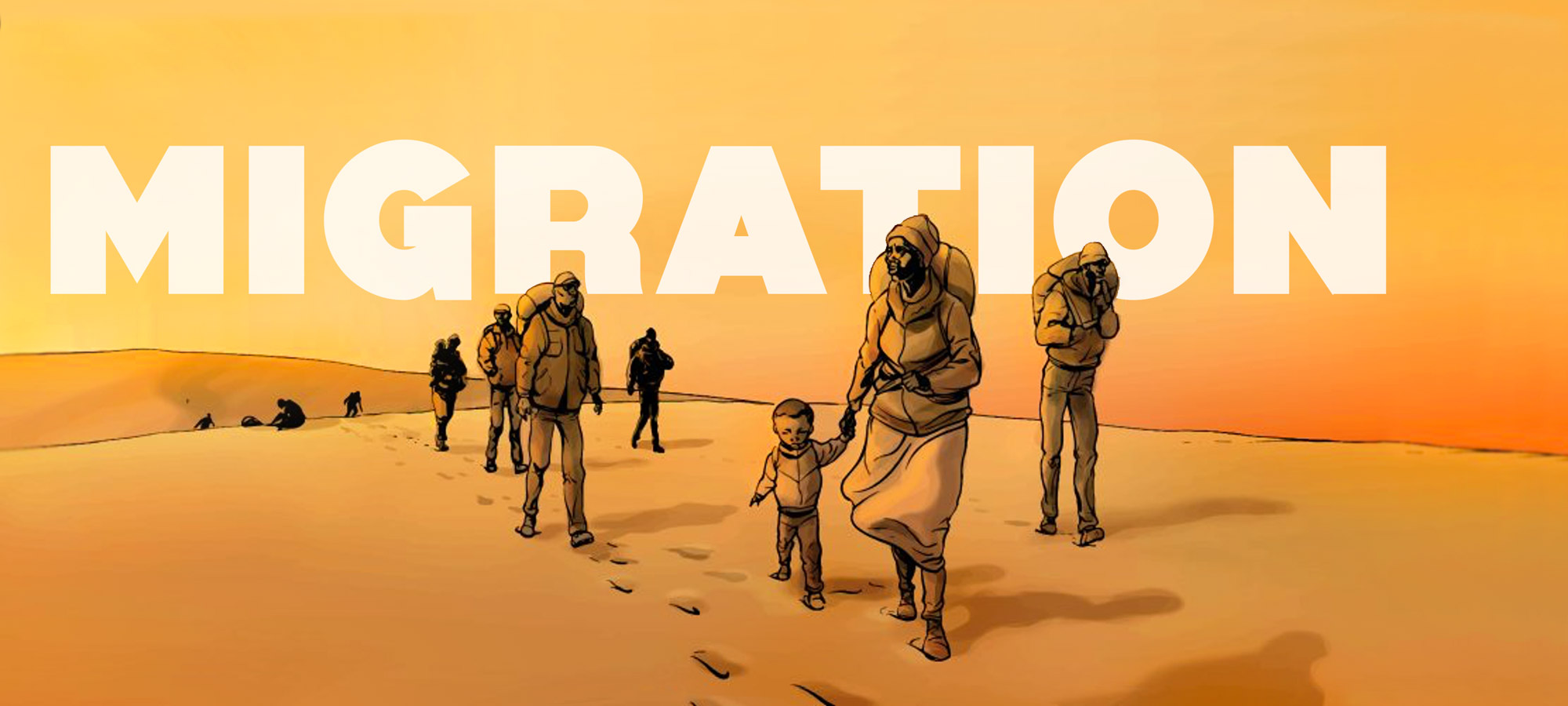
How current immigration policies clash with the biblical record, and our duty to respond.

cripture is clear; we are to obey God rather than man (Acts 5:29). Paul encourages us to pray for government leaders and respect their authority (Romans 12 and 13). But Paul demanded his rights as a Roman citizen (Acts 25:11) Therefore, Christians, while respecting those in authority, do not owe blind obedience to any human law if it is contrary to the Law (Torah) of God. What does the Bible say?
Isaac and Jacob were also migrants moving continually throughout the land of Canaan. Jacob fled his brother and violence to have a better future. Late in life, through the efforts of his son Joseph, who was now the prime minister of Egypt, Jacob and his entire family moved to Egypt to flee hunger caused by famine in Canaan, a natural disaster.

Centuries later the Hebrews were seen as a threat by the Egyptians who feared their growing numbers. A law was made enslaving them and finally a death decree was made to curb their population. The Hebrew midwives resisted this order. They made excuses for their “illegal actions” to save the baby boys.
Moses’ mother resisted this immoral law by hiding him. She hid him in a basket in the bulrushes of the river where he was found and saved by the daughter of the Pharaoh who wanted to kill him. This Egyptian princess knew he was a Hebrew but adopted him anyway. He was raised by his birth mother for the first years of his life and then went to live in the palace as the adopted grandson of Pharaoh. This same Moses led the Hebrews out of Egypt to return to the land of Canaan.
Another Bible story of migration is that of Ruth. She was a Moabite, a people who were the enemies of Israel. She had married an Israelite while he was a migrant in her country. When he died his mother wanted to return to Israel. Ruth went with her declaring, “your people will be my people and your God, my God.” To eat, Ruth labored in the fields picking up the leftovers after the harvest according to the law of God that demanded the corners of the field be left unharvested for the poor. This included widows and orphans. She married Boaz, the owner of the field she was working in, and became an ancestor of King David and Jesus.
Jesus was a migrant soon after his birth. Joseph and Mary were warned by an angel that their child was in imminent danger of death by Herod’s soldiers who were going to Bethlehem to kill all of the baby boys up to two years of age. Imminent danger forced them to migrate to Egypt where they could be safe.
The first believers in Jesus were forced to migrate from Jerusalem and Judea because of religious persecution. These people fled for their lives. Fear of imprisonment or death was the cause of their migration. The Apostles remind us that we are pilgrims in this earth, wandering. We look for a new heaven and a new Earth where righteousness reigns (1 Peter 2:11; Hebrews 11:13).
As we can see, the Scriptures are full of stories of people who had to migrate because of their faith, natural disasters, violence, death threats, and more. These are many of our Bible heroes. Migration was a key element in the story of their lives.

The division of human beings because of race, national origin, and gender is not God’s plan. In Jesus there is neither Jew nor Greek, male nor female, slave nor free (Galatians 3:28). Satan wants to divide us and cause enmity between people including believers (James 4:1). Jesus calls us to love one another, even those who hate us and persecute us (Matthew 5:44). And, He asks us to go into all the world and preach the gospel to everyone (Mark 16:15-16).
Jesus commands us to love (John 13:34-35, 1 John 4:7; Romans 12:10; 13:8; Ephesians 4:32). But whom should we love? Some have argued that there is an order of love (Ordos Amoris) beginning with those closest to us followed by those like ourselves. And finally, they argue, if there is any leftover love, care and concern, then it can go to others who are not of our family, community, or nation.
This is not the teaching of Jesus. He taught that our neighbor is not necessarily the one closest, nor most like us. In one of His most well-known parables, He seeks to answer the question: Who is my neighbor? In the story of “The Good Samaritan,” it was not those closest to the wounded man who turned out to be his neighbor. It was a man of the hated, demonized “others,” a Samaritan. Jesus taught that “God so loved the world” (John 3:16), not God so loved the Jews or the sons of Abraham.
Migration is an answer to human needs in the Scriptures just as it is in our times: religious persecution, famine hunger, family ties, injustice, and persecution based on race-ethnicity and other circumstances that make people migrate to another country where they hope to find freedom, justice, and safety for themselves and their families. It is sin that separates people into us and them. The fear and hatred of the other is sinful. Resistance to unjust, immoral laws is the duty of believers.
For many in our history, this was and remains a nation with hopes and intentions to fulfill the longing of the human heart for freedom and justice. It is a nation where religious freedom was the motivation for many of our ancestors’ migration. Christians are called to obey God’s commands rather than man’s. We are called to be light in the darkness, teaching Jesus’ gospel of love for one another. This is a love that is universal, not restricted to those who are nearest to us, or the most like ourselves. We follow Christ, not man. We are guided in our lives by the perfect law of liberty!



From hazing to kneeling devotion, challenging the spiritual side of our Greek-letter organizations.


hile attending Southern University and A&M College in Baton Rouge, Louisiana, 20-year-old engineering student Caleb Wilson sought out to pledge with Omega Psi Phi. He died during the hazing process. Sadly, his death is one of the latest in a string of tragedies associated with hazing.
Since 2000, there have been more than 100 hazing deaths. Hazing rituals are prevalent in various groups on many campuses, whether HBCUs, PWIs, private Christian, and non-Christian campuses. Many are drawn to Greek organizations after seeing their community service, friendships, career connections, and step shows. Yet, there is more to them than what meets the eye.
Pulling Back the Veil
Hazing
“Hazing: any activity often within a group setting, regardless of an individual’s willingness to participate, that causes or risks mental, physical or emotional harm, or humiliates, degrades, or abuses someone as a condition of joining or belonging to a group.”
Anti-hazing laws exist all over this country, at many distinct levels. They include institutions of higher education, state laws, Greek bylaws and federal laws. The federal SHCA (Stop Hazing on Campus Act), requires Institutions of Higher Education (IHE) to report hazing protocols in their Clery Reports, as of January 1, 2025. The Indiana University spring semester 2025 hazing conduct report, revealed 11 organizations hazed, and as a result some were suspended while others reprimanded. With such occurrences, one may wonder about the level of active oversight to ensure student safety?
Often, members of the organizations of interest are perpetrating the harm. In Wilson’s case, three other Omegas were charged in connection with his death. One could say, in essence, four lives are now lost.
Does Hazing Reflect God?
The risk to physical, mental, and emotional wellbeing, inflicted intentionally, and as a requirement for belonging is antithetical to the ways of Christ. However, it does reflect the last actions of those that hated Christ. He was mocked, beaten and humiliated before going to the cross, sacrificing His life for all mankind (Mark 15:15-20, Isaiah 53:5-8). God is love – in word and deed (1 John 4:7-21).
The Divine Nine
The Divine Nine is the nickname for the traditionally black sororities and fraternities. The word “Divine” indicates that one is of, from, or like God or a god. Each of the nine have a god(s). Initiation rituals reveal they are more than just mascots. All of the Divine Nine connect with Set/Seth when they incorporate hazing. Set/Seth is the Egyptian god of war, disorder, violence, pain, and god of the desert/desert storms (term used for underground hazing activities – physical and mental abuse, financial requirements, sleep deprivation, sexual immorality, eating raw onions and dog food, passing an egg from mouth-to-mouth, binding each other spiritually, etc.).
“Minerva- torch of wisdom…burns wherever we assemble and guides our footsteps, when we work in the name of the sorority, guiding our footsteps… We believe in a spiritual life, but we leave to the individual the selection of the medium for its outward manifestation.”
The questions for those who participate is, who is guiding those steps? Who is source of wisdom? Who are the mediums?
“Candidates kneel in front of the altar and give the oath: I … in the presence of Almighty God and the members of Kappa Alpha Psi, here assembled, and at the Sacred Delphic Shrine (Temple of Apollo), do solemnly swear that I will keep secret forever all things that may transpire or be revealed to me during my initiation.”
Do these rituals, agreements and covenants implicate our devotion? If the Bible says we can’t love two masters (Matthew 6:24) what happens to serving God, the Creator of all things? (Genesis 1:1).
“When you join AKA, a covenant is made by taking an oath, kneeling and signing your name. This binds your life to it. But everything you seek — belonging, purpose, identity — is found in God’s family. Jesus has already done all to save you. Don’t reject His love. Choose a covenant with Him, not with an organization that can’t offer true promises. Trust His word and accept eternal life (Proverbs 8:13, Ecclesiastes 12:13, John 14:23).

“Galatians 5:19-21 says works of the flesh are evident in these organizations, (sexual immorality, impurity, indecent behavior, idolatry, hostilities, strife); those who practice such things will not inherit the kingdom of God. All was witnessed when crossing over into these organizations, especially the quarrelling. We say it’s a brotherhood and sisterhood, but there’s a lot of division within the lines and in the organizations. The Lord showed that none of these organizations are evidence of the fruit of the Spirit – love, joy, peace, patience, kindness, and self-control. The Lord says that if these are based on Christian principles, why is the fruit of the Spirit not evident in these organizations? Drunkenness is praised with the alcohol of each organization: Omega oil, Alpha jungle, etc”
Why Recruit College Students/ Graduates?
Matthew 4:8-10: “Again, the devil took Him along to a very high mountain and showed Him all the kingdoms of the world and their glory; and he said to Him, ‘All these things I will give You, if You fall down and worship me.’ Then Jesus said to him, ‘Go away, Satan! For it is written: You shall worship the Lord your God, and serve Him only.’”
It is evident from this passage that Satan craves worship and imitates God (Isaiah 14:13–14). Though he failed to tempt Jesus, he deceives others, especially ambitious students and graduates aiming for success, charity, and leadership. Greek-letter organizations attract talented, friendship-seeking individuals, but their ties to rituals, gods, and oaths can pull people from God. Many eagerly sign binding agreements (oaths, contracts) without full understanding. Ask yourself, is this the direction you want for the next generation?
“[B]ut whoever causes one of these little ones who believe in Me to stumble, it would be better for him to have a heavy millstone hung around his neck, and to be drowned in the depth of the sea” (Matthew 18:6–9).
Is God Calling You to Pivot?
“Come out from among them” (2 Corinthians 6:17). If you walked into a church and saw images of Shekinah, Centaur, Minerva and 666 on a pentagram displayed, would you stay there? If not, why stay in organizations with these images?
Study to show thyself approved… a workman rightly dividing the Word of truth (2 Tim. 2:15). Make sure the light you are in is not actually darkness (Luke 11:35-36). For God will bring every act to judgment, everything which is hidden, whether it is good or evil (Ecclesiastes 12:14).
Pivots are part of life. No matter your role — parent, student, leader — ask God to search your heart and remove any offense (Psalm 139:23-24). If you’re in a Greek organization, prayerfully seek God’s guidance (Genesis 1:1; John 16:13). Compare the Word of God with your ritual book. Choose Him as your light and source of wisdom for eternal life. We are our brother’s keeper, as James 5:19-20 says, “My brethren, if any among you strays from the truth and one turns him back, let him know that he who turns a sinner from the error of his way will save his soul from death and will cover a multitude of sins” (NASB1995).
- Hebrews 3:14-15 – For we have become partakers of Christ if we keep the beginning of our commitment firm until the end, while it is said, “today if you hear his voice, do not harden your hearts, as when they provoked me.”
- John 12:42-43 – Nevertheless, many, even of the rulers, believed in Him, but because of the Pharisees they were not confessing Him, so that they would not be excommunicated from the synagogue; for they loved the approval of people rather than the approval of God.
- 2 Corinthians 6:14-18 – Do not be mismatched with unbelievers; for what do righteousness and lawlessness share together, or what does light have in common with darkness? Or what harmony does Christ have with Belial, or what does a believer share with an unbeliever? Or what agreement does the temple of God have with idols? For we are the temple of the living God; just as God said, “I will dwell among them and walk among them; and i will be their god, and they shall be my people. Therefore, come out from their midst and be separate,” says the lord. “And do not touch what is unclean; And I will welcome you. And I will be a father to you, and you shall be sons and daughters to Me,” Says the Lord Almighty.
- Revelations 18:4 – I heard another voice from heaven, saying, “Come out of her, my people, so that you will not participate in her sins and receive any of her plagues;
- 1 Peter 3:13-17 – And who is here to harm you if you prove zealous for what is good? But even if you should suffer for the sake of righteousness, you are blessed. And do not fear their intimidation, and do not be in dread, but sanctify Christ as Lord in your hearts, always being ready to make a defense to everyone who asks you to give an account for the hope that is in you, but with gentleness and respect; and keep a good conscience so that in the thing in which you are slandered, those who disparage your good behavior in Christ will be put to shame. For it is better, if God should will it so, that you suffer for doing what is right rather than for doing what is wrong.
- Matthew 16:24 – Then Jesus said to His disciples, “If anyone wants to come after Me, he must deny himself, take up his cross, and follow Me.
- Ephesians 5:11 – Don’t partake in the works of darkness, expose them.
- James 4:4 – You adulteresses, do you not know that friendship with the world is hostility toward God? Therefore, whoever wants to be a friend of the world makes himself an enemy of God.
- Ecclesiastes 12:14 – For God will bring every act to judgment, everything which is hidden, whether it is good or evil.
Behind the Divine Nine (African American Fraternities & Sororities), Free Masons, Eastern Stars
- Free Masons – Hiram Abiff (savior).
- Eastern Stars – Baphomet
- All of the Divine Nine – Set god, the god of violence.
- Phi Beta Sigma – Horus, falcon god of Egyptians.
- Zeta Phi Beta – Bastet, cat god of home and sunlight.
- Omega Psi Phi – Athena and Anubis, the royal one Jackel god of the dead.
- Kappa Alpha Psi – Toth, Egyptian god of wisdom and Apollo.
- Alpha Kappa Alpha – Qetesh, goddess of fertility.
- Delta Sigma Theta – Minerva, goddess of wisdom, known as the elephantine goddess and sorority mentor.
- Alpha Phi Alpha – Sphinx, the god of the pyramids, blocks the doorway of death.
- Sigma Gamma Rho – Maat, goddess of the heart.
- Iota Phi Theta – Centaur, half human and half horse creature in Greek mythology.
Five Signs to Know if You Are in a Social Organization or Idolatry
- Presence of an Altar – The Divine Nine include bowing down at an altar in initiation rituals. Many include a Bible, candles, mentioning the spirit and the organization by name in ceremonies, taking a pledge or oath. For whom was the altar created? God will not share His altar with another god, (Matthew 6:24).
- Use of a ritual book/manual with moral guidance – Initiating rituals showing devotion to the Organization
- Does the organization require allegiance/covenant with it?
- Does the organization substitute the name of God with the name of the organization or gods?
Omegas:
- Oath: I shall ask you to kneel upon both your knees, place your left hand upon the Holy Bible which I here give you, raise your right hand toward the heavens and repeat the oath after me.
- Covenant with Omega: covenant made in the presence of Almighty God, whereby one brother becomes the custodian of the other.
Deltas:
- Coming into covenant with the organization, agreement through kneeling, then the secrets of the organization revealed.
- Delta Initiation Ritual: We believe in a spiritual life, but we leave to the individual the selection of the medium for its outward manifestation (fire, crystal, etc.).
Alpha Kappa Alpha:
- Pledge at each business meeting – we pledge heart and strength.
- Hymn or Devotional song
- Designed for the purpose of giving adoration or prayer for the deity.
- Will have words singing to the organization – not God.
- Gives praise to the organization, who should all praise be given?
- Iota Phi Theta, to thee our hearts we bring
- Delta, with glowing hearts we praise thee, For the strength thy love bestows… Delta! With loyal hearts we gather To renew our vows of love
- Own Prayer
- May mention the Lord and the Spirit of God, yet it’s to the god of the organization.
- Alpha Kappa Alpha pray to eternal spirit when taking their oath.
- Kappas kneel at the Delphic Shrine representing the god Apollo.
- Memorial Service – in the ritual book at death
Ritual service for a deceased member that takes place at the end of the funeral service.
Know the goal of the counterfeit….
To mirror the authentic; to bring confusion and allegiance to the false.



When this plan failed, David eventually sent Uriah back to war with specific instructions to put him at the front lines in order for him to be killed. In this story we have sex, lies, and murder. Yet David was a great king and considered to be “a man after God’s own heart” (Acts 13:22). How is this possible?This is possible through the gift of repentance.
is when a person feels sorry for the wrong they have done and have changed their behavior to not cause that hurt again.
- When was the last time you felt deeply sorry for something you have done?
- A popular statement says “never be a prisoner of your past. It was just a lesson not a life sentence.”What does this phrase mean to you?


- Psalms 51

How have you responded after you recognized your sins?
The request David asked of God in verse 7 is to be “purged with hyssop” in order to be clean. This is significant because hyssop is a plant that was used to do deep cleansing. Therefore, David is asking God to do a deep cleansing in his life in order for him to be clean and have a fresh start.
How would you live differently?


First, few people have been actively framing their prophetic knowledge in ways that connect and speak powerfully to our present cultural, political, and spiritual moments. In the process they consider prophecy more about beasts and timelines than about Jesus Himself.
Second, framing prophecy as something separate from Jesus, or suggesting that the best way to honor Jesus is by stepping away from prophetic detail, misses something critical. In fact, it may be one of the very reasons so many missed Him when He came the first time.
Third, how we present prophecy tends to showcase Jesus as a Savior who is present there, where “they” are in Bible times and places. Much less often is Jesus presented through a framework that reveals Him as a Savior who is present here, where I am.

- Four fatal flaws in prophetic thinking:
- Decrying the alleged inaccuracy of its details.
- Bemoaning its perceived irrelevance.
- Failing to exegete prophecy in the context of the original hearers and readers.
- Lending more weight to the the literary and historical parts with all the word studies, variant translations, names, dates, and events that populate our charts and timelines, while minimizing the story of the people it was given to.
This is where, and sometimes why, the meaning and relevance of prophetic detail can unintentionally get lost and become little more than the monstrous melodrama of men, maps, and monotony.

He sets appointments for justice. He schedules liberation. He marks time with mercy.
When we understand that the framework of prophecy is liberation, the timelines stop feeling like charts and start looking like receipts; divine proof that oppression has an expiration date. The 2300 days, the seventy weeks, the judgment hour, they aren’t just doctrinal concepts. They’re promises with time stamps. They tell us not only that God will act, but they tell us when He has acted and why we can trust Him to act again.
Daniel is no theologian sitting in a quiet study. He is a forced immigrant. A political exile. A marginalized minority trying to maintain faith in the capital of a regime of colonizers committed to oppression. He lives under a foreign empire with an alien religion, hostile policies, and systemic injustice. He is bound to an empire that has moved to enact policies directly intended to divest a conquered and subjugated people of their history and their culture. When he prays, he isn’t just confessing personal sin, he is crying out over generational trauma, institutional sin, and the long shadow of oppression that still haunts his people.
In response, God doesn’t just send comfort. He sends a prophecy. A divine schedule that says, “I have heard your cry, I am not indifferent, and there is a time coming when injustice will be judged, and righteousness will be restored.”
That is not abstract. That is not theological trivia. That is liberation theology. The kind rooted in time, place, people, and pain. That is a message for immigrants who feel invisible. For women who are underestimated and disrespected. For the disabled who are overlooked. For veterans discarded after their usefulness has been exploited. For people of color who navigate systems not built for them. For anyone who’s been pushed to the margins, treated as an afterthought, or made to feel like they don’t belong.

And that 2300-day prophecy? It is all about Jesus. And because it’s all about Jesus, it’s about judgment. Not in the fearful, punitive sense, but in the hopeful sense. A divine assurance that one day lies will be silenced, truth will stand, oppression will end, and liberation will win. That righteousness will no longer be punished. That vindication is coming. That judgment is not about fear, it’s about justice.
This is the Jesus of prophecy. The Jesus who is not just in the past, but present in every struggle. The Jesus who walked with Daniel in Babylon.

Successful Mission

hen one thinks of an organization, ideas of structure, operation, energy currency, and governance come to mind. So what is an organization? “The organization is a central structure in the economy and society, consisting of a group of individuals who pursue certain goals together. They exist in various forms such as companies, associations, and non-profit organizations. An effective organization achieves its goals through good structure, clear task distribution, and efficient communication channels. The term organization is also used in relation to the organizing of processes and the structuring of workflows” (awork).
Thinking of the same structure, God is the Mastermind of systems, order and function. 1 Corinthians 14:33, 40 states, “For God is not a God of disorder but of peace—as in all the congregations of the Lord’s people,” “But everything should be done in a fitting and orderly way” (NIV). His principle of order is seen in His character, government, and creativity. “By faith we understand that the universe was created by the word of God, so that what is seen was not made out of things that are visible” (Hebrews 11:3, ESV). In Heaven there is order and function, and the creation of our solar system and our planet were done in order and in cooperative teamwork within the Godhead (Genesis 1-2, John 1:1-18).
Orderly functioning is a godly principle and extends into the mission of God (missio Dei) for the church and the various spiritual gifts given to chosen men and women to function in His mission, including wisdom, faith, and the gift of prophecy (1 Corinthians 12). Prophecy means prediction, and the bequest (legacy) gift given by God is the Spirit-endowed ability to declare/prophesy divine messages or predictions from God.

God introduced us to His gift of prophecy in the garden of Eden during the discourse with the Godhead, Adam, Eve, and the Serpent (Genesis 3).
There, in that moment, God prophesied His plan for humanity and the end of the Serpent (Satan). Rather than a forbidden, eerie taboo or practice, God endowed this gift with meaning and power, bequeathing it to men and women in the history of His church from the beginning.
…For it is the Spirit of prophecy who bears testimony to Jesus” (Revelation 19:10, NIV).
In the organizational structure of God’s redemption wheelhouse, and to keep communication flowing with humanity despite the barrier sin created, God chose intercessory “Press Secretaries.”
We have seen this terminology before in government such as the White House and other organizations.
This is a model found in the Bible, when God chose men and women to speak to His people on His behalf. Here is a Kingdom definition: God’s press secretary, is the senior human official (prophet) who oversees the communication of the Godhead and who communicates on behalf of the King of Kings in days of old, down through the ages, in modern and end times across print, broadcast, and internet channels. God’s press secretary is appointed by God, inspired by the Holy Spirit and testifies of Jesus.
Deborah rose to lead Israel, both as a prophet and judge:
“Now Deborah, a prophet, the wife of Lappidoth, was leading Israel at that time” (Judges 4:4).
In the New Testament, Anna heralded the arrival of Christ:
“There was also a prophet, Anna… She never left the temple but worshiped night and day… and spoke about the child to all who were looking forward to the redemption of Jerusalem” (Luke 2:36-38).
“‘I will pour out my Spirit on all people. Your sons and daughters will prophesy, your old men will dream dreams, your young men will see visions. Even on my servants, both men and women, I will pour out my Spirit in those days.’”
In addition, the role of the prophet who carries the Spirit of Prophecy or the Testimony of Jesus is not taken lightly by God, and a stern warning and judgment awaits anyone who despises or assigns violence to these chosen men and women beginning with Abel son of Adam “…[F]rom the blood of Abel to the blood of Zechariah, who was killed between the altar and the sanctuary. Yes, I tell you, this generation will be held responsible for it all” (Luke 11:51, NIV).
Seventh-day Adventist (SDA) believers consider these biblical teachings consistently presented from Genesis to Revelation. The Scriptures affirm that the Testimony of Jesus proclaimed by the office of a prophet is revealed in the church until the end of time. Further, Scripture supports the working of the gift in relatively modern times, as was “manifested in the life and work of Ellen G. White.
Just as the Bible has written accounts of prophets in the Old and New Testaments, the spiritual gift continued beyond the pages of the Bible and is an identifying sign of the remnant church foretold in the book of Daniel and ratified in Revelation 12:17, NIV:
“Then the dragon was enraged at the woman and went off to wage war against the rest of her offspring—those who keep God’s commands and hold fast their testimony about Jesus.” God’s press secretaries, His prophets, are not extinct! They are present, diverse, and Spirit-filled, called to amplify God’s voice in every generation.
The only question that remains is: are we listening…today?



“I will never leave you nor forsake you…I love you with an everlasting love…” Hebrews 13:5. There are over 7,000 of these vows!
Now it is your turn. If you find yourself scrambling for words, that is normal. How could I possibly make better vows than God? The truth is, you can’t, but, because He desires a successful marriage with you, He doesn’t leave you silent at the altar.
He instead tells you His expectations. His commandments become your vows to Him.
In John 14:15, Jesus says, “If you love me, you will keep my commandments.”
Obedience is the fruit of your love for God. “Because I love Him, I will not have other gods, or steal, or kill, etc. (Exodus 20:1-17). This is what your vows will look like.
But how can I keep them if I am sinful? The reality is, we are all inherently sinful. We violate our vows to God everyday (James 2:10). In our flesh, we can’t love God the way He asks to be loved.
Thankfully, in the verses following John 14:15, Jesus promises that the Holy Spirit will help us keep His commandments. Be encouraged, you aren’t doing it in your strength. When you accept the help, the law will no longer seem overbearing.
The bottom line: God didn’t create the law to restrict us, but instead to teach us how to live in love with Him and His creation! Ezekiel 36:26–27 affirms this:
“I will give you a new heart and put a new spirit in you; I will remove from you your heart of stone and give you a heart of flesh. And I will put my Spirit in you and move you to follow my decrees.”
When you accept the help, the law will no longer seem overbearing. As Romans 8:3–4 puts it: “For what the law was powerless to do… God did by sending his own Son… in order that the righteous requirement of the law might be fully met in us.”
And again, Psalm 119:32 gives us this promise:
“I run in the path of your commands, for you have set my heart free.”




The commands of God act as mirrors, giving clarity to the state of our souls and relationship with God.
That’s all. They show and tell us our condition in sin and how that condition has and is weakening our love and connection with God. But the commandments are not the solution; they are the signal to us that we must go to the One who can clean us up and present us to God as acceptable. The law and the prophets speak to us with the voice of the Holy Spirit and remind us of the God who redeems and of the sacrificial blood of Jesus.
“Love does no harm to a neighbor. Therefore, love is the fulfillment of the law.”
And so, to keep God’s commandments isn’t to live under a yoke of bondage; it is to learn the rhythm of Divine Love. To hear the prophets is not to tremble in fear, but to be awakened to hope, called back to covenant, reminded that God is still speaking. This is why we must not settle for understanding the Spirit of Prophecy as a human person or personality, but rather as a conduit of the gift.
Those conduits, God’s press secretaries, are very much alive. This gift dwells in men and women, present across generations, richly diverse, and Spirit-empowered to carry God’s message forward.
Are we listening to hear their voices today?
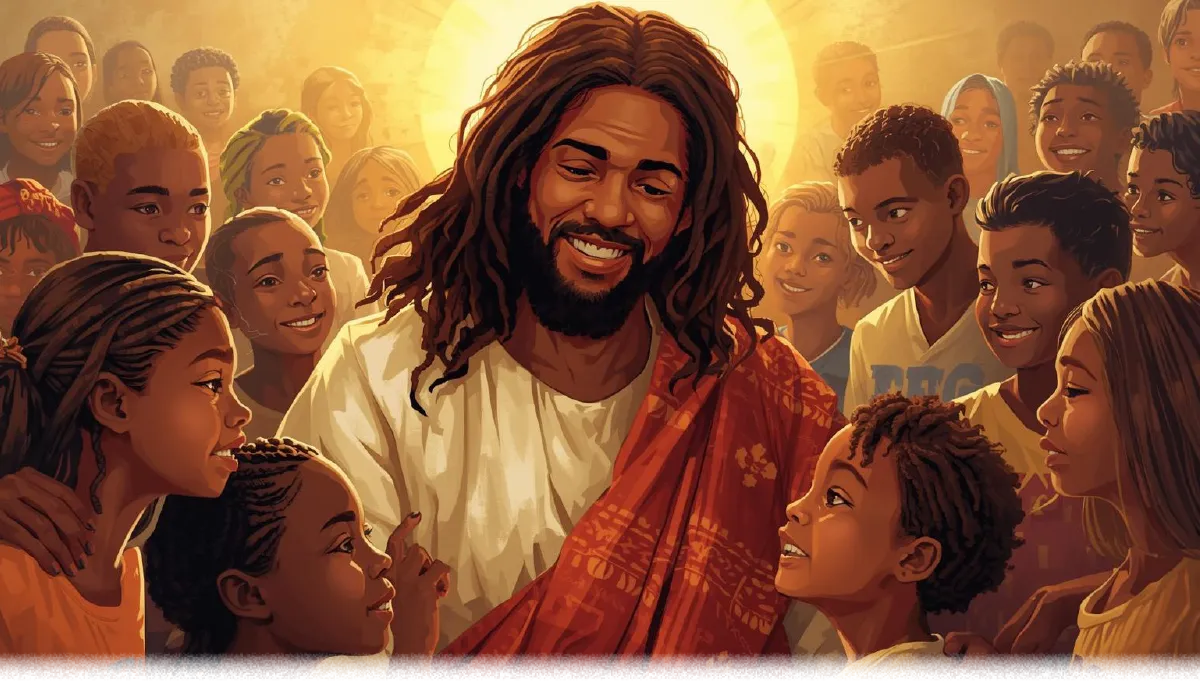

By Ellen G. White
“Jesus knows the burden of every mother’s heart. He who had a mother that struggled with poverty and privation sympathizes with every mother in her labors. He who made a long journey in order to relieve the anxious heart of a Canaanite woman will do as much for the mothers of today. He who gave back to the widow of Nain her only son, and who in His agony upon the cross remembered His own mother, is touched today by the mother’s sorrow. In every grief and every need He will give comfort and help.
“Let mothers come to Jesus with their perplexities. They will find grace sufficient to aid them in the management of their children. The gates are open for every mother who would lay her burdens at the Saviour’s feet. He who said, ‘Suffer the little children to come unto Me, and forbid them not,’ still invites the mothers to lead up their little ones to be blessed by Him. Even the babe in its mother’s arms may dwell as under the shadow of the Almighty through the faith of the praying mother. John the Baptist was filled with the Holy Spirit from his birth. If we will live in communion with God, we too may expect the divine Spirit to mold our little ones, even from their earliest moments…In His teaching He came down to their level. He, the Majesty of heaven, did not disdain to answer their questions, and simplify His important lessons to meet their childish understanding. He planted in their minds the seeds of truth, which in after years would spring up, and bear fruit unto eternal life.”




While I rarely engage with social media, I am no stranger to how out of control the comment section can become. Years ago, while pastoring a church, we launched an evangelistic series with Sunday morning services. With only the flyer to spur them, the comment section flooded with individuals who disagreed with what we were doing.
Through posts that rivaled dissertations, a small group of people accused me and the church of misconstruing beliefs. These weren’t constructive criticisms or challenges based on biblical facts; instead, they were mainly outlandish claims and unfounded accusations. Although I would reply to some to correct genuine misinformation, I refused to engage in any back-and-forth with others who refused to believe the facts, as I saw it as a waste of time. My church members, however, did not share the same sentiment.
For several days, social media spaces erupted into vicious arguments and name-calling. What started as a few disagreeable posts morphed into negative attention that moved through social media with pyroclastic cloud-like intensity. Soon, the purpose of the evangelistic series became lost among the debris of posts and comment sections.

Proverbs 29:9 says, “If a wise man contends with a foolish man, whether the fool rages or laughs, there is no peace.” (NKJV). The disruption of comment sections often steals peace and envelops us in numerous unnecessary interactions, distracting us from our original purpose.
Sometimes, I wonder what the Israelites’ Twitter would have looked like as they made their way out of Egypt. I contemplate what that family group chat looked like as the ark floated on day 25. I imagine the tags on David’s Facebook page moments before he faced the Goliath. In all of these moments, if these individuals had chosen to engage in arguments, accusations, and misunderstandings, they would have missed their overall calling from God.
What comment section are you continuously engaging in that’s holding you back from your calling? Friends, God is calling us out of life’s comment sections. Lay aside the distractions and answer the call.

We invite you to watch Breath of Life.
There are many options to choose from…
Atlanta, GA | WATC-TV Channel 57
Huntsville, AL | WAAY-TV Channel 31
Memphis, TN | WANT-TV Channel 24
Montgomery, AL | WNCF-TV Channel 32
Phoenix, AZ | Good News TV • mygoodnewstv.com
Hope Channel
Three Angels’ Broadcasting Network (3ABN)
Word Network
YouTube – YouTube.com/c/breathoflifetv
Facebook – Facebook.com/breathoflifetv
BOL Website – breathoflife.tv/videos/


COMES TOGETHER

For me, the storm felt personal. My daughter’s eighth-grade graduation was held the night before in a church that was damaged by the tornado. I couldn’t help but think—what if the tornado struck one day earlier? We were spared, yet I don’t think that God spared our lives for us to simply boast in our fortune.
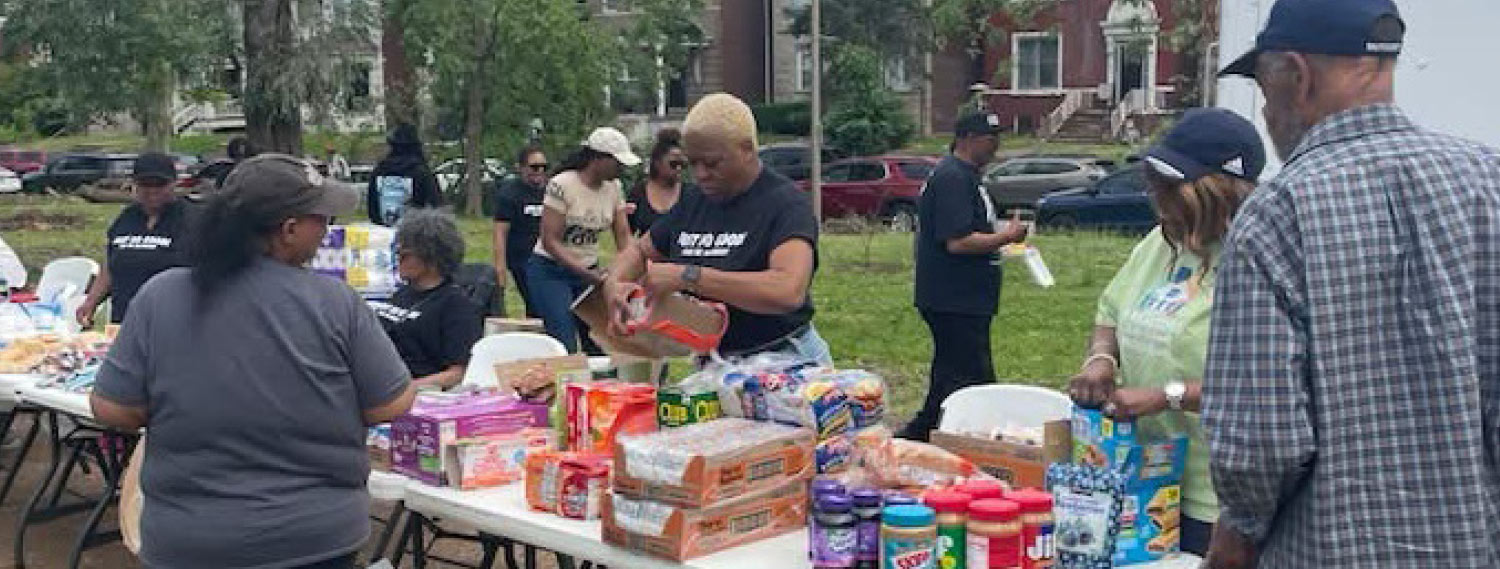
The day after the tornado, several church members entered the disaster zone to clear fallen trees and debris, allowing trapped residents to leave their homes. Others distributed water, food, and essential supplies. In the weeks that followed, members continued delivering items like bottled water, sanitary products, snacks, non-perishable food, wipes, and toiletries. Seeing physically challenged individuals step up to serve deeply moved me.
Another support role that our church members volunteered for was at the central warehouse. We helped unload and distribute bulk donations from major retailers such as Target, Sam’s Club, Home Depot, and Walmart. These much needed supplies were then sent to local service providers.
The greatest reward in serving is seeing the joy on the faces of those we help—a smile over a bottle of water or a pack of toiletries makes every effort worthwhile.
The amount of natural disasters is increasing rapidly. The cost of natural disasters is skyrocketing. But this tornado showed me that disasters can happen anywhere. Every person should do their part to ensure that they are ready. We recently offered an emergency preparedness workshop to help our community get ready for any future disasters. Find one where you are.
You can see God working in the disasters in a few ways. First, I count it tragic that any life is lost, but if a tornado bulldozes through seven miles of a major city and claimed no more than five people, that is a miracle. That’s God’s mercy on display. The damage was bad, but it could have been significantly worse. I believe the eyes of faith can see God’s goodness even in the middle of this disaster. Secondly, God is present through his sons and daughters. The gracious response of churches, civic organizations and people demonstrate the love of God. God wraps people in the blankets that his children give each other. God feeds the vulnerable through the food that was distributed. God continues to support us through the generous donations that are given.
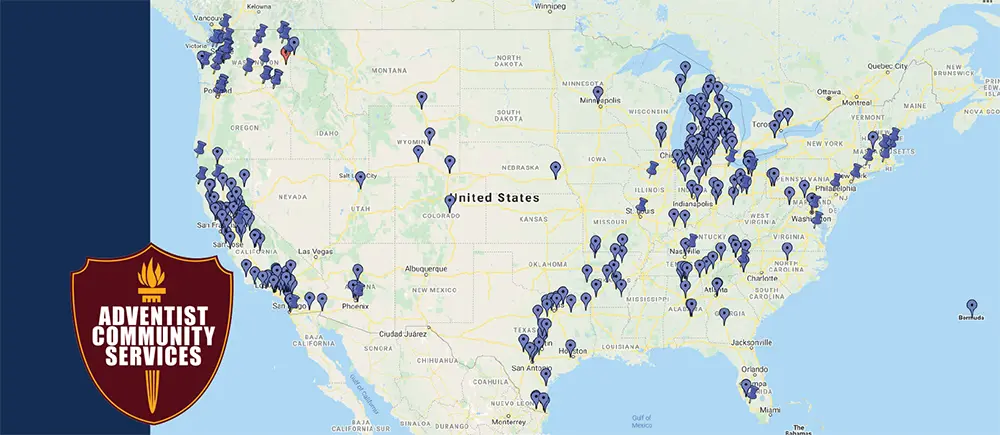
Atlanta, GA 30318
 404-799-7288
 http://atlantaberean.com/bomc
 [email protected]
P.O. Box 519
Ashton, MD 20861-0519
301-774-0400https://www.emmanuelbrinklow.org[email protected]Baltimore, MD 21217-3803
410-669-6350 https://www.bereatemple.org[email protected]Windsor Mill, MD 21244-2042
410-922-0050https://www.libertysda.org[email protected]7000 South Michigan Avenue
Chicago, IL 60637
773-224-7700http://www.shilohsdachicago.orgMemphis, TN 38106
901-774-5431 http://longviewheights22.adventistchurchconnect.orgOrlando, FL 32810
407-704-6963 https://www.guilgalsda.org/ministries/community-serviceSaint Louis, MO 63113-1520
314-361-6446 https://bereanmo.adventistchurch.org [email protected] St. Louis, MO 63136-1500
314-868-0707 https://www.northsidesda.org [email protected]