







Message Magazine is trying out a new size and we’re eager to hear your thoughts.

The new nation adopted its Constitution in 1789, and therefore would appear in 1798 to the Seer of Patmos as a nation coming up into prominence; and the beast had “two horns like a lamb.” What could better represent this youthful government established upon the God-given principles of civil and religious liberty?
“And it spake as a dragon.” The dragon is the union of church and state, which has always brought persecution. The union of heathenism with the state in Imperial Rome brought untold misery to God’s people. And in Revelation 13:11 it is inferred that the time is coming when the Protestant churches of America will no longer be separate from the state, but will seek its aid to enforce their dogmas.
by J. Gershom Dasent
Message October, third quarter 1935, p. 11


relationship
readineSS
Call 1-800-456-3991 Monday through Thursday 8:00 a.m. to 5:00 p.m. Mountain Time for subscription information or address changes. MESSAGE (ISSN 0026-0231) is published bimonthly Jan/Feb, Mar/Apr, May/June, July/Aug, Sept/Oct, Nov/Dec.
© 2018 by the North American Division of Seventh-day Adventists, 9705 Patuxent Woods Drive, Columbia, Maryland, 21046, U.S.A. Address editorial correspondence to MESSAGE MAGAZINE, 9705 Patuxent Woods Drive, Columbia, MD 21046-1565 U.S.A. All subscriptions are prepaid. If you did not order MESSAGE, it is being sent as a gift from a friend. You will not be billed. To subscribe, mail payment to MESSAGE, 1350 North Kings Road Nampa, ID 83687, U.S.A. or call 1-800-456-3991. Subscription price: one year, $19.95 U.S. currency; single copy, $4.00; overseas, add $10.00 per year for postage. Prices subject to change without notice. Periodicals Postage paid at Nampa, Idaho and additional offices. Vol. 91 No. 6 NOVEMBER/DECEMBER POSTMASTER: Send address changes to MESSAGE, 1350 North Kings Road Nampa, ID 83687, U.S.A. Printed in the U.S.A.
Unless otherwise noted, Bible texts in this issue are from the New King James Version. Copyright © 1979, 1980, 1982 by Thomas Nelson, Inc. Used by permission. All rights reserved. Statements in this issue attributed by an author to other speakers/writers are included for the value of the individual statements only. No endorsement of those speakers’/writers’ other works or statements is intended or implied.




I’m encouraged by Davenia Lea! From the first page, Davenia Lea’s “Deliver Us From eviL” grips the soul. Picking up after “Naked and Unashamed,” this second installment in the Shulamite Series reunites Alex, Savannah, Barb, Lindsey, and Jillian in a reunion charged with emotional and spiritual stakes. Secrets long hidden, resentments simmering, and a palpable spiritual battle begin to unravel the bonds they once trusted. Lea’s writing balances suspense and faith, marrying spiritual truth with real human fragility in a way that resonates.
Lea’s greatest strength here is in showing that redemption is rarely clean or simple. Her characters grapple with guilt, betrayal, doubt, and fear — and readers will find echoes of their own struggles in the pages. Though the plot sometimes leans on familiar themes in Christian suspense, the emotional integrity of the characters keeps it fresh. “Deliver Us From eviL” is not a quiet read; it demands reflection. It calls readers to ask: are we willing to face the lies holding us captive? Can we stand firm when everything is threatened?


Kirk Franklin is back, and he’s releasing more music because He’s Able! His new single is a sonic declaration that God is still active, present, and powerful in turbulent times.
For me as a ‘90s teen, I can see that he drew inspiration from the drum pattern of Mary J. Blige’s “Real Love,” or Audio Two borrowing its groove to anchor the track in both familiar R&B and gospel tradition. This creative bridge between church and culture makes the song feel both timeless and fresh. Look out for more of what Kirk is bringing — his music continues to uplift the soul. “Able” is available now on all major digital platforms.


In a noisy world, reflection matters. Daylio is a simple mood-tracking and journaling app that helps users check in with their emotional and spiritual well-being. With just a few taps, you can log your mood and activities, and over time, Daylio reveals patterns that might otherwise go unnoticed. It’s not therapy, but it’s a gentle mirror — helping you notice rhythms in your life that can lead to growth, prayer, or needed change.



“On that very day some Pharisees came, saying to Him,
“Get out and depart from here, for Herod wants to kill You.” And He said to them,
“Go, tell that fox, ‘Behold, I cast out demons and perform cures today and tomorrow, and the third day I shall be perfected.’ Nevertheless I must journey today, tomorrow, and the day following; for it cannot be that a prophet should perish outside of Jerusalem.”
Perhaps, in the words of Jesus you, as I do, can hear strains of the cultural and rhetorical device used in our community when responding to a meddling “messenger”:
“You go tell Felicia, I said come say it to my face . . .”
Ok, so Jesus didn’t say that. Don’t mind my “eisegesis.” This passage tracks one of several tense moments in which the Pharisees seek to control, threaten, and corret the Lord. Here, they threaten the full force of the state upon the life of Jesus if He doesn’t get out of town. Claiming to speak for Herod—maybe they did—these religious elites signal their intent to use whatever powers at their disposal to neutralize this wildfire in Jesus.
“Jesus’ words show no deference to the political authority inherent in Herod’s status,” writes Esau McCaulley, in “Reading While Black: African American Biblical Interpretation as an Exercise in Hope.”
“He calls him a fox. This is not a compliment. To be called a fox in Jesus’ day meant being considered conniving and deceitful” (p. 56) The fox, was deceptively destructive, (see Nehemiah 4:3; Song of Solomon 2:15), (Andrews Bible Commentary, p. 1376), and Jesus having seen the treachery against John the Baptist, and knowing the role Herod would play in His own suffering and crucifixion, rightly called it.
Notice Jesus answering as He did John the Baptist when he sent message from prison in (Matthew 11:3), listed all the liberating and life-giving stuff He would keep doing until He left this planet as the risen Savior! His eyes wide open. His mission would prevail. His sense of sacrifice and purpose, so intertwined, propelled Him forward.
That said, Jesus observed that the leaders and teachers, drunk with unholy power woudl indeed reject Him, as they had rejected the prophets before Him. Sardonic, but true nevertheless, where else would He go to die but Jeruselam where the professors of favor were actually purveyors of persecution.

EBONY MCMORRIS

COLIN KAEPERNICK

CHAPLAIN BARRY BLACK

MICHAEL WOOLF, CLERGY AND PROTESTORS
“We have rarely witnessed such brutality erupt into public view like it has in Chicago. For me, this is a spiritual emergency, and it means putting our bodies on the line in order to stop deportations. The Trump administration has said that ICE is only deporting the “worst of the worst,” but this is a lie. Agents disrupt children’s Halloween parades, terrorize our communities, and racially profile our neighborhoods in order to arrest as many people as possible.
“What weapons do we have? Our bodies, our commitment to peace, and our refusal to let dehumanization pass unchallenged. With those, we are told, amazing things can happen. — from Sojo.net: “I’m One Clergy ICE Assaulted. The Treat Immigrants Worse.”

CARMELA MONK CRAWFORD, Esq., is Editor of Message Magazine
Just for Theologians Anymore
Just for Theologians Anymore

“When we’re talking about the Bible as foundation, we must ask ourselves, how are we using the Bible? Are we using the Bible as a tool of control, or are we using it as God’s instrument for human liberation? If I go with the gospel preached by the Hebrew prophets and Jesus of Nazareth, I will go with the Bible as an instrument of human liberation.”
Unlike the way Bible-toting Christian Nationalists who cite biblical values, authentic biblical interpretation is not a human invention imposed upon the text. It is a necessary response to the nature of Scripture itself—it is divinely inspired, internally consistent, and understood in community and truth. In considering II Timothy 3:16-17, a faithful hermeneutic emerges not from partisan persuasion or self-interests, but from reverence for God’s Word and a desire to hear it rightly, as inspired by God.
A foundational passage for biblical hermeneutics is found in Nehemiah 8:8, which states:
“They read from the book, from the Law of God, clearly, and they gave the sense, so that the people understood the reading” (ESV).
This verse reveals three key components of biblical interpretation: reading the text, explaining it, and ensuring understanding. This approach demonstrates that interpretation was necessary even in the earliest stages of Israel’s post-exilic worship and community life.
Jesus Himself models a biblical hermeneutic in Luke 24:27, where, following His resurrection, “beginning with Moses and all the Prophets, He interpreted to them in all the Scriptures the things concerning Himself.”
Here, Jesus affirmed the unity and Christocentric nature of the Old Testament, showing that Scripture should be interpreted considering its fulfillment in Him.
Paul also endorses a spiritually guided approach to Scripture in 1 Corinthians 2:12–13: “Now we have received not the spirit of the world, but the Spirit who is from God, that we might understand the things freely given us by God.”
Here, the apostle emphasizes that true understanding of Scripture comes not merely through human intellect, but through the power of the Holy Spirit. Biblical hermeneutics is not merely academic; it is moral and spiritual.
Further, II Timothy 2:15 urges believers to “present yourself to God as one approved, a worker who has no need to be ashamed, rightly handling the word of truth.” This “right handling” implies that there is a correct and incorrect way to interpret Scripture—one that honors the text’s meaning, context, and divine origin.
“The question of what Scripture means has taken a back seat to the issue of what it means ‘to me.’ The difference may seem insignificant at first,” stated noted theologian, John MacArthur. “We have adopted practicality as the ultimate judge of the worth of God’s Word.”
The article failed to mention the heavily redacted “Slave Bible,” however. The “Slave Bible,” as described in History Magazine’s “Why Bibles Given to Slaves Omitted Most of the Old Testament,” was altered and used by enslavers to hide the evils of slavery, and remove from it stories and themes of liberation and personhood. They removed anything they thought “might incite them to rebel.”
But, unredacted, we see the Bible in its revelation of God’s character and goodness to the disadvantaged, vulnerable, and oppressed: to rebuke classism, we refer to James 2:1-4. In addressing ageism, we can reference Leviticus 19:32 or I Timothy 5:1-2. To support people with disabilities, we see purpose in John 9:23. To refute sexism, we can cite Galatians 3:28, I Corinthians 11:11, or Genesis 1:27.
This underscores the sacred nature of Scripture and the responsibility to interpret it without prejudice.
“There are a lot of things in the Bible that are not liberating,” said Hemmings. “And Jesus showed us how to point that out, how to see those or to recognize those. That’s why I say the hermeneutic of Jesus was the hermeneutic of liberation.”
Kwanzaa
Project

Kwanzaa
Project


Kwanzaa is a weeklong cultural celebration that honors African heritage, unity, and community. It was founded in 1966 by Dr. Maulana Karenga, a professor and activist, during a time of social upheaval and racial tension in the United States. The holiday was created to help African Americans reconnect with their ancestral roots and affirm their identity through shared cultural values. Drawing inspiration from traditional African harvest festivals, Kwanzaa takes its name from the Swahili phrase “matunda ya kwanza,” meaning “first fruits.” Celebrated annually from December 26 to January 1, Kwanzaa is not a religious holiday but a cultural one. It was designed to strengthen bonds within families and communities, while emphasizing reflection, creativity, and purpose.
Each of Kwanzaa’s seven days highlights one of the Nguzo Saba, or Seven Principles, which represent key values for building strong, vibrant communities.






The holidays are a perfect time to be a catalyst for community and connection.
Instead of waiting for the week of Kwanzaa or a different version of Kwanzaa to be realized, you can take action today. Below are listed the seven attributes of Kwanzaa. How can you, in your community, utilize these words to begin a cultural transformation in your area?
UMOJA (Unity): What does unity look, sound, and feel like for you? How do you make that a reality for your family, group, or community?
KUJICHAGULIA (Self-Determination): Take a look into the future; in 30 years what qualities would you like to say your family, group, community possessed? What words would give insight to who you are or who you would like to be?
UJIMA (Collective Work and Responsibility): What projects or goals can we work on together this year? How can we support the vision or dreams of those in this family, community, or network?
UJAMAA (Cooperative Economics): Create a survey and ask what are the top things you would like to know about money, finance, or business. Take that list and read a book, take a class or seek out a mentor. In what ways could you do things together financially with knowledge that you now do alone? What business skills can be identified as gaps? What action needs to be taken? What could we learn together about finance, starting a business, buying a house, etc.?
NIA (Purpose): Who in the community is a person that was/is respected? How can that person’s memory and legacy be replicated in the community? Who needs to learn about that person? How do we honor that memory?
KUUMBA (Creativity): Identify four places in the community that are special to you, your family, or others. These locations may include schools, churches, or parks. What areas of the community could be beautified through work days or volunteer events? What media messages can be created to support the identity of the community’s history and culture? How might we create a space for people to share their talents without feeling the need to take away cultural identity?
IMANI (Faith): Who can be identified as both deceased and living examples of victory through struggle? What qualities did they possess? How can their memories be honored? What are the gifts to be passed on to the next generation? What tangible reminder should be given as a gift as inspiration for challenging days ahead?

Their names might be John, Jacob, or Stanley, but passengers called them George. Why George? They were nicknamed after George Pullman, the company’s founder. The label was a way to overlook them as people and use them as commodities.
In 1917, the Order of Sleeping Car Porters (OSCP) of Canada was the first black railway union in North America. In 1942, they merged with the BSCP as it expanded into Canada. By 1945 their combined efforts led to a collective bargaining contract with the Canadian Pacific Railway.


we have confidence toward God”
1 John 3:21, NKJV
This year, the music and lights didn’t move him. He said to a friend, “All I want this Christmas is peace.”
That evening, with trembling hands, he finally wrote the letter. When he mailed it the next day, he released a deep painful burden. That Christmas, Robert said, was the first time in decades he slept without a stone on his soul.
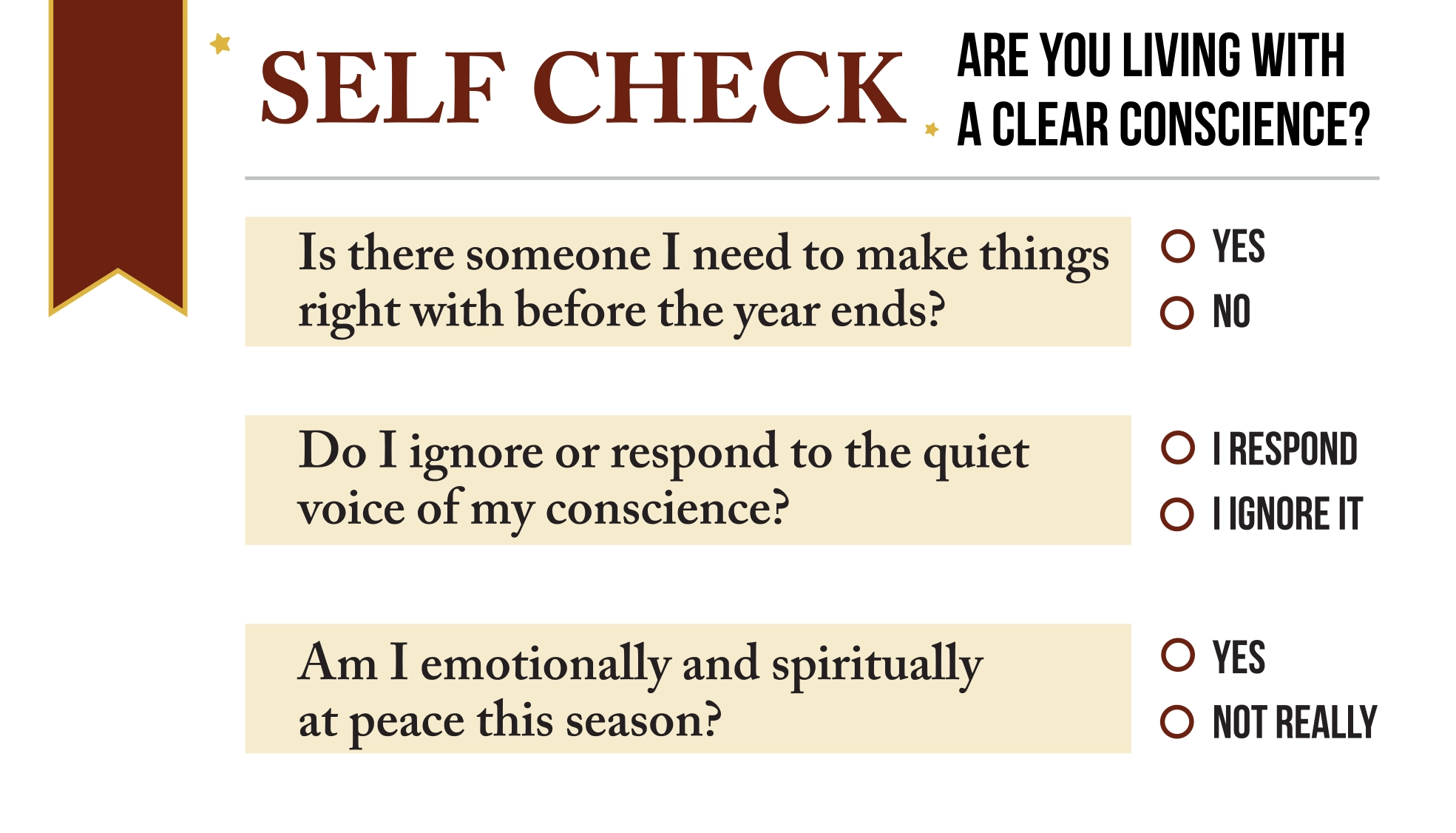
A clean conscience is more than a religious ideal. It is the gateway to rest, restoration, and intimacy with God. Is there something on your heart, in your life, that is weighing you down? Here is how to clear your conscience in three simple but crucial steps.




These beliefs remind us of our shared humanity and the divine blueprint for healing and restoration, encouraging us to actively engage in building communities reflective of God’s love and grace and uncompromised personhood.
The Genesis emphasis on the health of individuals and communities reflects this belief, compelling us to honor and uplift every member of our society. While the summary comes almost 3,200 years later, the prophet Micah articulates this responsibility in his timeless ethical challenge implicit in the Creation story:
“He has shown you, O man, what is good; And what does the Lord require of you
But to do justly,
To love mercy,
And to walk humbly with your God?” (Micah 6:8, NKJV).
The biblical account of creation teaches us that God’s design was not merely functional but relational. Community was intended to reflect the love and harmony inherent in the Godhead. Through this lens, understanding diversity in our communities is not merely a social obligation but a spiritual one, reinforcing the biblical image of a harmonious body where each part is essential (1 Corinthians 12:12-27).
In a world striving for diversity and inclusion, our observance of the Sabbath can lead to practical manifestations of these ideals. On the Sabbath, we engage in intentional acts of service and kindness, offering help and hospitality to those often marginalized.
Imbedded in the Exodus fourth commandment of 20:8-11 is the call to treat the “stranger,” aka foreigner, and immigrant, with the same generosity God extends to us. The stories of Jesus healing the sick on the Sabbath illustrate how this day can serve as a platform for justice and compassion, underscoring the need to extend our circles of love to encompass those on the fringes of society.
In practical terms, this means we must cultivate an atmosphere of grace within our lived communities. Emphasizing redemption encourages open dialogue about the pain of exclusion and the healing power of acceptance.
Maya Angelou, once in an interview with Oprah Winfrey, talked eloquently about the need to touch young urban black men. When Winfrey initially interpreted Angelou to mean symbolic touch, Angelou quickly intoned,
“No Oprah, I mean to touch them physically.”
By this clarification, Angelou was communicating touch as a means of communicating acceptance. By celebrating stories of touch and transformation, we foster an environment where individuals can reclaim their identities and worth, reinforcing the biblical assurance that everyone belongs to God.
The struggle between good and evil highlights the importance of choice, emphasizing that each person, regardless of background, must navigate their faith journey (John 10:10). Enemies seek to sow discord and division, but God’s plan calls us to align our choices with love, unity, and justice.
As we advocate for inclusion and equity, we must recognize that these principles are not just social ideals but are woven into the fabric of the cosmic struggle. By choosing to embrace diverse people groups and to promote equity and inclusion, we affirm God’s ultimate victory over division and discrimination.
In light of the Second Advent, we are compelled to act, not merely as passive observers but as active participants in God’s restorative work. This means championing inclusive practices, creating spaces for dialogue, and seeking justice, mercy, and love in our spheres of influence. Through our actions, we can reflect the values of an eternal kingdom characterized by love, acceptance, and unity.
As we embrace our individual and collective identities in Christ, let us stand firm in the belief that our communities can embody the healing and restoration that God desires. We are called to be conduits of His grace, transforming our world one relationship at a time.


“I have a passion to follow God’s will for my life,” he says. “I am driven by that thought.”
As an extension of his profession, Bryce teaches that God’s love powers the healing of body and mind.
Smith: Your scientific and biblical findings reveal the effects of accepting and experiencing “Love,” and even God’s Love on our brains. What led you on this explorative journey?
Bryce: Interesting question, well I would say that it had to come out of my personal search for love and acceptance when I was young growing up in Jamacia. I was abandoned when I was a child and raised by my grandmother. Even then I was looking and yearning to fit in and find love. I was on a path that didn’t include God. I was into reggae music, and partying. That seemed to fulfil me at that time but through some life-altering experiences, I realized that I was searching for more.
A certain Chaplain came to my house and gave me a book that changed the direction of my life, “Patriarchs and Prophets.” That one act of feeding into my soul changed the trajectory and spiritual outlook in my life.
But he didn’t know that the seed he was sowing into me had everything to do with God’s love and His plan. He let me know that God had something greater for me than just the reggae life.
So, I believe this “Love” search started from someone demonstrating and showing me that love can exist when it is fostered and cultivated out of true concern and compassion of others.
The neuroscientist, Dr. Stephanie Cacioppo, in her book, “Wired for Love,” states that “Love” is a fundamental need to live. So, when I recognized that I was loved and wired for love, I began my journey of connecting God’s fundamental principle of His love for [humanity].

Bryce: Sure, remember that Jesus, God the Father, and the Holy Spirit all came together to make man, and that was an act of Love.
“For God so “loved” the world that He gave His only begotten Son that whoever believes…should not perish but have everlasting life” (John 3:16, NKJV).
Because of sin, clinical trauma, brokenness, neglect, abuse, poverty, and put downs — all have changed our brain chemistry.
Smith: What does that look like?
Bryce: First we have to look at trauma and identify the effects of it. Trauma is a deeply disturbing experience that can result in lasting physical or emotional harm, overwhelming an individual’s ability to cope. Also, instead of oxygen being taken in to replenish and enhance our brain cells, this trauma changes into vasopressin, which is a hormone and neurotransmitter that plays a crucial role in regulating our fluid balance, blood pressure, and even social behavior. So, this vasopressin replaces oxytocin. Now oxytocin is a good hormone and neuropeptide that plays a crucial role in social bonding, feelings of trust, empathy, closeness, and reproduction. It even regulates blood pressure and heart rate. So, when the vasopressin is activated more, then the brain reacts and becomes tribal like and we can display animal characteristics. More importantly, our brain stem tends to go into a constant state of “fight or flight” mode, meaning survival mode.
Smith: It seems like we’re designed to be creative and keep our minds stayed on Christ.
Bryce: Moreover Dan, everything we do is a result of receiving this oxytocin hormone that gives this feeling of pleasure or happiness. This includes what we eat, drink, [and when we’re] feeling safe. We even come to church to feel good. But as vasopressin is being constantly turned on, it affects the frontal cortex of the brain—that’s the thinking and reasoning part. In my research, I have found that the only thing that can turn it off is true love.
Smith: What does that mean or look like, Dr. Bryce, true love?
Bryce: The body yearns to be loved; the brain senses it when there is grace and compassion exhibited to someone, when the fight or flight response is touched by and turned off by love. Then the thinking frontal cortex is turned on. Jesus understood this neuroscience. In Acts 10:36-38, Jesus relayed (through the Holy Spirit and Peter) this transforming love to Cornelius, which changed his life.
Smith: But why did His method of love work for Him?
Bryce: He mingled with the people as one who desired their good, to do good for them. He sympathized with them. Jesus satisfied their needs before He said Come to Me. In “Testimonies to the Church,” vol. 9, page 189, the author, Ellen White, states that if we are humble, kind, courteous, tender-hearted, and pitiful, there would be hundreds drawn to the church. If we were to become a bundle of love to others, like Christ, we could be the change agent on the road to a healthy and total whole person that God intended us to be, even at the subconscious level. The greatest argument for Christianity is the unselfish love that we can show to others as Christ did. That is the crowning principle.

Bryce: I can explain this as a three-stage spiritual process. First, in John 4:19, it states that we love because He first loved us. Jesus asked us and commands us to love each other. Consider how God showed Moses how He loved the children of Israel by bringing them out of Egypt and providing for them in the wilderness and brought them to Mt. Sinai to share His precepts of His love in the Ten Commandments. That imagery is an actual demonstration of God’s abiding love. When you become aware of God’s love to you, it changes your brain chemistry. You need to rehearse how God blesses you and that will trigger more oxytocin and gives you more dopamine, producing a feeling of love and peace.
Second, you decide to love God! How? By following His commandments. The result will be shown in a better lifestyle of making healthy choices which will promote more feelings of happiness by following His commands.
Thirdly, essentially it is Christ in whom we function at our best. That is where humility comes in. As we reflect the humble character of Christ, we are more capable to give more love to others from that reflection. It is Christ’s love that every human soul longs for. (1 Peter 2:9 and “Desire of Ages,” 250).
Finally, there is no limit to the usefulness to one who puts self aside and loves with all their heart. That’s true healing. Dr. Bruce Perry is a pioneer of neurosequential model of therapy that states how early trauma and adversity impacts the brain and how his therapeutic approach retrains the brain to function better. This is what Jesus does in His ministry.


“The Seventh-day Adventists, SDAs, it’s an end-time faith,” Toure’ says in the post, and claimed that apocalyptic forecasting in “Let’s Go Crazy,” “1999,” and other songs stemmed from Prince’s childhood experiences with the faith. Toure’ wasn’t the first or last to sleuth some sort of connection.
“Escalating gun violence, street crime, and drug use are all interpreted as signs of growing Satanic influence,” wrote Jonathan Downing in an African American Music Month feature for U.S. Studies Online in 2016.
“Prince pleads with his listeners, ‘don’t kiss the Beast, be superior at least,’ invoking the vision of the seductive beast deceiving Earth’s population in Revelation 13. In light of Christ’s impending return, Prince takes the opportunity to urge his listeners to pick the correct side in this ‘great controversy’.”
While it may be true that Seventh-day Adventism was conceived in the womb of apocalypticism and last-day prophetic understanding, the question for us all today is how to approach these significant and prophetic biblical passages in light of contemporary events? Adventism emerged in the reality that the message must always be relevant, that it is “present truth.”
What is true for Revelation 1-3 should also be true for Revelation 13. The beast is not only a symbol of a fallen, corrupt historical church and system; but it can and should be interpreted as a symbol of anything that is corrupt and falls short of God’s ideal.
Let’s take, for example, the number 666. In apocalyptic symbolism, six is one short of the perfect number, seven. Thus, the basic understanding of 666 should be triple imperfection, very short of the absolute triple perfection, 777.
To contemporize this, we must look at the evils in our society that are beast-like.
Their pioneers such as Joseph Bates, Ellen and James White, Uriah Smith and others were, for example, vociferous in their attack on racism and supported the abolitionism movement. Bates made it clear that as a good Christian he could not stand with oppressors and verbally condemned the USA as a “slave-holding…murdering country.”
Uriah Smith, in 1853, wrote a 35,000-word poem published in one of the church’s main papers, “Review and Herald,” titled, “The Warning Voice of Time and Prophecy.” In it he called for justice, liberty and equal rights. He further used the pages of the official paper of the church to chastise President Lincoln for “following this present conservative, not to say suicidal, policy” in his attempt to win the war without working to free the slaves.
In 1869, James White, as editor of the “Advent Review and Sabbath Herald,” allowed the following to be published:
“it is the Anglo-Saxon race which boasts of being the great apostle of the principles of righteousness and just government, and yet poisons millions of the Chinese annually, enforcing the infliction with armed fleets; takes America from the Indians, and the Scinde from its lawful possessors, by robbery and murder; kills races of men to get territory to which it has no claim… The Anglo-Saxon race gives itself out as the missionary of heaven, and the evangelizer of mankind; yet it is earth’s most successful propagandist of atheism, infidelity, and resistance to lawful authority; the educator of nations in rebellion and supreme selfishness….”
Ellen White was also vociferous in her condemnation of slavery. She called it a national sin, and dubbed it “a sin of the darkest dye.” She made it clear that “God is punishing this nation for the high crime of slavery…He will punish the South for the sin of slavery and the North for so long suffering its overreaching and overbearing influence.”
White made it very clear that those laws and rulings must not be obeyed.
“The law of our land requiring us to deliver a slave to his master, we are not to obey; and we must abide the consequences of violating this law.”
That law clearly stated that anyone who disobeyed it would be fined $1,000 and spend six months in jail. And when some of the Congressmen were issuing proclamations for national days of fasting and prayer that God would bring the war to an end, she proclaimed something else.
“I saw that these national fasts were an insult to Jehovah. He accepts no such fasts. . .. Oh, what an insult to Jehovah!”
White used Isaiah 58 to strengthen her position attacking those who have the yoke of slavery on the neck of the slaves, and she called upon the nation to let the oppressed go free.
To limit the proclamation and interpretation of Revelation and the beastly power to the past and the unfulfilled future is to commit an existential mistake. Many avoid social issues, putting them in, and compartmentalizing them into a box called “politics.” Another Seventh-day Adventist pioneer, J. N. Andrews, addressed this when a similar debate was at its height in 1864:
“How do such men expect to escape the fate of the oppressor when God shall bring him into judgment? By one of the most ingenious devices imaginable. This sin is snugly stowed away in a certain package which is labeled ‘Politics.’ They deny the right of their fellow men to condemn any of the favorite sins which they have placed in this bundle; and they evidently expect that any parcel bearing this label, will pass the final custom-house, i. e., the judgment of the great day-without being examined.”
We must reject the view that social evils are not a part of the gospel message. Social evils were national sins – beast-like behaviors. Sins and evils entrenched in the institutions and the social structures of society were beasts that needed to be preached against then; and so it must be now.


A Biblical Call to Defend the Vulnerable

Adobe Stock

he Bible warns us that the misuse of power always comes at the expense of the vulnerable. From Pharaoh’s enslavement of Israel, to Nebuchadnezzar’s demands for worship in Babylon, to the Roman Empire’s persecution of the early church, Scripture shows us that when governments and rulers exalt themselves, freedom is threatened.
We are seeing echoes of that same story today. Across our nation and the world, there is a rising tide of nationalism. Nationalism is defined simply as a loyalty to country or culture that elevates one group above others. While love for one’s nation can be healthy, nationalism narrows belonging, defining “true citizens” in terms of race, religion, or ideology. Those who don’t fit, be they immigrants, minority faith groups, individuals who are LGBTQIA, or other marginalized people are bound to be left vulnerable and ultimately as targets.
Our nation was actually founded on this practice. The U.S. Constitution delineated that citizenship (and thus the full rights) only applied if you were a white, Christian, heterosexual, male, who owned land. And thus, it excluded women, blacks, poor whites, and native Americans. This is made manifest with the vicious brutalization of the native people, the scourge of chattel slavery, and innumerable injustices against women.
Have We Learned Nothing?
It was Martin Luther King Jr. who said, “Injustice anywhere is a threat to justice everywhere.”
The prophet Amos thundered against Israel’s injustice, declaring that God despised religious ritual divorced from righteousness:
“Let justice roll on like a river, righteousness like a never-failing stream!” (Amos 5:24, NIV).
Justice is not optional in God’s eyes. It is central to His kingdom. Nationalism and government overreach are dangerous because they erode justice piece by piece. History teaches us that oppression never stops with the first group targeted.
Nazi Germany didn’t begin with the invasion of the Soviet Union in 1941, or even the invasion of Poland in 1939. It actually began with the suspension of constitutional rights and targeted exclusion of Jews in 1933.
Once the highest level leaders begin to manipulate the levers of power to decide whose rights matter, no one’s rights are secure.
Gerrymandering shouldn’t decide whose votes count. Then there are the other methods of rigging the legal process. Filing frivolous or baseless lawsuits that have no legal or factual merit, simply to harass an opponent or drain their resources. Then there are the endless motions appeals, discovery requests, petitions, and more to complicate the process and overwhelm those who lack resources.
And here is the sobering reality: freedom is not lost all at once. It erodes gradually, one compromise at a time. That means the responsibility rests with us. In our communities, our churches, and our homes, we must insist that justice and mercy remain at the center of our public life. We have to speak up when vulnerable people are being mistreated because when we protect the liberty of others, we are also protecting our own. And when we embody love for the least of these, we reflect the heart of Christ Himself (Matthew 25:40).
Pharaoh started with a misinformation campaign against the children of Israel long before he started throwing baby boys in the Nile. This is why Christians must be vigilant. If laws limit the rights of immigrants, silence dissenters, or restrict freedom of conscience, we cannot shrug and say, “That’s not my issue.”
Paul reminds us that when one part of the body suffers, the whole body suffers (1 Cor. 12:26). To turn away from injustice against our neighbor is ultimately to endanger our own freedom as well.
The pattern is painfully clear:
Societal pressure builds against minority groups.
Government enforces conformity in the name of unity or security.
Freedom erodes, and those who resist are punished or excluded.
But Scripture also calls us to courage. Revelation 12:17 tells us that Satan’s efforts in Chapter 13 were being launched against the remnant—“the rest of her (the church’s) offspring—those who obey God’s commandments and hold to the testimony of Jesus.”
Also it says in 12:11 that, “They overcame him by the blood of the lamb and the word of their testimony; they did not love their lives so much as to shrink from death.”
So what did they do? They spoke up!
As followers of Jesus, our calling is clear. We must defend the vulnerable, stand for liberty of conscience, and resist systems that crush the least of these. Our loyalty is not first to a political party or nation, but to the kingdom of God. God’s kingdom is not built by restricting the access of any undesirable group, but rather with love, justice, and truth.


Those too lazy to plow in the right season will have no food at the harvest.
Proverbs 20:4, NLT

To add insult to injury, the Toyota I purchased was a stick shift! I foolishly assumed that if I attempted to drive 100 miles to my home in Alabama, I would become a skilled driver. Fortunately, I not only arrived home alive but also arrived having learned how to get and keep my car in gear.
Too many of us live our lives as I did with my new car experience. We live with insufficient knowledge about living our best lives. We haven’t learned to get and keep our lives in gear. One of the primary reasons why we fail in this endeavor is because we make excuses for doing nothing. We’re like the person in our opening proverb, refusing to plow in the right season (Proverbs 20:4).
Edmond Burke, a British statesman, once declared:
“All that is necessary for evil to triumph is for good people to do nothing.”
Why should we get our lives in gear? The Bible tells us that after death, each of us will face judgment (Hebrews 9:27). In the judgment, God will bring every work we have done under His scrutiny, even our secret actions (Ecclesiastes 12:13-14). This accountability to the One from whom we borrow our heartbeats should make us eager to get and keep our lives in gear.

Adobe Stock
How can we get our lives in gear? I recommend we implement the following principles:
- Remember the present is intimately related to the future.
- Understand life’s plowing time is the season of preparation.
- Suspect the easy road is generally the wrong one.
First, remember the present is intimately related to the future. The Bible challenges us to remember that now is the day of salvation (2 Corinthians 6:2). Scripture also challenges us to not harden our hearts on the day God prompts us to obey (Hebrews 3:15). One inference to be drawn from these two biblical observations is to live in day-tight compartments (Matthew 6:34), remembering the close connection between our now and then.
Second, you can get your life in gear by understanding life’s plowing time is the season of preparation. We cannot reap before we plant. We can also miss the harvest if we plow at the wrong time. We are told that the harvest can pass, the summer can end and we have missed salvation (Jeremiah 8:20). This season of plowing is best in life’s morning; hence, we are admonished to remember God in our youth (Ecclesiastes 12:1).
Third, to get our life in gear, suspect the easy road is generally the wrong one. The Bible speaks of a man who built his house on sand and lost it when the storm came. Another man built his house on rock, and the home withstood the storm (Matthew 7:24-27). It is easier to build one’s house on sand than on rock, but the easy way is rarely the correct one. The Bible tells us that the road to destruction is broad and well populated, but that the way to life is narrow. Few people walk on that narrow road (Matthew 7:13-14).


To be honest, there’s nothing about dawn that’s more spiritually sacred than any other time of day. In fact, I have creative friends who boast that midnight to 3 a.m. is the best time to interact with Him. I have other pastoral colleagues who find peace in midday. It truly depends on the person.
One thing I notice about these varying times is that they all share a commonality. In the mornings, before the world seems to wake up, I’m less likely to get interrupted by phone calls and notifications. My midnight friends appreciate a time after their surroundings have wound down, that they can talk to God about their day. Even my midday colleagues appreciate the afternoon pause that takes place before the second half of the day begins. All of these moments happen in the absence of distractions.
As I write this, Breath of Life is diligently preparing for our 2nd annual Vision and Dreamers’ Conference. This three-day event is designed to pour into and encourage individuals to bring their God-inspired visions to fruition. Breakout sessions provide attendees with the tools needed to cultivate the ideas that God has placed within them. But last year, during many of the workshops and main sessions, a common question kept arising: “When is the best time to hear from God?”

Distractions are part of our everyday life. They can come from our phones, our loved ones, our jobs, and even our thoughts. And while the source of it may not be innately evil, when they begin to interrupt the time to talk with our Father, we may start to lack the necessary clarity needed to execute what God wants for us. It’s up to us to find when that time is.
I don’t know when your time is. Perhaps God wants to speak with you in the middle of the night, like Samuel (1 Samuel 1:3), but He can’t do that if you’re doomscrolling on your phone until 3 a.m. Perhaps he wants to talk to you on your commute, like Paul (Acts 9), but He can’t because you insist on occupying your car with unnecessary noise, afraid of silence. Or maybe He wants to speak to you in dreams like Jacob (Genesis 31:11) or Joseph (Genesis 37 – 44), but your subconscious is interrupted by the TV you left on.
You will be so surprised by the way God can pour out visions and dreams to you directly when you rid yourself of distractions.
Friends, I challenge you to make time for our Heavenly Father, so that you may move forward on the path He has for you.


We invite you to watch Breath of Life.
There are many options to choose from…
Atlanta, GA | WATC-TV Channel 57
Huntsville, AL | WAAY-TV Channel 31
Memphis, TN | WANT-TV Channel 24
Montgomery, AL | WNCF-TV Channel 32
Phoenix, AZ | Good News TV • mygoodnewstv.com
Hope Channel
Three Angels’ Broadcasting Network (3ABN)
Word Network
YouTube – YouTube.com/c/breathoflifetv
Facebook – Facebook.com/breathoflifetv
BOL Website – breathoflife.tv/videos/

- When was a time when your anger caused you to do something you’ve regretted?
- What are warning signs that show you that your anger is boiling up?
- Where in your body do you feel anger?

It is important that we properly manage our stress levels and reduce toxic stress as much as possible. Toxic stress may cause us anger, driving us to act in ways we would later regret. For this reason, the Bible advises that it is O.K. to be angry, angry at injustice, angry at oppression, angry when evil has been done. However, while we may have the right to be angry, we should not use our anger as fuel for vengeance.



Ephesians 4:26-27


What tends to cause you to get angry?
How could you better manage your anger when things become upsetting?




“In My Father’s house are many mansions… I go to prepare a place for you… I will come again” John 14:2, 3.
This is not wishful thinking; it is the pledge of the Crucified-and-Risen One, anchoring our hope and shaping our lives while we wait.
Even the heavens seem to lean toward that promise. With the James Webb Space Telescope, scientists are discerning the breath of distant worlds, methane and carbon dioxide in K2-18 b, hints of nitrogen around TRAPPIST-1e. If our instruments can read the breath of distant planets, how much more can our Savior prepare a home for us. Discovery stirs our wonder; promise secures our future.
Scripture gives us a palette of color and sound for that future. John sees foundation stones aglow: jasper, sapphire, chalcedony, emerald… a city where streets glint like glass and gates shine like single pearls (Revelation 21:19-27, NIV). Around the throne arcs a rainbow “like an emerald,” and before it lies a “sea of glass, clear as crystal.” The Prophet Ezekiel speaks of a throne like lapis lazuli, (Ezekiel 10:1, NIV), and Sinai’s pavement gleams sapphire-blue under God’s feet. Heaven is not gray austerity; it is saturated glory, the hues of covenant and holiness, refracting grace.
We believe there is a real sanctuary in heaven where Christ ministers now as our High Priest, applying the once-for-all victory of the cross and carrying our names on His heart. That ministry orients our present and points to our promised future when He returns. The sections that follow: Christ’s Heavenly Ministry, His Second Coming, Death and Resurrection, The Millennium, and The New Earth, are not isolated teachings; they are one symphony of hope.
Some folks have really tasted this hope. Author Ellen White wrote in “Early Writings” of fields of “living green,” of flowers that never fade, of the redeemed crossing the sea of glass to the city as Jesus opens the pearly gate.
“Heaven is a school,” she wrote. “[I]ts field of study, the universe; its teacher, the Infinite One.” We will learn forever because Love is infinite, and His world is inexhaustibly new.
So, it’s time to let science awaken wonder without stealing our worship. Time to let prophecy ignite courage without fueling fear. Time to step into these beliefs not as arguments to win but as an invitation to dwell in the lapis-blue light of the King, in the emerald-ringed mercy of the throne, and in the certain promise:
“You must not let yourselves be distressed, you must hold on to your faith in God and to your faith in me. There are many rooms in my Father’s House. If there were not, should I have told you that I am going to prepare a place for you? It is true that I am going away to prepare a place for you, but it is just as true that I am coming again to welcome you into my own home, so that you may be where I am. You know where I am going and you know the road I am going to take” (John 14:3, Philips).



In Daniel 7, I watched the heavenly courtroom unfold: thrones set, the Ancient of Days seated, books opened. For years, I assumed this scene meant my failures would be exposed. But then verse 13 leapt from the page:
“One like the Son of Man came with the clouds of heaven… and was presented before Him.”
That epiphany changed everything. The first verdict of judgment is about Christ, and He is found faithful! Because He conquered sin at the cross and rose victorious, authority and a kingdom are given to Him and to all who belong to Him (Daniel 7:22). His victory becomes my verdict.
And that verdict is active right now. Hebrews 7:25 says Christ “always lives to make intercession” for us. Romans 8:34 shows Him at the right hand of God, interceding even now. First John 2:1 calls Him our “Advocate with the Father,” assuring us that when we stumble, we are not alone.
Because of His faithfulness, I can come boldly to the throne of grace (Hebrews 4:16), live in peace with God, and enjoy fellowship with Him every day.
Friend, so can you. Pause and thank Jesus for standing in your place. The Judge is your Defender, the Priest is your Advocate, and the verdict is already in —in Christ, you are loved, forgiven, and free.


The Bible tells us that there is Someone who loves us deeply and is coming back to receive us, and that Someone is Jesus. He promised in John 14:3:
“I will come again and receive you to Myself, that where I am, there you may be also.”
For Christians, this promise is not wishful thinking, it is the essence of our faith and the foundation of our hope! Look around our world today, and it’s clear we are in need of hope. There is suffering, natural disasters, political division, sickness, and death; the list goes on and on. The Second Coming of Jesus is our assurance that God has not forgotten us. He will return, and He will make all things right. This hope is not only for Christians, it’s for all who choose to believe.
Imagine a world with no more sickness, no more violence, no more death or sorrow. Imagine a world where God’s love reigns, and every person is valued as His child. The return of Jesus marks the beginning of this promise, the end of pain and the beginning of eternal joy. Truly, His coming is worth the wait! So, what do we do while we wait? We live with purpose. We treat others with kindness. We strive for peace and justice. We keep studying His Word, and we keep our eyes lifted in hope, because one day soon, the waiting will end, and the greatest reunion of all time will begin: the reunion with our Lord and Savior.
For those who believe, the Second Coming is not a day to fear, it’s a day to long for with hope. Revelation 1:7 reminds us: “Behold, He is coming with clouds, and every eye will see Him…” The Second Coming will be the greatest day in history, and being reconciled with Jesus will be worth every moment of waiting!



Like me, you’re the one who looks up first when anyone enters the room, quickly scanning their employee ID for signs of their significance to the situation before they have even had an opportunity to introduce themselves.
If we’re similarly coded, the group chat that covers the generations from Great Aunt Petal to cousin Tré is relying on you for accurate updates.
If you’re built anything like I am, then you’re too busy to cry right now even as I confirm that your loved one has passed, because you’re too focused on trying to understand it all.
If we are being perfectly honest, regardless of our position in the family, most of us don’t really understand death. Death is difficult to explain, challenging to define, and when we speak about death, we are often left with more questions than answers. Yet when we read God’s Word it provides clarity about death and dying, especially as it relates to the death of a believer, versus that of an unbeliever.
The believer’s death is but a temporary sleep devoid of awareness, until the first resurrection at Christ’s return when our immortality is conveyed. The unbeliever’s death brings an end to all their plans and thinking until the thousand years are complete and their eternal doom is realized. Were it not for sin, there would be no death. And because of Christ’s victory on our behalf, death will one day die. (Ecclesiastes 6:5; 9:5,10; 1 Thessalonians 4:14-18).
May the hope of life again that’s found in Christ Jesus help you cope with any experience of death you may face.
Until that sweet Reunion, Maranatha!


Tears streamed uncontrollably down my face. No more daddy-daughter ice cream runs, no more driving lessons, no more promises of rewards for good grades.
Grief swept over me in waves, anger, sadness, confusion. My heart shattered as I wondered: Who would walk me down the aisle? Who would be there for father-daughter moments now? Why my dad, and why now, God?
Yet in the midst of my pain, God reminded me: before my earthly father lived or died, He had a plan that would one day remove death forever.
“Do you not know that the saints will judge the world?… Do you not know that we are to judge angels?” (1 Corinthians 6:2-3, ESV).
During this time, God will allow us to bring our questions before Him and see His justice and goodness fully revealed. Our whys will be healed in the waiting room of Heaven.

“He will wipe away every tear… and death shall be no more” (vs. 4).
That is how it all ends: Satan and evil defeated forever. No more shootings, no more cancer, no more storms, no more daughters losing their fathers too soon. When the Millennium ends and eternity begins, every eye will see Christ, every knee will bow, and every tongue will confess that Jesus is Lord.
The beauty of God’s plan is this: He doesn’t just erase our pain; He heals our hearts. The Bible confirms God’s plans with imagery like these:
- Revelation 21:1 “Then I saw ‘a new heaven and a new earth,’ for the first heaven and the first earth had passed away, and there was no longer any sea” (NIV).
- Isaiah 65:17 “For behold, I create new heavens and a new earth; And the former shall not be remembered or come to mind” (NKJV).
- Isaiah 66:22 “For as the new heavens and the new earth, which I will make, shall remain before me, saith Jehovah, so shall your seed and your name remain” (ASV).
- 2 Peter 3:13 “”But in keeping with his promise we are looking forward to a new heaven and a new earth, where righteousness dwells,” (NIV).


The good news is that God did not abandon His creation. He has made us a promise that we can believe. Through the prophet Isaiah, God declares:
“See, I will create new heavens and a new earth. The former things will not be remembered” (Isaiah 65:17).
This is a sure promise of joy, peace, and wholeness that will never fade.
In the New Testament, through Paul, we learn that “creation waits in eager expectation…” (Romans 8:19-21). Peter also assures us:
“In keeping with his promise we are looking forward to a new heaven and a new earth, where righteousness dwells” (2 Peter 3:13).
These words invite us not only to hope but also to live with holiness and faith as we wait. John the Revelator writes in tender tones,
“Then I saw a new heaven and a new earth… God’s dwelling place is now among the people… He will wipe every tear from their eyes” (Revelation 21:1-4).
Sorrow and sighing will be forever gone! The river and tree of life return (Revelation 22:1-3), showing us a restored Eden; good in the beginning, new in the end.
This promise is for every weary heart. Our present struggles are real, but they are not the end. One day, sorrow will give way to joy, death to life, and longing to home. In this new earth, affliction will not recur (Nahum 1:9); thank God!
Until then, we hold to this hope that our Heavenly Father is making all things new! For us.


 e have traced a constellation of hope and felt its holy pull: Christ interceding now, Christ returning soon, the sleeping raised, evil finally reckoned with, a world made new, and all of it flowing from one radiant center: the cross.
There, justice and mercy kissed; there, the Victor broke death’s claim. Because of Calvary and the empty tomb, the promise is certain and the future already breaking in (Hebrews 13:14).
Lift your eyes again because it is time for us not to see a victim nailed to wood, but the Victor who conquered death, the Lamb who stands, worthy and reigning. “Heaven opened,” and we see the white horse; the Rider is Faithful and True, eyes like fire, many crowns upon His head, the Word of God, King of kings and Lord of lords. (Revelation 19:11, MSG) He comes not to carry away lifeless remains, but to gather the living: the once-sleeping raised to life, and the faithful who still breathe transformed in an instant, (Revelation 7:9, KJV), tired bones infused with the Creator’s power and breath. This is the triumph of the cross applied to God’s people.
See the City: foundations jeweled with every precious stone, gates of pearl, streets bright as crystal. The throne is encircled by an emerald bow, and ancient visions speak of a lapis-blue radiance where holiness rests and mercy reigns. From that center flows the river of life, and the tree of life lifts healing for the nations (Revelation 22:1, 2). Creation finished. Justice fulfilled. Communion unbroken.
And hear the anthem appointed for that day: the song of Moses and the Lamb (Revelation 15:2-4 MSG) We will sing it as witnesses, not spectators, because we “overcame by the blood of the Lamb and by the word of our testimony” (Revelation 12:11). The story of the ages will bear our voices in it; grace will have taught our tongues to tell how Love won us, Love kept us, and Love brought us home.
So, we go in the lapis light of His throne and the emerald certainty of His covenant. We live as citizens of that City, doing justice, loving mercy, walking humbly, because our future is not fragile.
The Carpenter has gone ahead to prepare rooms; the High Priest intercedes until the trumpet sounds. And when it does, waiting will yield to welcome, faith to sight, and hope to home.
Even so, come, Lord Jesus.

It is the love of God toward us that has decreed this. He would lead us to abhor our own hardness of heart and to open our hearts to let Jesus abide in them. And thus, out of evil, good is brought, and what appeared a curse becomes a blessing.
The standard of the golden rule is the true standard of Christianity; anything short of it is a deception. A religion that leads men to place a low estimate upon human beings, whom Christ has esteemed of such value as to give Himself for them; a religion that would lead us to be careless of human needs, sufferings, or rights, is a spurious religion. In slighting the claims of the poor, the suffering, and the sinful, we are proving ourselves traitors to Christ. It is because men take upon themselves the name of Christ, while in life they deny His character, that Christianity has so little power in the world. The name of the Lord is blasphemed because of these things.







COMES TOGETHER

For me, the storm felt personal. My daughter’s eighth-grade graduation was held the night before in a church that was damaged by the tornado. I couldn’t help but think—what if the tornado struck one day earlier? We were spared, yet I don’t think that God spared our lives for us to simply boast in our fortune.
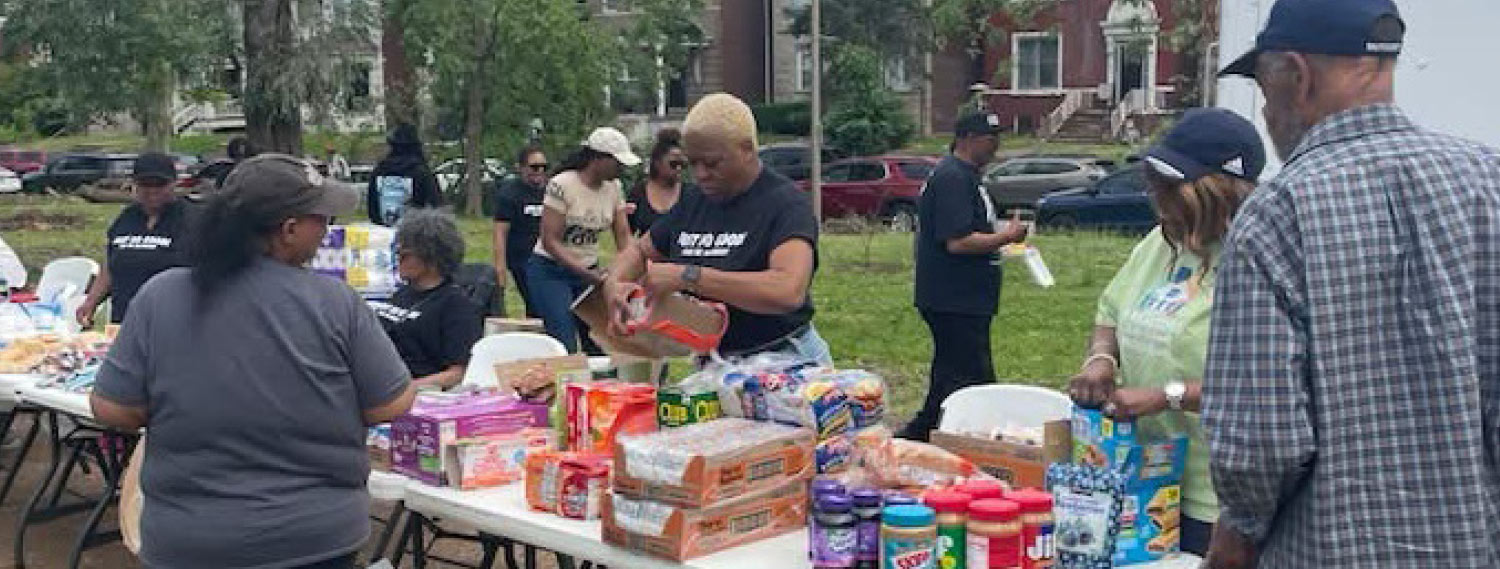
The day after the tornado, several church members entered the disaster zone to clear fallen trees and debris, allowing trapped residents to leave their homes. Others distributed water, food, and essential supplies. In the weeks that followed, members continued delivering items like bottled water, sanitary products, snacks, non-perishable food, wipes, and toiletries. Seeing physically challenged individuals step up to serve deeply moved me.
Another support role that our church members volunteered for was at the central warehouse. We helped unload and distribute bulk donations from major retailers such as Target, Sam’s Club, Home Depot, and Walmart. These much needed supplies were then sent to local service providers.
The greatest reward in serving is seeing the joy on the faces of those we help—a smile over a bottle of water or a pack of toiletries makes every effort worthwhile.
The amount of natural disasters is increasing rapidly. The cost of natural disasters is skyrocketing. But this tornado showed me that disasters can happen anywhere. Every person should do their part to ensure that they are ready. We recently offered an emergency preparedness workshop to help our community get ready for any future disasters. Find one where you are.
You can see God working in the disasters in a few ways. First, I count it tragic that any life is lost, but if a tornado bulldozes through seven miles of a major city and claimed no more than five people, that is a miracle. That’s God’s mercy on display. The damage was bad, but it could have been significantly worse. I believe the eyes of faith can see God’s goodness even in the middle of this disaster. Secondly, God is present through his sons and daughters. The gracious response of churches, civic organizations and people demonstrate the love of God. God wraps people in the blankets that his children give each other. God feeds the vulnerable through the food that was distributed. God continues to support us through the generous donations that are given.
Atlanta, GA 30318
 404-799-7288
 http://atlantaberean.com/bomc
 [email protected]
P.O. Box 519
Ashton, MD 20861-0519
301-774-0400https://www.emmanuelbrinklow.org[email protected]Baltimore, MD 21217-3803
410-669-6350 https://www.bereatemple.org[email protected]Windsor Mill, MD 21244-2042
410-922-0050https://www.libertysda.org[email protected]7000 South Michigan Avenue
Chicago, IL 60637
773-224-7700http://www.shilohsdachicago.orgMemphis, TN 38106
901-774-5431 http://longviewheights22.adventistchurchconnect.orgOrlando, FL 32810
407-704-6963 https://www.guilgalsda.org/ministries/community-serviceSaint Louis, MO 63113-1520
314-361-6446 https://bereanmo.adventistchurch.org [email protected] St. Louis, MO 63136-1500
314-868-0707 https://www.northsidesda.org [email protected]