








Message Magazine is trying out a new size and we’re eager to hear your thoughts.

“This sure word of prophecy reveals that the present condition of the world is the forerunner of an age of unprecedented glory and bliss. It is like the darkest hour of the night, which comes before the dawn. In its blackness the student of prophecy discerns the silver lining of God’s promise, which will soon be fulfilled in the setting up of a ‘kingdom that will never be destroyed’ and in which righteousness will covereth earth as the waters cover the sea.’”
by J. T. Carrington
Message. May 1950, p. 12.

Editor
Carmela Monk Crawford
[email protected]
Graphic Design
Erica Keith
www.ericakeith.com
Subscriber Services
Pacific Press Publishing Assoc.,
Virginia Ramsey 1-800-456-3991

Roger Bernard
Marvin Brown
Carlton Byrd
Virgil Childs
Eugene Lewis
Garth Gabriel
Alva James-Johnson
Benjamin Jones
Eldeen King
Kenneth Manders
Michael Owusu
Calvin Preston
Trevor Kinlock
Calvin Watkins
relationship
readineSS
Call 1-800-456-3991 Monday through Thursday 8:00 a.m. to 5:00 p.m. Mountain Time for subscription information or address changes. MESSAGE (ISSN 0026-0231) is published bimonthly Jan/Feb, Mar/Apr, May/June, July/Aug, Sept/Oct, Nov/Dec.
© 2018 by the North American Division of Seventh-day Adventists, 9705 Patuxent Woods Drive, Columbia, Maryland, 21046, U.S.A. Address editorial correspondence to MESSAGE MAGAZINE, 9705 Patuxent Woods Drive, Columbia, MD 21046-1565 U.S.A. All subscriptions are prepaid. If you did not order MESSAGE, it is being sent as a gift from a friend. You will not be billed. To subscribe, mail payment to MESSAGE, 1350 North Kings Road Nampa, ID 83687, U.S.A. or call 1-800-456-3991. Subscription price: one year, $19.95 U.S. currency; single copy, $4.00; overseas, add $10.00 per year for postage. Prices subject to change without notice. Periodicals Postage paid at Nampa, Idaho and additional offices. Vol. 92 No. 4 July/August POSTMASTER: Send address changes to MESSAGE, 1350 North Kings Road Nampa, ID 83687, U.S.A. Printed in the U.S.A.
Unless otherwise noted, Bible texts in this issue are from the New King James Version. Copyright © 1979, 1980, 1982 by Thomas Nelson, Inc. Used by permission. All rights reserved. Statements in this issue attributed by an author to other speakers/writers are included for the value of the individual statements only. No endorsement of those speakers’/writers’ other works or statements is intended or implied.



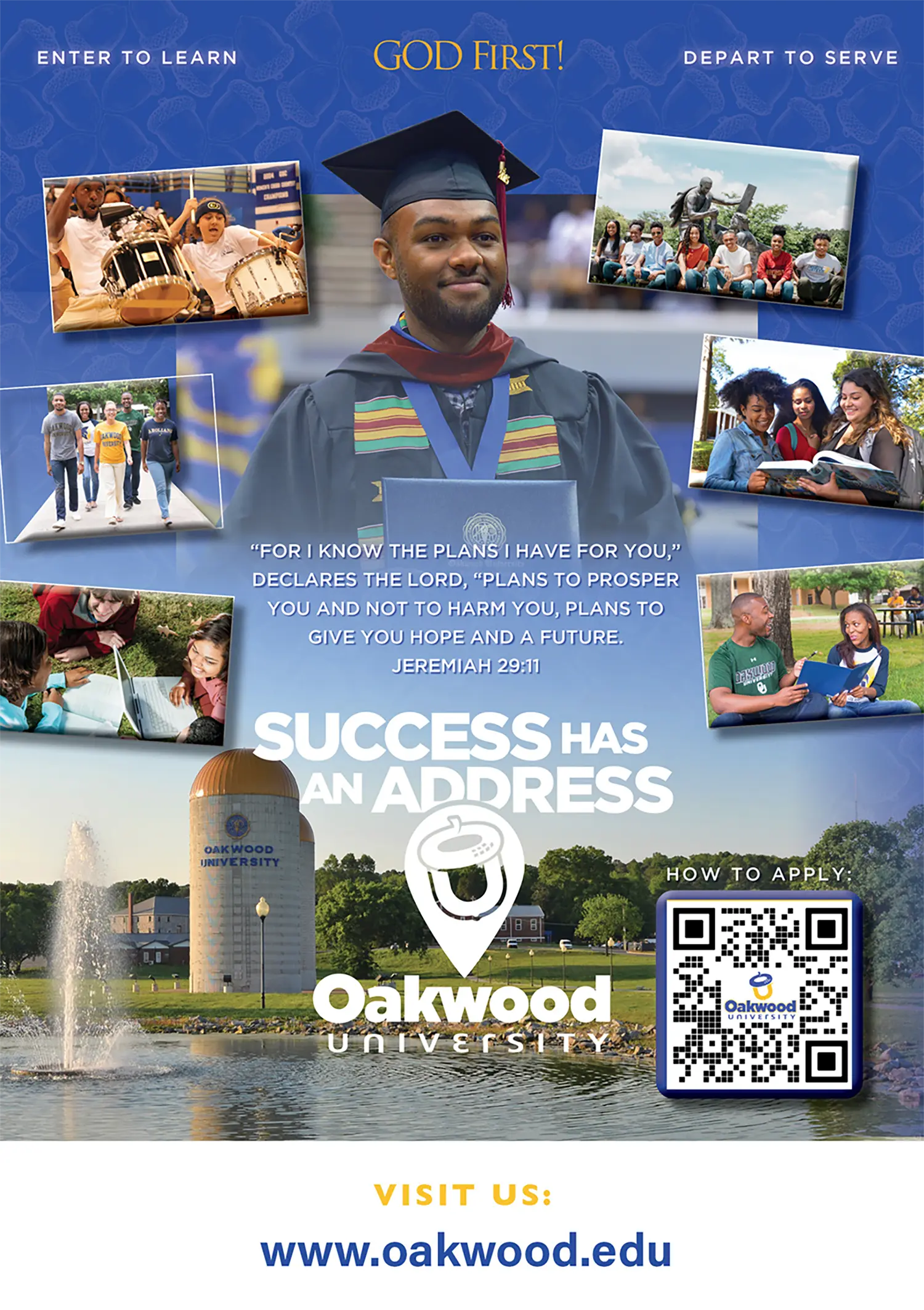

Swinson’s book offers practical parenting principles designed to empower mothers and fathers in nurturing and guiding their children. Her teaching and parenting have given us great insights into how we can do better in leading our young scholars. “God’s vision for parenting is detailed throughout Scripture, providing us with timeless principles for raising children in a way that aligns with His will,” says Swinson. This book is available on Amazon.


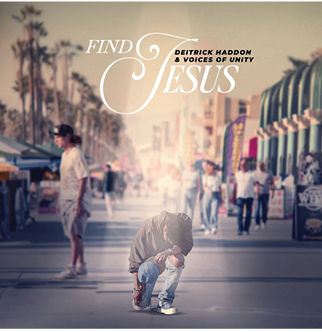
Deitrick Haddon’s latest single, “Find Jesus,” released in early March 2025, is an uplifting gospel track that encourages listeners to seek spiritual fulfillment. Living in a time of choosing sides, “Find Jesus” reminds us, powerfully, that only He can heal our broken hearts. I pray this song is a blessing for you as it has been for me. “Now that I’ve found Jesus, I refuse to let him go. I just want Jesus.”

Living in uncertain times of tension between cultures and ideas this app is perfect to have in our arsenal. Inspired by the legacy of Victor Hugo Green’s original “Green Book,” the Green Book App is a modern digital guide for black travelers seeking safe, inclusive, and welcoming businesses. From black-owned restaurants to culturally affirming accommodations, this app is your go-to resource to support where you are celebrated. Whether you’re traveling across the country or exploring your own city, the Green Book App ensures you always have access to places where you can thrive, be seen, and feel at home.

Submit your book, music, or app information for review to [email protected].
 f the recorded Biblical conflicts, none resonates as clearly today as that between Judah’s King Hezekiah, and the Assyrian big mouth, Sennacherib.
Let me set this up, in case the details and relevance are fuzzy to you (see 2 Kings 18, and 19). By today’s standards, Sennacherib operated well ahead of his time in his mastery of trash talk, manipulation of the media, and the ability to stoke the anxieties and doubts of his enemies.
God’s people — Judah—led by King Hezekiah resisted in their own way — stopping up the wells and viaducts — sabotaging their own land, and spoiling the eventual prize, if it came to that. Hezekiah had even tried to negotiate, ill-advisedly, however. He tried to stave off Sennacherib by paying him off with gold stripped from the doors of God’s house! Not to be satisfied with that inch, however, Sennacherib wanted the whole mile.
“You can’t win,” Sennacherib had said. Actually, it was the Sennacherib’s man, Rabshakeh, the king’s trusted cupbearer who stood on proverbial Front Street, speaking loudly, in a deliberate attempt to errorize passerbys in their own vernacular.
“It’s no use. You have no cards,” said, Rabshakeh. “Your God is powerless against me. Why don’t you just look around? No one else’s gods could defeat me — no, I defeated them all! Besides, your God is probably mad at you anyway for tearing down his shrines.”
Sennacherib then followed up with a detailed letter, rehearsing every threat, and observable reality. It should not be lost on us that drunk in his own pride and power, he also tried to wax theologically, telling Hezekiah and his people, essentially, that they were on the wrong side and that their god had rejected them.
But it is what Hezekiah did next that is the blueprint for our struggle in the final conflict of this world. After resisting, which I truly endorse, and after trying to work it out, which I also advocate, Hezekiah drew the line.
First, Hezekiah instructed his people not to respond, or otherwise engage the cunning Rabshakeh verbally. To promote our collective resilience, let us re-evaluate our incessant need for verbal analysis. The Bible gives seemingly conflicting thoughts in these kinds of cases: A. “Answer not a fool according to his folly, lest thou also be like unto him,” Proverbs 26:4. And B. “Answer a fool according to his folly, lest he be wise in his own conceit,” Proverbs 26:5. What’s the difference? The nature of the fool, or the nature of the folly, I suppose. Either way, I’m learning that preserving one’s sanity, peace, and resolve means carefully choosing the time, place, and method of engagement.
Not only that, White reminds that “[n]ever for a moment should we allow Satan to think that his power to distress and annoy is greater than the power of Christ to uphold and strengthen,” This Day With God,” p. 177.
Second, prevail in prayer as Hezekiah did, by spreading out your case before the Lord.
“Lord, bow down Thine ear, and hear: open, Lord, Thine eyes, and see: and hear the words of Sennacherib, which hath sent him to reproach the living God. Of a truth, Lord, the kings of Assyria have destroyed the nations and their lands, and have cast their gods into the fire: for they were no gods, but the work of men’s hands, wood and stone: therefore they have destroyed them. Now therefore, O Lord our God, I beseech Thee, save Thou us out of his hand, that all the kingdoms of the earth may know that Thou art the Lord God, even Thou only” 2 Kings 19:15-19
Read the rest of the story. The next morning must have been uncharacteristically silent prompting Hezekiah and the citizens of the kingdom of Judah to wander outside and discover that the invading, enemy army — all 185,000 of its troops — lay dead outside the besieged city. And, Sennacherib succumbed in treachery at the hands of his own sons.
In these troublesome times, when you feel outmatched and outstripped, this is how you fight your battles.

CARMELA MONK CRAWFORD, Esq., is Editor of Message Magazine


 n celebrating the annual National Day of Prayer (May 1), President Donald Trump established the Religious Liberty Commission through Executive Order 14291.
“It shall be the policy of the executive branch to vigorously enforce the historic and robust protections for religious liberty enshrined in Federal law. The Founders envisioned a Nation in which religious voices and views are integral to a vibrant public square and human flourishing and in which religious people and institutions are free to practice their faith without fear of discrimination or hostility from the Government.”
As a founding father and U.S. President in 1802, Thomas Jefferson reiterated in a letter to the Dansbury Baptist Association that the American “legislature should ‘make no law respecting an establishment of religion, or prohibiting the free exercise thereof,’ thus building a wall of separation between Church & State.”
In essence, the principle behind the separation of church and state was intended to prevent a merger of church and state and a bias for any religion.
- history of religious liberty in America,
- effect of religious liberty on the American public,
- current challenges to religious liberty in America,
- plan of action to protect and increase liberty of conscience protections for future generations, and
- “programs to increase awareness of and celebrate America’s peaceful religious pluralism.”
Despite the stated purpose and role of this Commission, everyone does not agree with its premise.
“This order accelerates the collapse of our democracy under an administration that coddles white supremacists, demonizes immigrants and dares to preach about faith while betraying its very essence,” said Bishop Dwayne Royster, executive director of Faith in Action.
“They have no moral authority and certainly no divine mandate to define what faith means. Religious freedom is not theirs to wield as a weapon of fear or domination. It is a sacred covenant extended to all of God’s children regardless of race, creed or country of origin. We must not stand idly by while the gospel of love is hijacked and perverted into a tool of hate and division.”

“In recent years, some federal, state and local policies have threatened America’s unique and beautiful tradition of religious liberty. These policies attempt to infringe upon longstanding conscience protections, prevent parents from sending their children to religious schools, threaten loss of funding or denial of nonprofit tax status for faith-based entities, and single out religious groups and institutions for exclusion from governmental programs.”
In considering the members of the Commission, none of them appear to identify as atheist or anti-Trump supporters. You could argue that they all align with the Christian right, sentiment of Christian Nationalism, and unwavering advocacy and support of Israel as a favored nation founded by God over Palestine.
The Religious Liberty Commission seems poised to delineate a contemporary interpretation, not a historical foundation, regarding the separation of church and state. At the signing ceremony for the Executive Order to create the Commission, President Trump stated, “Separation? Is that a good thing or a bad thing? I’m not sure…We’re bringing religion back to our country. It’s a big deal.”
In about a year, the American public will debate whether the Commission’s report aligns with the founding fathers of our nation or the Commission’s brand.

Chairman
Lt. Governor of Texas
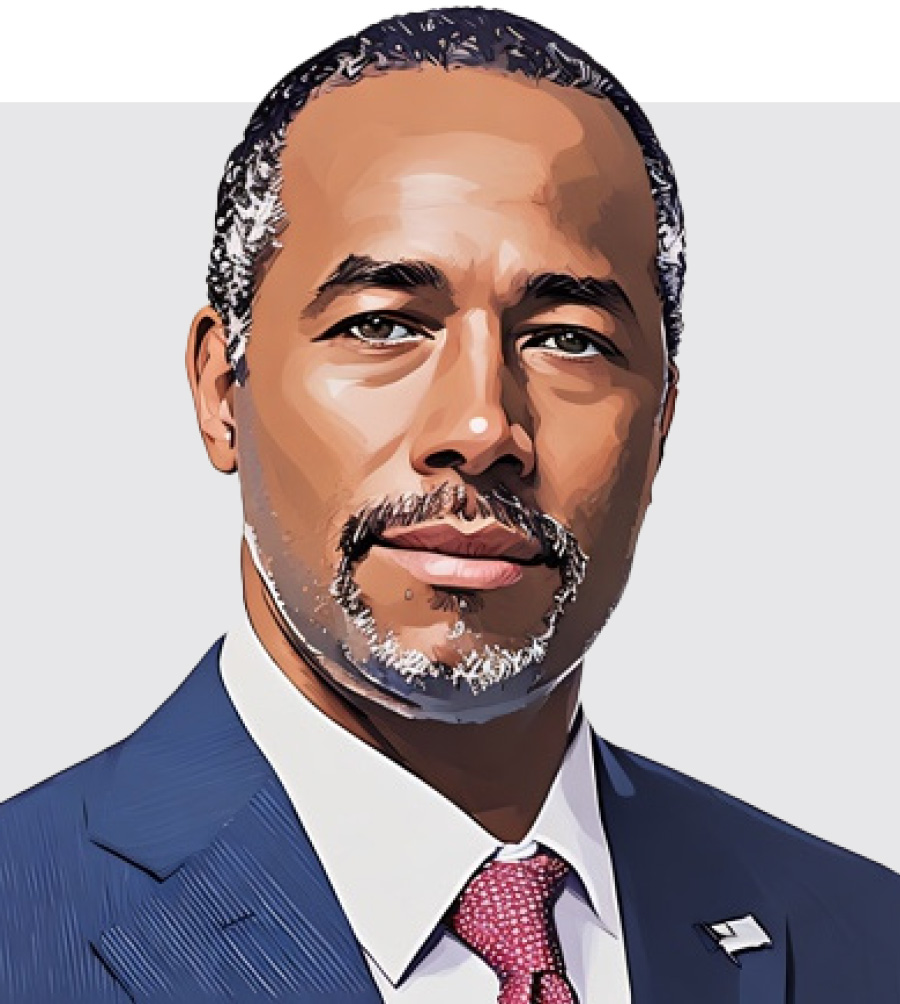
Vice Chair
Former Sec. of Housing and Urban Dev.

President of the Ethics and
Public Policy Center
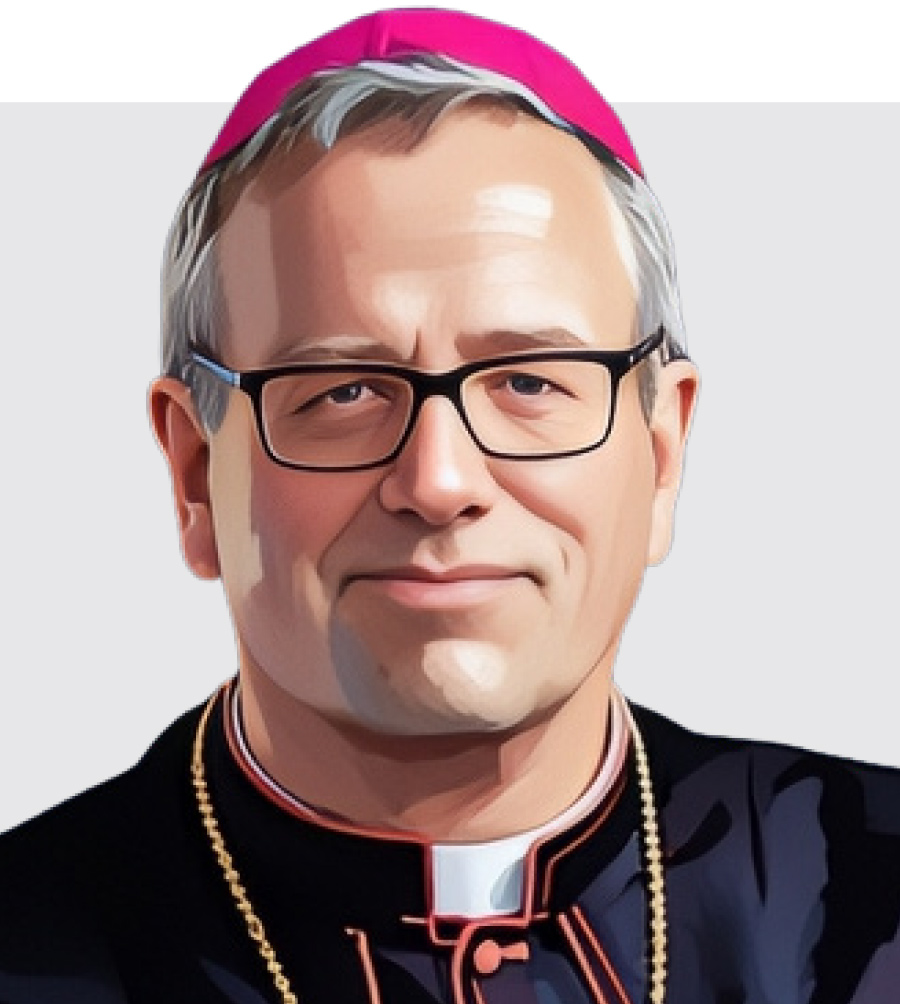
Catholic bishop of the Diocese
of Winona-Rochester in Min.

Former Miss
California USA
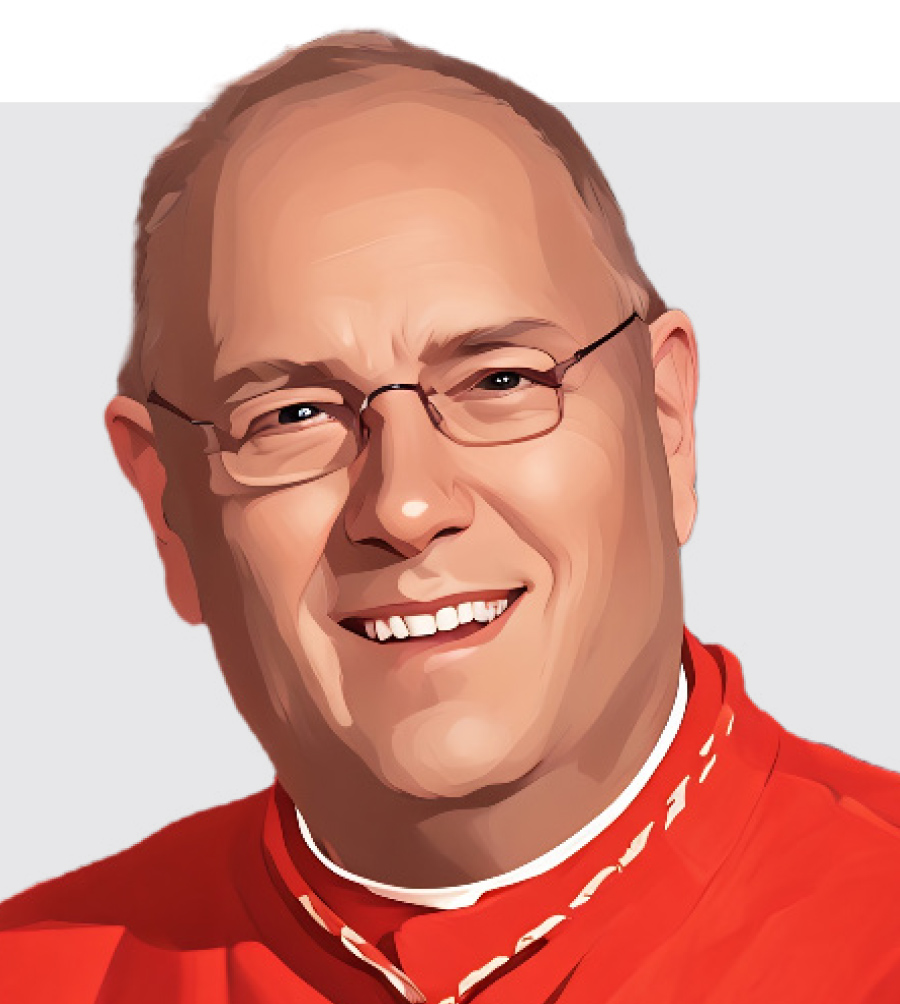
Roman Catholic Cardinal and
Archbishop of the Diocese of NY

President and CEO of the
Billy Graham Evangelistic Assoc.
and of Samaritan’s Purse

Partner at the law firm
Gibson, Dunn and Crutcher

TV therapist
and Author

Popular Purveyor of
Christian Nationalism

President
of First Liberty Institute

Rabbi of Congregation
Shearith Israel

Pentecostal Televangelist
who Heads the
White House Faith Office
Popular Purveyor of
Christian Nationalism
President
of First Liberty Institute
Rabbi of Congregation
Shearith Israel
Pentecostal Televangelist
who Heads the
White House Faith Office

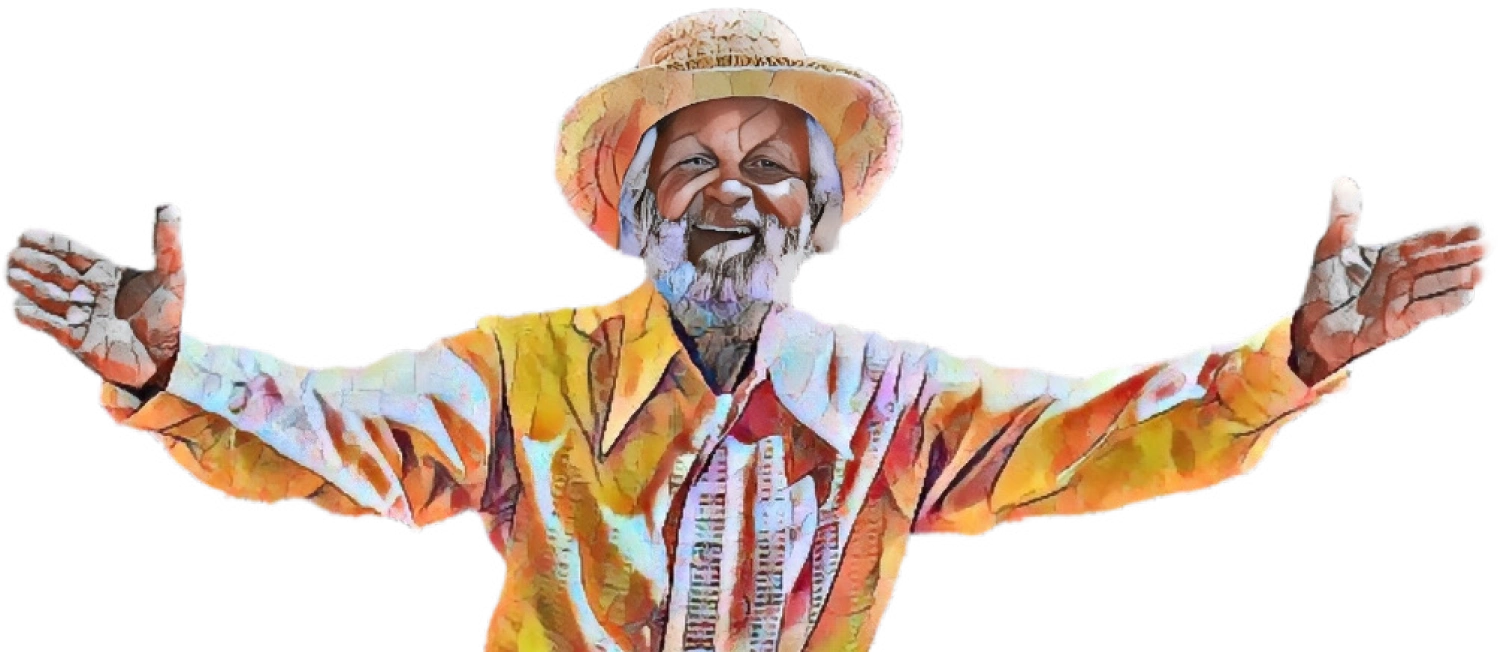
Barnes explained, “I can live without food for a while. I can live without clothes for a while. I can live without water for a while. I can live without money for a while. But there’s one thing I could never live without, and that’s God’s divine love.”
He may have looked crazy to some at first, but the former electrician and bus driver embraced his new calling as “Mr. Happy Man.” For the next 30 years, Barnes stationed himself at a roundabout in Bermuda that nearly every driver had to pass during their commute. People began looking forward to his positivity so much that some would circle around again if Mr. Happy missed them the first time.
“Everything belongs to God and nothing belongs to us. He has not allowed me to have boys and girls, so he has given me statues.”
Most of us won’t be “immortalized” by metallic sculptures of ourselves on public display, but we all bear the image of the same eternal God that inspired Barnes. The question is how will we reflect that divine love in a crowded, chaotic world that seems too rushed to care?

 arcus Thompson, 29, sat in his downtown Atlanta apartment, staring at his meditation app. As a successful tech consultant, he had everything society said he needed, except peace.
“I was making six figures but taking anxiety medication, eating fast food daily, and barely sleeping,” he recalls. His turning point came after a panic attack during a client meeting made him realize something had to change.
“Many young professionals are experiencing what I call ‘success syndrome’ — achieving external goals while neglecting internal well-being,” explains Jasmine Williams, M.D., a wholistic health specialist at Emory University’s Center for Integrative Medicine. According to the Journal of Behavioral Medicine’s 2023 report, 78% of urban professionals under 35 report significant stress-related health issues, with black and Latino professionals experiencing even higher rates.
Thompson’s journey to optimal health began with what he calls his “divine wake-up call.” “The Bible says our bodies are temples of the Holy Spirit (1 Corinthians 6:19, NKJV), but I was treating mine like a fast-food restaurant,” he shares with a rueful smile.
Recent research from the National Institutes of Health (2023) identifies five key pillars of optimal health that have transformed Thompson’s life and can help others:

Thompson’s transformation extends beyond numbers on a scale or medical charts. His blood pressure has normalized, he’s off anxiety medication, and his productivity at work has increased by 40%. More importantly, he’s found a sustainable approach to health that honors both his faith and his modern lifestyle.
“The biggest lesson I’ve learned is that optimal health isn’t about perfection, it’s about alignment,” Thompson reflects. “When we align our daily choices with divine principles and proven science, our bodies respond with amazing resilience.”
For young professionals seeking a similar transformation, Williams offers three practical steps:
- Start with small, consistent changes rather than dramatic overhauls.
- Integrate spiritual practices with evidence-based health strategies.
- Build a supportive community that understands both your health and faith journey.
“Your body is sending you messages every day,” Williams concludes. “The question is: are you listening?”
Thompson’s journey represents a growing movement among young urban professionals who are discovering that optimal health requires honoring both the scientific and spiritual aspects of our nature. As the Apostle John wrote, “Beloved, I pray that you may prosper in all things and be in health, just as your soul prospers” (3 John 1:2, NKJV).



1 tablespoon chopped jalapeño – seeds removed
2 tablespoon agave nectar – or more per your taste
2 cups sparkling water
6 leaves fresh mint
4 large fresh basil leaves
Place ice in eight glasses. Divide the watermelon mixture among the glasses. Top with sparkling water. Stir to combine.
Garnish with extra watermelon and mint, if desired.
Not too keen on spice? No worries, this drink is just as delicious without the jalapeno!


 fter the Emancipation Proclamation in the United States, the newly freed people automatically left slavery but were immediately placed in poverty because of their lack of wealth, earning power, and owning nothing for themselves. This created a huge, and almost insurmountable wealth gap. According to the Opportunity and Inclusive Growth Institute, in 1870, the wealth gap between black and white Americans was a shocking 23 to 1. Meaning, for every $100 of wealth for white Americans, it equated to $4 of wealth for black Americans.
Just as the wealth gap posed multiple problems for the black community then, what has continued to increase this gap is the role that capital gains have played in society. Therefore, could money be one of the reasons that black love is being threatened?
The disparities that exist among black women and their earnings is alarming. According to the Institute for Women’s Policy Research in 2022, it would take until the year 2227 (yes you read that correctly) for black women’s pay to equal white men’s for full-time, year-round workers, and until 2362 to reach pay equity for all with earnings.

One possible threat to black love, connected in some ways to money, is education. The Journal of Blacks in Higher Education states that black women in college far outnumber black men in college. Furthermore, black women currently earn two-thirds of all African American undergraduate degrees, 70% of all master’s degrees, and more than 60% of all doctoral degrees. Also, more black women are enrolled in law, medical, and dental schools.
In her 2020 book, “Black Women, Black Love: America’s War on African American Marriage,” Dianne Stewart, Ph.D, author and professor of religion and African American studies at Emory University, chronicled the intentional suppression of “black love in this country. Slavery’s enduring fallout and continued federal policies pit black men and women against each other, she posits. For Stewart, personally, educational status and attainment seemed to coincide with relationship stress.
“I wedded my first husband one month before I began my doctoral studies in my mid-20s and received my divorce decree one month before I walked across the stage to accept my Ph.D. degree just four years later. The archive of my 30s / 40s stored additional marriage and divorce certificates, and each document a story unto itself of shared hopes and disappointments. . . . My personal experiences with love and marriage typified another common condition Black women who do fall in love and marry black men know all too well — early or serial marital dissolution. But I wasn’t yet able to see my experience as something collective, shared among many Black women in America.”
- Celebrate Black Love. We need to champion black love. Dating outside of one’s race is not evil or wrong. However, we could celebrate the love that is experienced in the black community more. We need to champion more examples of how black love has endured challenges and pressed past adversity.
- Don’t buy into stereotypes. While the research obviously speaks to several issues at hand, let’s not allow the media to dictate our thoughts and actions. Believe it or not, regardless of the research or media, there are some good people in this life.
Let’s not allow these threats to cancel our love!


 hen Joseph Nyamwange describes his journey, he doesn’t start with a financial formula or flashy success story. He starts with something far more familiar to many of us — pressure.
“I thought I had arrived,” he said. “I had the degrees, the job, the car. But I was drowning in debt — over $100,000 — and I didn’t even know how bad it was.”
Nyamwange, a financial strategist and founder of the Nyamwange Foundation, isn’t just another personal finance coach. His story is rooted in faith, sacrifice, and an intentional pivot from consumerism to purpose.
His parents eventually earned Ph.D.s and passed on a clear formula: get good grades, work hard, stay faithful in church.
Joseph followed it. He became valedictorian, earned a college degree, and landed a solid job. But something was missing. “No one taught me how money works,” he said. “I looked successful, but I had no financial wisdom.”
Credit card debt piled up. At one point, he held more than 11 credit cards with interest rates as high as 45%. “It wasn’t even student loans. I was using debt to fund my insecurities.”
One day, while praying, he sensed God say, “The miracle you’re asking for isn’t coming in your bank account, it’s coming through wisdom.”
He began to study, reading books like “The Richest Man in Babylon,” “Think and Grow Rich: A Black Choice,” and most importantly, the book of Proverbs. “Solomon didn’t ask for riches, he asked for wisdom. That became my prayer, too.”
He moved back home to reset, created what he called a “dynamic budget,” and paid off his debt using the debt avalanche method. “We defunded our insecurities so we could fund our values.”
Instead of upgrading his lifestyle, he and his now-wife began investing, first in stocks, then real estate. “If we consume it, we should own it.”
“We’re not racing to be millionaires. We’re racing to be million-dollar givers.”
Through the Nyamwange Foundation, they mentor under-resourced youth through financial literacy and leadership. Their flagship program, Birthright Afrika, takes black and brown students from the U.S. to the continent of Africa to reconnect with their heritage.
“I saw kids struggling to dream because poverty clouded their vision. But once they touched the soil in Africa, they walked differently. They knew who they were.”
The journey was recently captured in a documentary selected for the Pan-African Film Festival.
“We’ve been told wealth is sinful. But John 10:10 is clear; Jesus came that we might have life more abundantly.”
Wealth isn’t the goal, he clarifies. Purpose is. “God doesn’t bless you so you can flex. He blesses you so you can bless others.”
To those feeling overwhelmed by debt or stuck in shame, Joseph offers this:
“Start where you are. Be a great thousand-aire first. Celebrate that first $500 saved. Then chase wisdom like your life depends on it. Because it does.”
Compassion versus Indifference:
“Kindness and courtesy are agents in the Lord’s work, and they have wonderful power to soften and win hearts.”
 ometimes, the smallest act of compassion can change the entire trajectory of a life, maybe even your own. Joseph, a young man unjustly imprisoned in Egypt, had every reason to be bitter. He had been rejected, betrayed, falsely accused, and forgotten. Yet, in the midst of his own suffering in prison, Joseph noticed the sadness in the faces of two fellow prisoners and asked a simple question: “Why are you so sad today?” (Genesis 40:7). That is absolutely powerful!
That small gesture — his choice to see and to care — unlocked a chain of events that led to his elevation as Prime Minister of Egypt. His kindness to the butler, who would later remember him before Pharaoh, became the key to Joseph’s destiny. Sometimes, destiny turns not on miracles, but on mercy.
Here are three ways to unlock the power of compassion in your life and leadership:




Every time you choose compassion; you take a step toward your divine purpose. Your destiny may not begin in a palace, it may start in a prison, in a waiting room, or in a tearful conversation. Don’t underestimate the power of noticing someone’s pain. The kindness that changes their day may change your life.


 f you just so happen to tune into your favorite gospel station or streaming channel, your ears are accustomed to hearing sounds like Fred Hammond, Jonathan McReynolds, Kierra Clark, and even Wess Morgan. But to meet and see Pastor Morgan is something your eyes and your ears must get adjusted to and reconcile.
I had the privilege of interviewing Joel Wesley Morgan and experiencing this reconciliation (up front and personal), not just musically but as he shared his spiritual reconciliation with himself and God.
(Laughing and Smiling) Yes, I hear that a lot, but I got this gift of music and soul from God! Well let me dig in deeper… I was born in a small town called Moss Point, Mississippi. That’s deep south near the Gulf. My parents were ministers (Joseph Morgan) at a church in that area, so we were at church every day of the week. My mother (Yolanda Morgan) sang, and my siblings seemed to be always helping in church with music, playing the piano, singing. So, my mother noticed that I had a gift of singing, and she had me singing in front of the church when I was about five years old.
Wow, so you had that gospel Christian influence at an early age. But what about that gospel style of influence?
Well, when we were growing up, my mom had a record player, and we had all the music styles playing from our home. We had Marvin Gaye, Stevie Wonder, Elvis Presley, and a lot of classical jazz that we listened to and sang. So, I had a great R&B influence at an early age and our church had a lot of black members and grandmothers who attended. So that’s why I really respect our elderly, seasoned members at our churches because of their wealth of wisdom, knowledge of life, and experience. They will keep you humble.
I think that wealth of musical influence is very evident in your own musical style as your music has been frequently featured in Billboard’s top gospel recordings, Dove and Stellar Award nominations. The song, “I Choose to Worship,” was even put in the WOW Gospel 2012 album. What a blessing. You’ve been acting, and played in Tyler Perry’s stage production of, “Laugh to Keep from Crying.” Where do you see God taking your ministry now and in the future?
Interesting that you would ask that. You know I was in several dark places in my life. I was in and out of drug rehab centers and prisons, where the people even knew me by name and just thought I was a part of a revolving door. I wasn’t sure where God was leading me with my music, going into R&B. But something kept pulling me back into singing gospel/Christian music.
Every time I would end up back in one of those rehab drug centers, the people and the counselors always wanted me to sing some old time Christian songs, mostly hymns. So, it’s kind of funny that they started to look forward to my return so I could sing to the clients and patients. They would start talking about Jesus; it’s funny when you’re trying to get high then you start talking about Jesus, saying He’s the deliverer!
I remember one time when I was back in jail, and I prayed, and the Holy Spirit just came over me and asked me if “You want me to dwell within you, you have to choose to worship me.” Out of that experience, I can say that’s where that song came from. And from that point on, I choose Christ to dwell within me.
Praise God!
I can’t say that it’s been all easy since then, but I have a clear purpose to minister to individuals who are on drugs trying to reform, and [to] preach the goodness of Christ and His forgiveness. Out of that experience, I wrote a 365-day devotional book so people can actually chart God’s influence and changing power on their lives.
It’s called, “Change Your Mind, Change Your World: A 365 Day Journaling.” I would say it’s a challenge that will change your life as it has changed mine as I took this journey with God.
I wanted to put something together that someone can see how God can actually make U-turns in someone’s life to get them back on track with their relationship with themselves, friends, family, and God.
Wow you are ministering to me, I am getting this book. So, what’s happening on the music scene with Pastor Wess Morgan?
Well, since I have been so much in church lately, I released a new single explaining about me and my journey. It’s called, “Churchy.” It’s a nice, riding-in-your-car smooth-bounce-groove song. You can get it on Apple Tunes and other platforms.
Thank you, Pastor Wess, for sitting down with me and Message Magazine for this inspirational interview. Any last advice and thoughts?
My pleasure. I pray that someone is inspired to change and turn their lives around from drug use or know that God can find a way for them, even in prison. Never give up on God, because He never gives up on you. I’m a living witness.
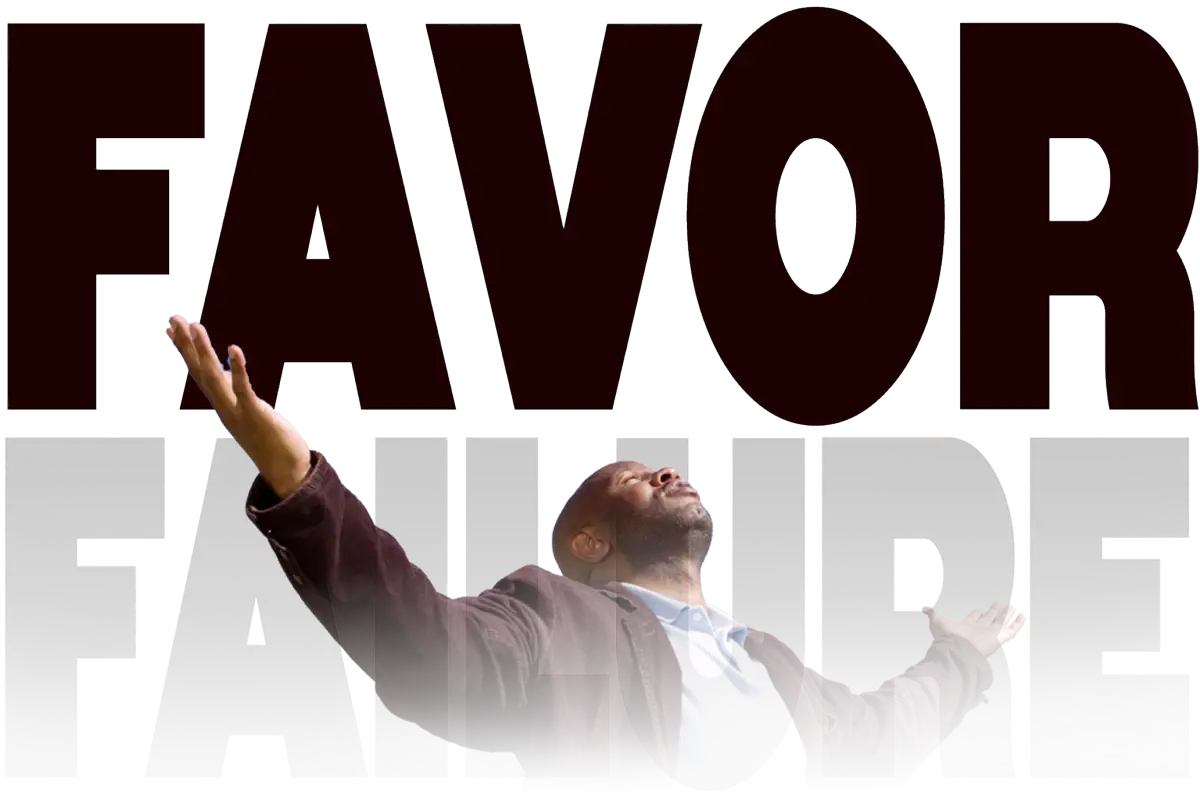
 here’s irony in God’s plan, and that is this: He often uses our lowest moments to bring out our greatest purpose.
Irony is when something happens that’s the opposite of what you’d expect. In God’s hands, irony becomes a way to show His love and power.
Many of the Bible’s most powerful stories don’t start with success; they start with struggle. God turns pain into purpose, prisons into platforms, and caves into classrooms. Great journeys don’t always begin the way we think they should.
From Prison to Prime Minister
Joseph later told his brothers (Genesis 50:20), “You meant to harm me, but God used it for good.” That’s God’s irony — turning a bad situation into something beautiful.
Mandela’s life shows us that even when others try to silence you, God can still speak through you. Sometimes dark places shape the strongest leaders.
From Cave to Throne
But in those caves, God was teaching David how to lead, trust, and wait. The hard times prepared him for the throne. When David finally became king, he was ready because of everything he had learned during those rough years.
Don’t give up. God can use your pain to shape your purpose. He can turn your mess into a mission. During our Prison Ministry Weekend, we saw this clearly. People who were once behind bars are now leading Bible studies, helping others, and making real change in their communities. That’s not luck, it’s God turning failure into favor.
Even Jesus lived this out. He wasn’t born in a fancy palace but in a stable. He didn’t choose famous people to follow Him. He chose fishermen and tax collectors. And the biggest surprise of all? He died on a cross, a shameful death at the time. That same cross became the way to eternal life for the whole world.
So, you’ve failed; what’s next? First, don’t be ashamed of your past. God can use every part of your story. Second, trust that where you are now is not where you’ll always be. God is still writing your story. And finally, stay open to His plan, even if it looks different from what you expected. God often does His best work in the hardest places. He’s not done with you yet.


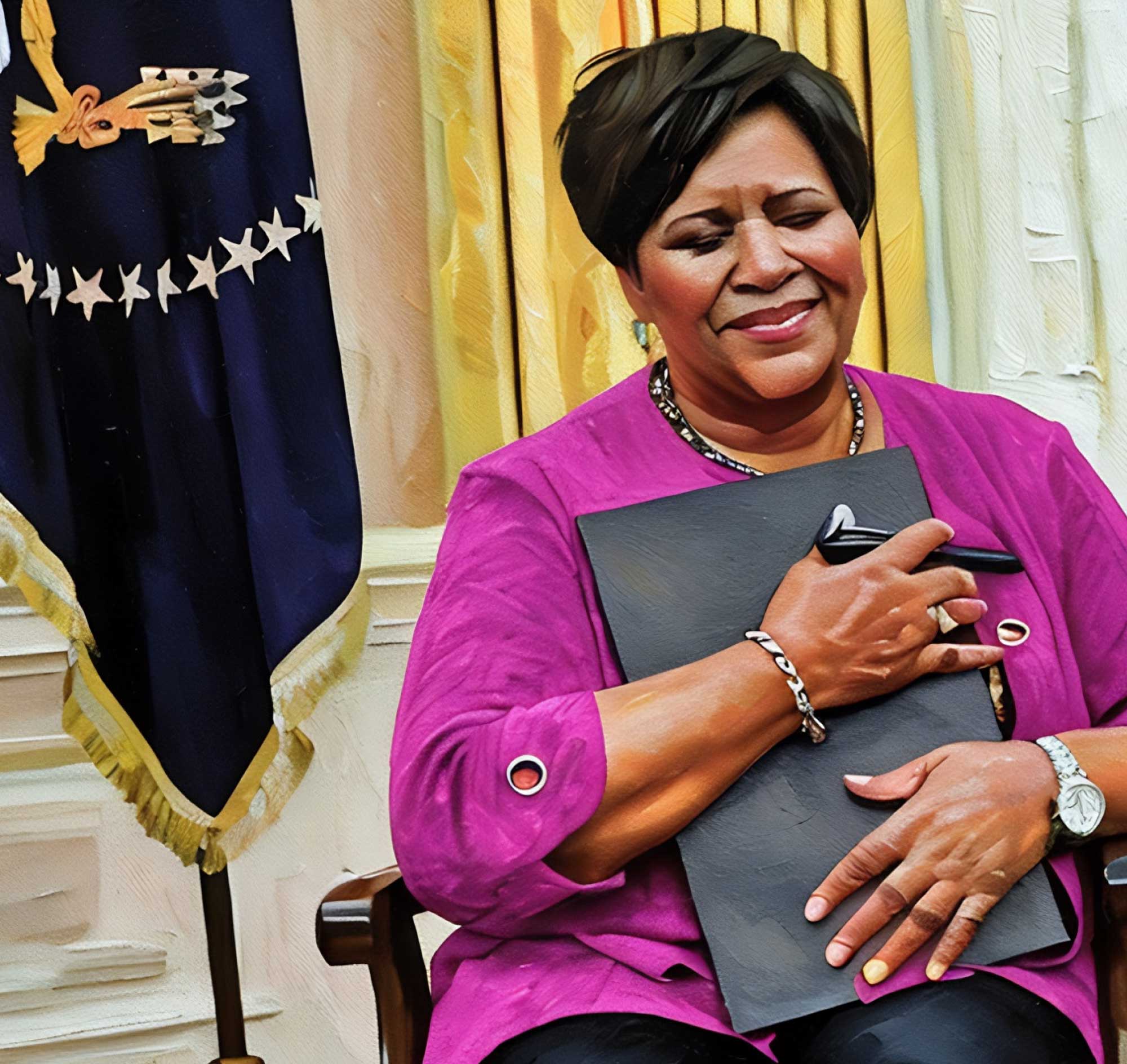
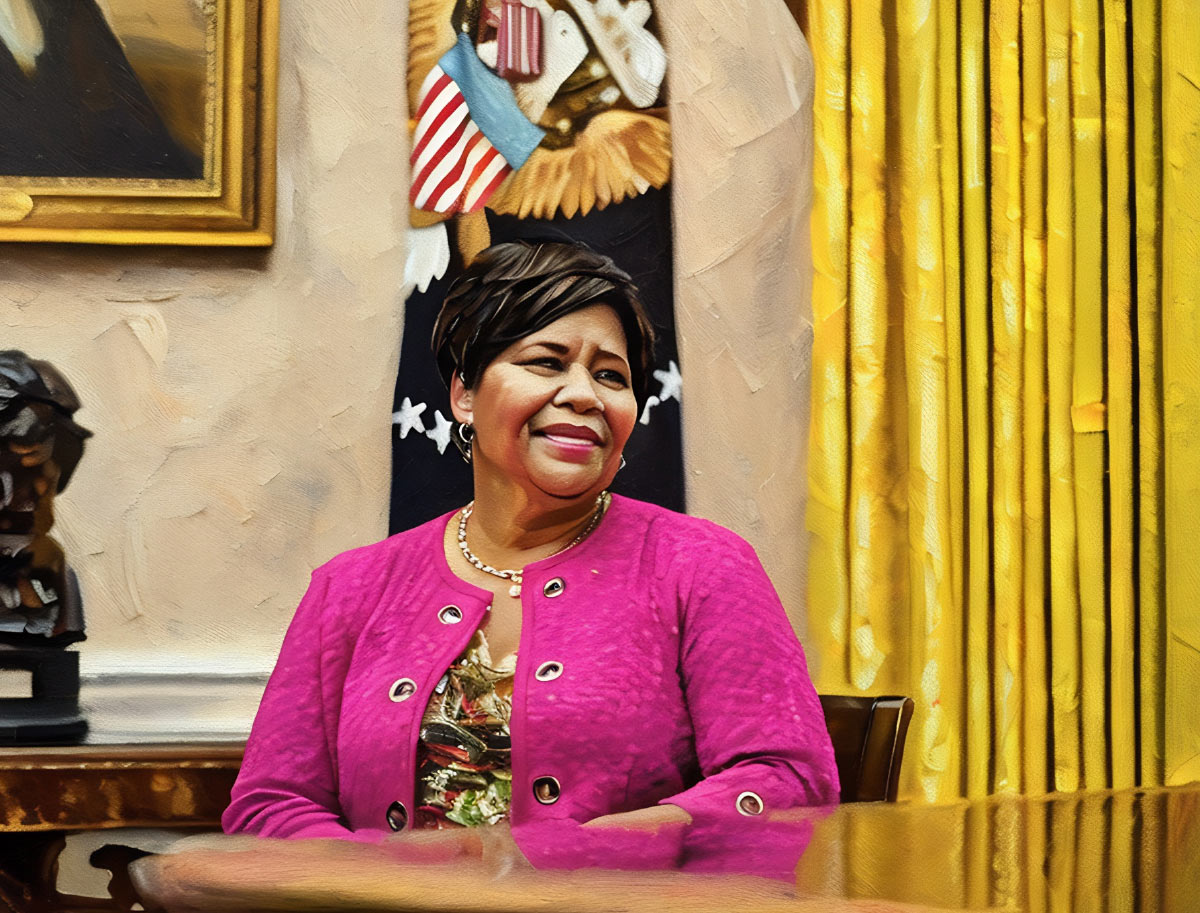
Her open praise, profound speech and strength gained her much media attention, and everyone wanted to know more about this grandmother whom Kim Kardashian took interest in to go to the President for relief. From the day of Alice’s release to each elevation level in her life, God allowed me to be a witness and gave me spiritual insight, biblically, of what was taking place. From having the pleasure to visit her home, to the revelation that she had one more assignment, God allowed me to continue to be a witness.

avishly dressed in fine clothes, nice jewelry and doing much partying was me. Yes, the once quiet, chubby girl barely recognized and seemingly rejected had found a place in life where she was accepted and well-recognized. That place was called “the drug game,” and my hustle was so genuine many people respected and admired me for that. Then by 1990 my life had taken a drastic turn for the worse.
The once lavishly lived life had turned into a gloomy nightmare. My initial casual drug usage became a drug habit that eventually turned into a drug imprisonment. Being bound to addiction caused me to lose everything, including my friends. My continuous drug usage resulted in me going to state prison for non-drug related crimes in 1992.
After serving over two years in state prison, I was released on intensive supervision. Getting back on my feet wasn’t going to be easy. Shortly thereafter, I begin to have disturbing dreams of being re-arrested. In addition, my mom kept warning me about getting out of the game, off the street, out of the mess.
I stopped hustling, but continued hanging out until the inevitable became a reality. I was arrested by the state but my case was sent to the federal government to prosecute for lack of cooperation.
The federal system became my initial changing point. In that system, my arrest led to unfair treatment, wrongful accusations, and the failure to seek the full truth. After being wrongfully convicted, I sought Congress for fairness and answers. I prayed and asked God to teach me, legally, how I was wronged. God answered and the law was changed to release me to go home five years earlier.

“My guardian angel, Brenda Ford,” is what a former inmate, friend of mine, Stephanie Hunter, calls me. “If it wasn’t for her, I probably wouldn’t be living,” Stephanie said recently. “This woman made me believe in myself. I met Brenda Ford, at a point in my life that I didn’t believe in God, or anything else.”
I had no idea that she thought I made such a profound impact on her life. This is very meaningful to me because my relationship was broken with my kids. I left my son and daughter when they were four and eight —from fourth grade, until age 31 for my son. I’m very proud of them now. My mom died two years into my sentence. I promise I will live my life to see [her] again.
No matter your mistakes you can bounce back, when you connect yourself with God. He will repay. He will restore. Mistakes don’t define who you are. God defines who you are.
 hrist followers are strangers of this world, passing through on their journey to heaven. On the way, each will likely enter seven active battlefields where Satan ruthlessly plots against them. God, however, has provided us with armor to protect us in the war (2 Timothy 2:3, Ephesians 6:12-18).
Satan promotes belief in prosperity or “Health and Wealth” to turn many from God. Some churches have thrown away the pure gospel of salvation and righteousness and replaced it with prescribing how to live comfortably in this world. Yet, Jesus did not guarantee us health and wealth. He tells us not to worry about our earthly needs but to seek first the Kingdom of God and its righteousness and all other needs shall be added (Matthew 6:33).
Demons rely on habitual and unconfessed sin to attack us. In John 14:30, Jesus said, “The ruler of this world is coming, but he has nothing in me” (NLT). This confirms that sin itself invites Satan into our lives. Signs of demonic attack include sinking deeper into sin with no willpower to control your life. (See sidebar.)
Followers of Christ navigate the world stage that threatens to pull them toward sin and compromise faith. Hence, this word of caution from John:
“Do not love this world nor the things it offers you, for when you love the world, you do not have the love of the Father in you. For the world offers only a craving for physical pleasure, a craving for everything we see, and pride in our achievements and possessions. These are not from the Father, but are from this world” (1 John 2:15, 16, NLT).
Persecution by friends, relatives, neighbors and even church members will occur if we live righteously (2 Timothy 3:12). Anyone who insists on the true Gospel and opposes corruption will be persecuted. You may lose your teaching position in the church, be shunned by the executives or even murdered, as occurred in one church not far from where I lived. The victim was the finance director who was about to reveal a church financial secret in an impending meeting.

Belt - Stands for truthfulness (v.14). Just as a belt holds all parts of a soldier’s uniform in place, so does truthfulness hold all our defenses together.
Breastplate - Stands for righteousness (v.14). Righteousness is a spiritual breastplate, because if we try to do what is right all the time, the devil will find it hard to trouble us.
Shoes - Stand for readiness to share the gospel (v. 15). If we have a habit of telling other people about Jesus, they will usually say, “let us leave this Osofo (priest) alone.”
Shield - Stands for faith (v. 16). Christians overcome Satan by their faith (1 John 5:4). Let us hold on to our faith and we will overcome our difficulties.
Helmet - Stands for trust in the Lord’s completed work of salvation in our lives (v. 17). We should feel certain that if we have truly believed in Jesus then we are saved (1 John 5:13).
Sword - Stands for the Word of God, which we should commit into our hearts and obey, (v. 17). A habit of daily Bible reading and memorizing of verses increases our faith and makes us overcomers in life. The Bible is indispensable spiritual food for the human soul (1 Peter 2:2).
Prayer - We must pray all the time (v.18). Alertness - We are soldiers for Christ (2 Timothy 2:3, 4); therefore, we look out for spiritual danger in what we say and do so that we may not slip (v.18).
God disciplines us when we go astray from Him (Hebrews 12:3-12). Satan takes advantage of such times by encouraging us to see God in a bad light and abandon worshipping Him. So, beware that when times of discipline come, remember to use your arsenal to resist the devil and he will flee from you.
The faith of Job and many others were tried by God so that the genuineness of their faith would be proven to the glory of God (1 Peter 1:6-7). That is what Satan found after Job passed his test. It is the same reason that you will be tried. Anyone who loves God more than worldly things and even his own life, will pass the test.
After praying for a long time and not getting answers from God, some believers are tempted, or do, give up on Him. Yet, in Romans 8:35, Paul says that nothing can separate God from His people. Stand firm and do not allow Satan to have his way; because all things work together for the ultimate good of those who love the Lord (Romans 8:28).



The movie, set in 2054, takes place in a world where crime has been almost eradicated due to reliance on clairvoyant humans who can see when a crime is about to occur. With a precrime-type SWAT team, this police unit has perfected stopping crimes before they happen. While all premeditated crime has been abolished by imprisoning individuals who plan to commit unlawful acts, a special team is responsible for responding to sudden crimes, having only a few minutes to prevent them from happening.
Without giving too much away, when the chief of the Precrime Unit is accused of a crime he hasn’t committed yet, a question comes up that stumps the main character of the film: If you knew your destiny before it happened, would you still have the ability to change the outcome? The movie’s main character wrestles with that question until the movie’s conclusion.
The answer is yes. And it doesn’t take years of research, elaborate dissertations, or many degrees in theology. It requires, however, simply a belief in Jesus Christ.

But once sin entered the chat, once their bad choices were made, our destiny shifted. It wasn’t until the crucifixion that our destiny was reestablished, according to God’s will for us. Acts 16:31 simply tells us, “Believe on the Lord Jesus Christ and you shall be saved.”
However, it’s important to recognize that while heaven is the destination, it’s still our choice. We can disrupt God’s plans for us simply by insisting on making poor decisions. Even God himself doesn’t trespass the boundaries of human choices, conscience, or will. The spirit will woo or guide, but it will never override our choices.
My friends, let us choose to live the kind of life that will allow us to fulfill our destiny. Philippians 3:20, NIV says, “But our citizenship is in Heaven. And we eagerly await a Savior from there, the Lord Jesus Christ.”

We invite you to watch Breath of Life.
There are many options to choose from…
Atlanta, GA | WATC-TV Channel 57
Huntsville, AL | WAAY-TV Channel 31
Memphis, TN | WANT-TV Channel 24
Montgomery, AL | WNCF-TV Channel 32
Phoenix, AZ | Good News TV • mygoodnewstv.com
Hope Channel
Three Angels’ Broadcasting Network (3ABN)
Word Network
YouTube – YouTube.com/c/breathoflifetv
Facebook – Facebook.com/breathoflifetv
BOL Website – breathoflife.tv/videos/

I believe one secret for being secure for eternity is found in Proverbs 1:33: “But those who obey wisdom dwell in security, in peace, without fear of harm.” By wisdom, the Bible is referring to reverential awe for God that leads to integrity and fulfillment (Proverbs 1:7), an attitude characterized by purity, peace, gentleness, compliance, mercy, productivity, constancy, and sincerity (James 3:17).
Although security systems are fine, Godly wisdom is the secret for staying safe for time and eternity. This wisdom prepares you for the joy of service in this world and the higher joy of a wider service in the world to come. Proverbs 10:9 puts it this way: “Those who walk with integrity walk securely, but those whose ways are crooked will fare badly” (Proverbs 10:9).
These words seem like an oasis blooming in the desert or a lone star smiling through thunder clouds. They reassure me that I can live peacefully, without fear, despite our external circumstances. By following divine wisdom and obeying sacred precepts, we can develop an inner reserve that will provide us peace even amid a storm. We can walk securely, avoiding self-inflicted wounds, and reach our destination without stumbling or slipping.
In short, you and I can stay safe even in a dangerous and predatory world by reverently pursuing God’s divine strategy for wisdom. Let convulsions shake the earth; it won’t matter, for we will abide in the stronghold of God’s loving and unfailing providence, aware that He is guiding our steps. Even if you lose your life in this chaotic world, God has promised us an eternal security in His presence, living within the shadow of His mercy and love (John 14:1-3).
How can we implement this secret of God’s wisdom and stay safe while walking through life’s minefields? Proverbs 8:13 instructs: “The fear of the Lord is to hate evil, pride, arrogance, and the evil way.” What does this mean? The fear of the Lord, reverential awe, is wisdom’s beginning (Proverbs 1:7). You start walking securely and safely when you cultivate a hatred for such negatives as evil, pride, arrogance, and transgression.
Hating evil means feeling about transgression as God does, refusing to be fascinated or titillated by sin. It means seeing sin with a sense of revulsion. Hating pride and arrogance refers to pursuing humility and not thinking of yourself more highly than you should. It involves realizing that our talents and ability are gifts from God, so the glory of our accomplishments belong to Him (1 Corinthians 4:7). Hating the evil way means knowing that the sinful path leads to destruction, which should motivate you and me to abandon evil for God’s ideal plan for our lives.
What then is the secret of staying safe in an unsafe world? Reverently embrace God’s wisdom that is pure, peaceable, gentle, compliant, merciful, productive, steady and sincere, as you develop a hatred for evil, pride, arrogance, and sin; thereby, staying safe for time and eternity, avoiding self-inflicted wounds, and reaching your destination without stumbling or slipping.



 edding season is here! It’s a time of love, commitment, and celebrations with family and friends. But elements reserved only for the bride and groom include the exchange of vows, the bouquet and garter toss, and the cake cutting.
Sometimes many aren’t invited to the wedding due to space restrictions. But Jesus has invited everyone to His wedding, and everyone is invited to exchange vows of loyalty and love with Him as His bride (Revelation 21:9). After all He has paid the ultimate price (dowry) with His blood so that we can be His bride.
- John 3:29 confirms Jesus’ claim on His bride; “The bride belongs to the bridegroom…”
- Revelation 12:1 describes her, “A great sign appeared in heaven: a woman clothed with the sun, with the moon under her feet and a crown of twelve stars on her head.”
Revelation 19:6-9 depicts scenes of our wedding and our clothes as the righteousness of Jesus. “Then I heard what sounded like a great multitude, like the roar of rushing waters and like loud peals of thunder, shouting:
For our Lord God Almighty reigns.
Let us rejoice and be glad
and give him glory!
For the wedding of the Lamb has come,
and his bride has made herself ready.
Fine linen, bright and clean,
was given her to wear.’
(Fine linen stands for the righteous acts of God’s holy people.)
Then the angel said to me, ‘Write this: Blessed are those who are invited to the wedding supper of the Lamb!’ And he added, ‘These are the true words of God’” (NIV).
“I love God so I gave my life to Him so that He could give me wisdom.” These are the simplistic yet consequential words of 9-year-old Peyton Frank when asked why she wanted to be baptized. Peyton studied with a female elder and here is what she has understood about baptism:
- Baptism follows in the footsteps of Jesus (Matthew 3:13–17).
- She knew that she wanted to be reborn and clean in Jesus in order to be saved (John 3:5-6; Revelation 7:14).
- The same Holy Spirit power which raised Jesus from the dead is His same power which raises us into a new life through baptism (Ephesians 1:19-21).
- Jesus didn’t ask us to worship on Sundays because of His resurrection. Instead, He wants us to honor His death, burial, and resurrection by being baptized, dying with, buried in, and resurrected through Him (Colossians 2:12).
- Baptism by full immersion in water is one side of the experience. She also needed the baptism of the Holy Spirit (Matthew 3:11; Mark 1:8; Luke 3:16; John 1:33).
- There is joy in Heaven even if only one is saved (Luke 15:7). Many came to support Peyton and celebrate her “marriage” to Jesus.
- Her decision was evidence of Jesus’ faith giving her courage and faith to believe Him (Mark 16:16).
Peyton’s grasp of the simplicity of the gospel with the help of the Holy Spirit shows proof that He’s dwelling in her. This same wisdom and understanding of salvation as a free gift through Jesus the Christ is waiting for us also.

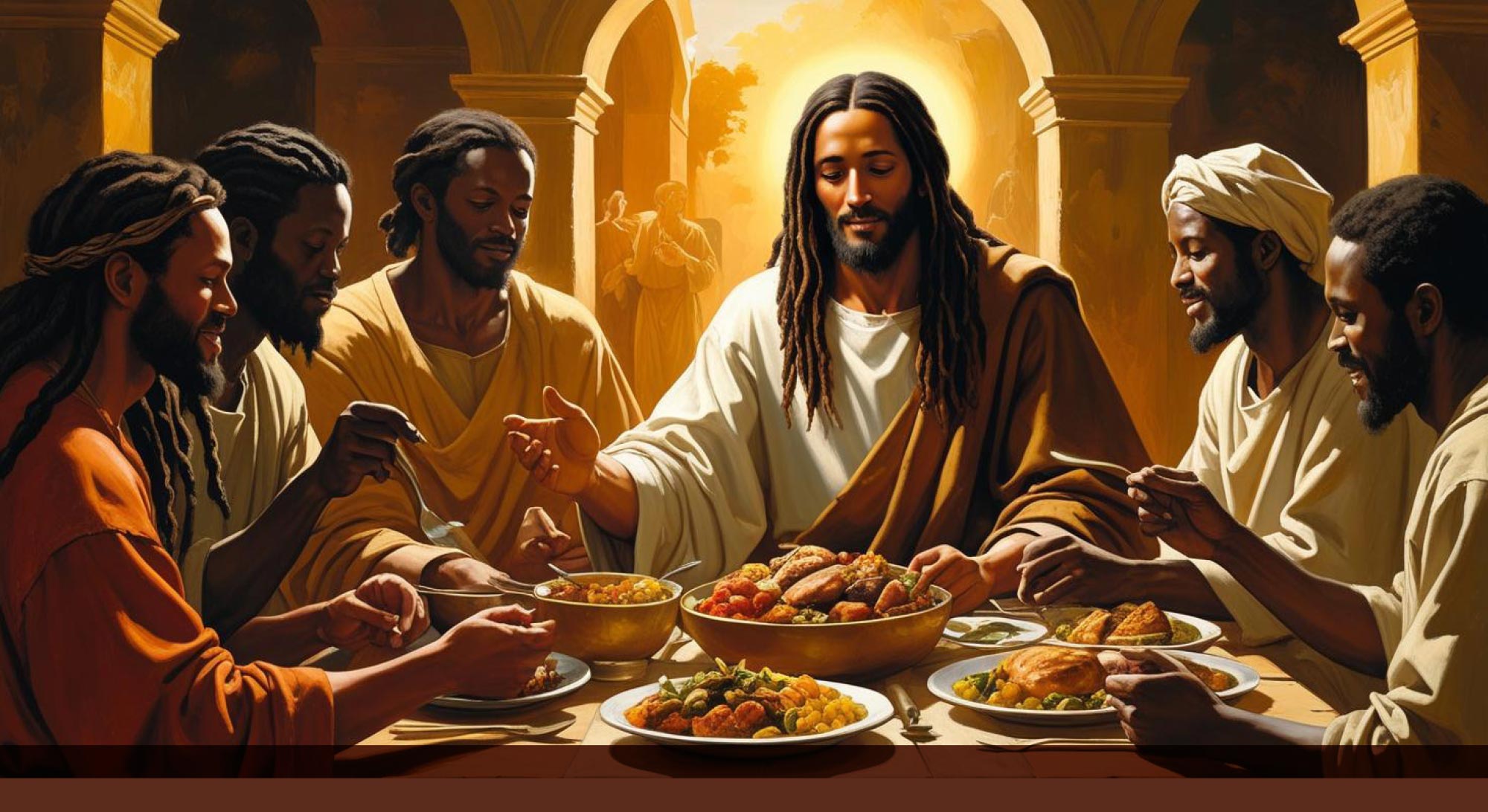

However, Paul says instead of being consumed about one’s worthiness, God wants humility, as modeled by Jesus at the Last Supper, while knowing His disciples would betray and desert Him (Matthew 26:26–28).
Jesus’ actions proved that privilege doesn’t mean better if we aren’t good stewards of power because God gives us privileges to glorify Him and bless others. French philosopher and author Voltaire coined this phrase made popular by Uncle Ben’s cautionary warning to a young Peter Parker aka Spiderman, “with great power comes great responsibility.” That responsibility is humility.
1 Corinthians 11:33-34 advises “when you come together to eat, (come with humility) wait for one another.” The Greek word “wait” doesn’t simply just mean to wait in reference to time; it also means to wait in our attitude, “wait in a welcoming manner.”
The communal language of Jesus modeled holy manners the same way my mother taught us to “wait on others – don’t be selfish.” This is the heart of the way we live our lives. The Lord’s Supper is a time of self-examination. Dinner with Jesus is a matter of humility.

 s an engineer working for a world-renowned pharmaceutical company, I remember the company spending significant amounts of money to pay for training for me. They invested heavily in training because they knew the company would benefit and excel as a result. I became a Certified Maintenance & Reliability Professional and a Certified Plant Maintenance Manager. I applied what I learned to plant operations, which contributed to reduced operating costs and increased efficiency.
  Everyone who joins the church, no matter their gender, age, nationality, country oaf origin or place of residence, are equipped with these gifts.
God doesn’t have to pay for training, but He gives us spiritual gifts at will. Ephesians 4:11-12 says, “Now these are the gifts Christ gave to the church: the apostles, the prophets, the evangelists, and the pastors and teachers” (NLT). Our responsibility is to equip God’s people to do His work and build up the church, the body of Christ. Only some of the gifts are mentioned here, but all are needed in the church. I decided to use all my gifts to build, and I invite you to do the same. Let’s build together!



 ebirth in God through baptism, re-dedication through the ordinances of communion, and life of service as stewards of spiritual gifts is transformative and produces enrichment in our lives.
Faith and knowledge of God isn’t proportional to age. It’s a life of engagement with His presence, gaining spiritual maturity, and receiving all His blessings (2 Timothy 3:14-15; Philippians 4:19). Therefore, we must be good stewards of His blessings by using His spiritual gifts to glorify God and serve each other with grace and humility.
Colossians 3:1-17 says, “Since, then, you have been raised with Christ, set your hearts on things above, where Christ is, seated at the right hand of God. 2 Set your minds on things above, not on earthly things. 3 For you died, and your life is now hidden with Christ in God…12 Therefore, as God’s chosen people, holy and dearly loved, clothe yourselves with compassion, kindness, humility, gentleness, and patience. 13 Bear with each other and forgive one another if any of you has a grievance against someone. Forgive as the Lord forgave you…17 And whatever you do, whether in word or deed, do it all in the name of the Lord Jesus, giving thanks to God the Father through him” (NIV).
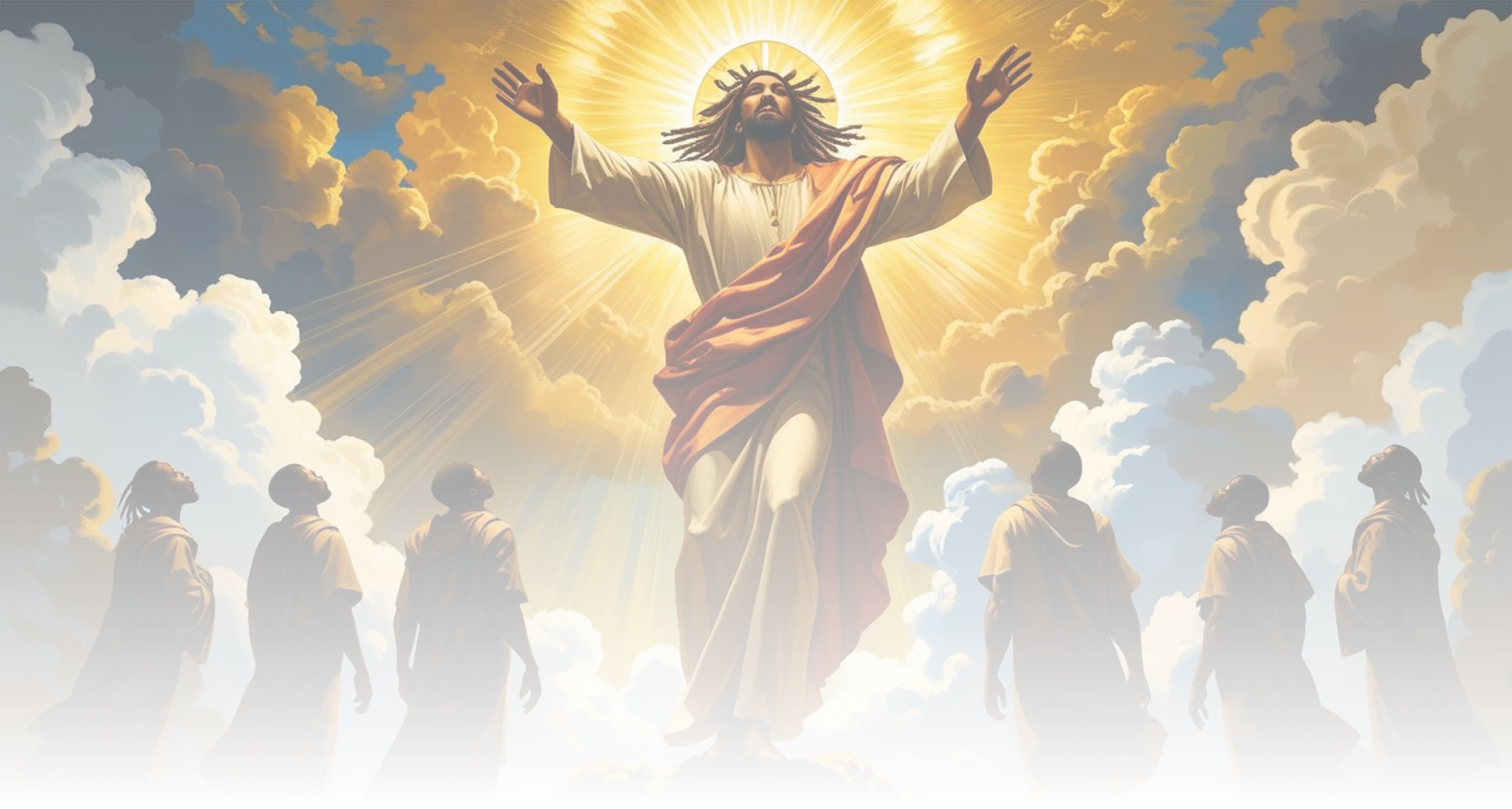

By Ellen G. White
 hrist had sojourned in the world for thirty-three years; He had endured its scorn, insult, and mockery; He had been rejected and crucified. Now, when about to ascend to His throne of glory — as He reviews the ingratitude of the people He came to save — will He not withdraw from them His sympathy and love? Will not His affections be centered upon that realm where He is appreciated, and where sinless angels wait to do His bidding? No; His promise to those loved ones whom He leaves on earth is, ‘I am with you alway, even unto the end of the world.’ Matthew 28:20, KJV
“Upon reaching the Mount of Olives, Jesus led the way across the summit, to the vicinity of Bethany. Here He paused, and the disciples gathered about Him. Beams of light seemed to radiate from His countenance as He looked lovingly upon them. He upbraided them not for their faults and failures; words of the deepest tenderness were the last that fell upon their ears from the lips of their Lord. With hands outstretched in blessing, and as if in assurance of His protecting care, He slowly ascended from among them, drawn heavenward by a power stronger than any earthly attraction. As He passed upward, the awe-stricken disciples looked with straining eyes for the last glimpse of their ascending Lord. A cloud of glory hid Him from their sight; and the words came back to them as the cloudy chariot of angels received Him, ‘Lo, I am with you alway, even unto the end of the world.’ At the same time there floated down to them the sweetest and most joyous music from the angel choir.”
The student who was made the class monitor wasn’t usually well liked, but you couldn’t gainsay their authority in the absence of the teacher. While they had no actual authority, the momentary authority from the teacher was very real. I’m thinking about that because our Heavenly Teacher has left the classroom of planet earth, but in this case, has left His disciples with some very real authority. The task for us is learning how to use it.

This is immediately before Jesus’ ascension. Notice how they are being deputized with the express responsibility of being Jesus’ representatives on Earth. Notice too that Jesus dissuades them from the idea of temporal political power to focus on their spiritual responsibility.

Reflect on the emotions that must have been going through the disciples’ minds as they watched Jesus ascend. They were definitely shocked; they were likely being plunged into a sudden sense of loss again (since the crucifixion). But the angels disrupt the shock and grief and remind them of their mission. Which parts of our mission mandate might we be ignoring because of our current state of grief or anguish, and how do we reclaim that mission?

Our mission mandate is clear. The task for us is to accept it. But with that mission, keep in mind that God is not leaving us to do the work alone. Jesus has promised that the Holy Spirit will be our companion, guide, and power source.

Every now and again someone will raise this text. If we have power, we ought to be able to tread on serpents; to be bitten and remain unharmed. Let’s use practical wisdom here. What is much more common in Scripture is that God promises power over evil; not dangerous animals. Imagine that this could be figurative language.

Look at a map of this region from Jesus’ time. Pay close attention to how Jesus tells them that their influence would be expansive. Now look at a map of your city. Imagine your influence and the influence of your church expanding in scope. How might that be possible?

Keep in mind that the Master has given strict instructions for managing the work while He is away. There are rewards for those who are faithful and punishments for those who are not.

Remember, God’s unlimited power is available to each of us. How will you use it?


Can I not get high for the next ten minutes?
The last time I broke that off—God broke it off for me — was through
that song “I Choose to Worship.”
I could choose the dope house, or I could choose to worship.
Sometimes I failed. Sometimes I didn’t.
I learned this: what you magnify will manifest. There were some times that I focused so much on not getting high, that I ended up getting high because I focused on it so much. Whatever you constantly keep your mind on, your thoughts are going to bring circumstances to you, and so, I think it’s an ongoing battle. I can’t let my guard down, cause I know [Satan] knows what kind of impact I have on people. When God gives me that mic, Satan hates that.”
CUPECAKE
COLLECTION

CUPECAKE
COLLECTION


Atlanta, GA 30318
 404-799-7288
 http://atlantaberean.com/bomc
 [email protected]
P.O. Box 519
Ashton, MD 20861-0519
301-774-0400 https://www.emmanuelbrinklow.org [email protected]Baltimore, MD 21217-3803
410-669-6350 https://www.bereatemple.org [email protected]Windsor Mill, MD 21244-2042
410-922-0050 https://www.libertysda.org [email protected]7000 South Michigan Avenue
Chicago, IL 60637
773-224-7700 http://www.shilohsdachicago.orgMemphis, TN 38106
901-774-5431 http://longviewheights22.adventistchurchconnect.orgOrlando, FL 32810
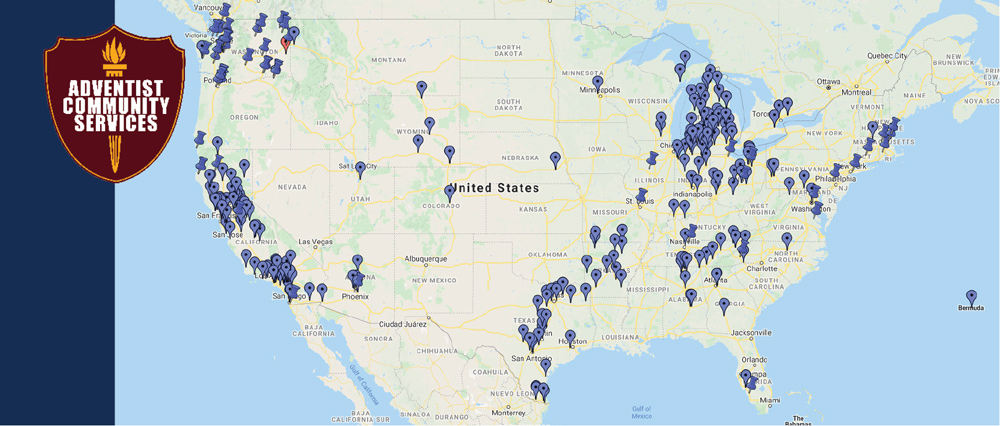
407-704-6963 https://www.guilgalsda.org/ministries/community-serviceSaint Louis, MO 63113-1520
314-361-6446 https://bereanmo.adventistchurch.org [email protected] St. Louis, MO 63136-1500
314-868-0707 https://www.northsidesda.org [email protected]