

 Baron Sovory

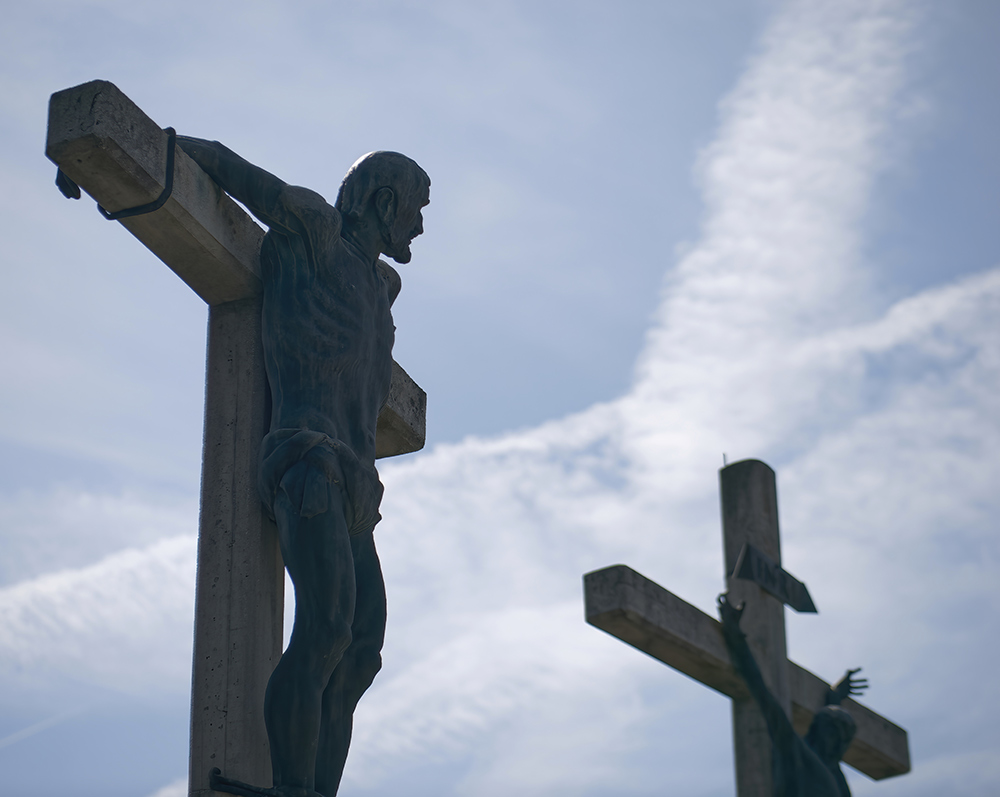
He had seen and heard Jesus, and had been convicted by His teaching, but he had been turned away from Him by the priests and rulers. Seeking to stifle conviction, he had plunged deeper and deeper into sin, until he was arrested, tried as a criminal, and condemned to die on the cross.
In the judgment hall and on the way to Calvary he had been in company with Jesus. He had heard Pilate declare, “I find no fault in Him” (John 19:4). He had marked His godlike bearing, and His pitying forgiveness of His tormentors.
On the cross he sees the many great religionists shoot out the tongue with scorn, and ridicule the Lord Jesus. He sees the wagging heads. He hears the upbraiding speeches taken up by his companion in guilt: “If Thou be Christ, save Thyself and us.”
Among the passers-by he hears many defending Jesus. He hears them repeat His words, and tell of His works. The conviction comes back to him that this is the Christ. Turning to his fellow criminal he says, “Dost not thou fear God, seeing thou art in the same condemnation?”
The dying thieves have no longer anything to fear from man. But upon one of them presses the conviction that there is a God to fear, a future to cause him to tremble. And now, all sin-polluted as it is, his life history is about to close.
“And we indeed justly,” he moans; “for we receive the due reward of our deeds: but this Man hath done nothing amiss.”
There is no question now. There are no doubts, no reproaches. When condemned for his crime, the thief had become hopeless and despairing; but strange, tender thoughts now spring up. He calls to mind all he has heard of Jesus, how He has healed the sick and pardoned sin. He has heard the words of those who believed in Jesus and followed Him weeping. He has seen and read the title above the Saviour’s head. He has heard the passers-by repeat it, some with grieved, quivering lips, others with jesting and mockery.
The Holy Spirit illuminates his mind, and little by little the chain of evidence is joined together. In Jesus, bruised, mocked, and hanging upon the cross, he sees the Lamb of God, that taketh away the sin of the world. Hope is mingled with anguish in his voice as the helpless, dying soul casts himself upon a dying Saviour.
“Lord, remember me,” he cries, “when Thou comest into Thy kingdom.”
Quickly the answer came. Soft and melodious the tone, full of love, compassion, and power the words: Verily I say unto thee today, Thou shalt be with Me in paradise.

Notice that Jesus is crucified between two criminals and surrounded by people who jeer and sneer at Him. Reflect on the fact that the thief on the cross was the only one to speak humbly and respectfully to Jesus while He was hanging on the cross.

Have you ever done something so regretful that you felt overwhelming, real remorse? This is that moment for the thief on the cross. In what ways can we show remorse healthily?

The psalmist clarifies what it is that God really wants. How do we know if our hearts are truly broken and contrite?

Reflect on all those around the cross who exhibited a spirit of pride. Yet, God resists the proud. What are some ways that we can combat pride and arrogance?

Notice the heartfelt prayer. This is the moment that this thief became a disciple. Imagine asking God to keep you in mind. Can you think of anything you need God to remember concerning you right now?

What the thief didn’t know was that Jesus had already planned to make some special housing arrangements. Have you asked God to reserve your spot? If not, do that right now.

The redeemed in heaven will sing a very unique song; “the song of Moses and the Lamb” signals the validity of the law and the power of grace. Our heavenly destiny is sure because of the matchless grace of the Almighty God.
