

 ou know the Bible character Mordecai for his most famous quote. It was an imperative uttered to Queen Esther regarding the imminent existential threat to the Jews. She possessed the power to halt a genocide using her influence with the king. But, even as the queen, her intervention required her to breach protocol. It required her to risk her life. This was no time to shrink, Mordecai insisted.
“Think not with thyself that thou shalt escape in the king’s house, more than all the Jews. For if thou altogether holdest thy peace at this time, then shall there enlargement and deliverance arise to the Jews from another place; but thou and thy father’s house shall be destroyed: and who knoweth whether thou art come to the kingdom for such a time as this?” (Esther 4:13, 14).
You may not remember, however, that it was Mordecai who started the whole thing. Esther’s pivotal role notwithstanding, Mordecai resisted the power of the regime in strategic and provocative ways.
On background, Mordecai, a Jewish captive in the court of the Persian King Xerxes, worked in the courtyard daily. Mordecai had essentially adopted his orphaned cousin Esther and hovered at a safe distance to ensure her safety. He strategically admonishes Esther to conceal her Jewish ancestry when she gets hauled in as part of an empire-wide search for a new queen. And though he is a captive foreigner, a slave, Mordecai duly reports an assassination plot on the King. But, in all this, make no mistake, though it is rule or custom, and though other subjects and captives perform obeisance, Mordecai refuses to bow down or reverence the number-two-in-charge, Haman. Upon discovering this, Haman’s injured pride knew no bounds, and that’s how Esther and the her people faced a genocide.
“And when Haman saw that Mordecai bowed not, nor did him reverence, then was Haman full of wrath. And he thought scorn to lay hands on Mordecai alone; for they had shewed him the people of Mordecai: wherefore Haman sought to destroy all the Jews that were throughout the whole kingdom of Ahasuerus, even the people of Mordecai,” (Esther 3:5,6).
Such a personal conflict with the world’s most powerful empire at the time reads both rationally, and miraculously. In other words, we can both understand Mordecai’s reasons for standing his ground, especially as his faith is implicated in a perceived act of worship. We can also understand that only the hand of God could rescue him from an arrogant and vengeful official.
I think about this point of conflict in the aftermath of the Minneapolis shooting of Renee Good by veteran ICE agent, Jonathan Ross. A protestor, a “neighbor” seeking to observe, or support, or oppose the work of ICE versus the “conservative Christian” ICE officer, tasked with seeking and removing undocumented individuals.
Whether it is the questionable self-defense argument in the shooting of Good — say her name — or the work of U.S. military aircraft killing the operators of fishing boats in the Caribbean, or searching door-to-door to remove undocumented individuals, or the specialized operation to kidnap the President of a foreign, sovereign nation, how does one resolve conflict of conscience and conflict of duty with the powers of this world?
The ethical, moral, Constitutional and spiritual responsibility to challenge authority, from the inside is not evidenced by carrying the label “Christian” or “conservative,” but acting in conscience.
“The Greatest Generation would be stupefied that we appear to have forgotten the horrors that the U.N. Charter intended to ensure never happen again: perhaps 90 million people dead from two world wars between 1914 and 1945,” wrote Kevin Carroll in “The Dispatch.” “Conspiracies to wage aggressive war, and not subsequent war crimes against noncombatants such as the Holocaust or Rape of Nanjing, were the main charges against Axis leaders at the postwar Nuremberg and Tokyo tribunals — with American prosecutors levying the charges and obtaining death sentences in several cases.”
These were obtained against people following orders. Generations thereafter learned the horrors of blind obedience, and unquestioning compliance in the face of inhumane treatment and cruelty. Carroll notes that the historical record in the United States reflects pivotal crisis moments in which someone on the inside resisted the overwhelming momentum, even orders, to overrun the rights and humanity of the people: after the Civil War, after Watergate, when President Trump had “notions of shooting demonstrators in 2020”, and during the January 6, 2021 insurrection.
“Christian” isn’t necessarily co-extensive with obedience to all authority, but God’s people hold the distinct responsibility to counter acts that are inhumane. We must both encourage the independent exercise of conscience, and prepare ourselves to once again brave moments of crisis of faith and conscience.
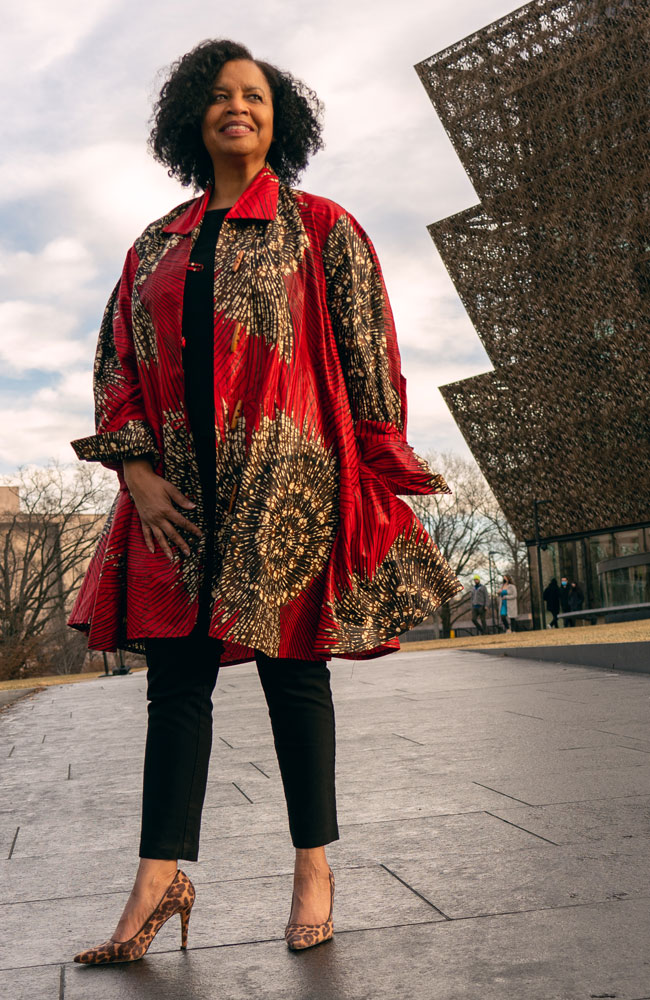
CARMELA MONK CRAWFORD, Esq., is Editor of Message Magazine