

editorial

smiled at the man wearing a beige baseball cap, with bold black letters declaring,
Shalom
Shalom
Because I smiled, he thought (rightfully so, I guess) that he could pull me aside, there at the DMV.
“Do you know what Shalom means?” he asked.
“Peace, right?” I said.
“Oh but it’s so much more, and more beautiful than that.”
Turns out, this rabbi is a Messianic Jew, a believer that Christ has already come, and that He truly is our peace (Ephesians 2:14). I listened nervously, knowing that this was a story I didn’t want to miss, while there for an appointment I also didn’t want to miss.
Each letter in the Hebrew word for Shalom represents not just a sound or part of the alphabet, but a concept that creates the word we’ve come to know as shalom, he explained. This blessing, this proclamation, embodies the idea that there is One who has authority to destroy the one who is connected to our chaos. The same word reveals that One, with nails, would be lifted up, cut off.
I can’t tell you the sweet peace that washed over me in that moment, as I looked at the character for destroy, and consume—which to me looks like our W, but in the rabbi’s eyes, the fangs of ferocity. Christ’s aggressive work of salvation on our behalf, the destruction of our enemy and every ripple of chaos assures our deep and convicting peace. This tenacious promise foretold in prophecy embeds itself in the very Hebrew alphabet and symbols that make the prophecy.
Such intentionality. Such promise. So rich.
As we embark on another year amidst the foreboding in the world’s markets, within the theater of war, the strain on our health, the confusion in our minds, the faintness in our hearts, I plan to mediate on this rich blessing, this aggressive peace.

Editor’s Notes
Life Design, the Black Box
Counternarratives

Counternarratives
Uncovering the counternarrative can lead to “research grief,” when the pain of the past reveals itself, said Kat Armas, author of Abuelita Faith. Armas’ book explores faith and theology as transmitted through the proverbial church mother, the grandmothers and others.
“I wanted grief to move me toward liberation as we embrace the narrative of the most marginalized among us. If I didn’t tell these stories, the whole story wasn’t being told.”
Tim Golden, author, actor, a former attorney and current college philosophy professor advocating the artful use of allegory to transmit sometimes uncomfortable information.
Ralph Peay, offered a first hand, untold story of orchestrating the series of Greensboro lunch counter, waiting room sit ins that led to desegregation.
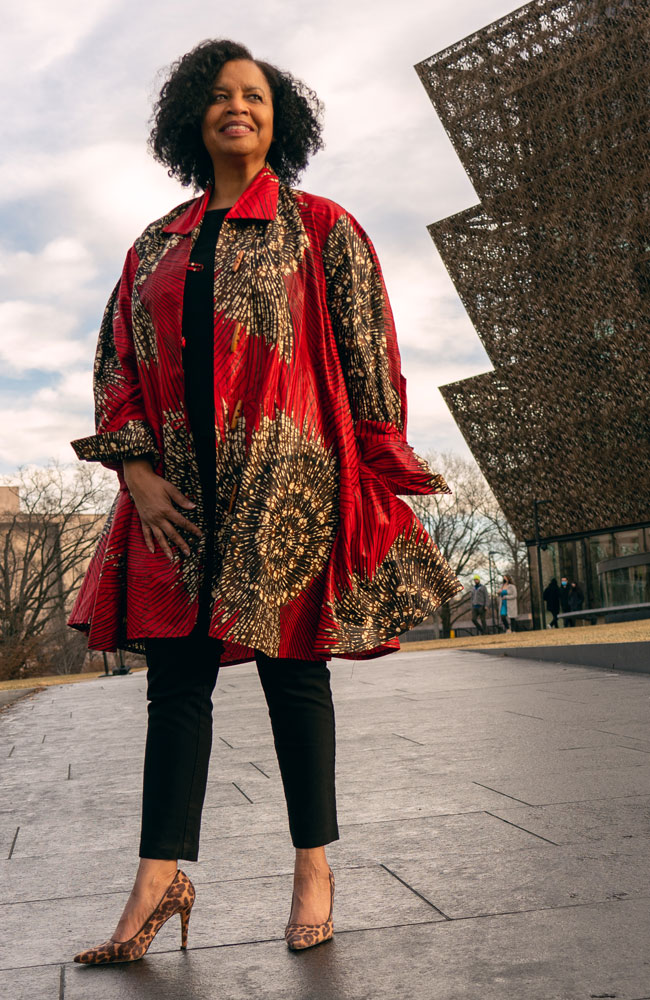
CARMELA MONK CRAWFORD, Esq., is Editor of Message Magazine